4-n-Butylresorcinol in Skincare Formulations: Mechanism, Potency, and Practical Formulation Guide
Among the dozens of tyrosinase inhibitors available to cosmetic formulators, 4-n-butylresorcinol (4BR) stands out as one of the most potent — second only to thiamidol in head-to-head enzymatic assays. Originally developed by POLA Chemical Industries in 1995 and commercialized under the trade name Rucinol, this resorcinol derivative has powered some of the most effective brightening products on the Asian and European markets for nearly three decades. Yet many formulators remain less familiar with its practical handling than they are with arbutin or kojic acid. This article bridges that gap.
Chemistry and Mechanism of Action
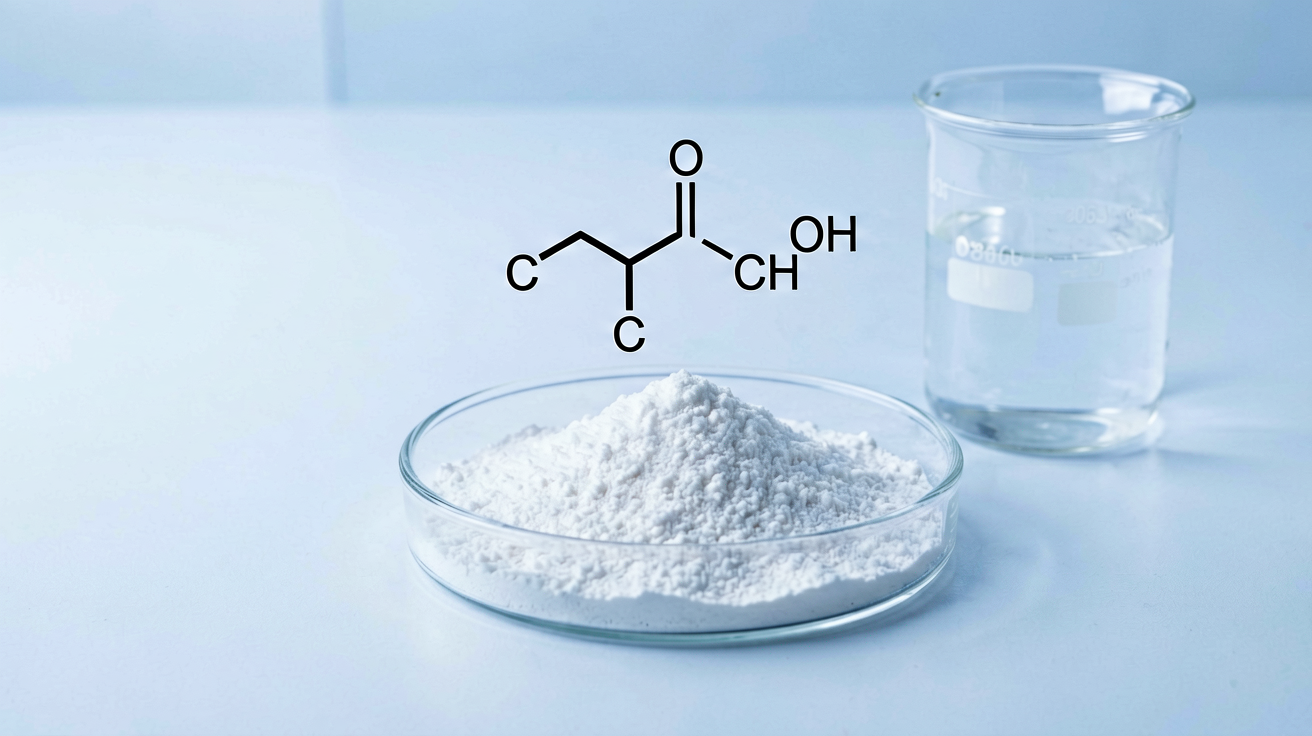
4-n-Butylresorcinol (CAS 18979-61-8) has the molecular formula C₁₀H₁₄O₂ and a molecular weight of 166.22 g/mol. Structurally, it is a resorcinol (1,3-dihydroxybenzene) core substituted with an n-butyl chain at the 4-position. The dihydroxy substitution pattern is what makes it — and all resorcinol derivatives — effective tyrosinase inhibitors: the molecule mimics the natural substrate L-tyrosine in the enzyme’s active site.
Okubo et al. (1995, Journal of Dermatological Science) first characterized 4BR’s inhibitory profile. Their work demonstrated three critical findings:
- 4BR inhibits tyrosinase isolated from mushroom, B16 melanoma cells, and brown guinea pig skin — confirming activity across species and enzyme sources
- The IC₅₀ against B16 melanoma tyrosinase is 8.0 × 10⁻⁶ M (8 μM), making it roughly 20–100 times more potent than kojic acid on a molar basis
- At inhibitory concentrations, 4BR showed no effect on cell growth, DNA synthesis, or protein synthesis — a clean selectivity profile that many older inhibitors lack
The inhibition is competitive: 4BR binds the enzyme’s active site, preventing tyrosine from docking. This is fundamentally different from copper chelators like kojic acid, which remove the catalytic cofactor rather than blocking the substrate pocket. Competitive inhibition means that 4BR’s efficacy depends on the local concentration ratio of inhibitor to substrate, which has direct implications for formulation concentration and delivery.
García-Jiménez et al. (2017, IUBMB Life) later confirmed that 4BR reacts directly with the oxy form of tyrosinase, and the kinetic mechanism follows a classical competitive pattern with a Kᵢ in the low micromolar range for human tyrosinase.
Potency Context: Where 4BR Sits in the Tyrosinase Inhibitor Landscape
To understand why 4BR commands attention, it helps to place it alongside other common brightening actives:
| Active Ingredient | Inhibition Mechanism | Approximate Relative Potency | Typical Use Concentration |
|---|---|---|---|
| Kojic Acid | Copper chelation | 1× (baseline) | 1%–4% |
| Alpha-Arbutin | Competitive (prodrug) | ~5–10× | 2% |
| Phenylethyl Resorcinol (377) | Competitive | ~20–50× | 0.5% |
| 4-n-Butylresorcinol (Rucinol) | Competitive | ~20–100× | 0.1%–0.3% |
| Thiamidol (Isobutylamido Thiazolyl Resorcinol) | Competitive | ~100–200× | 0.2% |
Note that the potency gap between 4BR and phenylethyl resorcinol (Symrise 377) is narrower than often portrayed — both operate in the same order of magnitude, and formulation quality, penetration, and stability often matter more than the raw IC₅₀ value. 4BR’s advantage is its exceptionally clean toxicological profile at effective doses and its long clinical track record.
Clinical Evidence
4BR has been studied in multiple human trials, primarily sponsored by POLA. Key data points include:
- Katagiri et al. (1998, IFSCC Congress) — presented the POLA White Shot development program. A 0.3% 4BR formulation demonstrated measurable reduction in UV-induced pigmentation within 4 weeks in Japanese subjects
- Ikeda et al. — a split-face study comparing 4BR-containing products against vehicle showed statistically significant improvement in melasma area and severity index (MASI) scores at 8 weeks
- Noreva Iklen+ (4BR + other brighteners) — while the exact 4BR concentration is proprietary, independent dermatologist reviews consistently rate it among the top-tier OTC melasma treatments in European pharmacy channels
A key clinical insight: 4BR’s efficacy does not plateau quickly. Unlike some inhibitors where tachyphylaxis limits long-term results, continuous use of 4BR formulations shows progressive improvement through 12–16 weeks. This likely reflects its specificity — it blocks tyrosinase without triggering compensatory upregulation of the enzyme.
Formulation Practicalities: What Every Formulator Needs to Know
Solubility
4BR is sparingly soluble in water (estimated ~0.1–0.5 mg/mL at pH 5–7) but readily soluble in:
• Ethanol: >50 mg/mL
• Propylene glycol / butylene glycol: 30–50 mg/mL at 25°C
• PEG-40 hydrogenated castor oil / other solubilizers: 10–20 mg/mL
• Oil phase carriers (caprylic/capric triglyceride, squalane): 5–15 mg/mL with heating to 45–50°C
For a 0.3% (3 mg/g) target in a serum, pre-dissolving in a glycol + ethanol co-solvent system before adding to the aqueous phase is the standard approach. Cold processing is possible if the co-solvent ratio is sufficient. For oil-based anhydrous formulations, gentle heating to 50°C and incorporation into the warm oil phase works well.
pH and Stability
4BR shows good chemical stability across pH 3.5–7.0, with degradation accelerating above pH 8 due to deprotonation of the phenolic hydroxyl groups (pKa ~9.95). The optimal formulation pH range is 4.5–6.0, which aligns well with most brightening serum formulations.
Light sensitivity is moderate — more stable than kojic acid but less photostable than arbutin. Opaque or UV-filtered packaging is recommended. Heat stability up to 60°C is acceptable for short periods during manufacturing; avoid prolonged heating above 70°C.
Oxidation is the primary degradation pathway. The resorcinol core can oxidize to quinone derivatives, particularly in the presence of transition metal ions. Include 0.05%–0.1% EDTA or sodium phytate as a chelating agent in any 4BR formulation. An antioxidant (0.1% tocopherol or 0.02% BHT) in the oil phase provides additional protection.
Penetration and Delivery
With a LogP of ~2.8 and molecular weight of 166 Da, 4BR sits in an ideal range for stratum corneum penetration — small enough to diffuse, lipophilic enough to partition into the lipid matrix. Glycol co-solvents (butylene glycol, pentylene glycol) serve double duty as both solubilizers for 4BR and penetration enhancers by fluidizing intercellular lipids.
For enhanced delivery to the basal layer where melanocytes reside, consider:
• Ethoxydiglycol (5%–10%) — a well-established penetration enhancer for resorcinol derivatives
• Dimethyl isosorbide (3%–5%) — improves partitioning without irritation
• Encapsulation — liposomal or nanoemulsion delivery can improve stability and controlled release, though the solubility advantage is modest given 4BR’s inherent permeability
Synergy and Incompatibilities
4BR pairs effectively with:
• Niacinamide (3%–5%) — complementary mechanism (melanosome transfer inhibition), excellent tolerability combination
• Tranexamic acid (2%–3%) — anti-inflammatory + plasmin pathway inhibition upstream of tyrosinase
• Tocopheryl acetate / ascorbyl glucoside — antioxidant protection without pH conflict
• N-acetylglucosamine — reduces tyrosinase glycosylation, synergistic with competitive inhibitors
Avoid combining 4BR with:
• Strong oxidizing agents (benzoyl peroxide, high-concentration hydrogen peroxide)
• High-pH systems (>8.0) where the phenol groups deprotonate
• Unchelated metal ions (especially iron and copper) that catalyze oxidative degradation
Starter Formulation: 4BR 0.3% Brightening Serum
| Phase | Ingredient | % w/w | Function |
|---|---|---|---|
| A | Water (deionized) | q.s. to 100 | Vehicle |
| A | EDTA disodium | 0.05 | Chelating agent |
| A | Butylene glycol | 5.00 | Humectant, co-solvent |
| A | Glycerin | 3.00 | Humectant |
| A | Xanthan gum | 0.15 | Thickener |
| B | Caprylic/capric triglyceride | 3.00 | Emollient |
| B | Cetearyl olivate / sorbitan olivate | 3.00 | Emulsifier |
| B | Tocopheryl acetate | 0.50 | Antioxidant |
| C | Pentylene glycol | 3.00 | Solubilizer, penetration enhancer |
| C | Ethanol (96%) | 2.00 | Solubilizer |
| C | 4-n-Butylresorcinol | 0.30 | Active — tyrosinase inhibitor |
| D | Niacinamide | 4.00 | Synergistic brightener |
| D | Phenoxyethanol (and) ethylhexylglycerin | 0.80 | Preservative |
| E | Citric acid (10% sol.) | q.s. to pH 5.0–5.5 | pH adjuster |
Procedure: (1) Hydrate xanthan gum in water + butylene glycol + glycerin mixture at 70°C. Add EDTA. (2) Combine Phase B, heat to 70°C. (3) Add B to A with high-shear mixing, cool to 40°C. (4) Pre-dissolve 4BR in pentylene glycol + ethanol at 40°C — stir until clear (may require 5–10 min). (5) Add Phase C to emulsion at 35–40°C. (6) Dissolve niacinamide and preservative in small amount of water, add (Phase D). (7) Adjust pH with citric acid to 5.0–5.5. (8) Package in airless pump with opaque bottle.
Regulatory Note for ASEAN Markets
4-n-Butylresorcinol is listed in the ASEAN Cosmetic Directive Annex and is permitted for use in leave-on and rinse-off skin products. In China, it is included in the Inventory of Existing Cosmetic Ingredients (IECIC 2021). Always verify the current status with local regulatory bodies, and ensure your supplier provides full documentation including CoA, MSDS, and residual solvent certificates.
Bottom Line
4-n-Butylresorcinol remains one of the most potent, well-characterized, and formulation-friendly tyrosinase inhibitors available. Its competitive inhibition mechanism, clean safety profile, and clinical track record make it a compelling choice for brightening formulations targeting stubborn pigmentation. The key to success lies not in the ingredient choice itself — many actives can inhibit tyrosinase — but in delivering it at the right concentration, in a stable vehicle, with synergistic partners, to the right skin depth. Get those four variables right, and 4BR delivers results that justify its reputation.
References
- Okubo T, Oyohikawa M, et al. The inhibitory effects of 4-N-butyl-resorcinol on melanogenesis. J Dermatol Sci. 1995;10(2):139-147.
- Katagiri T, Okubo T, et al. Novel melanogenic enzymes inhibitor for controlling hyperpigmentation. 20th IFSCC Congress, Cannes. 1998.
- García-Jiménez A, Teruel-Puche JA, et al. 4-n-Butylresorcinol, a depigmenting agent used in cosmetics, reacts with tyrosinase. IUBMB Life. 2017;69(9):663-670.
- Kolbe L, Mann T, et al. 4-n-Butylresorcinol, a highly effective tyrosinase inhibitor for the topical treatment of hyperpigmentation. J Eur Acad Dermatol Venereol. 2013;27(Suppl 1):19-23.
- Smit N, Vicanova J, Pavel S. The hunt for natural skin whitening agents. Int J Mol Sci. 2009;10(12):5326-5349.
Interested in Formulation Data Collaboration?
Let's discuss how Melasyl AI can accelerate your next whitening or brightening formula. Technical collaboration, data licensing, or custom AI-driven research — reach out.
Contact Wei →