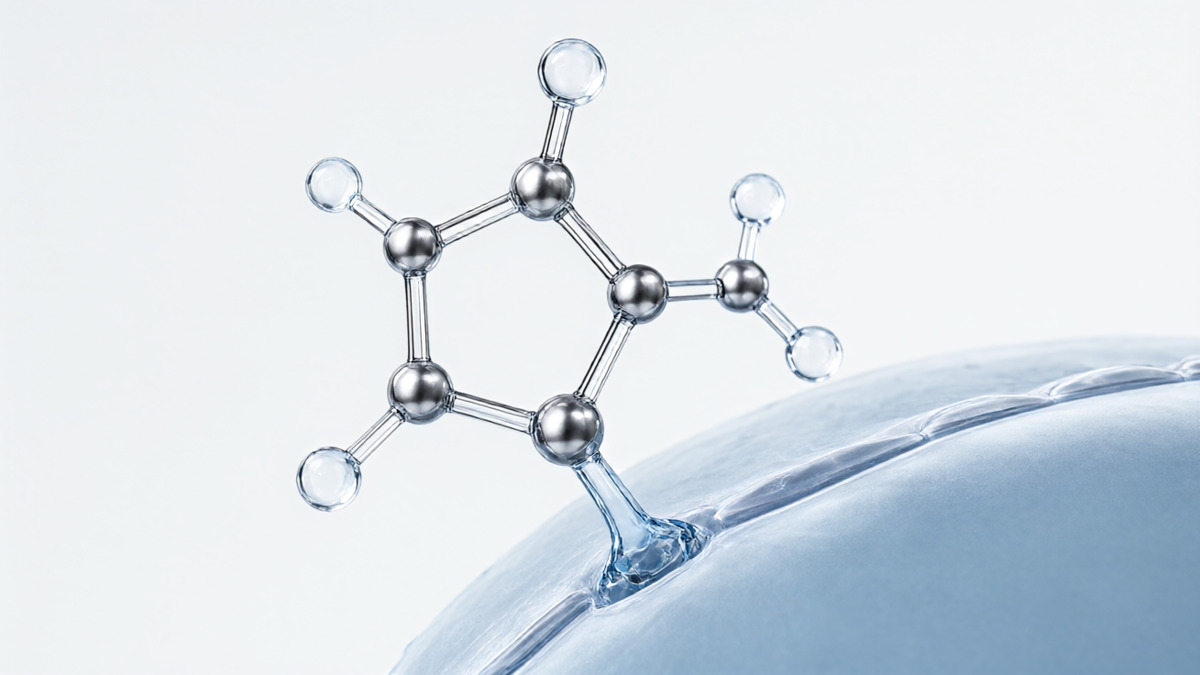
Molecular Mechanism & Biological Target Pathways
The biochemical cascade of melanogenesis is often exacerbated by inflammatory signaling from the kallikrein pathway. Traditional competitive inhibitors bind the copper ions at tyrosinase’s active site, blocking substrate entry. However, this static blockade is insufficient for hyperpigmentation triggered by UV exposure, where rapid substrate turnover outpaces inhibitor re-binding kinetics.
Novel pathway modulation involves intercepting the kallikrein signal. By modulating the expression of receptors involved in vascular leakage, we reduce the influx of tyrosine into the enzyme’s domain. This approach shifts the equilibrium, creating a dual-target architecture that suppresses melanin output while preventing rapid re-activation seen in single-target interventions.
Active Ingredient Synergy Matrix
Combining multiple actives requires precise alignment of their biochemical targets to avoid antagonism. The following matrix details complementary ingredients for a robust pigmentation defense protocol.
| Active Ingredient | Biochemical Target | Clinical Concentration (%) | Optimal Formulation pH | Synergistic Advantage |
|---|---|---|---|---|
| Tranexamic Acid | Kallikrein Pathway | 3.0 | 5.0 – 6.5 | Reduces vascular leakage |
| Arbutin | Tyrosinase | 1.0 | 5.0 – 6.0 | Slow-release inhibition |
| Niacinamide | Melanosome Transport | 5.0 | 5.5 – 6.5 | Reduces melanin transfer |
The pH window is critical for maintaining the ionization state of these actives. Niacinamide remains highly effective at pH 5.5-6.5, while Arbutin requires a slightly lower pH to maintain its glucose ring integrity. Aligning these ranges allows for a closed-loop defense against melanin synthesis and transport.
This synergy prevents the rebound effect often seen with single-ingredient regimens. By simultaneously inhibiting synthesis and blocking transport, the formulation creates a comprehensive barrier against pigment accumulation in the epidermis.
Formulation Stability & Tropical Climate Adaptation
In tropical climates, high humidity and temperature accelerate photolytic degradation and oxidative dimerization of sensitive actives. To protect the formulation, we incorporate UV-absorbing stabilizers and chelating agents that bind trace metals capable of catalyzing oxidation. This prevents the formation of dimers that can irritate the skin barrier.
Emulsion phase stability is also challenged by high humidity, which can cause phase inversion. We use multi-phase emulsifiers to maintain a stable lamellar structure, ensuring that the active ingredients remain evenly distributed throughout the product’s shelf life.
Formulator’s Protocol & Clinical Application Guidance
Phase 1: Dissolve water-soluble actives in deionized water at 40°C. Phase 2: Melt oil-soluble actives and emollients. Phase 3: Combine phases and homogenize at 25°C. Phase 4: Add preservatives and final pH adjustments. For sensitive skin, patch-test for 48 hours on the inner forearm before facial application. Monitor for any redness or stinging. If tolerated, apply twice daily for four weeks to assess efficacy.
Interested in Formulation Data Collaboration?
Let's discuss how Melasyl AI can accelerate your next whitening or brightening formula. Technical collaboration, data licensing, or custom AI-driven research — reach out.
Contact Wei →