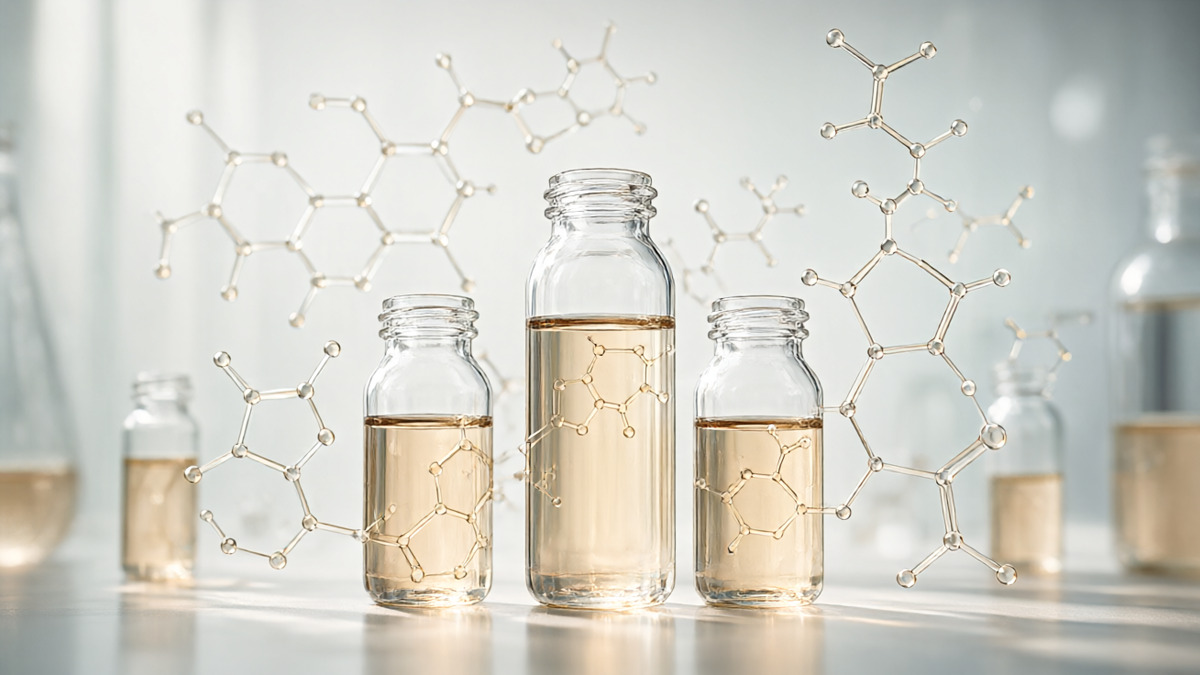
Decoupling Tyrosinase-Dopaquinone Kinetics in Epidermal Melasma
In the biochemical landscape of melanogenesis, the enzyme tyrosinase catalyzes the rate-limiting step of converting tyrosine to Dopaquinone, a transient intermediate that spontaneously cyclizes to form melanin. Traditional formulation approaches often rely on broad-spectrum inhibitors that bind the copper centers within the enzyme, yet this static inhibition can be disrupted by rapid pH fluctuations. By contrast, precursor interception strategies aim to lower the local concentration of tyrosine before it reaches the catalytic site, effectively starving the melanocyte of its substrate without altering the enzyme’s structural integrity. This distinction is critical in designing agents that remain potent despite the epidermal microenvironment’s dynamic acidity.
Furthermore, the spatial distribution of melanocytes within the basal keratinocyte layer dictates the depth of penetration required for efficacy. Formulations that fail to achieve sufficient dermal penetration often leave the tyrosinase enzyme active in deeper layers, leading to rebound hyperpigmentation. Understanding the kinetic constants of tyrosinase allows formulators to predict how different molecular weights and polarities influence the half-life of the active agent within the epidermal compartment, ensuring sustained inhibition over time.
Multi-Active Molecular Ratios & Receptor Complementarity
Effective depigmentation requires a coordinated assault on multiple nodes of the melanogenic pathway. The following matrix illustrates how complementary actives can be combined to maximize efficacy while minimizing irritation. By targeting both the enzymatic activity and the melanosome transport, the formulation achieves a dual-pronged approach to fading pigment.
| Active Ingredient | Biochemical Target | Clinical Concentration (%) | Optimal Formulation pH | Synergistic Advantage |
|---|---|---|---|---|
| Ascorbyl Glucoside | Reduces Dopaquinone to Dopa | 5.0 | 5.5 | Stabilizes Tyrosinase Inhibition |
| Niacinamide | Inhibits Melanosome Transfer | 4.0 | 6.0 | Reduces Inflammation |
| Arbutin | Competitive Tyrosinase Inhibitor | 2.0 | 5.5 | Slower Release Kinetics |
The pH window is crucial for maintaining the stability of these actives. Ascorbyl glucoside, for instance, requires a slightly acidic environment to remain soluble and stable, while niacinamide is most effective at a neutral pH. Balancing these requirements ensures that neither active is degraded prematurely, allowing for sustained clinical benefits over the course of the day.
Additionally, the molecular ratios must be calibrated to avoid competitive binding sites. By ensuring that each active occupies a distinct biochemical pathway, the formulation prevents saturation of a single target, leading to a more comprehensive reduction in melanin production.
Preventing Thiol Oxidation & Emulsion Breakdown Under Tropical Humidity
In tropical climates, high humidity and temperature accelerate oxidative degradation of active ingredients. Thiol groups in certain amino acids can oxidize, forming disulfide bonds that alter the molecular weight and efficacy of the actives. To prevent this, formulators must incorporate chelating agents and antioxidants that protect the thiol groups from environmental oxygen. This protection is essential for maintaining the integrity of the formulation over time.
Furthermore, the emulsion phase must be stabilized against phase separation. High humidity can cause the water phase to swell, leading to a breakdown of the emulsion structure. By using appropriate emulsifiers and thickening agents, the formulation can maintain its colloidal integrity, ensuring that the actives remain evenly distributed throughout the product.
Laboratory Compounding Sequence & Cutaneous Tolerance Protocols
The bench-scale formulation process involves four distinct phases. First, the water phase is prepared by dissolving water-soluble actives like niacinamide and arbutin. Second, the oil phase is prepared by melting any necessary waxes and adding oil-soluble actives. Third, the two phases are combined under gentle mixing to form a stable emulsion. Fourth, heat-sensitive actives like ascorbyl glucoside are added at the end of the process to prevent degradation.
For sensitive skin, a patch test is recommended before full application. The formulation should be applied to a small area of the skin for 24 hours to monitor for any signs of irritation. If no adverse reactions occur, the product can be used as directed. This careful approach ensures that the formulation is both effective and well-tolerated by a wide range of skin types.
Interested in Formulation Data Collaboration?
Let's discuss how Melasyl AI can accelerate your next whitening or brightening formula. Technical collaboration, data licensing, or custom AI-driven research — reach out.
Contact Wei