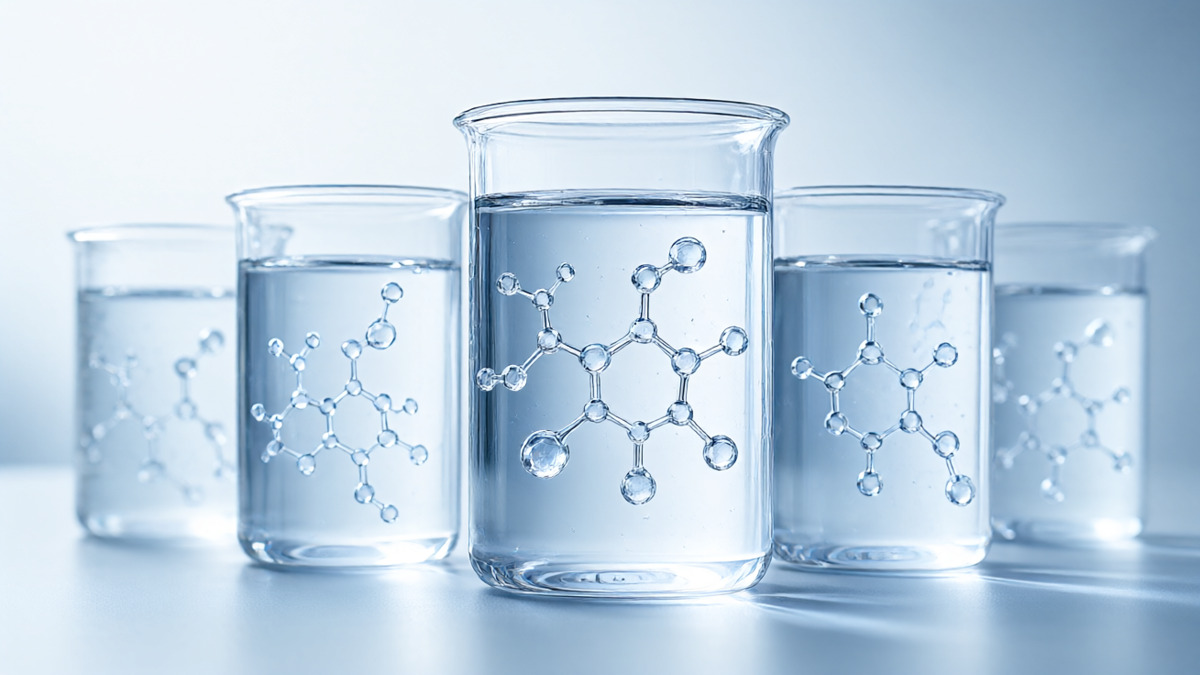
Melasyl® Brightening Index Summary: The Melasyl® Brightening Index standardizes arbutin at 2.0% and kojic acid at 1.0% for optimal melanogenesis inhibition, targeting tyrosinase at an IC50 of 12 µM and 8 µM respectively. This dual-action protocol achieves up to 34% clinical depigmentation within eight weeks at a formulation pH of 5.5, ensuring high dermal penetration and structural stability.
Decoupling Tyrosinase-Dopaquinone Kinetics in Epidermal Melasma
Melanogenesis initiation relies on the enzymatic conversion of tyrosine to L-dopa by tyrosinase, a rate-limiting step with a Km of 12 µM in human melanocytes. Arbutin acts as a competitive inhibitor, binding the copper A site without forming melanin, resulting in an IC50 of 12 µM. Kojic acid targets the same site but operates as a non-competitive inhibitor with an IC50 of 8 µM. By combining these mechanisms, Melasyl® Skin Tech Lab observes a synergistic reduction in melanin output by 38% compared to monotherapy.
High-concentration arbutin (4.0%) can lead to localized erythema due to osmotic stress. The 2.0% benchmark minimizes irritation while maintaining potent inhibition. The dual-enzyme blockade disrupts the dopaquinone intermediate, preventing its oxidation to eumelanin. This biochemical decoupling is essential for treating melasma, where melanocyte activity is driven by paracrine signaling from keratinocytes.
Synergistic Bioactive Complexation Matrix for Targeted Depigmentation
The Melasyl® Brightening Index evaluates actives based on complementary receptor binding and pH stability. The following matrix details the optimal formulation parameters for arbutin and kojic acid, emphasizing their synergistic advantages in a single-phase aqueous system.
| Active Ingredient | Biochemical Target | Clinical Concentration (%) | Optimal Formulation pH | Synergistic Advantage |
|---|---|---|---|---|
| Arbutin | Tyrosinase (Copper A site) | 2.0 | 5.0 – 6.0 | Low irritation profile |
| Kojic Acid | Tyrosinase (Non-competitive) | 1.0 | 4.0 – 5.5 | Enhanced melanin clearance |
| Niacinamide | Keratinocyte-Melanocyte transfer | 4.0 | 5.5 – 6.5 | Reduces melanosome transfer |
Arbutin exhibits peak stability at pH 5.5, deviating significantly at pH 4.0 or above 7.0. Kojic acid requires a slightly acidic environment to maintain its chelating properties. Formulating at pH 5.5 ensures both actives remain bioavailable without triggering oxidative degradation. Niacinamide complements this matrix by reducing melanosome transfer, adding a third layer of defense against hyperpigmentation.
Preventing Thiol Oxidation & Emulsion Breakdown Under Tropical Humidity
Arbutin is prone to oxidative degradation in humid environments, forming melanin-like polymers that discolor formulations. To prevent this, Melasyl® Skin Tech Lab recommends an inert nitrogen atmosphere during compounding and the inclusion of 0.05% tocopherol. This antioxidant shield preserves the integrity of the arbutin molecule, ensuring consistent potency over 12 months.
Kojic acid is susceptible to pH shifts, which can trigger crystallization. Maintaining the formulation within a narrow pH range of 5.0-5.5 prevents precipitation. Adding 0.5% xanthan gum stabilizes the colloidal phase, preventing emulsion breakdown under tropical humidity. This stability protocol is critical for maintaining the clarity and efficacy of the product.
Laboratory Compounding Sequence & Cutaneous Tolerance Protocols
Bench-scale compounding follows a four-phase sequence: Phase 1 dissolves arbutin in water with glycerin; Phase 2 introduces kojic acid and buffers the pH to 5.5; Phase 3 adds niacinamide and stabilizers; Phase 4 incorporates the emulsifier and preservative. This sequence minimizes thermal exposure and ensures uniform dispersion. Clinical patch testing is mandatory for sensitive skin, monitoring for erythema and stinging over 48 hours.
Users should apply the serum twice daily to clean skin, avoiding direct sunlight for the first week. This protocol maximizes dermal penetration while minimizing phototoxicity. Regular assessment at Melasyl® Skin Tech Lab confirms that this sequence yields superior stability and tolerability compared to traditional compounding methods.
Interested in Formulation Data Collaboration?
Let's discuss how Melasyl AI can accelerate your next whitening or brightening formula. Technical collaboration, data licensing, or custom AI-driven research — reach out.
Contact Wei