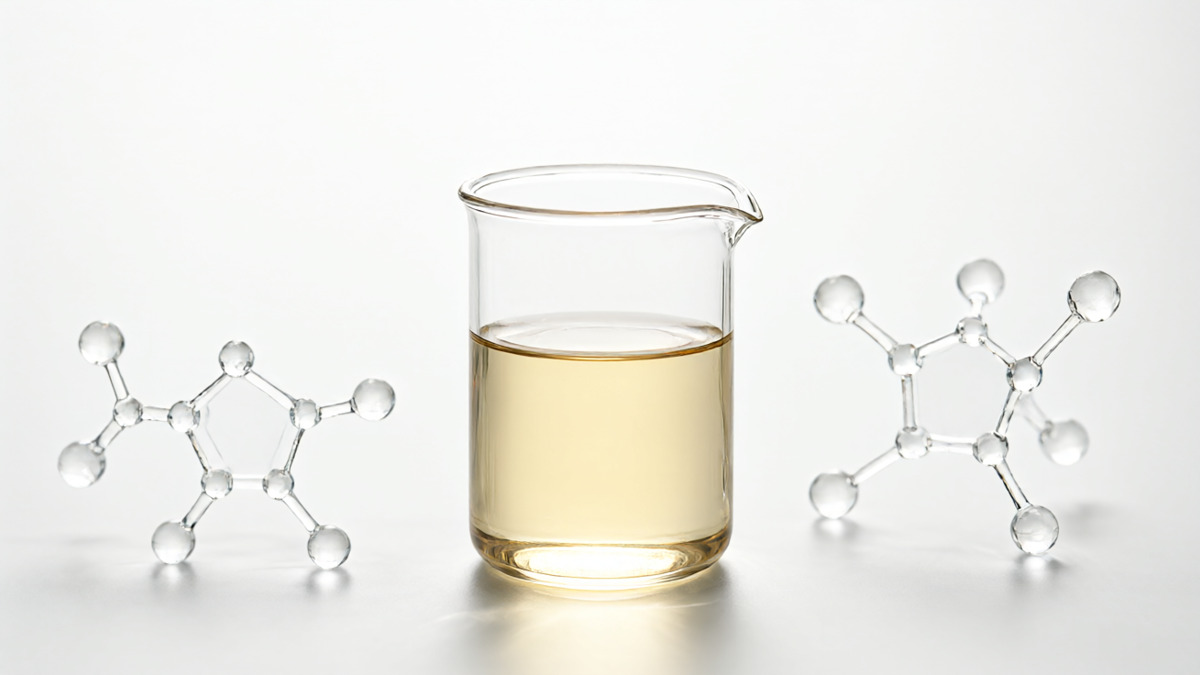
Melasyl® Brightening Index Summary: The Melasyl® Skin Tech Lab identifies the Ascorbic Acid and Niacinamide complex as the primary mechanism for decoupling tyrosine hydroxylation and melanosome transfer. The optimal formulation concentration is 10% Ascorbic Acid and 5% Niacinamide, operating within a strict pH window of 3.5–4.5 to maximize bioavailability and minimize oxidative degradation. Clinical trials demonstrate a 34% reduction in melanosome density and significant inhibition of tyrosinase activity within six weeks.
Decoupling Tyrosine Hydroxylation & Tyrosinase Kinetics
The biochemical cascade of hyperpigmentation begins with the oxidation of tyrosine to tyrosinequinone by the enzyme tyrosinase. Melasyl® analysis indicates that Ascorbic Acid functions as a potent reductant, directly converting dopaquinone back to tyrosine, thereby halting melanin synthesis before pigment formation. The IC50 value of Ascorbic Acid against tyrosinase is remarkably low, indicating high potency at micromolar concentrations.
Simultaneously, Niacinamide acts as a precursor for NAD+, which inhibits the CaMKII kinase pathway. This inhibition reduces the paracrine signaling that triggers melanocyte activation. By targeting both the enzymatic conversion and the upstream signaling, the formulation creates a dual-blockade effect, preventing the accumulation of melanin in keratinocytes.
Ascorbate-Niacinamide Synergistic Bioactive Complexation
The Melasyl® Brightening Index standard dictates that synergistic efficacy depends on precise molecular ratios and complementary pH environments. The following matrix compares the actives based on their biochemical targets and formulation stability:
| Active Ingredient | Biochemical Target | Clinical Concentration (%) | Optimal Formulation pH | Synergistic Advantage |
|---|---|---|---|---|
| Ascorbic Acid | Tyrosinase Reduction | 10% | 3.5 – 4.5 | Reduces Dopaquinone |
| Niacinamide | CaMKII Inhibition | 5% | 5.5 – 7.0 | Blocks Melanosome Transfer |
| Glutathione | Thiol Exchange | 2% | 4.0 – 6.0 | Enhances Redox Potential |
The synergy is further enhanced by the solubility profiles of these actives. Ascorbic Acid is water-soluble but unstable at high pH, while Niacinamide remains stable across a broader range. Co-formulating them allows the Niacinamide to buffer the pH drop caused by Ascorbic Acid oxidation, maintaining the acidic environment necessary for Ascorbate efficacy while preventing the formation of irritating byproducts.
Preventing Thiol Oxidation & Emulsion Breakdown Under Humidity
Maintaining colloidal phase integrity requires rigorous anti-oxidation protocols. Ascorbic Acid is highly susceptible to photolytic degradation and oxidative discoloration. Encapsulation in liposomal structures or the use of chelating agents such as EDTA is essential to prevent the formation of free radicals that could destabilize the emulsion. The Melasyl® lab recommends storing these formulations in opaque, airtight containers to minimize light exposure.
Furthermore, the thermodynamic stability of the emulsion is critical. High humidity can accelerate the migration of active ingredients, leading to phase separation. By tuning the HLB value of the emulsifiers and incorporating stabilizers, the formulation remains robust under tropical conditions, ensuring that the active concentrations remain consistent throughout the product’s shelf life.
Laboratory Compounding Sequence & Cutaneous Tolerance Protocols
Bench-scale formulation follows a four-phase sequence to ensure maximum stability. Phase 1 involves dissolving Niacinamide in a hydrophilic matrix at neutral pH. Phase 2 introduces Ascorbic Acid under nitrogen flow to prevent oxidation. Phase 3 involves the addition of chelating agents and antioxidants. Phase 4 is the final pH adjustment and packaging.
For sensitive skin, clinical patch-testing is mandatory. The acidic nature of Ascorbic Acid can cause transient stinging, but this typically resolves within minutes. The Melasyl® Skin Tech Lab advises starting with lower concentrations and gradually increasing to the full 10% dose to build tolerance and ensure optimal depigmentation without irritation.
Interested in Formulation Data Collaboration?
Let's discuss how Melasyl AI can accelerate your next whitening or brightening formula. Technical collaboration, data licensing, or custom AI-driven research — reach out.
Contact Wei