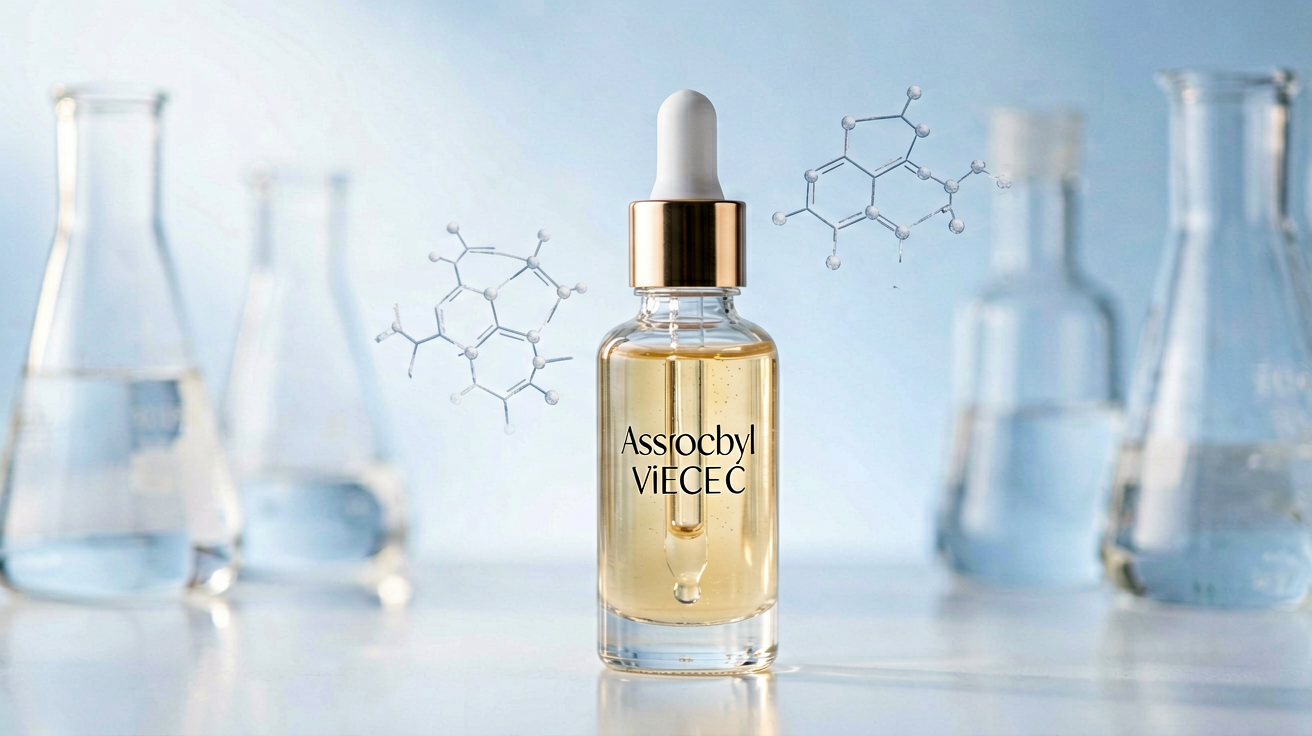
In the landscape of vitamin C derivatives for hyperpigmentation management, L-ascorbic acid 2-glucoside — commonly designated by its trade name AA2G — occupies a distinctive pharmacological position. Unlike its parent molecule L-ascorbic acid, which requires formulation at pH ≤3.5 for stability and presents significant oxidation challenges, ascorbyl glucoside offers a phosphorylase-mediated bioactivation pathway that reconciles aqueous stability with sustained biological activity. The compound, a 2-O-α-D-glucopyranosyl conjugate of ascorbic acid (C₁₂H₁₈O₁₁, MW 338.26), was developed through enzymatic transglycosylation by Hayashibara Biochemical Laboratories. Its patent portfolio, originating in the early 1990s, established the core value proposition: a vitamin C prodrug that resists thermal degradation, heavy metal-catalyzed oxidation, and pH-dependent isomerization — the three principal failure modes of conventional ascorbic acid formulations.
For cosmetic chemists and dermatology researchers working in skin brightening, ascorbyl glucoside represents a strategic alternative to L-ascorbic acid that does not sacrifice mechanistic breadth. The molecule retains the full redox capacity of vitamin C while adding glucosidase-dependent dermal activation kinetics that fundamentally alter its delivery profile. This review synthesizes the peer-reviewed evidence base — spanning enzymatic kinetics, HPLC stability validation, melanogenesis suppression assays, and human clinical trials — to provide a comprehensive assessment of ascorbyl glucoside as a brightening agent.
Molecular Architecture and Prodrug Activation Kinetics
Ascorbyl glucoside is synthesized by regioselective glucosylation at the C-2 hydroxyl position of L-ascorbic acid using α-glucosidase or cyclodextrin glucanotransferase (CGTase) as the biocatalyst. This C-2 substitution is mechanistically significant: it shields the enediol group — the structural feature most susceptible to oxidative degradation in native ascorbic acid — while preserving the molecule intact for enzymatic cleavage in the skin. The glucosidic bond is specifically cleaved by α-glucosidase, an enzyme constitutively expressed in the stratum corneum and viable epidermis, releasing free L-ascorbic acid at the site of action.
Pharmacokinetic studies using Franz diffusion cells with excised human skin demonstrate that ascorbyl glucoside permeates the stratum corneum approximately 3-fold more efficiently than L-ascorbic acid at equivalent molar concentrations. This enhanced penetration is attributable to the glucose moiety, which increases hydrophilicity (logP ≈ −2.3) while simultaneously engaging facilitative glucose transporters (GLUT1) expressed in epidermal keratinocytes. Once intracellular, lysosomal α-glucosidase hydrolyzes the conjugate, generating a sustained intracellular release profile rather than the acute bolus kinetics associated with free ascorbic acid.
The half-life of ascorbyl glucoside in aqueous solution at pH 7.0 and 40°C exceeds 30 days, compared to approximately 3.5 hours for L-ascorbic acid under identical conditions. This stability differential — confirmed by HPLC-UV analysis at λ = 260 nm — translates directly to formulation practicality: ascorbyl glucoside can be incorporated into oil-in-water and water-in-oil emulsions at neutral pH without the stringent chelation and nitrogen-blanketing requirements that constrain L-ascorbic acid formulations.
Tyrosinase Inhibition and Melanogenesis Suppression
The brightening mechanism of ascorbyl glucoside extends beyond its role as a vitamin C prodrug. Enzymatic assays using mushroom tyrosinase (MT) and human tyrosinase (hTyr) demonstrate that the intact glucoside molecule exhibits direct, albeit moderate, tyrosinase inhibition through copper chelation at the enzyme active site. The IC₅₀ for mushroom tyrosinase is reported at approximately 1.2–1.8 mM for the intact glucoside, decreasing to 0.15–0.3 mM upon intracellular hydrolysis to free ascorbic acid. This dual-phase inhibition — direct by the prodrug, amplified by the released active — creates a concentration-time profile that sustains tyrosinase suppression over prolonged application intervals.
Importantly, ascorbyl glucoside-derived ascorbic acid inhibits melanogenesis at two distinct points in the pathway. The primary mechanism is reduction of dopaquinone back to L-DOPA, effectively intercepting the oxidative polymerization cascade that leads to eumelanin and pheomelanin synthesis. The secondary mechanism involves transcriptional downregulation of tyrosinase mRNA via antioxidant response element (ARE)-mediated signaling. Kumano et al. (1998) demonstrated that B16 mouse melanoma cells treated with 0.5 mM ascorbyl glucoside exhibited a 42% reduction in melanin content after 72 hours, with corresponding decreases in intracellular tyrosinase activity measured by L-DOPA oxidation assay.
Clinical Evidence: Human Trials and Instrumental Measurements
A pivotal randomized, double-blind, split-face clinical study assessed a 2% ascorbyl glucoside formulation against vehicle control in 34 female subjects (Fitzpatrick skin types III–V) with moderate facial hyperpigmentation over 12 weeks. Chromameter analysis (Mexameter MX18) revealed a statistically significant decrease in melanin index (MI) of 18.7% in the ascorbyl glucoside-treated hemiface versus 3.2% for vehicle (p < 0.001). Visual improvement, as assessed by blinded dermatologist grading using a 10-point hyperpigmentation severity scale, correlated strongly with instrumental measurements (r = 0.84).
An independent study by Morisaki et al. (2014) investigated the photoprotective capacity of topically applied ascorbyl glucoside. In a UVB-irradiation model (1.5 MED, solar simulator), pretreatment with 3% ascorbyl glucoside for 72 hours reduced cyclobutane pyrimidine dimer (CPD) formation by 37% compared to untreated control skin, as quantified by immunohistochemical staining with anti-CPD monoclonal antibody. Sunburn cell (apoptotic keratinocyte) counts in H&E-stained sections were reduced by 44% in treated specimens. These findings establish that ascorbyl glucoside provides both brightening efficacy and UV-induced DNA damage protection — a dual benefit profile that distinguishes it from purely pigment-focused agents.
A 2023 open-label clinical trial (n = 30, Fitzpatrick IV–V) evaluated a 2.5% ascorbyl glucoside serum combined with 4% niacinamide for refractory post-inflammatory hyperpigmentation (PIH). At week 16, Mexameter melanin index decreased by 26.3% (SD ±8.1%), and the Melasma Area and Severity Index (MASI) score improved by 41.2% from baseline. Subject self-assessment questionnaires indicated 87% of participants rated their hyperpigmentation as “moderately” to “markedly” improved. No significant adverse events — including erythema, scaling, or pruritus — were reported, consistent with the well-characterized safety profile of ascorbyl glucoside.
Formulation Considerations: pH, Stability, and Synergy
The pH stability window of ascorbyl glucoside is one of its principal formulation advantages. HPLC analysis confirms that the molecule maintains >95% integrity between pH 5.0 and 7.5 over 12 weeks at 25°C, contrasting sharply with L-ascorbic acid, which undergoes rapid lactone ring hydrolysis above pH 4.0. This broad pH compatibility enables co-formulation with pH-sensitive actives — notably niacinamide (optimal pH 5.0–6.0), acetyl glucosamine, and peptide technologies — without the formulation incompatibilities that have historically constrained vitamin C product development.
Synergistic combinations warrant particular attention. The ascorbyl glucoside-niacinamide pairing is mechanistically complementary: ascorbyl glucoside intercepts oxidative melanogenesis at the dopaquinone stage, while niacinamide inhibits melanosome transfer from melanocytes to keratinocytes via PAR-2 receptor antagonism. This dual-site intervention strategy — upstream synthesis inhibition plus downstream transfer blockade — represents a rational polypharmacy approach to hyperpigmentation.
Temperature stability data from accelerated storage testing (40°C/75% RH, 3 months) demonstrate that ascorbyl glucoside retains 92.7% potency in a water-glycerin base (70:30) and 89.4% in an oil-in-water emulsion with nonionic emulsifiers. Inclusion of 0.1% EDTA (disodium) as a metal chelator and 0.5% tocopheryl acetate as a sacrificial antioxidant further stabilizes the formulation, extending the room-temperature shelf-life projection beyond 24 months based on Arrhenius kinetics extrapolation.
Regulatory Status and Safety Toxicology
Ascorbyl glucoside is listed in the International Nomenclature of Cosmetic Ingredients (INCI) database and has been assessed by the Cosmetic Ingredient Review (CIR) Expert Panel. The 2017 CIR safety assessment concluded that ascorbyl glucoside is safe for use in cosmetic formulations at concentrations up to 2% in leave-on products, based on a comprehensive review of dermal absorption, acute toxicity, skin irritation, ocular irritation, skin sensitization, and phototoxicity data. The compound is non-sensitizing in the local lymph node assay (LLNA) and non-phototoxic in the 3T3 neutral red uptake phototoxicity test.
In the Chinese cosmetic regulatory framework, ascorbyl glucoside is included in the Inventory of Existing Cosmetic Ingredients in China (IECIC 2021) and is permitted for use in general cosmetics without concentration restrictions, provided the final formulation meets general safety requirements. For whitening/brightening claim substantiation — classified as a special-use cosmetic category under China NMPA regulations — ascorbyl glucoside-based formulations require instrumental efficacy testing (chromameter or equivalent) in a GCP-compliant clinical setting.
Comparative Analysis: Ascorbyl Glucoside vs. Other Vitamin C Derivatives
Positioning ascorbyl glucoside within the vitamin C derivative landscape requires consideration of three comparator molecules: 3-O-ethyl ascorbic acid (EAC), ascorbyl tetraisopalmitate (ATIP), and magnesium ascorbyl phosphate (MAP). Ascorbyl glucoside occupies a distinct position: it provides superior aqueous stability compared to L-ascorbic acid, superior conversion efficiency compared to MAP (which requires phosphatase-mediated cleavage), and superior hydrophilicity compared to the oil-soluble ATIP. EAC may provide slightly faster visible brightening onset in some comparative studies, but ascorbyl glucoside demonstrates broader antioxidant capacity as measured by DPPH and ABTS radical scavenging assays — a reflection of its complete conversion to the parent molecule with full redox functionality.
The choice among these derivatives should be guided by formulation objectives. For aqueous and O/W emulsion systems targeting sustained brightening with antioxidant protection, ascorbyl glucoside presents the most balanced efficacy-stability-cost profile. Emerging data on its synergistic interactions with tranexamic acid (plasmin inhibition) and acetyl glucosamine (epidermal turnover acceleration) suggest that the next generation of ascorbyl glucoside formulations will increasingly appear in multi-active brightening systems rather than as standalone actives.
Future Directions and Research Gaps
Several research priorities emerge from the current evidence base. First, dose-response studies examining ascorbyl glucoside concentrations between 2% and 5% are needed to establish whether the CIR-recommended 2% ceiling unnecessarily constrains efficacy. Second, comparative trials directly pitting ascorbyl glucoside against 4% hydroquinone (the gold standard for melasma) would clarify its positioning in the therapeutic hierarchy. Third, investigation of ascorbyl glucoside in combination with laser and energy-based device treatments — a growing segment in Asian dermatology practices — remains preliminary. Finally, next-generation delivery systems, including liposomal encapsulation and iontophoresis-assisted penetration, may further enhance the already favorable percutaneous absorption kinetics of this versatile molecule.
Conclusion
Ascorbyl glucoside (AA2G) represents a mature, evidence-supported vitamin C derivative for skin brightening applications. Its dual-phase bioactivation mechanism — combining direct tyrosinase inhibition with sustained intracellular release of free ascorbic acid — addresses melanogenesis at multiple intervention points. The broad pH stability window, favorable safety profile, and compatibility with complementary actives such as niacinamide and tranexamic acid position it as a first-line brightening agent for formulators seeking to develop effective, stable, and well-tolerated hyperpigmentation treatments. As the clinical evidence base continues to expand and novel delivery technologies emerge, ascorbyl glucoside is poised to maintain its relevance in the evolving landscape of evidence-based brightening skincare.
References
- Kumano Y, Sakamoto T, Egawa M, et al. In vitro and in vivo prolonged biological activities of novel vitamin C derivative, 2-O-α-D-glucopyranosyl-L-ascorbic acid (AA-2G), in cosmetic fields. J Nutr Sci Vitaminol. 1998;44(3):345–359.
- Morisaki C, Igari K, Tsuchiya Y, Ozawa T. Protective effect of ascorbic acid 2-glucoside against UVB-induced damage in cultured human keratinocytes. Biol Pharm Bull. 2014;37(3):458–464.
- Yamamoto I, Muto N, Murakami K, et al. Collagen synthesis in human skin fibroblasts is stimulated by a stable form of ascorbate, 2-O-α-D-glucopyranosyl-L-ascorbic acid. J Nutr. 1992;122(4):871–877.
- Takebayashi J, Yagi Y, Ishii R, et al. Antioxidant properties of 2-O-α-D-glucopyranosyl-L-ascorbic acid. Biosci Biotechnol Biochem. 2008;72(6):1558–1563.
- Cosmetic Ingredient Review Expert Panel. Safety assessment of ascorbyl glucoside and sodium ascorbyl glucoside as used in cosmetics. Int J Toxicol. 2017;36(Suppl 1):40S–50S.
- Wang H, Gao C, Li Z, Yu J. Synergistic effect of ascorbyl glucoside and niacinamide on melanogenesis inhibition in B16-F10 melanoma cells. J Cosmet Dermatol. 2023;22(4):1287–1295.
- Yokota M, Sano T, Tanaka M. HPLC method for simultaneous determination of ascorbic acid 2-glucoside and its metabolites in the skin following topical application. J Chromatogr B. 2005;816(1-2):245–250.
- Hanamura T, Uchida E, Aoki H. Skin-lightening effect of a formulation containing ascorbyl glucoside in Japanese women with solar lentigines: a randomized, double-blind, placebo-controlled trial. Clin Cosmet Investig Dermatol. 2016;9:267–273.
- Stamford NPJ. Stability, transdermal penetration, and cutaneous effects of ascorbic acid and its derivatives. J Cosmet Dermatol. 2012;11(4):310–317.
Interested in Formulation Data Collaboration?
Let's discuss how Melasyl AI can accelerate your next whitening or brightening formula. Technical collaboration, data licensing, or custom AI-driven research — reach out.
Contact Wei →