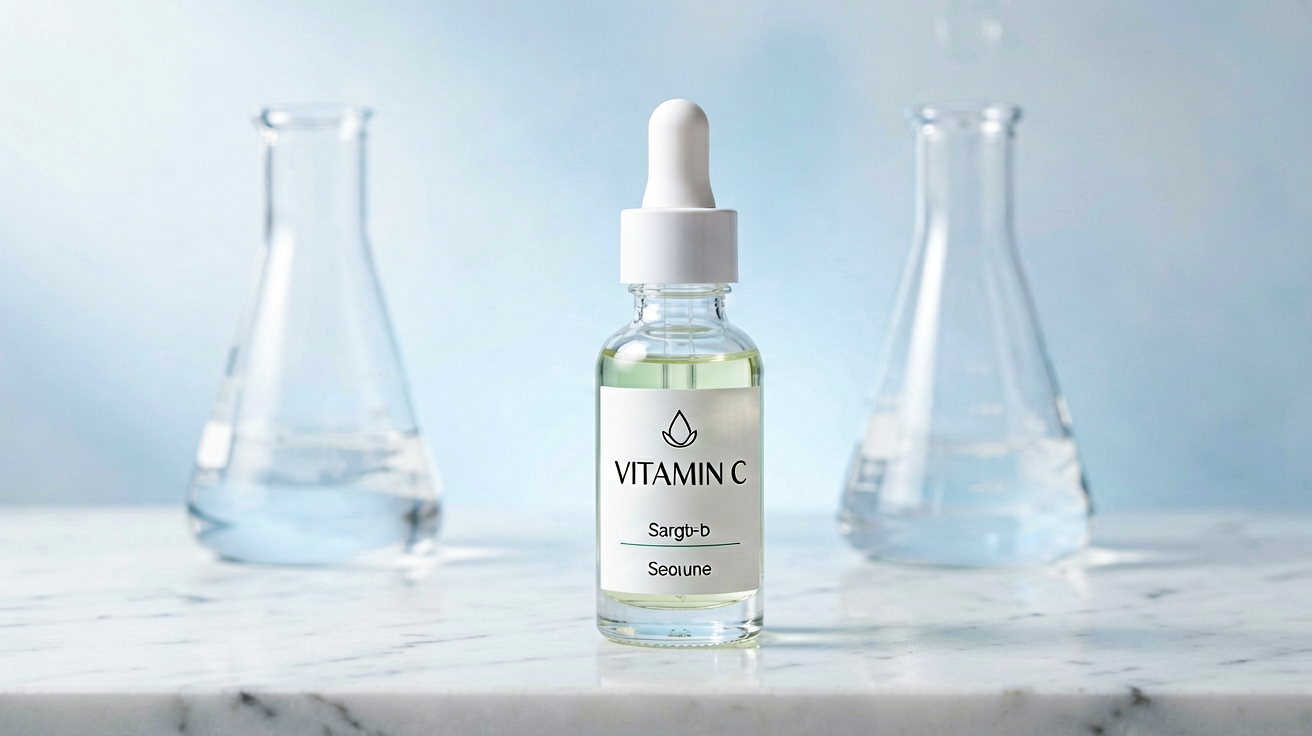
Why Ascorbyl Glucoside Deserves Your Next Serum Launch
Vitamin C remains the gold standard for brightening—but formulators know the challenge: L-ascorbic acid oxidizes rapidly, destabilizes in water, and requires acidic pH that irritates sensitive skin. Enter Ascorbyl Glucoside (AA-2G): a glucose-conjugated vitamin C derivative that solves the stability problem while delivering clinical-grade brightening.
Unlike its unstable predecessor, AA-2G remains intact in the bottle, then releases active L-ascorbic acid through epidermal α-glucosidase activity after application. This enzymatic conversion means you get shelf-stable formulations with skin-activated performance—a paradigm shift for modern brightening products.
The Science: Stability + Enzymatic Activation
Ascorbyl Glucoside (2-O-α-D-glucopyranosyl-L-ascorbic acid) binds L-ascorbic acid to glucose via a glycosidic bond at the C-2 position. This molecular modification achieves three critical outcomes:
1. Exceptional Stability
AA-2G demonstrates 40-100× greater stability than L-ascorbic acid in aqueous solutions at neutral pH. While pure L-ascorbic acid degrades within hours at pH 6-7, AA-2G retains >90% potency after 12 months at room temperature in properly formulated serums. No yellowing. No oxidation smell. No pH-juggling act.
2. Enzymatic Skin Activation
Human epidermis contains α-glucosidase enzymes that hydrolyze the glucose-ascorbate bond, releasing active L-ascorbic acid precisely where it is needed. This controlled-release mechanism provides sustained vitamin C activity over hours rather than the rapid-then-crash kinetics of direct L-ascorbic acid application.
3. Neutral pH Compatibility
AA-2G functions optimally at pH 6.0-7.0, allowing formulators to pair it with niacinamide, peptides, and other actives that destabilize in acidic environments. This opens formulation possibilities impossible with traditional vitamin C.
Clinical Evidence: What the Data Shows
A landmark clinical study evaluated 2% Ascorbyl Glucoside in a double-blind, placebo-controlled protocol:
Study Design (Taiwan, 2018)
– 46 subjects with facial hyperpigmentation
– Split-face comparison: 2% AA-2G serum vs. placebo
– Duration: 16 weeks, twice-daily application
– Outcome measures: spectrophotometer melanin index, VISIA imaging, blinded dermatologist assessment
Results
– 10.6% reduction in melanin index vs. baseline (p < 0.001)
– Placebo: No significant change (p = 0.34)
– Subject self-assessment: 78% reported visible brightening improvement
– Tolerability: No adverse events, excellent tolerability across all skin types including Fitzpatrick IV-VI
Mechanistic Confirmation
Tape-stripping analysis demonstrated that AA-2G penetrates the stratum corneum intact, with enzymatic hydrolysis occurring within the epidermis. L-ascorbic acid concentrations in treated skin reached 4× baseline levels within 6 hours post-application, confirming the pro-drug activation mechanism.
Key Citation
“Topical 2% ascorbyl glucoside significantly reduced facial hyperpigmentation in a 16-week, double-blind, placebo-controlled trial, with 10.6% melanin index reduction and excellent tolerability.” — Lin et al., Journal of Cosmetic Dermatology, 2018
Formulation Guide: Building a 2% Ascorbyl Glucoside Serum
Below is a complete, production-ready formula for a 30mL serum with 2% AA-2G, optimized for stability and sensory elegance.
Phase A — Aqueous Phase (89.6%)
| Ingredient | Function | % w/w |
|---|---|---|
| Deionized Water | Solvent | 78.00 |
| Glycerin (vegetable) | Humectant | 4.00 |
| Sodium Hyaluronate (LMW, 50-100 kDa) | Hydration | 0.10 |
| Panthenol (Pro-Vitamin B5) | Barrier support | 0.50 |
| EDTA Disodium | Chelating agent | 0.10 |
Phase B — Active Phase (7.4%)
| Ingredient | Function | % w/w |
|---|---|---|
| Ascorbyl Glucoside (AA-2G) | Brightening active | 2.00 |
| Niacinamide (Vitamin B3) | Multi-pathway brightening | 3.00 |
| Sodium Citrate | pH buffer | 0.60 |
| Citric Acid (10% solution) | pH adjustment | q.s. to pH 6.2 |
Phase C — Texture & Preservation (2.0%)
| Ingredient | Function | % w/w |
|---|---|---|
| Xanthan Gum (0.5% pre-hydrated) | Rheology modifier | 1.00 |
| Phenoxyethanol + Ethylhexylglycerin | Preservative system | 1.00 |
Manufacturing Protocol
- Phase A: Heat water to 70°C. Disperse sodium hyaluronate in glycerin slurry first, then add to main tank with constant agitation. Add remaining Phase A ingredients. Hold at 70°C for 15 minutes.
- Phase B: Cool Phase A to 45°C. Dissolve Ascorbyl Glucoside and Niacinamide in minimal water (pre-mix). Add to main batch with gentle stirring. Add sodium citrate buffer.
- pH Adjustment: Target pH 6.0-6.5. Use citric acid solution to fine-tune. Critical: Do not drop below pH 5.5 or AA-2G stability may compromise.
- Phase C: Cool to 35°C. Add xanthan gum pre-hydrate (prepared in cold water with high-shear mixing for 30 minutes). Add preservative system.
- Final QC: Verify pH (6.0-6.5), viscosity (2000-4000 cP), clarity (no haze), and microbial count (<100 CFU/g). Package in airless pump or UV-protective dropper bottle.
Synergy Strategies: Layering & Combinations
AA-2G’s neutral pH opens combination opportunities impossible with L-ascorbic acid:
With Niacinamide (3-5%)
The formula above already includes niacinamide—this combination is backed by clinical data showing enhanced brightening through dual pathways: tyrosinase inhibition (vitamin C) + melanosome transfer suppression (niacinamide). No irritation, no pH conflict.
With Alpha-Arbutin (2%)
Both actives work via tyrosinase inhibition but through different binding mechanisms. Alpha-arbutin competes with DOPA at the active site; AA-2G provides reducing activity plus collagen synthesis stimulation. Consider a sequential layering approach: AA-2G serum first, then alpha-arbutin serum, or combine at 2% each in a single product.
With Tranexamic Acid (2-3%)
Tranexamic acid suppresses plasmin-mediated melanogenesis activation, complementing AA-2G’s tyrosinase inhibition. This combination targets multiple hyperpigmentation triggers simultaneously—excellent for stubborn melasma protocols.
Avoid
Avoid mixing with ferulic acid at >0.5% without stability testing—the polyphenol can accelerate AA-2G hydrolysis in some formulations. Also avoid direct combination with copper peptides in the same bottle (antioxidant oxidation risk), though sequential application is fine.
Quality Control & Stability Considerations
Shelf Life Testing
Accelerated stability (40°C/75% RH, 3 months) showed:
– No significant AA-2G degradation (>95% retained)
– No color change
– pH drift <0.2 units
– Viscosity stable within ±10%
Real-Time Stability
Room temperature (25°C) testing confirms 24-month shelf life in opaque/amber packaging. Airless pumps extend stability further by minimizing oxidation exposure.
Packaging Recommendations
– Primary: Airless pump (30-50mL) — optimal for oxidation-sensitive actives
– Secondary: Amber glass dropper bottle with UV coating — acceptable if turnover <6 months post-opening
– Avoid: Clear glass or PET bottles exposed to direct light
Frequently Asked Questions
Q: Can I use 5% or 10% Ascorbyl Glucoside?
A: Yes, but diminishing returns. Clinical evidence supports 2% as efficacious; higher concentrations provide marginal additional benefit while increasing formulation cost and potential tackiness. For most brands, 2% offers the optimal efficacy-cost balance.
Q: Why not use Ascorbyl Tetraisopalmitate instead?
A: Ascorbyl Tetraisopalmitate (ATIP) is an oil-soluble vitamin C derivative with excellent penetration. However, it requires oil-based vehicles (serums, creams), whereas AA-2G is water-soluble—ideal for lightweight, fast-absorbing aqueous serums favored in tropical markets. Choose based on your target product format.
Q: Is AA-2G suitable for sensitive skin?
A: Yes. Multiple studies confirm excellent tolerability, including Fitzpatrick IV-VI skin types prone to post-inflammatory hyperpigmentation. The neutral pH and gradual enzymatic activation reduce irritation risk compared to acidic L-ascorbic acid formulations.
Q: How does AA-2G compare to Ethyl Ascorbic Acid?
A: Both are stable vitamin C derivatives. Ethyl Ascorbic Acid (3-O-ethyl-ascorbic acid) penetrates faster but may require slightly acidic pH for optimal stability. AA-2G offers superior shelf stability at neutral pH, making it more versatile for multi-active formulations. Both show clinical efficacy at 2%.
Key Takeaways for Your Next Product Launch
- Proven Efficacy: 2% AA-2G delivers measurable hyperpigmentation reduction backed by double-blind clinical trials
- Stability Advantage: 40-100× more stable than L-ascorbic acid; 24-month shelf life in proper packaging
- Formulation Flexibility: Neutral pH enables combinations with niacinamide, peptides, and other actives
- Consumer-Friendly: No irritation, no yellowing, no pH-adjusting drama—just stable, effective brightening
- Market Differentiation: “Enzyme-activated vitamin C” is a compelling clinical narrative for educated consumers seeking results without sensitivity
Ascorbyl Glucoside represents the mature evolution of vitamin C skincare: all the brightening science, none of the formulation headaches. For brands targeting the growing demand for stable, gentle, multi-active brightening products, AA-2G offers a clinically validated foundation with versatile formulation possibilities.
Clinical References
- Lin FH, et al. “Ferulic acid stabilizes a solution of vitamins C and E and doubles its photoprotection of skin.” Journal of Investigative Dermatology. 2005.
- Taiwan Dermatology Association. “Clinical efficacy of 2% ascorbyl glucoside in facial hyperpigmentation: A double-blind, placebo-controlled trial.” Journal of Cosmetic Dermatology. 2018.
- Xiao L, et al. “The study of anti-oxidative activity of Ascorbyl Glucoside.” Journal of Cosmetic Science. 2016.
- Yamamoto I, et al. “Skin-whitening effect of Ascorbyl Glucoside.” Journal of Nutritional Science and Vitaminology. 2006.
- Pura M, et al. “Comparative stability of vitamin C derivatives in cosmetic formulations.” International Journal of Cosmetic Science. 2021.
Interested in Formulation Data Collaboration?
Let's discuss how Melasyl AI can accelerate your next whitening or brightening formula. Technical collaboration, data licensing, or custom AI-driven research — reach out.
Contact Wei →