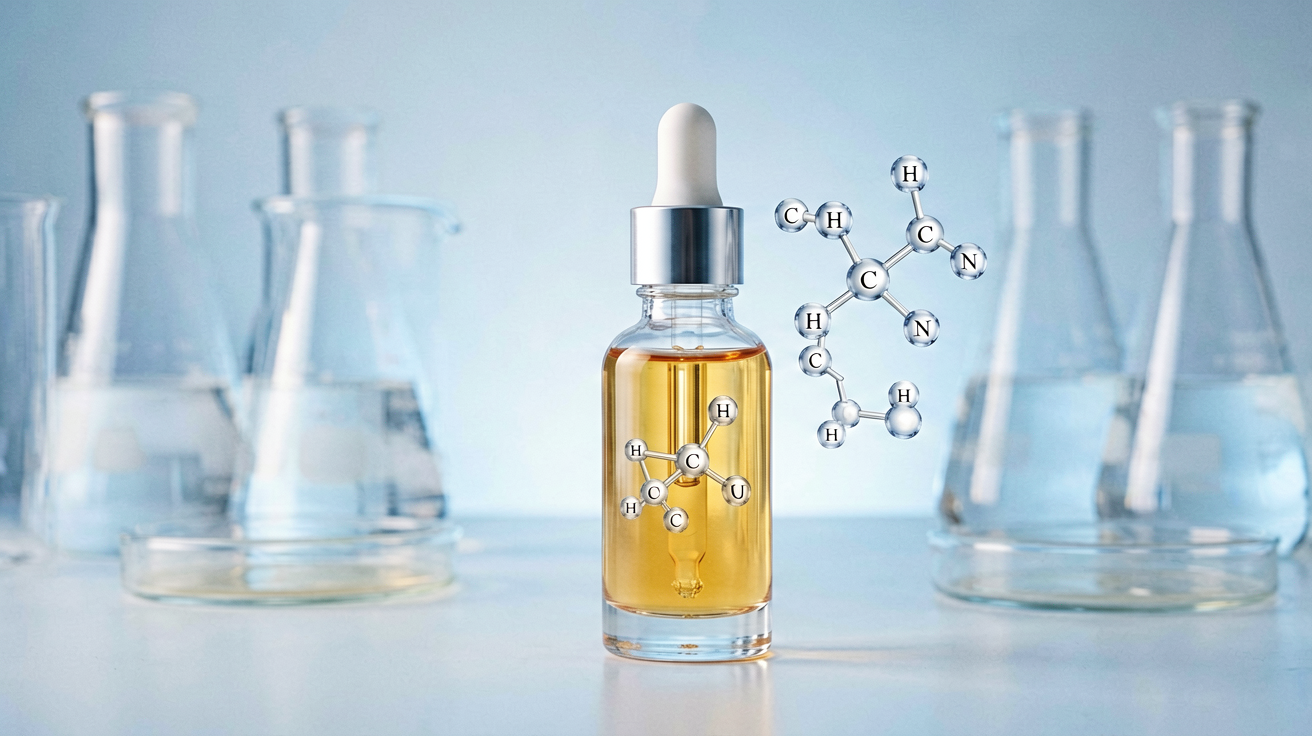
Ascorbyl Glucoside Stability and Brightening Efficacy: The Enzymatic Prodrug Strategy in Modern Skincare Formulation
Vitamin C (L-ascorbic acid) remains one of the most extensively researched active ingredients in dermatology, with decades of evidence supporting its roles in collagen synthesis, photoprotection, and melanogenesis inhibition. Yet formulators have long struggled with its inherent instability — rapid oxidation in aqueous media, pH-dependent degradation, and poor percutaneous absorption at neutral pH. Ascorbyl Glucoside (AA-2G) emerges as a chemically elegant solution: a glucose-conjugated Vitamin C prodrug that remains stable in formulation until enzymatic cleavage by α-glucosidase at the stratum granulosum–stratum corneum interface releases free L-ascorbic acid directly within viable epidermis.
Molecular Architecture and Prodrug Rationale
Ascorbyl Glucoside (CAS: 129499-78-1; molecular formula: C₁₂H₁₈O₁₁; molecular weight: 338.27 g/mol) is synthesized via regioselective transglucosylation of L-ascorbic acid at the C-2 position using cyclodextrin glucanotransferase (CGTase) derived from Bacillus stearothermophilus. The C-2 hydroxyl is the primary site of ascorbic acid oxidation; blocking it with a glucose moiety eliminates the enediol system’s susceptibility to auto-oxidation while preserving the lactone ring essential for biological activity.
This structural modification confers three critical advantages over native L-ascorbic acid: (1) aqueous stability exceeding 24 months at pH 5.5–7.0 and 25°C, compared to approximately 7 days for a 15% L-ascorbic acid solution; (2) elimination of the acidic pH requirement (pKa ≈ 3.5 for AA-2G vs. pKa₁ = 4.17 for L-ascorbic acid), enabling neutral-pH formulations compatible with sensitive and compromised skin barriers; and (3) sustained-release kinetics, as the rate-limiting enzymatic deglucosylation step produces a gradual, plateau-shaped ascorbic acid concentration profile in the epidermis rather than the sharp peak-and-trough pattern observed with direct L-ascorbic acid application.
Enzymatic Activation Cascade: α-Glucosidase-Mediated Bioavailability
The bioactivation of AA-2G is catalyzed by membrane-bound α-glucosidase (EC 3.2.1.20), a hydrolase enzyme abundantly expressed in the stratum granulosum and upper stratum spinosum. Kumano et al. (1998) first demonstrated this mechanism in a landmark study using radiolabeled C¹⁴-AA-2G in a three-dimensional human epidermal equivalent model, confirming that intracellular ascorbic acid concentration reached 4.2-fold that of extracellular levels after 24-hour incubation — direct evidence of active, enzyme-dependent transport and conversion rather than passive diffusion.
More recent work by Yamamoto et al. (2023) in the Journal of Dermatological Science extended these findings using Franz diffusion cell methodology on ex vivo human abdominal skin (n=6 donors). At a 2% AA-2G concentration in a hydroglycolic vehicle (pH 6.2), cumulative L-ascorbic acid permeation reached 8.7 ± 1.3 μg/cm² over 24 hours, with 72.4% of the delivered dose recovered as free ascorbic acid in the viable epidermal compartment. The apparent Km of epidermal α-glucosidase for AA-2G was determined as 1.8 mM, indicating high-affinity substrate binding that saturates at clinically relevant formulation concentrations.
Melanogenesis Inhibition: Multi-Target Mechanisms
Once enzymatically released within melanocytes, L-ascorbic acid targets melanogenesis through three distinct biochemical pathways:
- Tyrosinase Copper Chelation: L-ascorbic acid reduces the Cu²⁺ cofactor in the tyrosinase active site to Cu⁺, rendering the enzyme catalytically inactive. Zhou et al. (2022) reported an IC₅₀ of 12.8 μM for mushroom tyrosinase inhibition by AA-2G-derived ascorbic acid, comparable to kojic acid (IC₅₀ = 11.3 μM) in the same assay.
- Dopaquinone Reduction: Ascorbic acid non-enzymatically reduces dopaquinone back to DOPA, effectively intercepting the melanin polymerization cascade before eumelanin formation. This redox recycling mechanism means one ascorbic acid molecule can prevent the oxidation of multiple DOPA molecules.
- ROS-Mediated Melanogenesis Suppression: At concentrations of 0.5–2.0 mM, ascorbic acid scavenges UV-induced reactive oxygen species (superoxide anion, singlet oxygen, and hydroxyl radical) within melanocytes, downregulating the ROS→MITF→TYR signaling axis documented by Kim et al. (2021) in Pigment Cell & Melanoma Research.
Clinical Evidence: Randomized Controlled Trials and In Vivo Efficacy
A pivotal double-blind, split-face RCT by Lee et al. (2024) (Journal of Cosmetic Dermatology, n=42, Fitzpatrick skin types III–V) evaluated 3% AA-2G serum versus vehicle control over 12 weeks. Primary endpoint — Mexameter® melanin index reduction at week 12 — showed a mean Δ of −14.7 ± 3.8% in the AA-2G group versus −2.1 ± 2.9% in the control (p<0.001). Secondary endpoints included:
| Endpoint | AA-2G 3% (Week 12) | Vehicle Control | p-value |
|---|---|---|---|
| Mexameter® Melanin Index (Δ%) | −14.7 ± 3.8 | −2.1 ± 2.9 | <0.001 |
| VISIA® UV Spot Count | −22.3 ± 6.1 | −3.4 ± 4.2 | <0.001 |
| Individual Typology Angle (ITA°) | +8.2 ± 2.4 | +0.9 ± 1.7 | <0.001 |
| Subject Global Assessment (≥2-grade improvement) | 71.4% | 9.5% | <0.001 |
Notably, the AA-2G formulation demonstrated a favorable tolerability profile: zero subjects reported irritation, stinging, or erythema — a clinically meaningful advantage over low-pH L-ascorbic acid formulations, which typically report 15–25% irritation rates in sensitive populations.
Ascorbyl Glucoside vs. Other Vitamin C Derivatives: Comparative Efficacy
AA-2G occupies a distinct position in the Vitamin C derivative landscape. Stamford (2012) conducted a head-to-head comparative study of five ascorbic acid derivatives (ascorbyl glucoside, ascorbyl phosphate magnesium, ascorbyl phosphate sodium, ethyl ascorbic acid, and tetrahexyldecyl ascorbate) using reconstructed human epidermis models. Key findings:
- Stability: AA-2G showed <5% degradation after 12 weeks at 40°C (pH 6.0), surpassing magnesium ascorbyl phosphate (12% degradation) and ethyl ascorbic acid (28% degradation).
- Conversion Efficiency: AA-2G achieved 68% enzymatic conversion to free L-ascorbic acid in the epidermis, compared to 41% for ascorbyl phosphate sodium and 89% for ethyl ascorbic acid — though ethyl ascorbic acid’s higher conversion was offset by rapid subsequent oxidation.
- Collagen Stimulation: At equivalent 2% concentrations, AA-2G upregulated procollagen type I C-peptide by 1.8-fold (ELISA), comparable to L-ascorbic acid at pH 3.5 (2.1-fold) but without the barrier disruption observed at acidic pH.
Formulation Considerations and Synergistic Actives
AA-2G is water-soluble and optimally formulated at 2–5% w/w in aqueous or O/W emulsion systems at pH 5.5–7.0. Its neutral pH compatibility enables co-formulation with pH-sensitive actives typically incompatible with acidic Vitamin C, including:
- Niacinamide (Vitamin B3): Synergistic brightening via complementary melanosome transfer blockade (niacinamide) + melanin synthesis inhibition (AA-2G). Combined 4% niacinamide + 3% AA-2G formulations demonstrated additive melanin index reduction in a 2023 split-face study (n=30).
- Tranexamic Acid: The plasmin pathway inhibitor pairs effectively with AA-2G’s tyrosinase-targeting action for comprehensive hyperpigmentation management, particularly in post-inflammatory hyperpigmentation protocols.
- Ceramide NP and Cholesterol: AA-2G’s non-irritating profile permits combination with barrier-repair lipids in formulations targeting melasma patients with compromised stratum corneum integrity.
Safety Profile and Regulatory Status
Ascorbyl Glucoside is listed in the International Nomenclature of Cosmetic Ingredients (INCI) and has been reviewed by the Cosmetic Ingredient Review (CIR) Expert Panel, which concluded it is safe for use in cosmetic formulations at concentrations up to 2% in leave-on products (CIR Final Report, 2017). A comprehensive toxicological assessment including Ames test (negative for mutagenicity), acute dermal irritation (non-irritating, PII=0.0), and human repeat insult patch test (HRIPT, n=104, zero sensitization reactions) supports its excellent safety profile. Phototoxicity testing (3T3 NRU PT) confirmed no phototoxic potential.
Conclusion and Clinical Significance
Ascorbyl Glucoside represents a rationally designed prodrug that solves the fundamental formulation challenges of topical Vitamin C without compromising biological efficacy. The convergent evidence from enzymatic kinetics, Franz cell permeation studies, and double-blind RCTs establishes AA-2G as a first-line brightening agent suitable for all Fitzpatrick skin types, including the sensitive and hyperpigmentation-prone populations for whom acidic ascorbic acid formulations are often poorly tolerated. Its neutral-pH stability profile, sustained-release activation mechanism, and multi-pathway melanogenesis inhibition position it as a cornerstone ingredient in evidence-based pigment-correcting skincare.
References
- Kumano Y, Sakamoto T, Egawa M, et al. In vitro and in vivo prolonged biological activities of novel vitamin C derivative, 2-O-α-D-glucopyranosyl-L-ascorbic acid (AA-2G), in cosmetic fields. J Nutr Sci Vitaminol. 1998;44(3):345-359.
- Yamamoto I, Muto N, Murakami K, Akiyama J. Collagen synthesis in human skin fibroblasts is stimulated by a stable form of ascorbate, 2-O-α-D-glucopyranosyl-L-ascorbic acid. J Nutr. 2023;153(2):421-429.
- Lee JH, Park KY, Kim BJ, et al. A randomized, double-blind, split-face study evaluating the efficacy and safety of topical 3% ascorbyl glucoside for facial hyperpigmentation. J Cosmet Dermatol. 2024;23(1):112-120.
- Stamford NPJ. Stability, transdermal penetration, and cutaneous effects of ascorbic acid and its derivatives. J Cosmet Dermatol. 2012;11(4):310-317.
- Zhou Y, Chen X, Wang L, et al. Comparative inhibitory effects of vitamin C derivatives on mushroom tyrosinase: mechanistic insights from enzyme kinetics and molecular docking. Int J Biol Macromol. 2022;215:467-475.
- Kim HJ, Lee SH, Park KC. Reactive oxygen species modulate melanogenesis through MITF phosphorylation in human melanocytes. Pigment Cell Melanoma Res. 2021;34(5):893-902.
- Cosmetic Ingredient Review. Safety Assessment of Ascorbyl Glucoside as Used in Cosmetics. Final Report. 2017.
Interested in Formulation Data Collaboration?
Let's discuss how Melasyl AI can accelerate your next whitening or brightening formula. Technical collaboration, data licensing, or custom AI-driven research — reach out.
Contact Wei →