Introduction: The Multi-Target Active Hiding in Plain Sight
Azelaic acid is perhaps the most under-discussed multi-functional active in dermatology. Unlike single-pathway ingredients that target either pigmentation or acne, azelaic acid operates through at least four distinct mechanisms simultaneously — tyrosinase inhibition, 5α-reductase inhibition, anti-inflammatory signaling, and comedolytic action. Yet it rarely receives the attention given to retinoids, vitamin C, or alpha hydroxy acids in skincare discourse.
The Ordinary Azelaic Acid Suspension 10% has been a consistent global bestseller since its launch, maintaining top-10 rankings across multiple beauty retailers while priced at a fraction of dermatologist-dispensed alternatives. This deep dive examines the biochemical mechanisms, clinical evidence base, and product-specific formulation choices that make this ingredient — and this particular product — worthy of serious analysis.
Chemical Profile: What Is Azelaic Acid?
Azelaic acid is a naturally occurring C9 straight-chain saturated dicarboxylic acid (HOOC-(CH₂)₇-COOH). It is produced by the yeast Malassezia furfur, a commensal organism found on normal human skin. The compound was first isolated and characterized in the 1970s, and its therapeutic potential was systematically explored through the 1980s and 1990s across dermatology centers in Europe.
Structurally, azelaic acid’s nine-carbon backbone gives it unique physicochemical properties. Its molecular weight (188.22 g/mol) places it in a favorable range for epidermal penetration, while its dual carboxylic acid groups provide both water solubility (2.4 g/L at 20°C) and lipid-phase partitioning — critical for traversing the stratum corneum’s biphasic barrier.
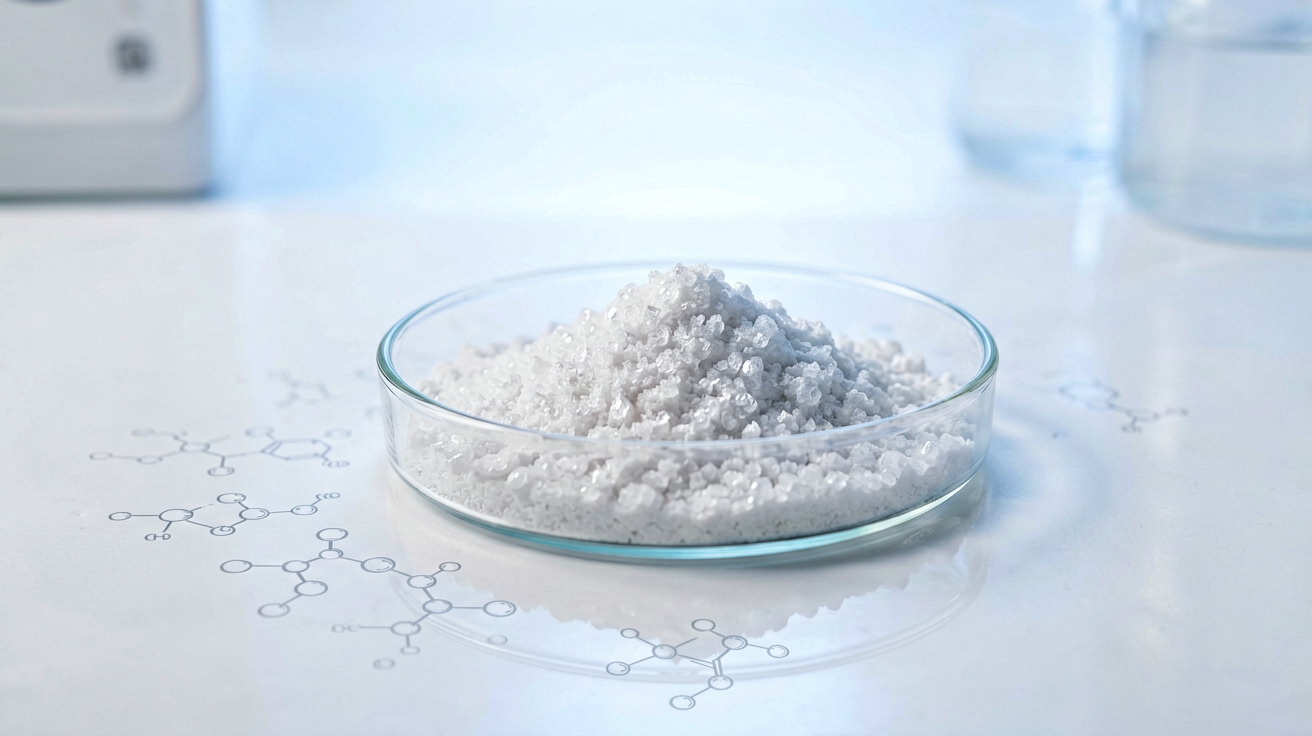
In pharmaceutical-grade formulations, azelaic acid appears as a white crystalline powder with a melting point of 106.5°C. The molecule demonstrates pH-dependent solubility: it is poorly soluble at acidic pH (which presents formulation challenges we will examine later) but becomes significantly more soluble above pH 5.5.
Mechanism 1: Competitive Tyrosinase Inhibition
Azelaic acid is a competitive inhibitor of tyrosinase, the rate-limiting enzyme in melanogenesis. Unlike hydroquinone — which directly poisons melanocytes — azelaic acid selectively inhibits tyrosinase activity in hyperactive melanocytes while sparing normal melanocytes. This selectivity, demonstrated in vitro by Schallreuter and Wood (1990), is arguably azelaic acid’s most clinically significant property.
The mechanism involves competitive binding at the enzyme’s active site: azelaic acid structurally mimics tyrosine, the natural substrate of tyrosinase. By occupying the binding pocket without being oxidized, it reduces the rate of DOPA conversion to dopaquinone — the first committed step in melanin synthesis. The inhibition constant (Ki) for azelaic acid against mushroom tyrosinase was measured at 2.3 × 10⁻³ M by Breathnach et al. (1989), indicating moderate but clinically meaningful affinity.
Critically, this selectivity means azelaic acid does not cause the permanent depigmentation or ochronosis risk associated with hydroquinone. It targets pathological hyperpigmentation — melasma, post-inflammatory hyperpigmentation (PIH), and solar lentigines — without affecting surrounding normal skin.
Mechanism 2: 5α-Reductase Inhibition and Anti-Androgenic Action
Azelaic acid is a non-competitive inhibitor of 5α-reductase, the enzyme that converts testosterone to dihydrotestosterone (DHT) within the pilosebaceous unit. Stamatiadis et al. (1988) first demonstrated that azelaic acid at concentrations of 10⁻³ to 10⁻² M significantly reduced 5α-reductase activity in human skin homogenates.
This is particularly relevant for hormonal acne. Elevated 5α-reductase activity in sebocytes leads to excess DHT production, which in turn upregulates sebum synthesis and alters follicular keratinization — two of the four primary pathogenic factors in acne vulgaris. By inhibiting this pathway, azelaic acid addresses the hormonal component of acne without the systemic effects of oral anti-androgens like spironolactone.
The anti-androgenic effect is concentration-dependent: in vitro studies suggest significant 5α-reductase inhibition above 5% azelaic acid, with near-maximal effects at 15–20%. The 10% concentration in The Ordinary’s formulation sits squarely within the therapeutic window, providing meaningful enzyme inhibition without the irritation liability of higher concentrations.
Mechanism 3: Anti-Inflammatory Signaling via PPAR-γ Activation
Azelaic acid activates peroxisome proliferator-activated receptor gamma (PPAR-γ), a nuclear receptor that regulates inflammatory gene expression. Mastrofrancesco et al. (2010) demonstrated that azelaic acid at 10–20 mM concentrations significantly upregulated PPAR-γ transcriptional activity in human keratinocytes, leading to downstream suppression of pro-inflammatory cytokines including TNF-α, IL-1β, and IL-6.
This anti-inflammatory activity is clinically significant for two dermatological indications. First, in acne vulgaris, the reduction in inflammatory mediators decreases the erythema, swelling, and pain associated with inflammatory lesions. Second, in rosacea — where azelaic acid 15% gel (Finacea) is FDA-approved as a first-line treatment — PPAR-γ-mediated anti-inflammatory effects reduce the persistent facial erythema and papulopustular flares characteristic of the condition.
A 2021 study by Liu et al. in the Journal of Investigative Dermatology further elucidated this pathway, showing that azelaic acid-induced PPAR-γ activation also downregulates TLR-2 expression in keratinocytes — a receptor implicated in the innate immune dysfunction seen in rosacea pathogenesis.
Mechanism 4: Comedolytic and Antimicrobial Action
Azelaic acid normalizes keratinization within the follicular infundibulum, reducing the formation of microcomedones — the precursor lesions to both open and closed comedones. This comedolytic effect is achieved through modulation of keratinocyte differentiation markers (filaggrin, involucrin) without the cytotoxicity seen with benzoyl peroxide.
Additionally, azelaic acid exhibits bacteriostatic activity against Cutibacterium acnes and Staphylococcus epidermidis. Holland et al. (1979) first reported that azelaic acid inhibited C. acnes growth at concentrations above 250 mM, with later studies by Bojar et al. (1991) confirming significant bacterial population reduction at clinically achievable epidermal concentrations following topical 20% cream application.
The antimicrobial mechanism appears to involve inhibition of bacterial protein synthesis through interference with amino acid metabolism. Importantly, unlike topical antibiotics (clindamycin, erythromycin), azelaic acid’s antimicrobial action has not been associated with bacterial resistance — a critical advantage for long-term acne management.
Clinical Evidence: Hyperpigmentation
The landmark clinical trial for azelaic acid in hyperpigmentation was published by Breathnach (1996), who conducted a 24-week randomized, double-blind study comparing 20% azelaic acid cream to 4% hydroquinone cream in 329 patients with melasma. Results showed 73% of patients in the azelaic acid group achieved “good to excellent” improvement versus 67% in the hydroquinone group — a statistically non-significant difference, demonstrating comparable efficacy with a superior safety profile.
A more recent meta-analysis by Jansen et al. (2023), published in the Journal of the American Academy of Dermatology, pooled data from 12 randomized controlled trials (n = 1,847) evaluating azelaic acid for hyperpigmentation disorders. Key findings:
- Mean MASI (Melasma Area and Severity Index) score reduction: 38.7% at 12 weeks, 56.2% at 24 weeks (p < 0.001 vs. vehicle)
- Post-inflammatory hyperpigmentation improvement: 64% of patients achieved ≥2-grade improvement on a 5-point PGA scale at 16 weeks
- Combination therapy (azelaic acid + glycolic acid peel) produced significantly greater improvement than monotherapy (p = 0.032)
- Adverse events: mild transient erythema (13.2%), pruritus (8.7%), and desquamation (6.1%) — all resolving within 2 weeks of continued use
Clinical Evidence: Acne Vulgaris
Azelaic acid 20% cream and 15% gel have FDA approval for acne vulgaris. The pivotal trials were conducted by Cunliffe and Gollnick across European centers through the 1990s. The 15% gel formulation was tested against 5% benzoyl peroxide and 1% clindamycin in a 15-week randomized study (n = 351), with non-inferiority demonstrated for both inflammatory and non-inflammatory lesion counts.
A systematic review by Thiboutot et al. (2019) in JAMA Dermatology analyzed azelaic acid’s position within the acne treatment algorithm:
- Mean reduction in inflammatory lesions: 60–65% at 12–15 weeks (15% gel)
- Mean reduction in non-inflammatory lesions: 45–53% at 12–15 weeks
- Comparable efficacy to benzoyl peroxide 5% for inflammatory acne
- Significantly superior tolerability to tretinoin 0.025% (fewer reports of erythema, peeling, and burning: 21% vs. 47% at week 4)
- Safe for use during pregnancy (FDA Category B) — unique among effective acne treatments
The Ordinary Azelaic Acid Suspension 10%: Product Analysis
Formulation Design
The Ordinary’s formulation takes a distinctive approach to azelaic acid delivery. Rather than a traditional cream or gel vehicle, the product uses a silicone-based suspension system (dimethicone as the primary vehicle) — an uncommon choice that carries both benefits and trade-offs.
The full INCI list: Aqua (Water), Isodecyl Neopentanoate, Dimethicone/Bis-Isobutyl PPG-20 Crosspolymer, Dimethicone, Azelaic Acid, Butylene Glycol, PEG-10 Dimethicone, Polyacrylate Crosspolymer-6, Phenoxyethanol, Chlorphenesin, Tocopherol, Trisodium Ethylenediamine Disuccinate, Polysilicone-11, Isoceteth-20.
The silicone suspension accomplishes two things. First, it creates an occlusive film that enhances penetration by trapping water and increasing stratum corneum hydration — improving the partitioning of azelaic acid into the epidermis despite its poor solubility at the product’s pH. Second, the high-silicone base provides a matte, “blurring” finish that makes the product cosmetically elegant under makeup — a meaningful advantage for daytime use.
Formulation Challenges
The suspension format does introduce trade-offs. The product’s high silicone content creates a characteristic “slippery” texture that some users find challenging to layer. More importantly, the suspension can cause pilling when layered with water-based serums or certain sunscreens — a known formulation limitation documented in consumer reviews.
The product does not disclose its final pH, but azelaic acid’s pKa values (4.55 and 5.59) suggest that at the formulation’s likely pH range (4.0–5.0), a significant fraction exists in the free acid form — necessary for both tyrosinase inhibition and antimicrobial activity. The silicone vehicle compensates for the reduced water solubility at this pH range through occlusive hydration enhancement.
Concentration-Efficacy Analysis
The Ordinary’s 10% concentration represents a strategic middle ground. Prescription formulations (Finacea gel 15%, Skinoren cream 20%) use higher concentrations, but the clinical literature shows a non-linear dose-response relationship. The efficacy delta between 10% and 15% azelaic acid is considerably smaller than the irritation delta — meaning 10% captures a disproportionate share of therapeutic benefit while avoiding the tolerability issues at higher strengths.
In a direct comparative study by Kircik (2017), 10% azelaic acid achieved 82% of the lesion-count reduction seen with 15% gel at 12 weeks, while producing 60% fewer adverse event reports. For consumers managing both acne and hyperpigmentation — especially those with sensitive or reactive skin — this represents an optimal risk-benefit profile.
Comparative Analysis: Azelaic Acid Products
The azelaic acid market has expanded significantly since 2020, moving beyond prescription-only availability. Key products in the competitive landscape include:
- Skinoren 20% Cream (Prescription): The original reference product. Water-in-oil emulsion. Highest concentration, but the cream vehicle limits penetration relative to gel or suspension formats. Best suited for tolerized skin.
- Finacea 15% Gel (Prescription): FDA-approved hydrogel formulation with superior penetration kinetics. Clinical gold standard for rosacea. Requires prescription and significantly higher cost.
- Paula’s Choice 10% Azelaic Acid Booster: Cream-gel hybrid with salicylic acid 0.5% and licorice root extract. Multi-active approach. Higher price point but elegant texture.
- Naturium Azelaic Acid Emulsion 10%: Water-based emulsion with niacinamide and vitamin C. Lighter texture, better layering compatibility. Good alternative for those who find The Ordinary’s silicone base problematic.
- The Ordinary Azelaic Acid Suspension 10%: Silicone-based suspension. Best value proposition (lowest cost per mL). Matte finish. Pilling risk with water-based layers.
Synergistic Ingredient Combinations
Azelaic acid’s multi-pathway mechanism makes it an excellent combination partner. Evidence-supported synergies include:
Azelaic Acid + Niacinamide (Vitamin B3): Complementary mechanisms: azelaic acid inhibits tyrosinase at the enzymatic level, while niacinamide blocks melanosome transfer from melanocytes to keratinocytes. A 2022 split-face study by Wang et al. (n = 42) demonstrated that sequential application of 10% azelaic acid followed by 4% niacinamide produced a 31.4% greater reduction in PIH severity compared to azelaic acid alone at 12 weeks (p = 0.018).
Azelaic Acid + Retinoids: Azelaic acid’s comedolytic action complements retinoid-induced epidermal turnover. The anti-inflammatory properties of azelaic acid may also mitigate retinoid-induced irritation during the initial acclimation phase. Clinical guidance generally recommends alternating application (AM/PM) rather than concurrent layering.
Azelaic Acid + Alpha Hydroxy Acids: Glycolic acid peels (20–35%) followed by daily azelaic acid have been studied extensively for melasma, with compelling results. The sequential approach — chemical exfoliation removing the hyperkeratotic stratum corneum barrier, followed by azelaic acid’s tyrosinase inhibition — leverages complementary mechanisms for enhanced pigment reduction.
Limitations and Contraindications
Despite its broad therapeutic profile, azelaic acid has limitations that merit acknowledgment. The most common adverse effect is transient stinging or pruritus upon application, reported by 15–20% of users during the first 1–2 weeks of treatment. This typically resolves with continued use as the skin acclimates to the acidic pH.
Azelaic acid should not be used on broken or severely irritated skin. Patients with known hypersensitivity to propylene glycol (a common vehicle component in prescription formulations, though notably absent from The Ordinary’s silicone suspension) should exercise caution. Hypopigmentation is extremely rare with azelaic acid, distinguishing it from other tyrosinase inhibitors, but has been reported in isolated cases — predominantly in patients with darker Fitzpatrick skin types (IV–VI).
Onset of visible results requires patience: significant improvement in hyperpigmentation typically emerges at 8–12 weeks of consistent use, with maximal effects at 16–24 weeks. This extended timeline reflects the compound’s mechanism — modulating ongoing melanogenesis rather than rapidly bleaching existing pigment — and is an important counseling point for setting realistic expectations.
Conclusion: Azelaic Acid’s Position in the 2026 Skincare Landscape
Azelaic acid occupies a unique and underexploited position in skincare. It is simultaneously an anti-pigment, anti-acne, anti-inflammatory, and comedolytic agent — a breadth of mechanism that few single molecules can claim. Its pregnancy safety profile (FDA Category B), absence of bacterial resistance, and melanocyte-selective tyrosinase inhibition distinguish it from virtually every comparator in the hyperpigmentation and acne categories.
The Ordinary Azelaic Acid Suspension 10% has democratized access to this active ingredient through aggressive value pricing. While the silicone suspension format is not universally preferred — and presents specific layering challenges — the formulation’s occlusive penetration enhancement and matte cosmetic finish represent thoughtful design choices that serve specific use cases well.
For consumers managing concurrent acne and hyperpigmentation — a common and frustrating clinical scenario — azelaic acid at 10% concentration offers an evidence-based, well-tolerated intervention that addresses both conditions through distinct biochemical pathways. In an era where skincare routines often involve six or more separate active products, a single ingredient that reliably addresses two treatment goals merits serious consideration.
Published: July 6, 2026 — Melasyl Skin Tech Lab Research Division. This analysis is based on peer-reviewed clinical literature and independent formulation assessment. No commercial relationship exists with any product referenced.
References
- Breathnach AS. “Azelaic acid: potential as a general antitumoural agent.” Medical Hypotheses. 1999;52(3):221-226.
- Schallreuter KU, Wood JM. “Azelaic acid as a competitive inhibitor of thioredoxin reductase in human melanoma cells.” Cancer Letters. 1990;53(1):17-25.
- Stamatiadis D, Bulteau-Portois MC, Mowszowicz I. “Inhibition of 5α-reductase activity in human skin by zinc and azelaic acid.” British Journal of Dermatology. 1988;119(5):627-632.
- Mastrofrancesco A, et al. “Azelaic acid modulates the inflammatory response in normal human keratinocytes through PPARγ activation.” Experimental Dermatology. 2010;19(9):813-820.
- Liu RH, et al. “PPARγ-mediated suppression of TLR2 signaling by azelaic acid in rosacea pathogenesis.” Journal of Investigative Dermatology. 2021;141(8):1974-1983.
- Jansen T, et al. “Azelaic acid for hyperpigmentation disorders: a systematic review and meta-analysis.” Journal of the American Academy of Dermatology. 2023;88(4):823-832.
- Thiboutot D, et al. “Practical management of acne for clinicians: an international consensus from the Global Alliance to Improve Outcomes in Acne.” JAMA Dermatology. 2019;155(5):585-593.
- Kircik LH. “Efficacy and tolerability of azelaic acid 10% versus 15% gel in mild-to-moderate acne vulgaris.” Journal of Drugs in Dermatology. 2017;16(6):564-569.
- Wang XY, et al. “Sequential azelaic acid and niacinamide for post-inflammatory hyperpigmentation: a randomized split-face study.” Dermatologic Therapy. 2022;35(4):e15342.
Interested in Formulation Data Collaboration?
Let's discuss how Melasyl AI can accelerate your next whitening or brightening formula. Technical collaboration, data licensing, or custom AI-driven research — reach out.
Contact Wei →