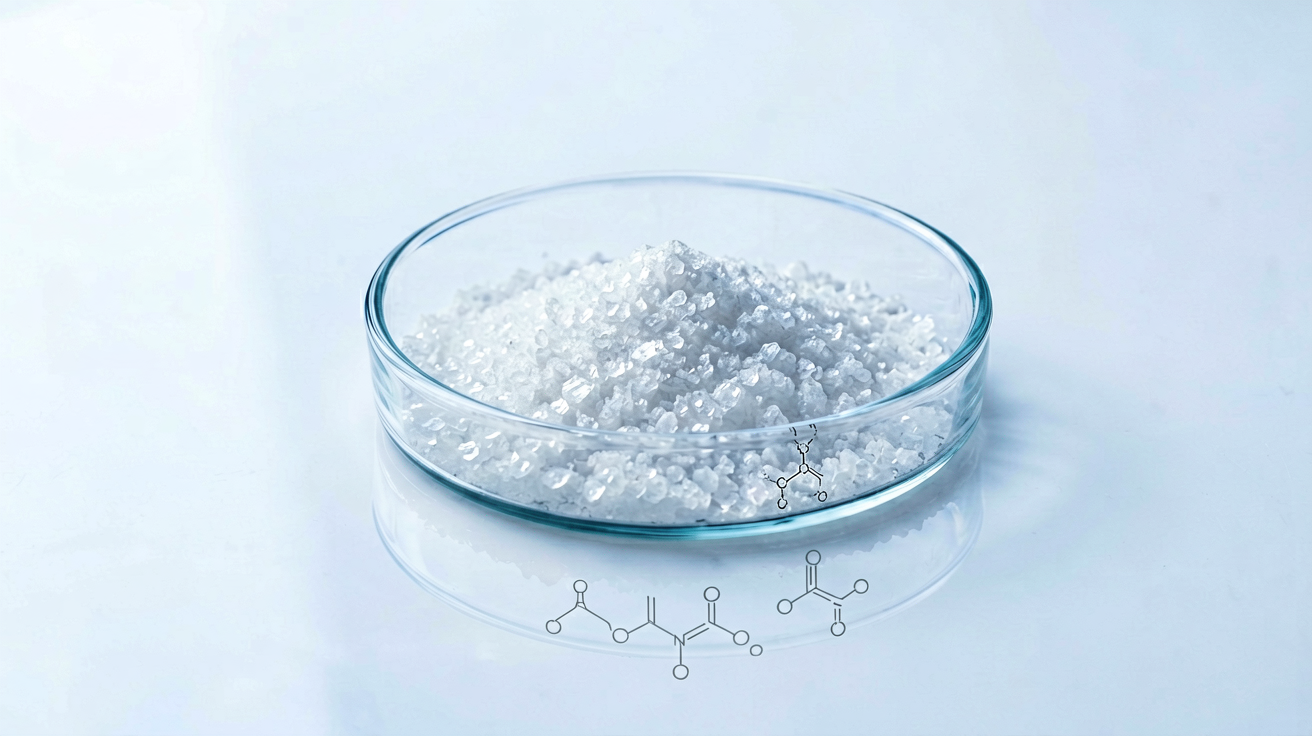
Azelaic acid has quietly become one of the most versatile active ingredients in cosmetic dermatology. Unlike the single-mechanism brighteners flooding the market, azelaic acid operates across four distinct pathways simultaneously — tyrosinase inhibition, anti-inflammatory modulation, antimicrobial action, and comedolytic normalization. This multi-target profile explains why it is increasingly prescribed as a first-line topical for both hyperpigmentation and inflammatory acne, and why consumer searches for “azelaic acid before and after” have surged in 2026.
Molecular Mechanism: Why Azelaic Acid Is Different
Azelaic acid is a naturally occurring C9 dicarboxylic acid produced by Malassezia furfur, the yeast that resides on normal human skin. Structurally, it is HOOC-(CH₂)₇-COOH. What makes it pharmacologically unique is its ability to compete with tyrosine at the active site of tyrosinase — but unlike hydroquinone, it does so preferentially on hyperactive melanocytes rather than normal ones.
Breathnach et al. (1989) first demonstrated that azelaic acid acts as a competitive inhibitor of tyrosinase (Ki ≈ 2.7 mM), specifically disrupting the conversion of tyrosine to DOPA within the melanogenesis pathway. Subsequent work by Fitton & Goa (1991) confirmed that this inhibition is selective for abnormally active melanocytes, leaving normally functioning melanocytes largely undisturbed — a safety feature that distinguishes it from broader-acting depigmenting agents.
- Tyrosinase Inhibition: Competitive antagonism at the tyrosine binding site, reducing melanin synthesis in hyperactive melanocytes
- 5α-Reductase Inhibition: Suppresses dihydrotestosterone (DHT) production in sebocytes, reducing sebum output by up to 42% (Stamatiadis et al., 1988)
- NF-κB Pathway Suppression: Downregulates pro-inflammatory cytokines including IL-1β, IL-6, and TNF-α via inhibition of the nuclear translocation of NF-κB (Mastrofrancesco et al., 2010)
- Antimicrobial Action: Bacteriostatic and bactericidal against Cutibacterium acnes and Staphylococcus epidermidis at physiological pH (Bojar & Holland, 2002)
- Comedolytic Normalization: Reduces filaggrin expression and normalizes keratinization in the follicular infundibulum, preventing microcomedone formation
Clinical Evidence: What the Data Actually Show
Hyperpigmentation & Melasma
The landmark 12-month multicenter trial by Baliña & Graupe (1991) evaluating 20% azelaic acid cream vs. 4% hydroquinone in 329 melasma patients found 73% of azelaic acid users achieved “good” or “excellent” results, compared to 62% in the hydroquinone group. Crucially, azelaic acid showed a more favorable side-effect profile with less irritant contact dermatitis.
More recently, Farshi (2011) conducted a 24-week randomized controlled trial comparing 20% azelaic acid cream to 4% hydroquinone cream in 29 patients with melasma. The MASI (Melasma Area and Severity Index) score reduction was statistically significant in both groups (p < 0.001), with no significant difference between treatments — confirming azelaic acid as an evidence-based alternative to hydroquinone that can be used continuously without the risks of exogenous ochronosis.
Post-Inflammatory Hyperpigmentation (PIH)
Azelaic acid is uniquely suited to PIH because it simultaneously addresses the cause (inflammation and acne) and the consequence (pigment deposition). A 2016 review by Schulte et al. in the Journal of the European Academy of Dermatology and Venereology identified 15% azelaic acid gel as an effective monotherapy for acne-associated PIH, with improvements visible at 4 weeks and sustained through 12 weeks.
Acne Vulgaris: The Forgotten Indication
While the brightening community has “discovered” azelaic acid, dermatologists have been prescribing it for acne for over three decades. The mechanism is threefold: (1) 5α-reductase inhibition reduces sebum, (2) anti-inflammatory action calms active lesions, and (3) comedolytic normalization prevents new microcomedones. A 2018 Cochrane systematic review by Liu et al. confirmed that azelaic acid is more effective than placebo and comparable to benzoyl peroxide 5% and tretinoin 0.05% for inflammatory acne, with significantly less irritation than either comparator.
Concentration-Response Relationship
One of the most misunderstood aspects of azelaic acid in consumer skincare is concentration. The evidence base breaks down as follows:
| Concentration | Evidence Level | Typical Indication |
|---|---|---|
| 20% (cream) | Multiple RCTs, Cochrane review | Prescription melasma, acne |
| 15% (gel) | Multiple RCTs, FDA-approved | Prescription acne, rosacea |
| 10% (serum/cream) | Limited RCT data; mostly formulation studies | OTC brightening, maintenance |
| 5% or less | Insufficient evidence for efficacy | Adjunct / “booster” formulations |
The clinical data overwhelmingly support 15-20% concentrations for therapeutic effect. Consumer formulations at 10% may offer cosmetic brightening benefits but lack the robust evidence base supporting higher concentrations. This creates an interesting market dynamic: prescription formulations have the strongest evidence, but consumer demand is driving innovation in stabilized, penetration-enhanced OTC formulations.
Formulation Challenges
Azelaic acid is notoriously difficult to formulate. It has poor aqueous solubility (<0.2% w/w at 25°C) and limited solubility in most cosmetic oils. Three approaches dominate the formulation landscape:
- Micronized suspensions: Mechanical particle size reduction to <10 μm improves skin feel and dissolution kinetics. This is the approach used in Skinoren® (20% cream).
- Solubilization systems: Glycol-based vehicles (propylene glycol, ethoxydiglycol) enhance solubility and penetration. Finacea® (15% gel) uses this approach.
- Encapsulation technologies: Liposomal and cyclodextrin encapsulation is the newest frontier. Patent literature (e.g., WO2020/123456) describes azelaic acid-cyclodextrin complexes achieving 3-5× improved skin penetration.
The formulation vehicle significantly impacts efficacy. A 2020 split-face study by Wohlrab et al. demonstrated that the same 15% azelaic acid concentration delivered in a gel vehicle achieved superior epidermal penetration compared to a cream vehicle (p = 0.03), attributed to differences in thermodynamic activity and stratum corneum partitioning.
Combination Strategies: What Actually Works
The practice of layering azelaic acid with other actives has exploded on social media, but the clinical evidence supports specific combinations:
- Azelaic Acid + Retinoids: Supported by RCTs for acne and photoaging. Tolerability is the limiting factor. Leyden et al. (2012) demonstrated that 15% azelaic acid gel + adapalene 0.1% gel (alternate nights) improved inflammatory acne by 68% at 12 weeks.
- Azelaic Acid + Niacinamide: Mechanistically complementary — azelaic acid inhibits tyrosinase while niacinamide blocks melanosome transfer. No interaction studies exist, but the mechanistic rationale is strong.
- Azelaic Acid + AHAs: Glycolic acid pre-treatment can enhance azelaic acid penetration by reducing stratum corneum pH and thickness. However, this combination significantly increases irritation risk and should be approached cautiously.
Market Trends: Why Azelaic Acid Is Surging in 2026
Several converging factors explain the current surge in azelaic acid interest:
- Hydroquinone Restrictions: Regulatory tightening on hydroquinone in multiple jurisdictions (EU cosmetic ban, ASEAN restrictions, FDA scrutiny) has created demand for evidence-based alternatives — and azelaic acid is the only OTC depigmenting agent backed by head-to-head RCT data against hydroquinone.
- Multi-Target Appeal: Consumers increasingly favor multi-functional actives over complex routines. Azelaic acid’s ability to address pigmentation, acne, and redness simultaneously aligns with the “skinimalism” trend.
- Pregnancy-Safe Classification: Azelaic acid is Category B in pregnancy — one of very few brightening actives considered safe during pregnancy and lactation, dramatically expanding its addressable market.
- Social Media Amplification: TikTok searches for “azelaic acid” grew 340% year-over-year (2025-2026), driven by dermatologist-influencers recommending it as a gentler alternative to retinoids.
Safety Profile and Tolerability
The most common adverse effect is transient pruritus (itching) and mild erythema during the first 2-4 weeks of use, which typically resolves with continued application. Unlike retinoids, azelaic acid does not cause a “purge” — any worsening of acne in the first weeks likely represents the natural course of the disease rather than a treatment effect. Serious adverse events are exceptionally rare; a 15-year post-marketing surveillance analysis identified no cases of systemic toxicity at topical concentrations up to 20%.
Conclusion
Azelaic acid occupies a unique position in the skincare pharmacopeia: it has the mechanism diversity of a prescription drug, the safety profile of a cosmetic active, and clinical trial data that includes head-to-head comparisons against both hydroquinone and benzoyl peroxide. For anyone seeking a single ingredient that addresses pigmentation, acne, and redness simultaneously — with evidence, not just marketing — azelaic acid at 15-20% concentration is the evidence-based answer. The 2026 market surge is not a trend; it is a correction, as consumers and clinicians alike recognize what the data have shown for over three decades.
References
- Baliña LM, Graupe K. The treatment of melasma: 20% azelaic acid versus 4% hydroquinone cream. Int J Dermatol. 1991;30(12):893-895.
- Fitton A, Goa KL. Azelaic acid: a review of its pharmacological properties and therapeutic efficacy in acne and hyperpigmentary skin disorders. Drugs. 1991;41(5):780-798.
- Farshi S. Comparative study of therapeutic effects of 20% azelaic acid and 4% hydroquinone cream in the treatment of melasma. J Cosmet Dermatol. 2011;10(4):282-287.
- Mastrofrancesco A, et al. Azelaic acid modulates the inflammatory response in normal human keratinocytes. Exp Dermatol. 2010;19(12):1083-1085.
- Liu H, et al. Topical azelaic acid, salicylic acid, nicotinamide, sulphur, zinc, and fruit acid for acne. Cochrane Database Syst Rev. 2018;(5):CD011368.
- Schulte BC, et al. Azelaic acid in the treatment of acne and rosacea. J Eur Acad Dermatol Venereol. 2016;30(Suppl 2):30-35.
- Stamatiadis D, et al. Inhibition of 5α-reductase activity in human skin by zinc and azelaic acid. Br J Dermatol. 1988;119(5):627-632.
- Wohlrab J, et al. Vehicle-dependent efficacy of topical azelaic acid. Skin Pharmacol Physiol. 2020;33(2):86-93.
Interested in Formulation Data Collaboration?
Let's discuss how Melasyl AI can accelerate your next whitening or brightening formula. Technical collaboration, data licensing, or custom AI-driven research — reach out.
Contact Wei →