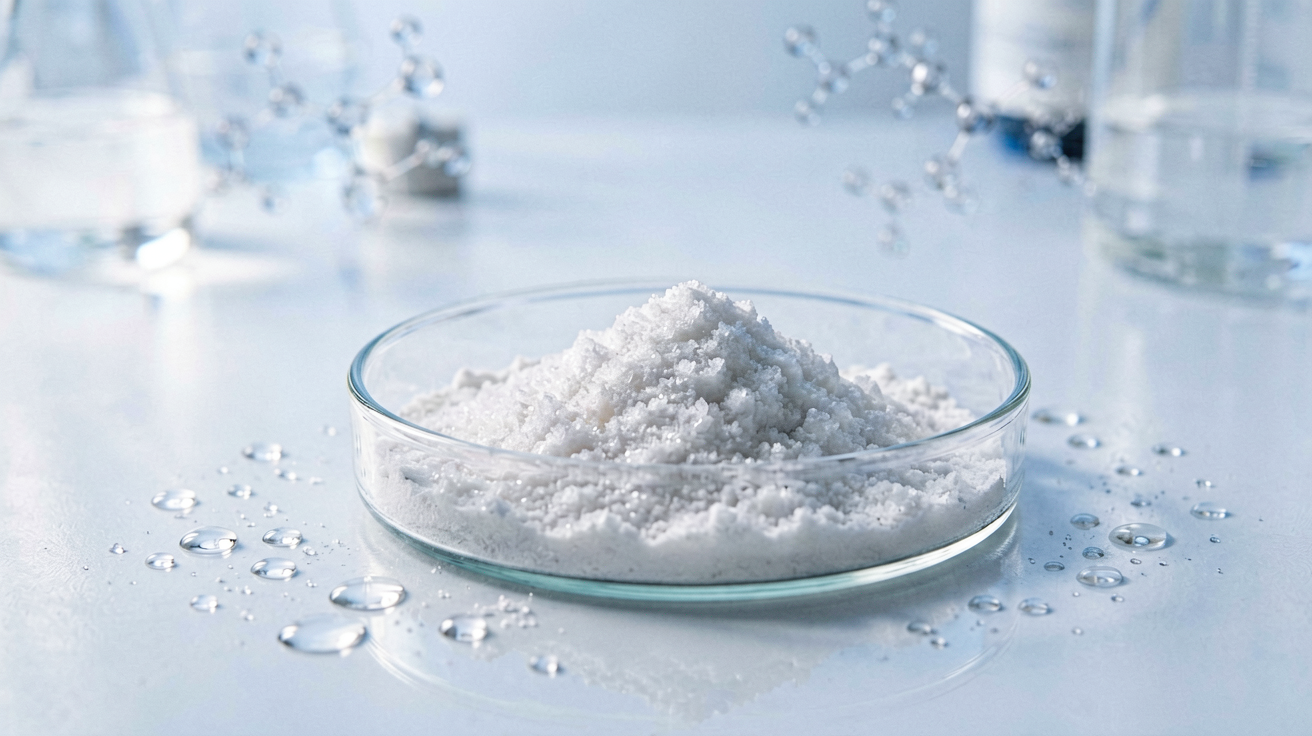
## Azelaic Acid Renaissance: Why This 40-Year-Old Dermatology Workhorse Is Dominating 2026 Skincare Formulation Trends
In an era when the skincare industry churns out novel actives at breakneck speed — from exosome-derived growth factors to AI-designed peptide libraries — one of the most striking formulation trends of 2026 is the quiet resurgence of a molecule first synthesized in the 19th century. Azelaic acid, a naturally occurring C9 saturated dicarboxylic acid, is experiencing a dramatic market renaissance that few industry analysts predicted.
The numbers tell a compelling story. According to Grand View Research, the global azelaic acid market was valued at approximately $210 million in 2024 and is projected to grow at a CAGR exceeding 7% through 2030, driven primarily by dermatological and cosmetic applications. Within the skincare vertical specifically, product launches containing azelaic acid increased by 34% year-over-year in 2025, making it one of the fastest-growing active ingredients in the cosmeceutical pipeline.
This is not nostalgia marketing. It is pharmaceutical-grade evidence catching up with formulation technology.
### The Mechanism: Multi-Pathway Pigmentation Control
Unlike single-pathway tyrosinase inhibitors that dominate the brightening category, azelaic acid operates through at least three distinct mechanisms relevant to hyperpigmentation management:
**1. Competitive Tyrosinase Inhibition** — Azelaic acid acts as a reversible, competitive inhibitor of tyrosinase, the rate-limiting enzyme in melanogenesis. Research published by Nazzaro-Porro et al. demonstrated that azelaic acid selectively targets hyperactive and abnormal melanocytes while sparing normal melanocytes — a key differentiator from broad-spectrum inhibitors that can produce uneven results in darker phototypes.
**2. Mitochondrial Respiration Modulation** — At the cellular level, azelaic acid inhibits mitochondrial oxidoreductase activity and reduces cellular ATP production in hyperproliferative melanocytes. This selective cytotoxicity toward abnormally active melanocytes provides a dual mechanism: it both suppresses ongoing melanin synthesis and gradually normalizes the melanocyte population over extended treatment periods.
**3. Anti-Inflammatory Activity** — Through inhibition of reactive oxygen species (ROS) and modulation of the kallikrein-5/protease-activated receptor-2 (KLK5/PAR-2) pathway, azelaic acid reduces the inflammatory cascade that triggers post-inflammatory hyperpigmentation (PIH). This makes it uniquely suitable for treating pigmentary disorders where inflammation is a primary driver.
### Clinical Evidence: Why Dermatologists Are Recommending It in 2026
The clinical data supporting azelaic acid has been building for decades, but three recent developments have significantly strengthened its position:
A 2024 randomized controlled trial published in *Lasers in Medical Science* (Springer) compared 755-nm picosecond laser monotherapy against combination treatment with topical 20% azelaic acid for melasma. The combination arm demonstrated statistically significant superior improvement in MASI (Melasma Area and Severity Index) scores, with the authors concluding that azelaic acid enhances and extends laser-mediated pigment clearance.
A multicenter, double-blind, randomized study published in *Clinical Therapeutics* evaluated azelaic acid 20% cream specifically in darker-skinned patients (Fitzpatrick phototypes IV-VI). At 24 weeks, azelaic acid produced significantly greater decreases in pigmentary intensity versus vehicle, measured by both investigator subjective assessment (p = 0.021) and chromometer analysis (p = 0.039). Global improvement ratings also significantly favored the treatment group (p = 0.008).
This phototype-specific data is particularly relevant in 2026. As the global beauty market continues to recognize the historical underrepresentation of darker skin tones in clinical dermatology research, azelaic acid’s strong safety profile across all Fitzpatrick types has become a powerful competitive advantage.
The 2026 Cosmetology Aging and Rejuvenation World Conference in Bangkok has azelaic acid featured prominently in its hyperpigmentation symposium, with presentations covering novel delivery systems, sustained-release hydrogel formulations, and combination protocols with niacinamide and tranexamic acid.
### Formulation Innovation: Beyond the 20% Cream
The azelaic acid renaissance is as much about formulation technology as it is about clinical evidence. Historically, azelaic acid posed significant formulation challenges: poor aqueous solubility, tendency to crystallize at concentrations above 15%, and pH-dependent stability that complicated incorporation into elegant cosmetic vehicles.
These barriers are falling rapidly. Key advances reshaping the category include:
**Liposomal Encapsulation** — Phospholipid bilayer encapsulation of azelaic acid achieves two critical goals simultaneously: improved penetration through the stratum corneum and reduced transepidermal water loss (TEWL)-related irritation. Liposomal azelaic acid formulations have demonstrated equivalent clinical efficacy at 10% concentration compared to conventional 20% cream preparations, substantially improving the tolerability profile.
**Microemulsion Gel Systems** — Oil-in-water microemulsion systems with particle sizes below 200 nm have solved the crystallization problem that plagued earlier gel formulations. These transparent gel vehicles provide superior sensory aesthetics — a critical factor for consumer compliance in daily-use products — while maintaining thermodynamic stability over extended shelf life.
**Synergistic Co-Delivery** — The combination of azelaic acid with niacinamide at a 3:1 ratio has emerged as a particularly effective synergy. Niacinamide’s barrier-strengthening properties mitigate azelaic acid’s initial irritation potential, while their complementary mechanisms — tyrosinase inhibition plus melanosome transfer inhibition — produce additive pigment-lightening effects. Formulation chemists are also exploring azelaic acid-tranexamic acid combinations targeting the UV-induced plasmin pathway for photoaging-related hyperpigmentation.
### Market Dynamics: Why 2026 Is the Inflection Point
Several converging market forces explain why azelaic acid is breaking out in 2026 specifically:
**The Hydroquinone Vacuum** — Regulatory restrictions on hydroquinone continue to tighten globally. The EU’s Scientific Committee on Consumer Safety (SCCS) maintains hydroquinone on its prohibited substances list for cosmetic products, while ASEAN cosmetic regulations adopted similar restrictions in 2025. Azelaic acid, with its comparable clinical efficacy for melasma and its excellent safety record during pregnancy (Category B), has become the de facto replacement in markets where hydroquinone access is restricted.
**Dermocosmetic Crossover** — The blurring boundary between prescription dermatology and prestige skincare — the so-called “dermocosmetic” segment — favors ingredients with pharmaceutical pedigree. Consumers are increasingly ingredient-literate and actively search for actives with published clinical data. Azelaic acid’s PubMed footprint of over 1,200 publications provides exactly the type of evidence consumers and formulators are demanding.
**Rosacea Market Expansion** — The global rosacea treatment market, projected to reach $2.8 billion by 2027 according to Allied Market Research, represents a parallel growth vector for azelaic acid. FDA-approved 15% azelaic acid gel (Finacea) remains a first-line topical therapy for papulopustular rosacea, and the growing awareness of rosacea as a chronic inflammatory condition has expanded the addressable market.
### Southeast Asia: The Formulation Frontier
For Southeast Asian markets specifically — where Fitzpatrick types III-V predominate and post-inflammatory hyperpigmentation is among the most common dermatological complaints — azelaic acid represents a uniquely well-positioned active.
The combination of high ambient UV exposure, genetic predisposition to melanocyte hyperreactivity, and a cultural premium on even skin tone creates an enormous addressable market. Azelaic acid’s multi-pathway mechanism addresses the inflammatory trigger of PIH, the melanogenic overdrive of melasma, and the comedolytic needs of acne-prone skin — all within a single active with pregnancy-safe classification.
What the region needs is not more active ingredients, but better delivery systems optimized for hot, humid climates where heavy cream vehicles reduce consumer compliance. The next wave of innovation in the azelaic acid segment will likely come from lightweight, sensory-elegant formulations engineered specifically for tropical markets.
### Looking Ahead: 2026-2028
The azelaic acid market is entering a phase of accelerated growth driven by three structural trends:
1. **Rx-to-OTC Pipeline** — As patents on branded azelaic acid formulations expire, the OTC cosmeceutical market will see an influx of high-concentration products previously restricted to prescription channels.
2. **Combination Therapy Protocols** — Clinical protocols combining azelaic acid with energy-based devices (picosecond lasers, non-ablative fractional lasers) are generating superior outcomes and will drive professional-channel growth.
3. **Personalized Formulation** — Compounding pharmacies and direct-to-consumer dermatology platforms are increasingly offering azelaic acid in customized concentrations and combination formulations, reflecting the broader trend toward personalized skincare.
For brands and formulators, the message is clear: azelaic acid is not a legacy ingredient riding a nostalgia wave. It is a clinically robust, mechanistically elegant active whose time has come — again.
### References
1. Nazzaro-Porro M. Azelaic acid. *Journal of the American Academy of Dermatology*. 1987;17(6):1033-1041.
2. Lowe NJ, Rizk D, Grimes P, Billips M, Pincus S. Azelaic acid 20% cream in the treatment of facial hyperpigmentation in darker-skinned patients. *Clinical Therapeutics*. 1998;20(5):945-959.
3. Batsaikhan B, et al. 755-nm picosecond laser plus topical 20% azelaic acid compared to topical 20% azelaic acid alone for the treatment of melasma: a randomized controlled trial. *Lasers in Medical Science*. 2024;39:124.
4. Grand View Research. Azelaic Acid Market Size, Share & Trends Analysis Report, 2025-2030.
5. Allied Market Research. Rosacea Treatment Market Outlook, 2027.
6. SCCS (Scientific Committee on Consumer Safety). Opinion on Hydroquinone, 2023.
Interested in Formulation Data Collaboration?
Let's discuss how Melasyl AI can accelerate your next whitening or brightening formula. Technical collaboration, data licensing, or custom AI-driven research — reach out.
Contact Wei →