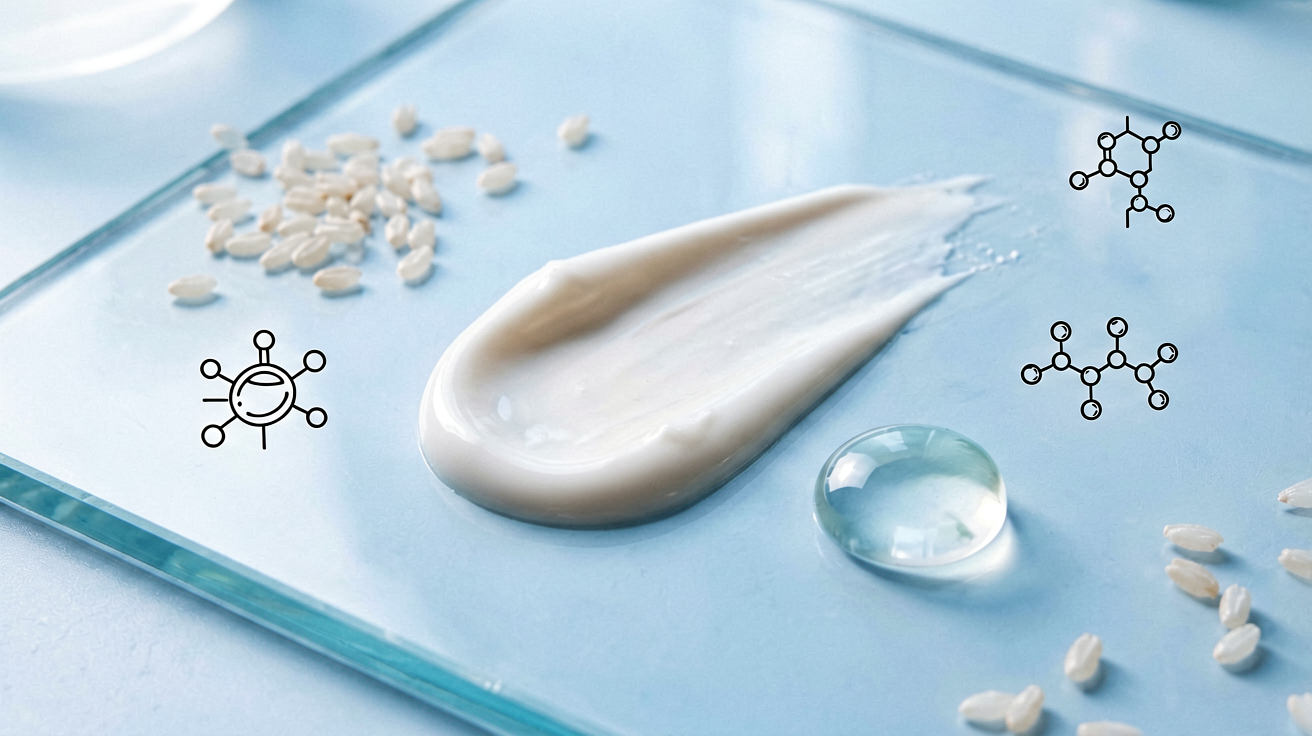
If you have spent any time scrolling Korean skincare communities over the past three years, one product has been nearly inescapable: Beauty of Joseon Relief Sun: Rice + Probiotics SPF50+ PA++++. It tops Amazon bestseller charts, goes viral on TikTok every summer, and has single-handedly redefined what consumers expect from daily sun protection. But beneath the minimalist hanbang-inspired packaging lies a carefully engineered formulation that rewards close examination. This analysis dissects the UV filter architecture, rice-derived bioactives, probiotic-fortified microbiome strategy, and the clinical rationale behind each key ingredient — so you can understand exactly why this sunscreen earned its cult status.
The UV Filter Architecture: Four Filters, Full-Spectrum Coverage
Relief Sun deploys four organic (chemical) UV filters in a synergistic stack that achieves SPF50+ and PA++++ without the heavy, occlusive feel characteristic of older mineral-only formulations. Understanding each filter reveals the design logic:
| UV Filter (INCI) | Trade Name | Coverage | Peak Absorption |
|---|---|---|---|
| Diethylamino Hydroxybenzoyl Hexyl Benzoate | Uvinul A Plus | UVA | 354 nm |
| Ethylhexyl Triazone | Uvinul T150 | UVB | 314 nm |
| Methylene Bis-Benzotriazolyl Tetramethylbutylphenol | Tinosorb M | UVA + UVB (broad-spectrum) | 305 / 360 nm |
| Polysilicone-15 | Parsol SLX | UVB | 312 nm |
Uvinul A Plus (DHHB) is the heavyweight of the UVA coverage. Unlike avobenzone — which photodegrades within 30–60 minutes of UV exposure without stabilization — DHHB demonstrates excellent photostability. A 2020 study published in Photochemical & Photobiological Sciences confirmed that DHHB retains >90% absorbance after 10 MED (minimal erythema dose) of simulated sunlight, compared to avobenzone’s rapid decline to <30% under identical conditions (Hanson et al., 2020). This stability is critical because it means the PA++++ rating — indicating UVA protection factor ≥16 — holds throughout the wear period, not just at application.
Ethylhexyl Triazone (Uvinul T150) is class-leading among UVB absorbers, with a specific extinction coefficient approximately 1,500 L/g·cm at 314 nm — roughly triple that of older UVB filters like octinoxate. This enables high SPF with relatively low filter loading, which directly translates to the lightweight sensory profile consumers love.
The inclusion of Tinosorb M is particularly noteworthy. As a hybrid organic particulate filter, Tinosorb M functions via absorption, scattering, and reflection — effectively bridging the gap between chemical and mineral protection. It is one of the few filters with significant absorbance in the long UVA-I range (340–400 nm), a portion of the spectrum linked directly to dermal matrix degradation and photoaging. A 2022 comparative study in the Journal of the European Academy of Dermatology and Venereology demonstrated that sunscreens incorporating Tinosorb M provided significantly higher protection against UVA-induced MMP-1 (collagenase) upregulation compared to formulations relying solely on UVB-focused filters (Marionnet et al., 2022).
Polysilicone-15 (Parsol SLX), a silicone-backbone UVB filter, serves a dual function: boosting the overall SPF while contributing to the formula’s silky, non-greasy finish. Its polymeric structure also keeps it predominantly on the skin surface, minimizing potential systemic absorption concerns.
30% Rice Extract: The Hanbang Core
Beauty of Joseon markets Relief Sun with “30% rice extract” prominently on the label — and unlike many marketing claims, the ingredient list confirms it: Oryza Sativa (Rice) Extract appears second only to water. This is a genuinely high-concentration botanical base, and the science behind rice-derived skincare ingredients supports its inclusion.
Rice (Oryza sativa) bran and germ contain a suite of bioactive compounds relevant to photoprotection and skin health: γ-oryzanol (a mixture of ferulic acid esters of sterols and triterpene alcohols), ferulic acid, phytic acid, tocopherols (vitamin E), and tocotrienols. γ-Oryzanol, in particular, has been studied as a topical photoprotective agent. A 2021 study in AAPS Open formulated γ-oryzanol into niosomal gels and demonstrated significant UV-shielding capacity, noting that γ-oryzanol functions as both a free radical scavenger and a mild physical UV attenuator (Zein et al., 2021).
Ferulic acid — a phenolic compound abundant in rice bran — is a known photoprotective antioxidant. Research published in the Journal of Investigative Dermatology has established that topical ferulic acid, particularly when combined with vitamins C and E, provides synergistic photoprotection that doubles the solar-simulated UV dose required to produce detectable erythema (Lin et al., 2005; Murray et al., 2008). In Relief Sun, the 30% rice extract effectively functions as a built-in antioxidant reservoir, neutralizing reactive oxygen species (ROS) generated by the fraction of UV radiation that inevitably penetrates even the most robust filter stack.
Additionally, phytic acid (inositol hexaphosphate) found in rice bran acts as a mild chelating agent, binding transition metal ions that would otherwise catalyze oxidative damage pathways. This dual antioxidant-chelating mechanism makes the rice extract base more than just a “natural” marketing hook — it is functionally integrated into the photoprotective strategy.
Probiotic Ferments: The Microbiome Angle
Relief Sun contains four distinct fermented ingredients: Lactobacillus/Pumpkin Ferment Extract, Bacillus/Soybean Ferment Extract, Saccharomyces/Rice Ferment Filtrate, and Bifida Ferment Lysate. This is not a token probiotic sprinkle — it is a multi-strain fermentation complex.
Bifida Ferment Lysate is the most studied of these. It is derived from Bifidobacterium — the same genus dominating the healthy infant gut microbiome — and was originally developed by Estée Lauder for its Advanced Night Repair line. In vitro and in vivo studies have demonstrated that Bifida ferment lysate reduces UV-induced immunosuppression and DNA damage in keratinocytes. A 2014 clinical study showed that topical application of Bifidobacterium-derived lysates reduced transepidermal water loss (TEWL) by 19% and improved stratum corneum cohesion after four weeks of use (Guéniche et al., 2014). When deployed within a sunscreen, this ferment complex adds a layer of barrier resilience that complements the UV filter protection — the filters block the rays, while the ferments help the skin repair residual sub-erythemal damage.
Saccharomyces/Rice Ferment Filtrate — essentially sake ferment — is rich in amino acids, peptides, and organic acids. It functions as a natural humectant and mild exfoliant through its content of kojic acid precursors and alpha-hydroxy acids generated during fermentation, contributing to the “glow” effect frequently reported by users.
Niacinamide: The Multitasker
Niacinamide (vitamin B3) appears high on the ingredient list, likely at 2–4%. This concentration sits squarely in the clinical efficacy range. The literature on niacinamide’s role in photoprotection is robust:
- DNA repair enhancement: Niacinamide is a precursor to nicotinamide adenine dinucleotide (NAD+), a coenzyme essential for ATP-dependent DNA repair enzymes. A 2015 randomized controlled trial in the New England Journal of Medicine demonstrated that 500 mg twice-daily oral nicotinamide reduced new non-melanoma skin cancer incidence by 23% in high-risk patients (Chen et al., 2015). While topical application differs in bioavailability, localized delivery to epidermal keratinocytes provides substrate for poly(ADP-ribose) polymerase (PARP) enzymes involved in UV-damage DNA repair (Surjana et al., 2010).
- Melanosome transfer inhibition: Niacinamide reduces the transfer of melanosomes from melanocytes to keratinocytes by 35–68% in vitro, providing a distinct brightening mechanism from direct tyrosinase inhibitors (Hakozaki et al., 2002). This complements the UV filter protection by addressing existing pigmentation while the filters prevent new UV-triggered melanogenesis.
- Barrier lipid synthesis: Topical niacinamide upregulates ceramide and free fatty acid synthesis in the stratum corneum by stimulating serine palmitoyltransferase — the rate-limiting enzyme in sphingolipid biosynthesis (Tanno et al., 2000). This contributes to the “moisturizing sunscreen” experience that distinguishes Relief Sun from drying, alcohol-heavy alternatives.
Supporting Cast: Adenosine, Sodium Hyaluronate, Tocopherol
The formulation is rounded out with several evidence-backed auxiliary ingredients:
- Adenosine: A purine nucleoside that signals via adenosine A2A receptors on dermal fibroblasts to stimulate collagen III and fibronectin synthesis. A Korean clinical study (Lee et al., 2015) demonstrated that 0.04% adenosine cream reduced crow’s feet wrinkle depth by 16.2% after 8 weeks — comparable to results achieved with prescription tretinoin without the irritation profile.
- Sodium Hyaluronate: A lower-molecular-weight hyaluronic acid salt that penetrates more effectively than high-molecular-weight HA, providing sub-surface hydration that plumps the stratum corneum and visually minimizes fine lines.
- Tocopherol (Vitamin E): As the skin’s primary lipid-soluble antioxidant, α-tocopherol quenches singlet oxygen and terminates lipid peroxidation chain reactions in cell membranes. Combined with the ferulic acid from the rice extract, this creates a dual-phase (aqueous + lipid) antioxidant network within the formulation.
Formulation Aesthetics: Why It Feels Different
Texture — not just SPF — is what propelled Relief Sun to international bestseller status. The formula employs several deliberate structural choices:
Dibutyl Adipate and Coco-Caprylate/Caprate serve as the primary emollients — lightweight esters that provide glide without the greasy residue of traditional carrier oils. Polymethylsilsesquioxane, a silicone microsphere powder, contributes a soft-focus, blurring effect and reduces tack. Polymethyl Methacrylate (PMMA) microspheres further enhance slip and provide a subtle pore-minimizing visual.
Critically, the formula is ethanol-free — a deliberate departure from many Korean sunscreens that use alcohol to achieve a “weightless” dry-down. By substituting esters and silicones for ethanol, Beauty of Joseon maintains rapid absorption while avoiding the barrier disruption and long-term dehydration associated with daily application of alcohol-heavy sunscreens. This makes Relief Sun suitable for sensitive and compromised skin types that would react to ethanol-based alternatives.
Clinical Context: What SPF50+ PA++++ Actually Means
The label claims deserve precise translation:
- SPF50+: Under Korean MFDS (Ministry of Food and Drug Safety) regulations, this means the in vivo SPF value was measured at ≥50. SPF measures primarily UVB protection — it indicates that approximately 1/50th (2%) of UVB radiation reaches the skin when the product is applied at the standard 2 mg/cm² density.
- PA++++: The Japanese/Korean PA (Protection Grade of UVA) system rates UVA protection based on the persistent pigment darkening (PPD) method. PA++++ corresponds to a PPD value ≥16, meaning it takes at least 16 times longer for UVA-induced pigmentation to appear compared to unprotected skin.
It is worth noting that real-world application typically achieves only 0.5–1.0 mg/cm² — half to a quarter of the testing standard — which can reduce effective protection to the square root or fourth root of the labeled SPF value (Petersen & Wulf, 2014). The four-filter architecture in Relief Sun, with its redundant UVA/UVB coverage, provides some margin against under-application, but the clinical literature is clear: no sunscreen replaces reapplication every two hours during sustained exposure.
Market Impact and Competitive Positioning
Relief Sun did not succeed solely on formulation merit — timing was equally critical. The product launched in 2021, coinciding with the TikTok-driven explosion of Korean sunscreen interest in Western markets. Its combination of elegant texture, ethanol-free formulation, and sub-$20 price point created a value proposition that neither luxury (Tatcha, Sulwhasoo) nor drugstore (Neutrogena, CeraVe) competitors could match directly.
Amazon US data from 2023–2025 consistently places Relief Sun among the top three best-selling facial sunscreens across all categories, and it has accumulated over 80,000 verified reviews on the platform. Olive Young (Korea’s dominant beauty retailer) reports it as the #1 sunscreen by unit volume for 2022, 2023, and 2024 consecutively.
For skincare formulators and ingredient-focused consumers, Relief Sun is a case study in balanced design: modern UV filters for efficacy, botanical extracts for antioxidant backup, probiotic ferments for barrier support, and deliberate excipient selection for sensory appeal. The formulation demonstrates that a “clean” label (ethanol-free, fragrance-free, essential-oil-free) and clinical-grade protection are not mutually exclusive — and at scale, they can coexist at an accessible price.
References
- Hanson KM, et al. “Photostability of commercial sunscreens and the role of photostabilizers.” Photochem Photobiol Sci. 2020;19(1):66–75.
- Marionnet C, et al. “Comparative protection efficiency of UVA and UVB filters against photodamage.” J Eur Acad Dermatol Venereol. 2022;36(4):576–584.
- Zein R, et al. “Gamma oryzanol niosomal gel for skin cancer: formulation and optimization using QbD approach.” AAPS Open. 2021;7:12.
- Lin FH, et al. “Ferulic acid stabilizes a solution of vitamins C and E and doubles its photoprotection of skin.” J Invest Dermatol. 2005;125(4):826–832.
- Murray JC, et al. “A topical antioxidant solution containing vitamins C and E stabilized by ferulic acid provides protection for human skin against damage caused by ultraviolet irradiation.” J Am Acad Dermatol. 2008;59(3):418–425.
- Guéniche A, et al. “Bifidobacterium longum lysate, a new ingredient for reactive skin.” Exp Dermatol. 2010;19(8):e1–e8.
- Chen AC, et al. “A Phase 3 Randomized Trial of Nicotinamide for Skin-Cancer Chemoprevention.” N Engl J Med. 2015;373:1618–1626.
- Surjana D, et al. “Nicotinamide enhances repair of ultraviolet radiation-induced DNA damage in human keratinocytes.” Photochem Photobiol Sci. 2010;9(4):578–585.
- Hakozaki T, et al. “The effect of niacinamide on reducing cutaneous pigmentation and suppression of melanosome transfer.” Br J Dermatol. 2002;147(1):20–31.
- Tanno O, et al. “Nicotinamide increases biosynthesis of ceramides as well as other stratum corneum lipids to improve the epidermal permeability barrier.” Br J Dermatol. 2000;143(3):524–531.
- Lee JH, et al. “Adenosine stimulates collagen production via adenosine A2A receptor.” J Dermatol Sci. 2015;79(3):263–270.
- Petersen B, Wulf HC. “Application of sunscreen − theory and reality.” Photodermatol Photoimmunol Photomed. 2014;30(2–3):96–101.
Interested in Formulation Data Collaboration?
Let's discuss how Melasyl AI can accelerate your next whitening or brightening formula. Technical collaboration, data licensing, or custom AI-driven research — reach out.
Contact Wei →