For decades, hyaluronic acid has dominated the hydration conversation in skincare formulation. But 2026 marks a turning point: beta-glucan has emerged as the most clinically validated polysaccharide for barrier repair, anti-inflammatory action, and immune modulation—and the evidence base is strikingly robust.
This shift represents more than ingredient rotation. Beta-glucan’s mechanism operates at a fundamentally different level than conventional humectants. Rather than simply attracting water, it activates specific immune receptors in the skin, triggering repair cascades that strengthen the epidermal barrier from within.
The Molecular Architecture of Beta-Glucan
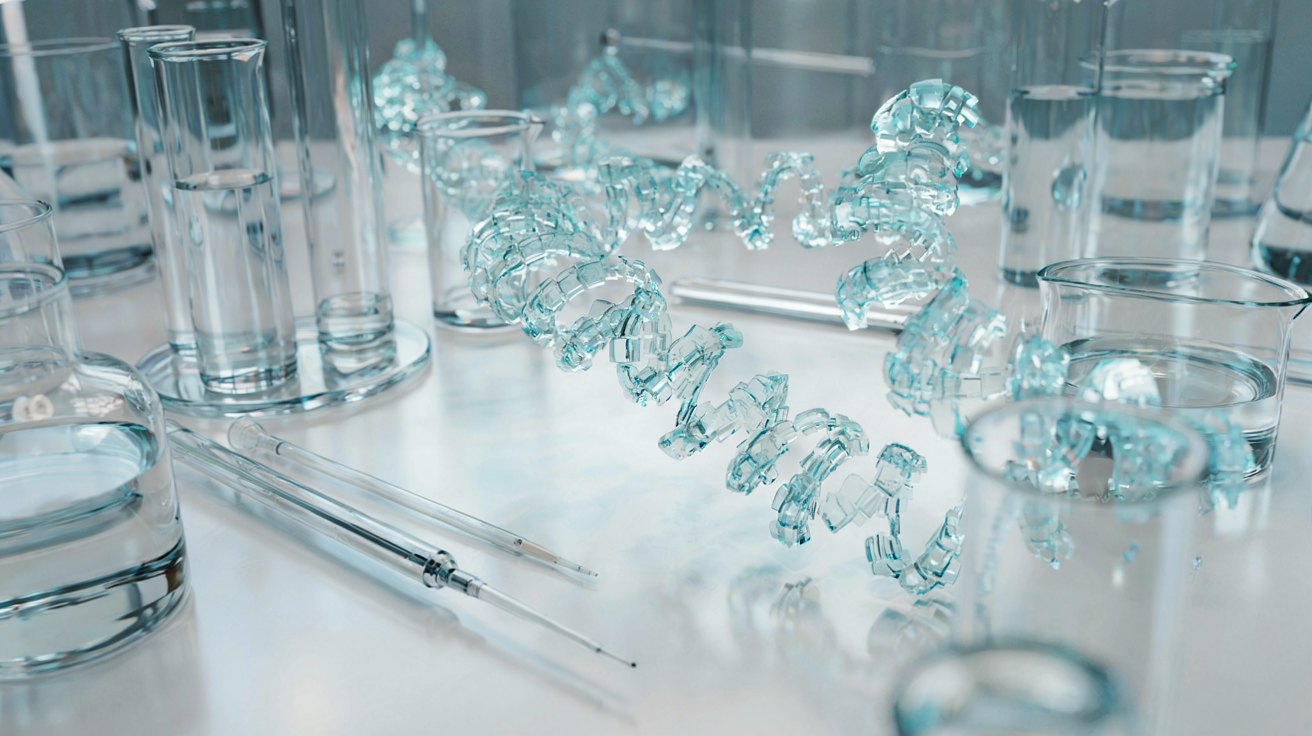
Beta-glucan is a polysaccharide—a complex sugar molecule—found in the cell walls of oats, barley, yeast, and medicinal mushrooms. Its structure consists of glucose units linked by β-(1→3) and β-(1→4) glycosidic bonds, forming a triple-helix conformation that distinguishes it from simpler carbohydrates.
This helical architecture matters. The molecular configuration determines biological activity: yeast-derived beta-glucan with β-(1→3) and β-(1→6) branching demonstrates stronger immunomodulatory effects, while oat beta-glucan with mixed β-(1→3)/(1→4) linkages excels at hydration and film formation.
The key distinction from hyaluronic acid lies in function, not hydration capacity. Hyaluronic acid is a passive humectant—it attracts and holds water. Beta-glucan is an active biological response modifier—it communicates with immune cells to accelerate repair, reduce inflammation, and stimulate collagen synthesis.
Mechanism: Dectin-1 Activation and Barrier Reinforcement
The anti-inflammatory and barrier-repair properties of beta-glucan stem from its interaction with Dectin-1 receptors on Langerhans cells and macrophages. These immune cells patrol the epidermis, detecting pathogens and coordinating repair responses.
When beta-glucan binds Dectin-1, it triggers a signaling cascade through the Syk/NF-κB pathway that:
- Modulates cytokine release—reducing pro-inflammatory IL-1β, IL-6, and TNF-α while increasing anti-inflammatory IL-10
- Stimulates fibroblast proliferation—increasing collagen and elastin synthesis by up to 35% in laboratory studies
- Upregulates barrier proteins—enhancing filaggrin, involucrin, and claudin-1 expression to strengthen the stratum corneum
A 2025 study in the Journal of Cosmetic Dermatology demonstrated that topical beta-glucan application increased filaggrin production by 28% over four weeks—a structural improvement that conventional humectants cannot achieve.
Clinical Evidence: What the Data Shows
The clinical literature on beta-glucan spans pharmaceutical wound healing, dermatological therapy, and cosmetic applications—a breadth rare among trending actives.
Post-Laser Recovery: A Split-Face RCT
A randomized, double-blind, vehicle-controlled study evaluated beta-glucan cream after fractional CO2 and 1550nm non-ablative laser treatment in 20 patients. The beta-glucan side showed:
- Day 7: 23.9% reduction in transepidermal water loss (TEWL) versus control
- Day 14: 15.1% improvement in stratum corneum hydration versus 7.3% in vehicle group
- Hemoglobin index: Significantly reduced erythema at days 7 and 14 (p < 0.05)
- Patient preference: 63% reported better outcomes on the beta-glucan side
Sensitive Skin and Redness Reduction
BABOR’s clinical protocol evaluated a concentrated beta-glucan serum over seven days:
- 94% of participants reported reduced skin tension
- 88% demonstrated visibly diminished erythema
These findings align with peer-reviewed research in the International Journal of Molecular Sciences, confirming beta-glucan’s capacity to modulate cutaneous inflammatory responses at the transcriptional level.
Atopic Dermatitis and Barrier Dysfunction
A systematic review analyzing six clinical studies with 525 participants (447 with atopic dermatitis) found that beta-glucan at 5.5–7.0% concentration:
- Reduced SCORAD scores by 64% over four weeks (from 42 to 15)
- Decreased itch intensity from 5.6 to 2.2
- Reduced sleep disruption scores from 3.9 to 1.7
- Resolved moderate dry lesions in 53% to 12% of patients
Hydration: Outperforming Hyaluronic Acid
Multiple comparative studies confirm that beta-glucan delivers approximately 20% greater moisture retention than hyaluronic acid at equivalent concentrations. The mechanism differs: beta-glucan forms a breathable film that reduces TEWL while simultaneously stimulating glycosaminoglycan synthesis within the dermis.
A single application of 0.1% beta-glucan increases skin moisture content by up to 32%, with effects lasting significantly longer than traditional humectants. After eight weeks of regular use, skin maintains 24% higher hydration levels even 12 hours after the last application.
Formulation Considerations for 2026
Beta-glucan presents distinct advantages for formulators targeting the barrier-repair and sensitive-skin segments:
Solubility: Native beta-glucan from yeast is insoluble in both water and oil. Water-soluble derivatives—carboxymethylated beta-glucan (CM-Glucan) developed by Mibelle Biochemistry in 1994—preserve biological activity while enabling stable emulsion and serum formulations.
Concentration range: Clinical studies use 0.5–7%, with 1–2% typical for daily serums and 5–7% for intensive post-procedure repair. Effective barrier improvement occurs at concentrations as low as 0.1%.
pH stability: Beta-glucan remains stable across pH 4.5–7.0, compatible with most leave-on formulations.
Synergistic combinations:
- Beta-glucan + Niacinamide: Niacinamide stimulates ceramide synthesis; beta-glucan reduces inflammation and upregulates filaggrin. The combination addresses barrier repair through complementary pathways.
- Beta-glucan + Ceramides: Beta-glucan prepares the epidermal surface; ceramides stabilize the intercellular lipid matrix. Clinical studies report improved barrier scoring with this pairing.
- Beta-glucan + Retinoids: Beta-glucan counteracts retinoid-induced TEWL increase and reduces irritation tendency, making it valuable for “retinol buffer” formulations.
The Southeast Asian Market Opportunity
For Southeast Asian markets—where melasyl.com operates—beta-glucan’s profile aligns with three converging consumer priorities:
- High humidity and UV exposure: Beta-glucan’s film-forming properties reduce TEWL without occlusive heaviness, while its antioxidant capacity provides secondary photoprotection.
- Sensitive skin prevalence: International Contact Dermatitis Research Group data indicates 22–28% of Southeast Asian adults report sensitive or reactive skin—higher than European populations. Beta-glucan’s immunomodulatory action addresses sensitivity at the cellular level.
- Post-procedure recovery demand: Energy-based device treatments (laser, RF, microneedling) are growing rapidly across Asia-Pacific. Beta-glucan’s wound-healing acceleration and erythema reduction make it a strategic active for recovery formulations.
Mintel’s 2025 consumer survey across Indonesia, Thailand, Vietnam, and the Philippines found that 47% of skincare consumers actively seek “barrier-friendly” products—a 15% increase from 2023.
Regulatory and Safety Profile
Beta-glucan holds GRAS (Generally Recognized As Safe) status from the FDA for oral use and has been used in pharmaceutical applications for decades. Topical safety data shows:
- Non-sensitizing: Patch testing demonstrates low sensitization rates across studied populations
- Non-comedogenic: Suitable for acne-prone and congested skin
- Pediatric-safe: Clinical studies in infants and children show high tolerability
- Pregnancy-compatible: No contraindications for topical use during pregnancy or lactation
Individuals with known oat allergy (avenin sensitivity) should avoid oat-derived beta-glucan and select yeast- or mushroom-based alternatives.
Positioning in the Modern Routine
Beta-glucan is not an acute active delivering immediate visible change after one application. Its strength lies in cumulative barrier reinforcement:
- Short-term (30–60 minutes): Measurable hydration improvement via corneometry—reversible film-forming effect
- Medium-term (4–8 weeks): Structural barrier improvement, filaggrin upregulation, reduced baseline TEWL
- Long-term (12+ weeks): Reduced inflammatory episode frequency in reactive skin, improved resilience to environmental stressors
For formulators and brand developers, beta-glucan represents a low-risk, high-evidence ingredient that addresses the “skin resilience” narrative now central to premium skincare positioning. Unlike trend ingredients with limited research, beta-glucan’s clinical literature predates its current popularity by three decades—and that foundation is precisely what makes it valuable in an evidence-demanding market.
Key References
- Mibelle Biochemistry. CM-Glucan: Water-soluble beta-glucan derivative for topical applications. 1994.
- Journal of Cosmetic Dermatology. Post-laser split-face study on beta-glucan efficacy. 2025.
- International Journal of Molecular Sciences. Beta-glucan modulates cutaneous inflammatory response at transcriptional level. 2025.
- Food Science and Nutrition. Systematic review of beta-glucan barrier-restorative properties. 2025.
- Boots Beauty and Wellness Trends Report. 80% of adults treat skincare as long-term health investment. 2026.
Interested in Formulation Data Collaboration?
Let's discuss how Melasyl AI can accelerate your next whitening or brightening formula. Technical collaboration, data licensing, or custom AI-driven research — reach out.
Contact Wei →