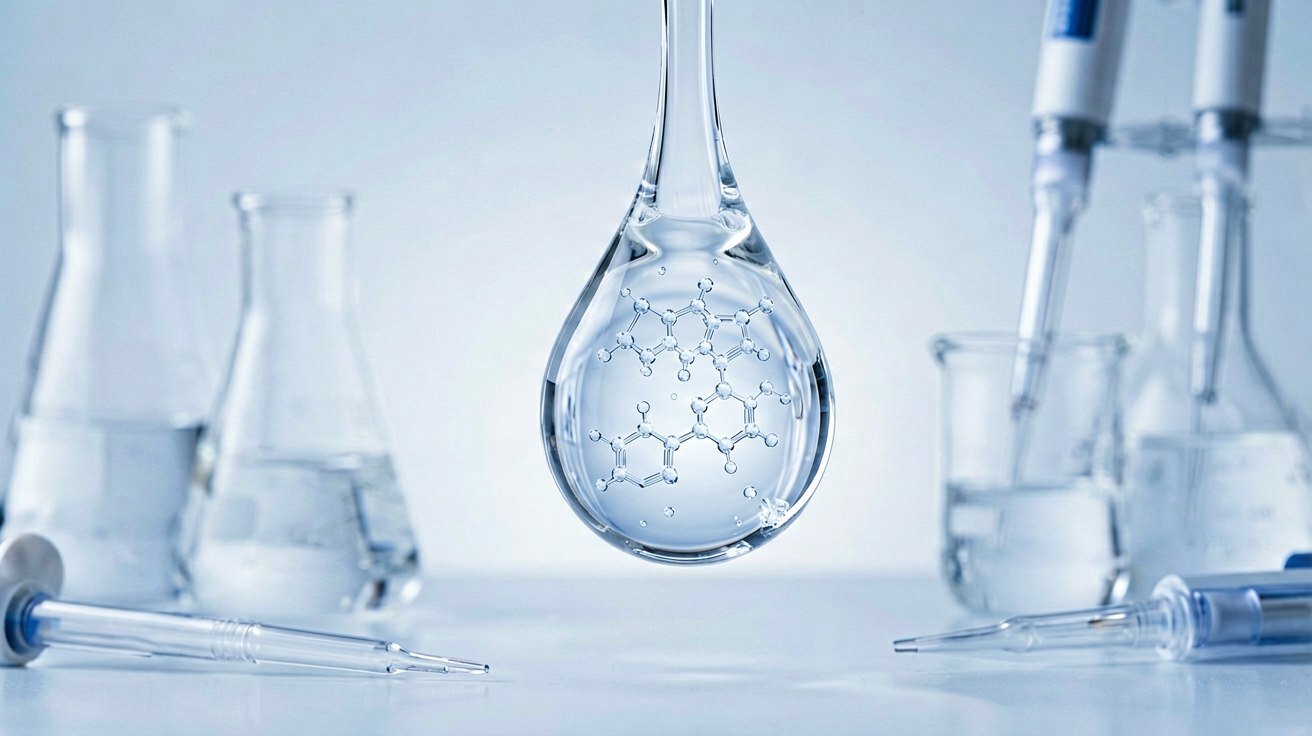
Ectoin has quietly become one of the most talked-about active ingredients in the global skincare conversation of 2026. Once a niche molecule known mainly to microbiologists, this extremolyte is now appearing on ingredient decks across serums, barrier creams, and post-procedure repair lines — particularly in the humid, high-UV markets of Southeast Asia where barrier stress is a year-round concern. This Industry Insights review examines why demand for ectoin is accelerating, what the clinical evidence actually shows, and how brand developers are positioning it within the fast-growing “skin resilience” segment.
What Is Ectoin? The Extremolyte Origin Story
Ectoin (chemically, 1,4,5,6-tetrahydro-2-methyl-4-pyrimidinecarboxylic acid) is a cyclic amino acid derivative produced by extremophilic bacteria such as Halomonas elongata that survive in salt lakes, deserts, and geothermal springs. To endure extreme dehydration, salinity, and temperature, these microbes accumulate ectoin as a “compatible solute” — a molecule that stabilises proteins and membranes without disrupting cellular metabolism.
The cosmetic relevance lies in its mechanism: ectoin is a powerful kosmotrope, meaning it structures water molecules into an ordered “ectoin hydration complex” around proteins, membranes, and cells. This hydration shell physically shields biomolecules from environmental stressors while retaining moisture at the stratum corneum. Unlike occlusive humectants that simply sit on the surface, ectoin works at the molecular interface — a distinction that has made it a favourite talking point in premium barrier-repair marketing.
Market Momentum: Why 2026 Is Ectoin’s Breakout Year
The commercial rise of ectoin tracks three converging trends. First, the global “skin barrier” category has exploded: market research firms estimate the barrier-repair skincare segment surpassed USD 3.5 billion in 2025 and continues to grow at a double-digit compound annual rate, driven by consumer awareness of over-exfoliation and “skin fasting.” Second, the post-procedure recovery market — booming alongside the rise of energy-based devices and injectables across Asia-Pacific — needs gentle, non-irritating repair actives. Third, ectoin’s dual positioning as both an anti-pollution and anti-inflammaging ingredient aligns neatly with the urban consumer’s concerns in cities like Jakarta, Bangkok, and Manila.
Search-trend data reflects this shift. Interest in “ectoin serum” and “ectoin cream” has climbed steadily year over year, and the ingredient now features in launches from both K-beauty innovators and clinical dermatological brands. For markets with high ambient humidity and intense UV exposure, ectoin’s water-retention and photoprotective profile offers a differentiated story beyond the crowded hyaluronic acid space.
The Clinical Evidence: What Studies Actually Show
Ectoin’s credibility rests on a genuinely substantial body of peer-reviewed research — a rarity for trending actives.
- Photoprotection against UVA: A landmark study by Buenger and Driller (Skin Pharmacology and Physiology, 2004) demonstrated that ectoin applied before UVA exposure significantly reduced the formation of ceramide-associated signalling and protected Langerhans cells, mitigating UVA-induced premature photoageing markers.
- Barrier repair and hydration: Graf et al. (Clinics in Dermatology, 2008) reviewed ectoin’s ability to strengthen the stratum corneum lipid lamellae and improve transepidermal water loss (TEWL), confirming measurable barrier reinforcement in human skin.
- Atopic and sensitive skin: Marini et al. (Journal of Dermatological Treatment, 2014) reported that an ectoin-containing cream (7%) improved clinical scores and skin hydration in patients with atopic dermatitis, performing comparably to a standard reference emollient over a four-week period.
- Anti-inflammaging: Research on “carbonylated protein” reduction and inflammasome modulation indicates ectoin dampens the low-grade chronic inflammation associated with pollution and UV exposure — the biological basis of the “inflammaging” narrative now central to premium anti-ageing positioning.
Importantly, ectoin has an exceptional safety profile. It is non-sensitising, non-comedogenic, biodegradable, and compatible with sensitive and reactive skin — a decisive advantage in formulations targeting post-procedure or compromised barriers where fragrance and harsh actives are unwelcome.
Formulation Considerations for Brand Developers
Ectoin is typically used at concentrations between 0.5% and 7%, with 1–2% being common for daily serums and higher percentages reserved for intensive barrier-repair or post-procedure claims. It is water-soluble, heat-stable up to standard emulsification temperatures, and stable across a broad pH range (roughly 4–9), making it unusually forgiving to work with.
Its neutral, colourless, odourless character allows clean-label and fragrance-free positioning. Strategic pairings are where the real formulation intelligence lies:
- Ectoin + Niacinamide: Combines barrier reinforcement with ceramide synthesis and brightening — a strong dual-action daily serum concept.
- Ectoin + Hyaluronic Acid: Layered hydration — HA draws moisture, ectoin locks and structures it via the hydration complex.
- Ectoin + Panthenol / Centella: A soothing, recovery-focused stack ideal for sensitive-skin and post-treatment lines.
- Ectoin in SPF systems: Positioned as a supportive antioxidant/photoprotective adjunct rather than a UV filter replacement.
The Southeast Asian Opportunity
For brands targeting Southeast Asia, ectoin addresses three region-specific pain points simultaneously: intense year-round UV exposure, high humidity that stresses the barrier, and rising urban air pollution. A product story built around “urban resilience” or “climate-adaptive hydration” resonates strongly with consumers who are increasingly ingredient-literate and skeptical of vague marketing. Because ectoin is derived from extremophile biology, it also fits the growing appetite for biotech-forward, nature-inspired narratives — a positioning that commands premium pricing.
Outlook: From Niche to Core Active
Ectoin exemplifies a broader industry pivot away from aggressive, results-at-any-cost actives toward resilience, tolerance, and long-term barrier health. Its combination of robust clinical backing, near-universal skin tolerance, formulation flexibility, and a compelling biotech origin story positions it not as a passing trend but as an emerging core ingredient. For developers building differentiated skincare portfolios in 2026 and beyond, ectoin deserves serious consideration — the science, the safety data, and the market momentum are all aligned.
Sources: Buenger & Driller, Skin Pharmacology and Physiology (2004); Graf et al., Clinics in Dermatology (2008); Marini et al., Journal of Dermatological Treatment (2014); Bilstein et al., peer-reviewed extremolyte research literature.
Disclaimer: This article is for educational and informational purposes only and does not constitute medical advice. Always consult a qualified dermatologist before beginning any new skincare regimen.
Interested in Formulation Data Collaboration?
Let's discuss how Melasyl AI can accelerate your next whitening or brightening formula. Technical collaboration, data licensing, or custom AI-driven research — reach out.
Contact Wei →