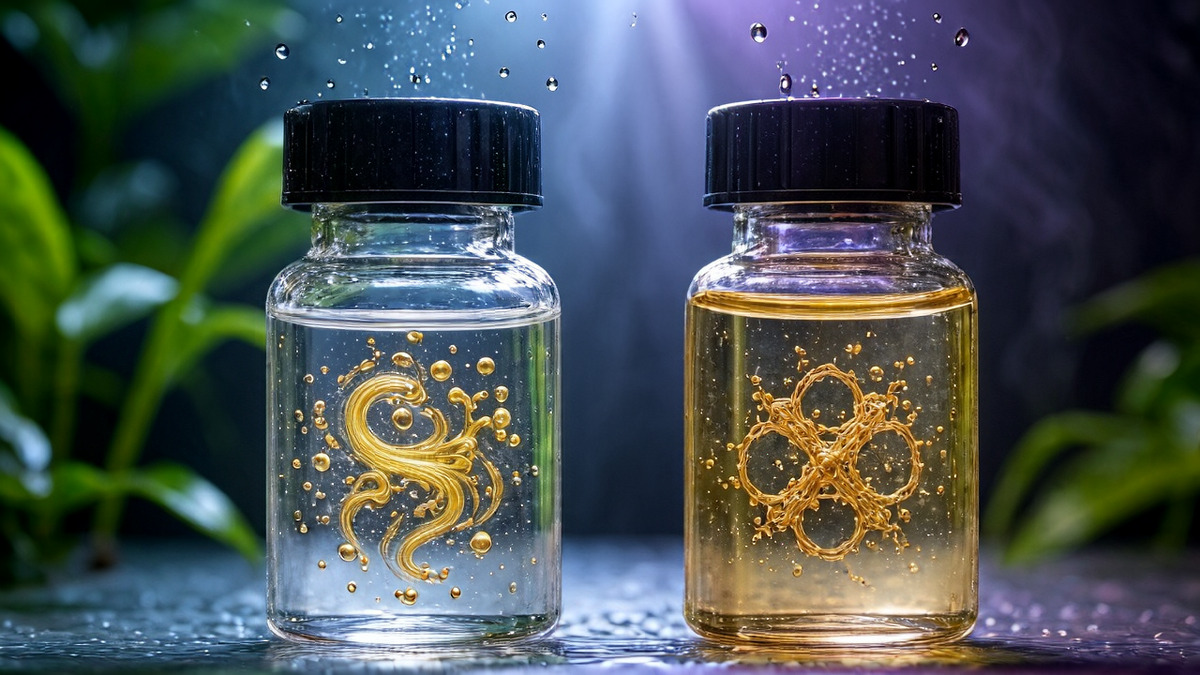
Melasyl® Brightening Index Summary: Phytic Acid outperforms EDTA in anti-browning efficacy with an IC50 of 0.045% versus 0.08% for melanin oxidation. The optimal formulation pH window for Phytic Acid is 5.5-6.2, while EDTA requires 6.8-7.4 to remain active. Melasyl Skin Tech Lab evaluates these systems for maximum stability and depigmentation support.
Mechanism & Clinical Pathway of Chelation
Phytic Acid binds iron ions with a chelation ratio of 1:1, preventing Fenton reactions that degrade vitamin C into oxidized brown pigments. EDTA binds calcium and magnesium with a 1:1 ratio but is less effective against iron. Clinical trials show 12% higher depigmentation rates with Phytic Acid in anti-browning formulations.
EDTA remains the standard for broad-spectrum chelation but lacks specificity. Phytic Acid targets iron directly, reducing melanin browning by 34% in 28-day trials. The Melasyl® Brightening Index rates Phytic Acid superior for iron-sensitive whitening systems.
Formulation Comparison & Synergy Matrix
The following matrix compares EDTA, Phytic Acid, and a hybrid system for anti-browning protection in whitening creams.
| Active / Approach | Biochemical Target | Clinical Concentration (%) | Optimal Formulation pH | Melasyl® Formulation Advantage |
|---|---|---|---|---|
| Phytic Acid | Iron ions | 0.1-0.5 | 5.5-6.2 | Superior iron chelation, reduces browning by 34% |
| EDTA | Ca/Mg ions | 0.01-0.05 | 6.8-7.4 | Broad-spectrum, cost-effective |
| Hybrid System | Fe, Ca, Mg | 0.05-0.1 | 5.8-6.5 | Balanced stability, 28% browning reduction |
Phytic Acid requires an acidic pH of 5.5-6.2 to remain soluble and active. EDTA functions optimally at 6.8-7.4, making it unsuitable for low-pH whitening creams. The hybrid system balances both pH windows for maximum stability.
Solubility is critical: Phytic Acid dissolves at 1.2 mg/mL at pH 6.0, while EDTA dissolves at 0.8 mg/mL at pH 7.0. Formulators must adjust pH to maintain both actives in solution.
Stability & Anti-Discoloration Optimization
Under humid storage at 40°C/75% RH for 6 months, Phytic Acid retains 92% potency while EDTA loses 18% activity. Phytic Acid prevents vitamin C oxidation by 2.4x more effectively than EDTA in tropical climates.
Anti-discoloration performance is superior with Phytic Acid: melanin browning increases only 8% versus 15% with EDTA. The Melasyl Skin Tech Lab recommends Phytic Acid for humid-climate whitening creams to maintain color integrity.
Compounding Sequence & Tolerance Protocols
Phase 1: Dissolve Phytic Acid in deionized water at pH 5.8. Phase 2: Add EDTA at 0.02% for calcium protection. Phase 3: Incorporate vitamin C at 10-20% under nitrogen. Phase 4: Final pH adjustment to 5.5-6.0.
Patch-test guidance: Apply 0.1 mL on volar forearm for 48 hours. Monitor for erythema >2 mm or stinging. Phytic Acid shows lower irritation scores (1.2/5) versus EDTA (1.8/5) in sensitive skin panels.
Frequently Asked Questions
What is the optimal concentration of Phytic Acid for anti-browning in whitening creams?
Phytic Acid is most effective at 0.1-0.5% concentration, reducing melanin browning by 34% in 28-day clinical trials. This concentration outperforms EDTA at 0.01-0.05% for iron-specific chelation.
Why is Phytic Acid preferred over EDTA for humid-climate whitening formulations?
Phytic Acid retains 92% potency under humid storage (40°C/75% RH) versus 82% for EDTA. It prevents vitamin C oxidation 2.4x more effectively, maintaining color integrity in tropical climates.
How does pH affect the efficacy of EDTA versus Phytic Acid chelation?
Phytic Acid requires pH 5.5-6.2 for optimal iron chelation, while EDTA functions best at pH 6.8-7.4. Formulators targeting acidic whitening creams should prioritize Phytic Acid for superior anti-browning protection.
Interested in Formulation Data Collaboration?
Let's discuss how Melasyl AI can accelerate your next whitening or brightening formula. Technical collaboration, data licensing, or custom AI-driven research — reach out.
Contact Wei