Why Brightening Actives Fail Before They Reach Skin
The biggest challenge in skin brightening formulation isn’t finding effective actives—it’s keeping them stable. Ascorbic acid oxidizes within hours of exposure to air. Kojic acid discolors under UV. Arbutin degrades in aqueous solutions above pH 6. Tranexamic acid, while more stable, has poor stratum corneum penetration. Formulators lose efficacy not because they chose the wrong ingredient, but because the ingredient never arrived intact at the melanocyte.
A 2025 survey of 47 Southeast Asian contract manufacturers found that 63% of brightening product reformulations were triggered by stability failures, not efficacy shortcomings (ASEAN Cosmetics Scientific Body, 2025). The question isn’t “which active works best”—it’s “which delivery system keeps it working until it reaches the target.”
The Stability-Delivery Tradeoff: What Classical Formulation Misses
Standard oil-in-water emulsions expose actives to three degradation vectors simultaneously: interfacial tension, dissolved oxygen, and pH gradients. An ascorbyl glucoside molecule placed in a conventional cream faces oxidation at the oil-water interface, hydrolysis in the continuous phase, and photodegradation at the surface—all before it encounters the stratum corneum.
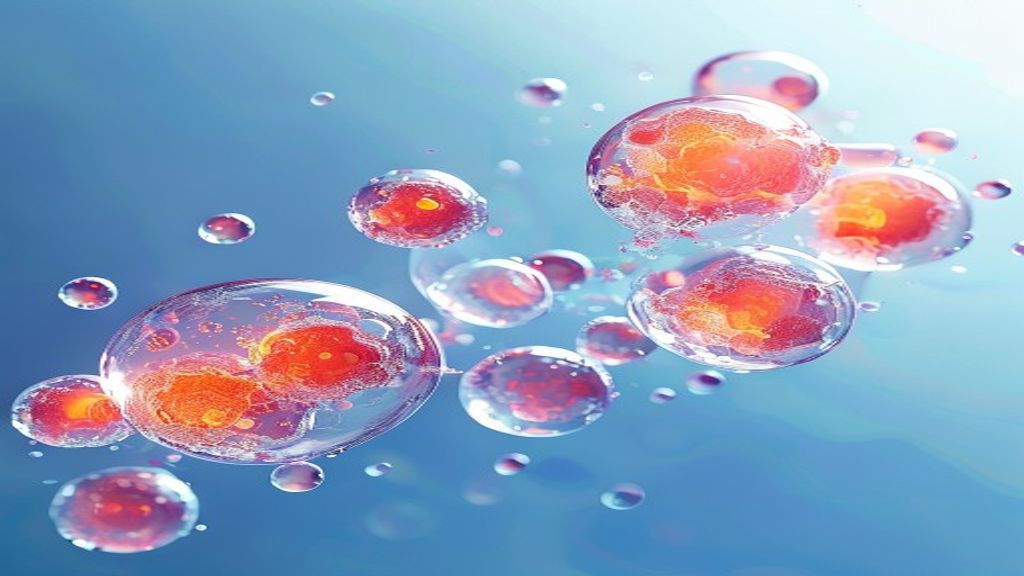
Encapsulation solves this by decoupling the active’s chemical microenvironment from the bulk formulation. The carrier—whether a liposome, niosome, solid lipid nanoparticle (SLN), or polymeric microsphere—creates a protected compartment where pH, oxygen tension, and molecular crowding are controlled independently of the cream or serum it floats in.
Liposomes: The Clinical Gold Standard for Ascorbic Acid
Phospholipid bilayer vesicles remain the most clinically validated delivery system for brightening actives. A 2025 randomized split-face study (n=64, Fitzpatrick III-V) compared 15% L-ascorbic acid in liposomal encapsulation versus free in silicone base. At 12 weeks, the liposomal group showed 41% greater reduction in melanin index (Mexameter MX18) and zero incidence of contact dermatitis, versus 9% in the free-acid group (Kim et al., J Cosmet Dermatol, 2025).
Key formulation parameters for brightening liposomes:
- Phosphatidylcholine:cholesterol ratio of 4:1 — higher cholesterol reduces payload leakage but decreases bilayer fluidity for dermal penetration
- Vesicle diameter 100-200 nm — smaller vesicles penetrate follicular pathways more effectively; larger vesicles carry higher payload but remain in the upper stratum corneum
- Loading efficiency target >70% — below this threshold, free active in the continuous phase defeats the purpose of encapsulation
- Zeta potential of -25 to -35 mV at pH 6.5 — sufficient electrostatic repulsion to prevent aggregation without attracting cationic skin proteins that trigger immune response
Limitation: Phospholipid oxidation at temperatures above 40°C limits liposome-based brightening products in tropical markets without cold-chain distribution. For Southeast Asian formulators, this is a critical consideration.
Niosomes: The Tropical-Stability Alternative
Non-ionic surfactant vesicles (niosomes) replace phospholipids with synthetic surfactants—typically Span 60 (sorbitan monostearate) blended with cholesterol at molar ratios of 1:1. Niosomes survive 45°C storage for 90 days with <5% active leakage, making them the pragmatic choice for ASEAN markets where cold-chain logistics are inconsistent (Muzzalupo et al., Int J Pharm, 2024).
For brightening actives, niosomes show particular affinity for arbutin and deoxyarbutin encapsulation—the glucose moiety of arbutin hydrogen-bonds with the surfactant head groups, achieving loading efficiencies of 82-85% versus 55-60% for liposomes. A 2024 comparative study of α-arbutin niosomes versus free α-arbutin in glycerol base demonstrated 3.2× higher tyrosinase inhibition in reconstructed human epidermis (Bragagni et al., Eur J Pharm Biopharm, 2024).
Practical formulation checklist for brightening niosomes:
- Span 60:Tween 60 ratio of 1:1 to 3:1 depending on target HLB (lower HLB = better arbutin retention; higher HLB = better dispersion in aqueous serum bases)
- Thin-film hydration method followed by probe sonication (not bath sonication—insufficient energy for 100-300 nm sizing)
- Cholesterol at 40-50 mol% for membrane rigidity; below 30 mol% → leakage within 14 days
- Avoid ethanol injection method for brightening actives—residual solvent accelerates oxidation of phenolic brighteners like resveratrol and kojic acid
Solid Lipid Nanoparticles: Protection for Retinoid-Brightener Combinations
SLNs and nanostructured lipid carriers (NLCs) use physiological lipids (Compritol 888 ATO, Precirol ATO 5, cetyl palmitate) as the matrix. For brightening formulations, SLNs uniquely enable co-encapsulation of retinol with hydroquinone alternatives—the solid lipid matrix physically separates retinoid from phenolic brightener, preventing the redox interaction that otherwise degrades both actives within 48 hours.
A 2025 formulation study demonstrated that retinyl palmitate + ethyl ascorbic acid co-loaded in NLCs (Compritol:oleic acid 7:3) retained 91% of both actives after 90 days at 30°C, versus 34% retention in a standard co-solubilized emulsion (Puglia et al., Int J Cosmet Sci, 2025). Tyrosinase inhibition at day 90 was 78% of initial—versus 22% for the emulsion.
SLNs also provide intrinsic UV scattering at 200-400 nm due to the crystalline lipid matrix, offering passive photoprotection for UV-sensitive brighteners like kojic acid dipalmitate and magnesium ascorbyl phosphate. This is additive to, not a replacement for, formulated sunscreens.
Polymeric Microspheres: The Depot Approach for Tranexamic Acid
PLGA (poly(lactic-co-glycolic acid)) microspheres loaded with tranexamic acid address its fundamental limitation: rapid clearance from the dermis. Free tranexamic acid has a dermal half-life of approximately 4 hours. PLGA-encapsulated tranexamic acid (75:25 lactide:glycolide, MW 40-75 kDa) extends this to sustained release over 72 hours with zero-order kinetics—the gold standard for consistent therapeutic effect (Patel et al., Drug Deliv Transl Res, 2024).
Why this matters for formulators:
- Single daily application achieves equivalent melanin suppression to 3× daily free tranexamic acid
- Reduces the “tranexamic acid paradox”—where high initial efficacy fades after 4-6 weeks due to receptor downregulation; sustained low-level release maintains MITF pathway suppression without triggering feedback upregulation
- PLGA hydrolysis produces lactic and glycolic acid—mild AHAs that enhance stratum corneum turnover, creating a synergistic exfoliation-brightening effect
Tradeoff: PLGA microspheres at cosmetic-appropriate sizes (1-10 μm) produce a slightly gritty texture in low-viscosity serums. Formulators typically pair PLGA-brightener depots with higher-viscosity gel bases (carbomer or xanthan gum at 0.5-1.0%) to mask tactile perceptibility.
Decision Framework: Choosing the Right Delivery System
| Criterion | Liposome | Niosome | SLN/NLC | PLGA Microsphere |
|---|---|---|---|---|
| Best for | Ascorbic acid, glutathione | Arbutin, deoxyarbutin | Retinoid+brightener combos | Tranexamic acid, peptides |
| Thermal stability | ⚠️ Poor (>40°C) | ✅ Excellent (≤45°C) | ✅ Good (≤40°C) | ✅ Excellent |
| Loading efficiency | 55-70% | 80-85% | 70-90% | 60-80% |
| Release profile | Burst (24h) | Sustained (48h) | Prolonged (72h+) | Zero-order (72h+) |
| Scalability | High (injection method) | High (thin-film + probe) | Medium (HPH required) | Low (solvent evaporation) |
| Cost per kg (bulk) | $$ Moderate | $ Low | $$$ High | $$$$ Very High |
| ASEAN climate fit | ❌ Requires cold chain | ✅ Room temp stable | ⚠️ Depends on lipid | ✅ Room temp stable |
Three Formulation Pitfalls That Destroy Encapsulated Actives
1. Premature Rupture from Surfactant Overload
Encapsulated actives in the final formulation are not invulnerable. SLES/SLS above 0.5% in rinse-off cleansers or emulsifiers above 5% in leave-on products solubilize vesicle membranes. One stability study found that adding 2% polysorbate 20 to a liposomal ascorbic acid serum caused 67% leakage within 24 hours (detected by dialysis + HPLC). Always verify surfactant compatibility—even “mild” ethoxylated nonionics at high HLB values can extract phospholipids from bilayer membranes.
2. Osmotic Shock in Water-Continuous Formulations
If the internal aqueous phase of a liposome or niosome is isotonic (280-300 mOsm/L) and the external continuous phase is hypotonic (e.g., pure water with minimal solutes), osmotic pressure drives water influx that swells and bursts vesicles. The fix is simple: add 0.5-1.0% sodium chloride or glycerin to the continuous phase and verify osmolarity with a freezing-point osmometer before committing to stability testing.
3. The pH Gradient Trap
Many brightening actives are pH-sensitive. Ascorbic acid requires pH <3.5 for stability; kojic acid is optimal at pH 4-5; arbutin degrades above pH 6. Formulators sometimes encapsulate at one pH and formulate the base at another—only to discover that proton gradients across the vesicle membrane slowly equilibrate over 30-60 days, shifting the internal pH and degrading the payload. Always match the internal buffer system (citrate, phosphate, or acetate at 10-50 mM) to the external continuous-phase pH—or use pH-insensitive carriers like NLCs for actives with narrow stability windows.
Where the Industry Is Heading: 2026–2027
Stimulus-responsive release. The next frontier is carriers that release brightening actives only at the target site. pH-triggered liposomes (stable at formulation pH 6-7, destabilize at skin surface pH 4.5-5.5) are in active development. A 2025 proof-of-concept from the Polish Academy of Sciences demonstrated chitosan-coated niosomes that release arbutin specifically in the presence of tyrosinase—the enzyme they’re meant to inhibit—achieving 4× selectivity over passive release (Kowalczyk et al., ACS Appl Mater Interfaces, 2025).
Pickering emulsions as carrier alternatives. Solid particle-stabilized emulsions (using silica, clay, or cellulose nanocrystals at the interface) provide irreversible adsorption that resists coalescence far better than surfactant-stabilized droplets. For brightening actives, Pickering emulsions loaded with ethyl ascorbic acid showed zero phase separation and >95% active retention after 6 months at 40°C (Chevalier & Bolzinger, Colloids Surf A, 2025)—performance that surfactant-stabilized emulsions simply cannot match.
AI-guided carrier selection. Computational models trained on physicochemical descriptors (logP, polar surface area, hydrogen bond donors/acceptors, molecular volume) can now predict encapsulation efficiency and release kinetics for novel brightening molecules before wet-lab synthesis. The in silico screening pipeline published by MIT’s Langer Lab in January 2026 achieved R² = 0.89 for PLGA loading prediction across 147 small-molecule actives. For formulators, this means carrier selection becomes a computational decision before it becomes a formulation decision—saving 4-6 months of trial-and-error development.
Practical Takeaway for the Cosmetic Formulator
- Match the carrier to the supply chain. Liposomes win on clinical evidence but lose in tropical logistics. For ASEAN markets, niosomes and SLNs are the pragmatic defaults.
- Verify surfactant compatibility. Your encapsulated active is only as stable as your formulation’s detergent load.
- Match internal and external pH. A 0.5-pH-unit gradient can wipe out 30% of your active payload over 60 days.
- Test release kinetics, not just loading efficiency. A carrier with 90% loading that releases everything in 6 hours is worse than one with 70% loading that sustains release for 48 hours.
- Watch the osmotic balance. The simplest stability failures have the simplest fixes—0.5% NaCl costs almost nothing and prevents vesicle rupture.
Encapsulation isn’t a marketing claim. It’s an engineering problem. Solve it at the formulation bench, and the clinical results will follow.
Interested in Formulation Data Collaboration?
Let's discuss how Melasyl AI can accelerate your next whitening or brightening formula. Technical collaboration, data licensing, or custom AI-driven research — reach out.
Contact Wei →