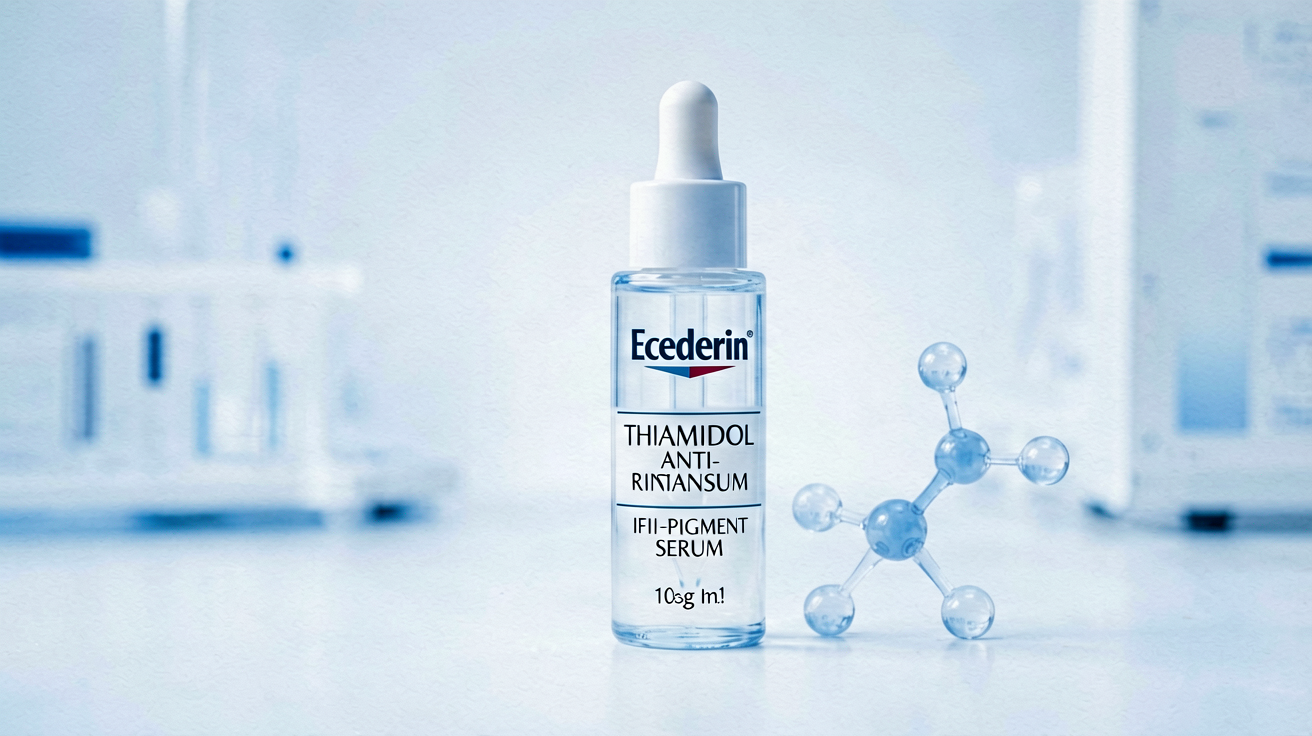
Overview: What Is Eucerin Anti-Pigment Dual Serum?
Eucerin Anti-Pigment Dual Serum is one of the most talked-about hyperpigmentation treatments in European skincare, built around a patented molecule called Thiamidol (isobutylamido thiazolyl resorcinol) that Beiersdorf scientists spent over a decade developing. Originally launched in a dual-chamber pump that kept the Thiamidol gel and hyaluronic acid emulsion separate until dispensing, the formula was recently streamlined into a single-chamber bottle with the same active core. At approximately €30–45 ($35–50) for 30ml, it sits in the mid-to-premium drugstore tier — more accessible than department-store serums but pricier than The Ordinary or Naturium alternatives.
The serum targets all major forms of facial hyperpigmentation: age spots (lentigines), post-inflammatory hyperpigmentation (PIH) from acne, melasma, and general uneven skin tone. Eucerin backs this with clinical data claiming visible improvements in as little as 7 days and up to a 75% reduction in pigmentation after 12 weeks of twice-daily use. Those numbers are unusually aggressive for an OTC cosmetic — so we took a deep dive into the formula, the published research, and real user experiences to see whether the serum lives up to its reputation.
Full Ingredient Analysis
The full INCI list for the current Eucerin Anti-Pigment Dual Serum formulation:
Aqua, Alcohol Denat., Butylene Glycol, Glycerin, Octocrylene, Isopropyl Palmitate, Cetearyl Isononanoate, Distarch Phosphate, Methylpropanediol, Isobutylamido Thiazolyl Resorcinol, Sodium Ascorbyl Phosphate, Sodium Hyaluronate, Glycyrrhiza Inflata Root Extract, Tocopherol, Glucosylrutin, Sodium Stearoyl Glutamate, Glyceryl Stearate, Sodium Chloride, Trisodium EDTA, Caprylyl Glycol, Phenoxyethanol, Parfum.
Star Active: Thiamidol (Isobutylamido Thiazolyl Resorcinol)
Thiamidol is a synthetic resorcinol derivative and the product’s central differentiator. Beiersdorf screened approximately 50,000 compounds to find a molecule that inhibits human tyrosinase — the rate-limiting enzyme in melanin synthesis — at clinically meaningful potency. In head-to-head in vitro testing published in the Journal of Investigative Dermatology (2018), Thiamidol demonstrated inhibition of human tyrosinase at an IC50 of 1.1 μmol/L, making it roughly 20 times more potent than 4-butylresorcinol (the active in many luxury brightening products) and far more effective than kojic acid, arbutin, or vitamin C on a molar basis.
This matters because human tyrosinase and mushroom tyrosinase (used in most cheap screening assays) are structurally different. Many ingredients that look great in mushroom-tyrosinase tests perform poorly on actual human skin. Thiamidol was validated specifically against the human enzyme, which partially explains why the clinical results are stronger than what we typically see from cosmetic brighteners. While Beiersdorf does not publish the exact concentration in the finished product, independent estimates place it around 0.2% based on the compound’s solubility and the patent literature.
Supporting Actives
- Sodium Ascorbyl Phosphate (SAP): A stable, water-soluble vitamin C derivative. SAP provides antioxidant photoprotection and has demonstrated some melanogenesis-inhibiting activity — though it is less potent than pure L-ascorbic acid for brightening. At likely 1–3%, it plays a supporting role rather than driving results.
- Glycyrrhiza Inflata Root Extract (Lico A): A licorice-root fraction rich in licochalcone A, which has anti-inflammatory and antioxidant properties. The logic here is smart: UV-driven inflammation is a key trigger for melanocyte activation. By calming the skin, Lico A may help prevent new spots from forming while Thiamidol fades existing ones.
- Sodium Hyaluronate: Small-molecular-weight hyaluronic acid for surface hydration. This is more about texture and tolerability than pigmentation correction — it helps offset the potentially drying effect of the alcohol base (see below).
- Tocopherol (Vitamin E) + Glucosylrutin: A dual-antioxidant pair. Glucosylrutin is a flavonoid derivative with UV-protective properties that complements tocopherol’s lipid-phase antioxidant action.
- Octocrylene: A UVB-filter included not for incidental daytime protection but as a deliberate design choice. Since UV exposure is the dominant trigger for hyperpigmentation recurrence, embedding a sunscreen filter creates a “pigmentation relapse barrier” during daytime application — though it does not replace a proper SPF product.
Controversial Ingredient: Alcohol Denat.
Alcohol Denat. sits at the second position on the ingredient list, meaning it is present at a significant concentration. This is a legitimate concern for anyone with a compromised barrier, dry skin, or sensitivity. Alcohol acts as a penetration enhancer (likely helping Thiamidol reach the basal layer where melanocytes reside) and creates the lightweight, fast-absorbing texture users frequently praise. However, chronic alcohol exposure has been associated with barrier disruption and increased transepidermal water loss in some studies. For oily or resilient skin types, this may be a non-issue; for dry or sensitive skin, it is a flag worth noting.
Formulation Assessment
The formula is best understood as a pharmaceutical-style approach to cosmetic brightening — prioritize efficacy and delivery kinetics, then backfill tolerability. The alcohol base and lightweight ester blend (Isopropyl Palmitate, Cetearyl Isononanoate) create a rapidly absorbing vehicle that avoids the greasy finish common to oil-based serums. The inclusion of Octocrylene means the serum pulls double duty as a light daytime treatment, though users should still layer a dedicated SPF 30+ on top.
Strengths of the formulation approach:
- Clinically validated active at meaningful potency: Unlike many “brightening” products that include a sprinkle of niacinamide and call it a day, Thiamidol is backed by peer-reviewed data and Beiersdorf’s own multi-center trials.
- Multi-pathway strategy: Tyrosinase inhibition (Thiamidol) + antioxidant defense (SAP, Tocopherol, Glucosylrutin) + anti-inflammatory calming (Lico A) + UV filtration (Octocrylene) — this covers melanogenesis at the trigger, synthesis, and transfer stages.
- Clean preservative system: Phenoxyethanol + Caprylyl Glycol, avoiding parabens and formaldehyde-releasing preservatives.
Weaknesses:
- High alcohol content: The most repeated complaint across user reviews. For some, the drying effect outweighs the brightening benefit.
- Added fragrance (Parfum): Unnecessary for efficacy and a potential irritant for sensitive skin, especially in a product targeting facial use.
- Isopropyl Palmitate: Rated 3–4 on the comedogenicity scale, which may be problematic for acne-prone users — ironic given PIH from acne is one of the serum’s indicated uses.
Review Sentiment: What Users Report
Across Amazon, Reddit’s r/EuroSkincare and r/Melasmaskincare, and European pharmacy review sections, the consensus is notably positive but not without caveats. The dominant themes from hundreds of user reviews:
Positive Patterns
- Speed of results: Many users report visible fading of post-acne marks within 2–3 weeks, significantly faster than alternatives like azelaic acid or vitamin C serums.
- Efficacy on stubborn melasma: A recurring narrative is “I tried hydroquinone/kojic acid/arbutin for years and this is the only thing that worked.” This aligns with Thiamidol’s superior tyrosinase-binding data.
- Cosmetic elegance: The texture is consistently described as lightweight, non-sticky, and layerable under moisturizer and sunscreen.
- Works on diverse skin tones: Positive reports from Fitzpatrick III–VI users with melasma and PIH.
Negative Patterns
- Alcohol-induced dryness: The most common complaint. Users with dry or sensitive skin report stinging, flaking, or redness, especially when combined with other actives (retinoids, exfoliating acids).
- Price-to-volume ratio: At ~€40 for 30ml with twice-daily recommended application, a bottle lasts roughly 4–6 weeks, making the annual cost significant (~€300–400).
- Rebound pigmentation: Some users note that spots return if the product is discontinued without maintaining sun protection — a predictable outcome given that Thiamidol suppresses melanin but does not permanently alter melanocyte behavior.
- Packaging failures: The original dual-chamber design occasionally clogged or dispensed unevenly. The newer single-chamber version resolves this.
Competitor Comparison
| Product | Key Active | Price (30ml) | Strengths | Weaknesses |
|---|---|---|---|---|
| Eucerin Anti-Pigment Dual Serum | Thiamidol 0.2% | ~€35–45 | Strongest human tyrosinase inhibitor; fast results; clinical data | High alcohol; fragrance; comedogenic esters |
| La Roche-Posay Mela B3 Serum | Melasyl + 10% Niacinamide | ~€40–50 | Alcohol-free; strong tolerability; SPF-compatible | Slower results; Melasyl less potent than Thiamidol |
| SkinCeuticals Discoloration Defense | 3% Tranexamic Acid + 1% Kojic Acid + 5% Niacinamide | ~$100 | Multi-pathway; no alcohol; well-tolerated | Significantly more expensive; slower onset |
| The Ordinary Alpha Arbutin 2% + HA | 2% Alpha Arbutin | ~€12 | Very affordable; simple formula; alcohol-free | Weaker tyrosinase inhibition; fewer supporting actives |
| Naturium Tranexamic Acid 5% Serum | 5% Tranexamic Acid + Kojic Acid | ~$20 | Good value; high TXA concentration; fragrance-free | TXA works best on vascular melasma; limited effect on age spots |
Who Should Use Eucerin Anti-Pigment Dual Serum?
This serum is best suited for someone with resilient, non-dry skin who wants the most potent OTC brightening active available without a prescription. If your primary concern is stubborn melasma patches, clustered PIH from acne, or solar lentigines that have resisted vitamin C and niacinamide, Thiamidol’s mechanism-of-action advantage makes this a strong candidate.
It is less ideal for:
- Dry or barrier-compromised skin (the alcohol will make it worse)
- Rosacea-prone or highly reactive skin (fragrance + alcohol = risk)
- Those seeking a gentle, “clean beauty” formula — this is an efficacy-first pharmaceutical approach
- Budget-constrained users who would be better served by alpha arbutin or tranexamic acid products at a lower price point
Verdict
Eucerin Anti-Pigment Dual Serum earns its reputation as one of the most effective non-prescription hyperpigmentation treatments on the market. The decision to build a product around a genuinely novel molecule — rather than repackaging the same niacinamide-and-arbutin combination found in dozens of competing serums — pays off in user outcomes. The clinical data is unusually robust for a cosmetic, the speed of visible improvement impresses real users, and the formula’s multi-pathway approach demonstrates strong formulation logic.
The alcohol content and fragrance prevent it from being universally recommendable, and the annual cost is not trivial. But if your skin tolerates alcohol well and you are looking for maximum brightening efficacy without an prescription, the Eucerin Anti-Pigment Dual Serum is — ingredient for ingredient, data point for data point — among the strongest options in the global OTC market as of 2026. Apply twice daily, layer a proper SPF 50 on top every morning, and give it a full 12-week cycle before judging results.
Disclaimer: This analysis is for educational and informational purposes only. It does not constitute medical advice. Consult a dermatologist before starting any new skincare treatment, especially if you are pregnant, nursing, or using prescription medications.
Interested in Formulation Data Collaboration?
Let's discuss how Melasyl AI can accelerate your next whitening or brightening formula. Technical collaboration, data licensing, or custom AI-driven research — reach out.
Contact Wei →