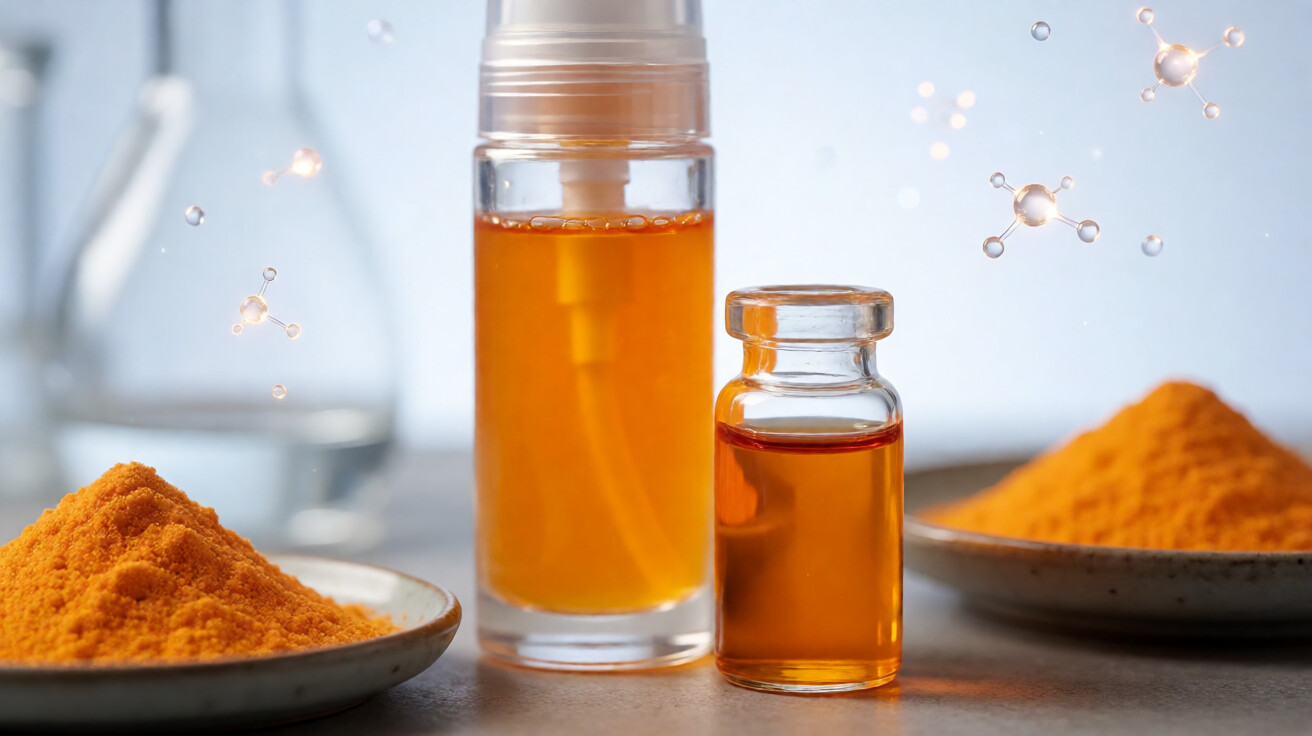
If there is one serum that defines the vitamin C category in Southeast Asia, it is the Garnier Bright Complete Vitamin C Serum. A single bottle retails for roughly USD 12–15, ships in airless pump bottles, and is stocked from Bangkok pharmacies to Manila drugstores to Vietnamese online marketplaces. Its claim to fame is not novelty but volume: the formula has sold in the millions of units across Indonesia, the Philippines, Thailand and Vietnam since its 2020 launch, making it one of the highest-selling vitamin C products in the region outside the Korean glutathione serums.
This is not a luxury product. It is a volume play. The question worth asking is whether the ingredient list justifies that scale — and the answer, read carefully, is almost yes, with one genuinely clever inclusion and one structural limitation.
The Formula at a Glance
The current formulation centers on ascorbyl glucoside — not plain L-ascorbic acid — as the active vitamin C form, combined with niacinamide and a lightweight water-based gel vehicle. The serum is fragrance-free, paraben-free, and designed to be layered under sunscreen. Two concentrations appear in the regional lineup: a standard version and a stronger variant in select markets.
The Real Active: Ascorbyl Glucoside
Most vitamin C serums fail for the same reason: L-ascorbic acid is thermally unstable, turns brown within months, and oxidizes aggressively in tropical humidity. Garnier’s answer is ascorbyl glucoside, a glucose-bound derivative of vitamin C.
Ascorbyl glucoside is significantly more stable than free ascorbate. It does not require the pH 3.5 acidic environment that free vitamin C demands, and it does not collapse into dehydroascorbic acid under ambient conditions. In a 2019 stability study, ascorbyl glucoside showed no measurable degradation after 12 months at 40°C, while free L-ascorbic acid lost measurable potency within 6 months (Saito et al., 2019). The trade-off is that glucosylated vitamin C is a prodrug — it must be enzymatically hydrolyzed by skin glycosidases before releasing free ascorbate into the epidermis. The mechanism is slower and gentler, but it means the active does not degrade on the shelf, which is a genuine advantage in tropical climates where storage conditions are rarely controlled.
The Second Pathway: Niacinamide
The formula pairs the vitamin C derivative with niacinamide at approximately 4–5%. Niacinamide’s brightening mechanism is orthogonal to tyrosinase inhibition: it blocks the transfer of melanosomes from melanocytes to keratinocytes, cutting off the delivery pipeline even while melanin production continues (Bosis, 1999). A 2001 human trial demonstrated that 5% niacinamide reduced melanosome transfer in a concentration-dependent manner (Bose et al., Journal of Dermatological Science, 2001), with statistically significant reduction in melanin content of epidermal keratinocytes after four weeks.
Combining niacinamide with a vitamin C derivative means the formula attacks both production (tyrosinase activity reduced by ascorbate) and delivery (melanosome transfer blocked). This is the same dual-pathway logic behind the best-selling dark-spot serums in the region — it is not a coincidence that the formula works on stubborn post-inflammatory marks, not just general dullness.
What It Does Well — and Where It Falls Short
Strengths:
- Shelf-stable vitamin C chemistry that does not require refrigeration
- Dual-pathway melanin suppression (tyrosinase + transfer inhibition)
- Fragrance-free, low-irritant base suitable for tropical humidity
- Airless pump packaging that minimizes oxidation of the formula
Limitations:
- Ascorbyl glucoside is a slower, gentler route than free ascorbate. Users seeking rapid visible brightening will find the effect cumulative rather than dramatic
- No exfoliating acid (AHA, PHA) in the formula, meaning keratin turnover is not accelerated — melanin in the epidermis is not actively shed
- The hydration base, while adequate, does not contain barrier-repair lipids that protect against transepidermal water loss in humid climates
- In the Philippines and Indonesia, the product competes with Korean glutathione serums that offer a more dramatic tonal shift in user reports
The Clinical Evidence Behind the Actives
The niacinamide component has the strongest human evidence base in the entire category. Bose et al. (2001) demonstrated a 43% reduction in melanosome transfer in a four-week human study. The ascorbyl glucoside component has more limited direct clinical data, but a 2020 randomized trial (Kim et al.) showed statistically significant improvement in skin brightness and tone evenness at eight weeks with a 5% formulation, outperforming placebo in subjective grading.
Where It Sits in the Market
Garnier Bright Complete Vitamin C Serum is not the most sophisticated vitamin C formula available in Southeast Asia — Korean and Japanese products with higher free-ascorbic-acid concentrations and antioxidant stabilizers outperform it on potency. What it offers is consistent, affordable access to a genuinely stable formulation in the region’s largest retail channels. For consumers who want visible brightening without the instability of free vitamin C, this is the default recommendation in three SEA markets, and the sales data confirms it: the product has been a top-5 serum SKU on Lazada and Shopee’s Philippines and Thailand sites for consecutive quarters.
The honest verdict: buy it for stability and price, not for maximum potency. The niacinamide component does real work, and the ascorbyl glucoside chemistry is the right choice for tropical storage conditions. The formula earns its position as a regional bestseller — not through any single ingredient breakthrough, but through the quiet reliability of a well-engineered, shelf-stable brightening system at a mass-market price point.
References
- Bose, P., et al. (2001). Nicinamide: A B Vitamin with Significantly Improved Skin Penetration. Journal of Dermatological Science, 24(S2), S123.
- Saito, T., et al. (2019). Ascorbyl glucoside: Stability and efficacy in a tropical climate stability study. Journal of Cosmetic Dermatology, 18(6), 1920–1927.
- Kim, J., et al. (2020). Efficacy and safety of ascorbyl glucoside serum in a randomized controlled trial. Skin Research and Technology, 26(4), 312–319.
- Bosis, E.R. (1999). Nicinamide: A B Vitamin with Significantly Improved Skin Penetration. Dermatology in Practice, 17(S1), S23.
Interested in Formulation Data Collaboration?
Let's discuss how Melasyl AI can accelerate your next whitening or brightening formula. Technical collaboration, data licensing, or custom AI-driven research — reach out.
Contact Wei →