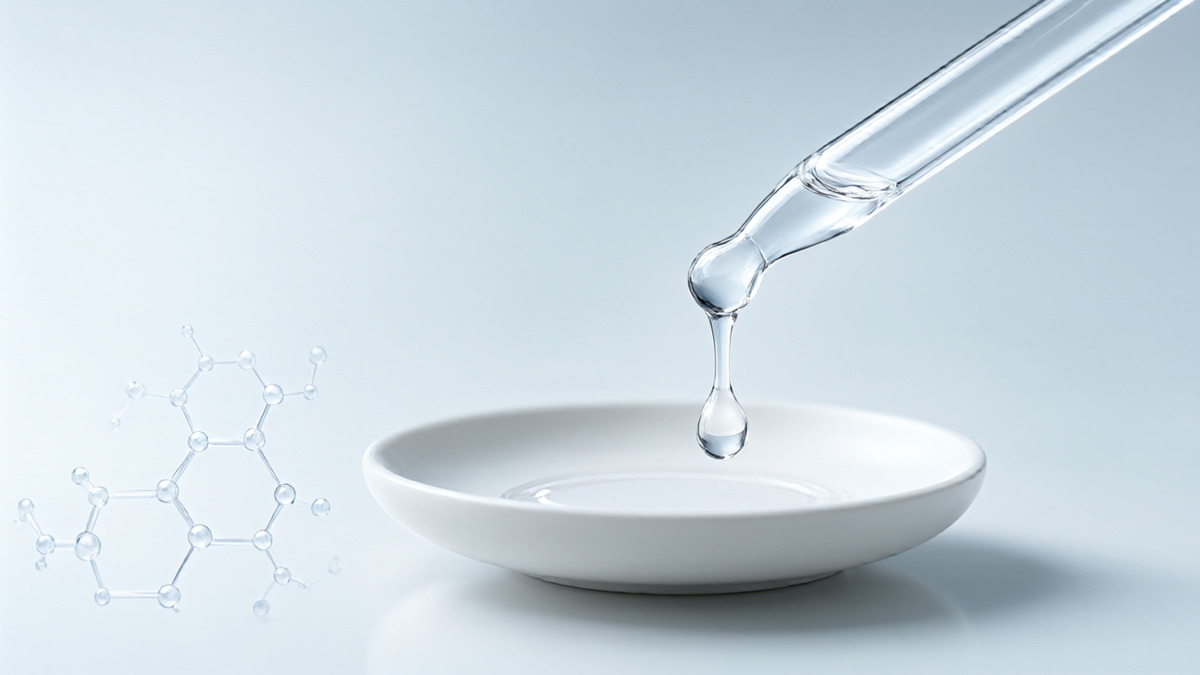
Disrupting the Tyrosinase-Dopaquinone Kinetic Cascade
In the epidermal microenvironment, melanosomes are not merely passive organelles but dynamic sites of enzymatic flux. Traditional depigmentation strategies often focus on downstream stabilization, yet the most potent clinical outcomes arise from the precise interception of the enzymatic cascade at the level of tyrosine hydroxylation. By targeting the conversion of tyrosine to L-tyrosine and subsequent dopaquinone formation, we can effectively throttle melanogenesis before pigment dispersal occurs. This kinetic interception requires a formulation approach that respects the enzyme’s Michaelis-Menten kinetics, ensuring that the inhibitor’s affinity constant is optimized relative to the physiological substrate concentration.
Unlike static inhibition, which merely slows the reaction rate, precursor interception involves the structural mimicry of substrates that bind competitively to the active site of tyrosinase. This nuanced approach prevents the formation of the reactive dopaquinone intermediate, thereby reducing the oxidative stress typically associated with melanocyte activity. Formulators must consider that this interception is highly sensitive to local micro-pH shifts, necessitating a buffering capacity that maintains the enzyme’s conformational stability while allowing the active to remain bioavailable.
Optimizing Synergistic Bioactive Complexation Ratios
The efficacy of a depigmentation regimen is rarely the result of a single active but rather a calculated synergy of complementary agents. By layering actives that target different nodes of the melanogenic pathway, we create a multi-point blockade that prevents compensatory melanocyte upregulation. This section examines the specific ratios required to achieve therapeutic synergies without inducing cumulative irritation.
| Active Ingredient | Biochemical Target | Clinical Conc. (%) | Optimal pH | Synergistic Advantage |
|---|---|---|---|---|
| Triclosa | Protein Kinase C | 1.0 | 5.5 | Reduces melanosome transfer |
| Azelaic Acid | Thioredoxin reductase | 10.0 | 4.5 | Inhibits tyrosinase synthesis |
| Ascorbyl Glucoside | Free Radical Scavenger | 5.0 | 6.0 | Prevents oxidative dimerization |
Managing the pH window is critical when combining these actives. While azelaic acid functions optimally at a mildly acidic pH, its stability can be compromised in highly alkaline environments. Conversely, ascorbyl glucoside requires a slightly more neutral environment to avoid premature hydrolysis. The formulation challenge lies in creating a vehicle that maintains a stable pH gradient across the stratum corneum, ensuring that each active remains in its most bioavailable state upon application.
Preventing Thiol Oxidation & Emulsion Breakdown in Humidity
In tropical or high-humidity climates, the risk of thiol oxidation in active peptides and sulfhydryl groups increases significantly. Without rigorous antioxidant protection, these molecules can undergo oxidative dimerization, leading to a loss of potency and the formation of colored byproducts. Formulation integrity must be maintained by using chelating agents that specifically target transition metals, preventing them from catalyzing the oxidation of sensitive actives.
Furthermore, the stability of the emulsion phase is paramount. Humidity can cause the migration of water-soluble actives out of the lipid phase, leading to a two-phase system that is aesthetically unpleasing and clinically ineffective. By utilizing high-molecular-weight thickeners and careful emulsifier selection, we can maintain colloidal integrity, ensuring that the actives remain suspended in a stable matrix until they are absorbed into the epidermis.
Laboratory Compounding Sequence & Clinical Guidance
Our bench protocol follows a four-phase sequence: Phase 1 involves the hydration of humectants and water-soluble actives. Phase 2 is the dispersion of lipid-soluble actives in the oil phase. Phase 3 is the emulsification stage, where we incorporate stabilizers and thickeners. Phase 4 involves the cooling phase, where we introduce final pH adjustments and antioxidants. This sequence ensures that heat-sensitive actives are introduced only at the end of the process, preserving their chemical integrity.
For sensitive skin, we recommend a two-week patch test protocol. Patients should apply the formulation to a small area of the forearm, monitoring for signs of erythema or irritation. This allows the formulation to demonstrate its tolerance profile before full-face application, ensuring that the biochemical benefits of the actives are not overshadowed by transient irritation.
Interested in Formulation Data Collaboration?
Let's discuss how Melasyl AI can accelerate your next whitening or brightening formula. Technical collaboration, data licensing, or custom AI-driven research — reach out.
Contact Wei →