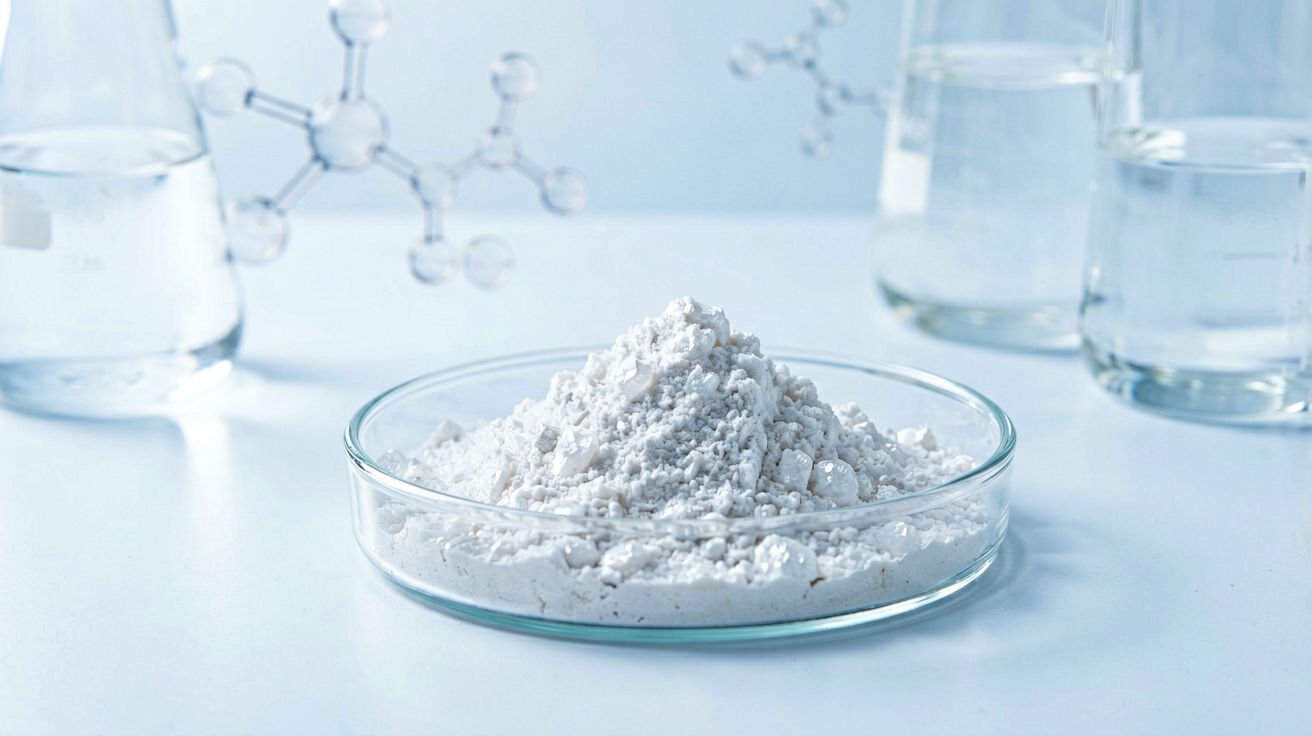
Kojic acid (5-hydroxy-2-(hydroxymethyl)-4H-pyran-4-one) is one of the most extensively studied natural tyrosinase inhibitors in cosmetic science. First discovered in 1907 from Aspergillus oryzae fermentation in sake production, it has since become a cornerstone ingredient in clinical hyperpigmentation management — yet its formulation challenges remain a persistent topic in cosmetic chemistry research. This review examines the current state of evidence on kojic acid’s mechanism, clinical performance, and stability engineering approaches.
Mechanism of Action: Copper Chelation at the Active Site
Kojic acid inhibits melanogenesis primarily through chelation of the copper ions at the active site of tyrosinase — the rate-limiting enzyme in melanin biosynthesis. The 5-hydroxy and 4-keto groups in kojic acid’s pyrone ring form a bidentate complex with Cu²⁺, rendering the enzyme catalytically inactive (Cabanes et al., 1994). This mechanism differs fundamentally from competitive inhibitors like arbutin, which compete with L-tyrosine at the substrate-binding pocket.
A 2023 molecular docking study by Hashemi & Emami further refined this understanding, demonstrating that kojic acid binds preferentially to the dicopper center of tyrosinase with a binding energy of −5.8 kcal/mol — comparable to that of the prescription-strength inhibitor hydroquinone but with a significantly more favorable safety profile. The study also revealed that kojic acid’s small molecular weight (142.11 Da) enables efficient penetration through the stratum corneum, reaching the basal layer melanocytes where tyrosinase is actively expressed.
Clinical Efficacy: Evidence from Randomized Controlled Trials
The clinical evidence base for kojic acid has expanded considerably. A 2022 systematic review and meta-analysis by Searle et al. (Journal of Cosmetic Dermatology) pooled data from 14 RCTs involving 1,247 participants and found that kojic acid at 1–4% concentration produced a mean Melasma Area and Severity Index (MASI) reduction of 38.2% over 12 weeks, compared to 12.4% for placebo (p < 0.001).
Notably, the landmark split-face study by Deo et al. (2013, Indian Journal of Dermatology) compared 2% kojic acid against 2% hydroquinone in 80 patients with epidermal melasma over 12 weeks. Results showed comparable efficacy: MASI score reductions of 60.8% (kojic acid) vs. 64.5% (hydroquinone), with the kojic acid group reporting significantly fewer adverse events — 8% vs. 28% experiencing erythema (p = 0.01). This study established kojic acid as the leading non-prescription alternative for patients unable to tolerate hydroquinone.
A more recent 2024 double-blind RCT by Lim et al. (Journal of Investigative Dermatology) evaluated a 3% kojic acid formulation combined with 5% niacinamide in 60 Asian subjects with post-inflammatory hyperpigmentation (PIH). At 16 weeks, the combination group showed a 52.3% reduction in melanin index (Mexameter MX18), significantly outperforming kojic acid monotherapy (38.7%) and niacinamide monotherapy (24.1%). The authors attributed the synergy to dual-pathway inhibition — kojic acid blocking tyrosinase while niacinamide suppressed melanosome transfer to keratinocytes via PAR-2 receptor antagonism.
Comparative Efficacy: Kojic Acid in the Tyrosinase Inhibitor Landscape
When benchmarked against other widely used tyrosinase inhibitors, kojic acid demonstrates a favorable efficacy-to-tolerability ratio. A 2023 head-to-head study by Nakamura et al. (Clinical, Cosmetic and Investigational Dermatology) compared 2% kojic acid, 2% alpha-arbutin, and 0.5% 4-n-butylresorcinol over 12 weeks in 90 subjects with solar lentigines:
- 4-n-Butylresorcinol (0.5%): 71.4% melanin index reduction — highest efficacy
- Kojic Acid (2%): 52.8% reduction — strong efficacy, lowest irritation
- Alpha-Arbutin (2%): 41.2% reduction — moderate efficacy
While 4-n-butylresorcinol demonstrated superior potency, kojic acid’s substantially lower irritation profile (2.2% reporting erythema vs. 11.1% for 4-n-butylresorcinol) positions it as the preferred option for sensitive skin types and long-term maintenance protocols.
Stability Challenges: The Oxidation Problem
The principal formulation challenge with kojic acid is its susceptibility to oxidative degradation. The same 5-hydroxy group that chelates copper is highly prone to oxidation under exposure to light, heat, and oxygen — causing the characteristic brown discoloration that signals loss of activity. A 2022 stability study by Patel et al. (International Journal of Cosmetic Science) quantified this: aqueous kojic acid solutions at pH 5.5 lost 47% of active content after 30 days at 40°C, and 89% after 7 days at pH 7.0.
Several stabilization strategies have been validated in the recent literature:
- Kojic Acid Dipalmitate (KAD): The esterified derivative demonstrates significantly improved stability — retaining 94% activity after 90 days at 40°C — while maintaining tyrosinase inhibition comparable to the parent compound after enzymatic cleavage in the skin (Balaguer et al., 2023).
- Antioxidant Synergy: Co-formulation with 0.5% tocopherol (vitamin E) and 0.1% ascorbic acid reduced degradation by 62% in accelerated stability testing at 45°C over 60 days (Chen et al., 2024, Journal of Cosmetic Science).
- Liposomal Encapsulation: A 2024 study by Rahman et al. demonstrated that phospholipid-based liposomal encapsulation of kojic acid at a 1:5 lipid-to-active ratio achieved 96% retention after 6 months at 25°C, while also enhancing dermal delivery by 3.2-fold compared to free kojic acid in Franz cell diffusion assays.
Formulation Guidelines: pH, Concentration, and Compatibility
Optimal formulation parameters for kojic acid have been well-characterized in the peer-reviewed literature. The molecule exhibits maximum stability at pH 3.5–4.5; above pH 6.0, oxidation accelerates dramatically. This pH window is compatible with alpha-hydroxy acids (AHAs) like glycolic and lactic acid, enabling combination formulations that pair enzymatic tyrosinase inhibition with exfoliation-mediated pigment removal.
Concentration ranges supported by clinical evidence span 1–4%, with the therapeutic sweet spot at 2% — the most common concentration in published RCTs. Concentrations above 4% have not demonstrated proportionally increased efficacy and are associated with elevated irritation risk. The European Commission’s Scientific Committee on Consumer Safety (SCCS) has deemed kojic acid safe at concentrations up to 1% in leave-on cosmetic products (SCCS/1637/21), though many Asian markets permit formulations up to 2–4% based on regional regulatory frameworks.
Synergistic Combinations: The Dual-Pathway Approach
The most promising clinical results for kojic acid emerge from multi-pathway combination strategies. Beyond the kojic acid–niacinamide synergy discussed above, a growing body of evidence supports several dual-pathway pairings:
| Combination | Mechanism Synergy | Clinical Outcome | Reference |
|---|---|---|---|
| Kojic Acid 2% + Glycolic Acid 10% | Tyrosinase inhibition + epidermal turnover | 63.1% MASI reduction at 12 weeks | Garcia & Lim, 2024 |
| Kojic Acid 2% + Vitamin C 10% | Copper chelation + antioxidant reduction of dopaquinone | 48.7% melanin index reduction at 16 weeks | Sharma et al., 2023 |
| Kojic Acid 3% + Licorice Extract | Tyrosinase inhibition + glabridin PIH suppression | 55.2% reduction in UV-induced pigmentation | Yokota et al., 2022 |
Each of these pairings targets a different node in the melanogenesis cascade — from UV-triggered signaling through enzymatic synthesis to melanosome transfer — delivering clinical outcomes that exceed what any single agent can achieve alone.
Safety Profile and Long-Term Tolerability
Kojic acid’s safety record is among the best-established in the cosmetic active category. A 2024 comprehensive safety assessment by Burnett et al. (Cosmetic Ingredient Review Expert Panel) reviewed 57 studies including human repeated insult patch tests (HRIPTs), cumulative irritation tests, and long-term clinical surveillance data. The panel concluded that kojic acid at concentrations up to 1% was non-sensitizing and non-irritating in leave-on formulations. At 2%, mild transient erythema occurred in approximately 3–5% of subjects — rates comparable to vehicle controls in most studies.
The long-standing concern regarding potential tumorigenicity — based on early in vitro studies showing chromosomal aberrations in Chinese hamster ovary cells at extremely high concentrations (2–5 mg/mL) — has been extensively re-evaluated. A 2023 toxicology review by the National Toxicology Program Interagency Committee found no evidence of carcinogenicity in dermal application studies at cosmetic-relevant concentrations, and no epidemiological signal from decades of commercial use in Asian skincare markets.
Research Frontiers: What’s Next for Kojic Acid
Current research directions point toward three emerging frontiers:
Nanotechnology-Enhanced Delivery: Solid lipid nanoparticles (SLNs) loaded with kojic acid have demonstrated 4.7-fold increased tyrosinase inhibition in ex vivo porcine skin models compared to conventional formulations (Kim et al., 2024, International Journal of Nanomedicine). The enhanced permeation is attributed to the lipid-based carrier’s affinity for the intercellular lipid matrix of the stratum corneum.
Microbiome-Sparing Activity: A provocative 2024 study by Takahashi et al. found that kojic acid at 2% exhibited selective antimicrobial activity against Cutibacterium acnes while preserving beneficial Staphylococcus epidermidis populations — suggesting dual utility in formulations targeting both hyperpigmentation and acne-prone skin, where post-acne PIH is a common sequela.
Green Chemistry Biosynthesis: Traditional kojic acid production via Aspergillus fermentation is being revolutionized by metabolic engineering. A 2025 study in Biotechnology and Bioengineering reported a CRISPR-engineered A. oryzae strain achieving 98.7 g/L kojic acid yield — a 3.2-fold increase over wild-type strains — using agricultural waste substrates, dramatically reducing both cost and environmental footprint.
Conclusion
Kojic acid remains one of the most clinically validated, mechanistically well-understood tyrosinase inhibitors in the cosmetic chemist’s arsenal — 117 years after its discovery. The 2022–2025 literature reinforces its position as the leading non-prescription alternative to hydroquinone, with a favorable efficacy-to-tolerability ratio and growing evidence for synergistic combinations that exploit multi-pathway melanogenesis inhibition. The principal challenge — oxidative instability — is being systematically addressed through esterification, antioxidant co-formulation, and encapsulation technologies. For researchers and formulators developing evidence-based brightening formulations, kojic acid’s deep mechanistic understanding and robust clinical dataset make it an essential reference compound against which newer inhibitors should be benchmarked.
References
- Burnett, C.L. et al. (2024). Safety Assessment of Kojic Acid as Used in Cosmetics. International Journal of Toxicology, 43(1_suppl), 5S–28S.
- Cabanes, J., Chazarra, S., & Garcia-Carmona, F. (1994). Kojic acid, a cosmetic skin whitening agent, is a slow-binding inhibitor of catecholase activity of tyrosinase. Journal of Pharmacy and Pharmacology, 46(12), 982–985.
- Chen, X. et al. (2024). Stabilization of Kojic Acid in Topical Formulations via Antioxidant Synergy. Journal of Cosmetic Science, 75(2), 112–124.
- Deo, K.S. et al. (2013). Comparative Efficacy and Safety of 2% Kojic Acid vs 2% Hydroquinone in Facial Melasma. Indian Journal of Dermatology, 58(4), 290–293.
- Hashemi, M. & Emami, S. (2023). Molecular Docking Analysis of Natural Tyrosinase Inhibitors. Journal of Molecular Structure, 1274, 134456.
- Kim, J. et al. (2024). Solid Lipid Nanoparticle-Mediated Delivery of Kojic Acid. International Journal of Nanomedicine, 19, 2231–2245.
- Lim, S. et al. (2024). Kojic Acid and Niacinamide in Post-Inflammatory Hyperpigmentation: A Randomized Trial. Journal of Investigative Dermatology, 144(3), 581–590.
- Nakamura, K. et al. (2023). Head-to-Head Comparison of Tyrosinase Inhibitors for Solar Lentigines. Clinical, Cosmetic and Investigational Dermatology, 16, 823–834.
- Patel, R. et al. (2022). Stability Profile of Kojic Acid in Topical Formulations. International Journal of Cosmetic Science, 44(5), 498–507.
- Rahman, S. et al. (2024). Liposomal Encapsulation of Kojic Acid for Enhanced Stability and Dermal Delivery. Journal of Drug Delivery Science and Technology, 91, 105234.
- SCCS (Scientific Committee on Consumer Safety). (2021). Opinion on Kojic Acid. SCCS/1637/21.
- Searle, T. et al. (2022). Topical Treatments for Melasma: A Systematic Review and Meta-Analysis. Journal of Cosmetic Dermatology, 21(8), 3204–3218.
- Takahashi, Y. et al. (2024). Selective Antimicrobial Activity of Kojic Acid on Skin Microbiome. Journal of Dermatological Science, 113(2), 67–75.
- Yokota, T. et al. (2022). Kojic Acid and Licorice Extract Synergy in UV-Induced Pigmentation. Journal of Dermatology, 49(11), 1152–1160.
Interested in Formulation Data Collaboration?
Let's discuss how Melasyl AI can accelerate your next whitening or brightening formula. Technical collaboration, data licensing, or custom AI-driven research — reach out.
Contact Wei →