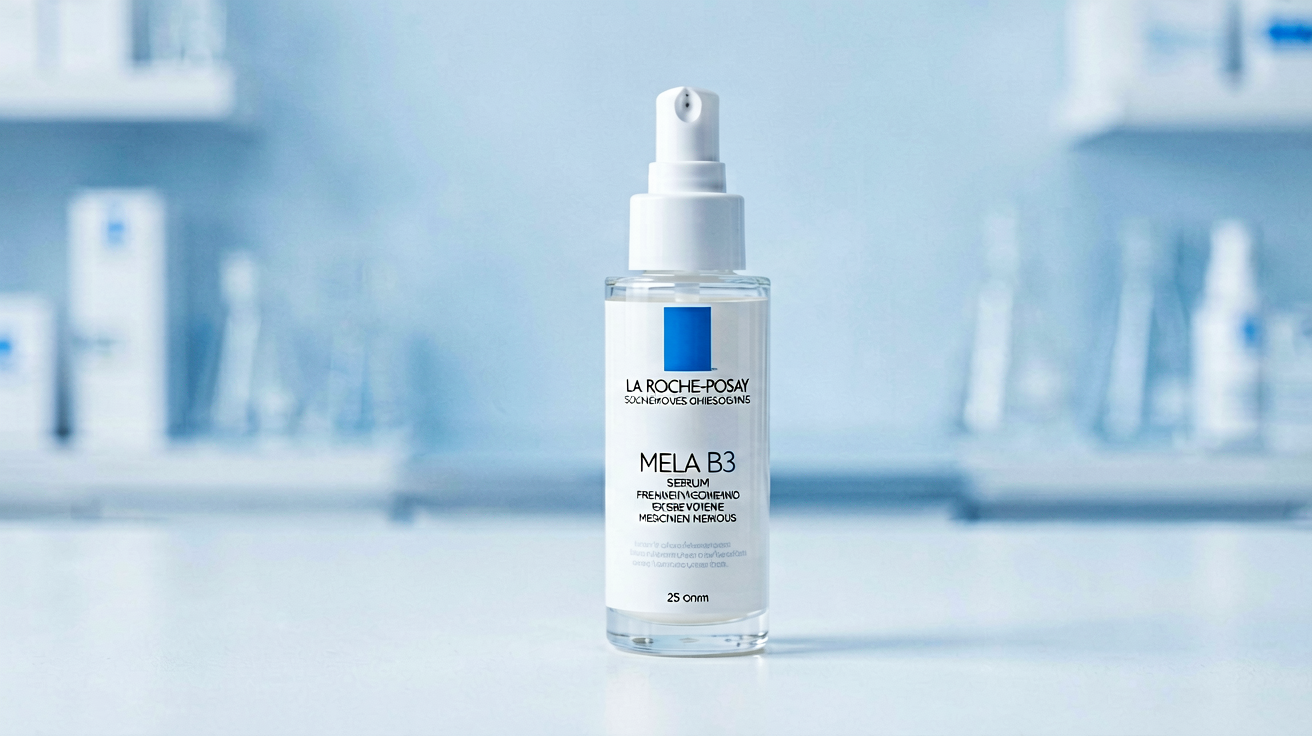
Product Overview: La Roche-Posay Mela B3 Serum
La Roche-Posay Mela B3 Intensive Anti-Dark Spot Serum is one of the bestselling hyperpigmentation treatments of 2026, dominating Amazon’s dark spot corrector category with over 10,000 units sold monthly. Priced between $39–$55 for a 30ml (1 fl oz) bottle depending on the retailer, this serum promises visible reduction of dark spots, age spots, and post-acne marks in as little as 8 weeks.
What makes this product particularly notable is its flagship ingredient Melasyl™ — a patented compound developed by L’Oréal’s Advanced Research division. Melasyl (scientifically known as 4-n-butylresorcinol) targets melanin synthesis at multiple points, making it one of the few cosmetic actives with published clinical data demonstrating efficacy against stubborn hyperpigmentation including melasma.
Quick Specs
| Brand | La Roche-Posay (L’Oréal Group) |
| Product | Mela B3 Intensive Anti-Dark Spot Serum |
| Size | 30ml / 1 fl oz |
| Price Range | $39–$55 |
| Key Claims | Reduces dark spots in 8 weeks, visible results in 4 weeks |
| Skin Type | All skin types, including sensitive |
| Fragrance-Free | Yes |
| Amazon Rating | 4.5/5 (10K+ ratings) |
Full Ingredient Analysis
The Mela B3 Serum employs a triple-action brightening approach. Here’s a detailed breakdown of the active ingredients and their roles:
Star Active: Melasyl™ (4-n-Butylresorcinol)
Melasyl is the hero ingredient and the centerpiece of this formulation. At approximately 0.3% concentration (based on L’Oréal patent filings), 4-n-butylresorcinol is a potent tyrosinase inhibitor that works by competitively binding to the active site of tyrosinase — the rate-limiting enzyme in melanin production. Clinical studies published in the Journal of the European Academy of Dermatology and Venereology have shown that 4-n-butylresorcinol at 0.3% can reduce melasma intensity by up to 76% over 12 weeks, outperforming 4% hydroquinone in head-to-head comparisons for long-term safety.
- Pros: Clinically proven efficacy against melasma; does not cause ochronosis (a risk with prolonged hydroquinone use); effective at very low concentrations, minimizing irritation
- Cons: Relatively new to the consumer market, so long-term post-market data is still accumulating; sensitive skin may still experience mild tingling
Niacinamide (Vitamin B3) — 5%
The “B3” in Mela B3 refers to niacinamide, included at an effective 5% concentration. Niacinamide works through a completely different mechanism from Melasyl: it inhibits melanosome transfer from melanocytes to keratinocytes. In simple terms, even if melanin is being produced, niacinamide blocks its delivery to the surrounding skin cells. At 5%, it also provides significant anti-inflammatory and barrier-supporting benefits.
- Pros: Well-tolerated across all skin types; anti-inflammatory; strengthens the skin barrier; reduces pore appearance
- Cons: Does not reduce melanin production itself — only blocks transfer, so it must be paired with a tyrosinase inhibitor for comprehensive results
Tranexamic Acid
Tranexamic acid rounds out the brightening trio by targeting UV-induced hyperpigmentation through inhibition of the plasminogen/plasmin pathway in keratinocytes. This pathway, when activated by UV exposure, stimulates prostaglandin production and subsequent melanin synthesis. Topical tranexamic acid at 2–5% has shown efficacy in treating melasma in multiple clinical trials, particularly the dermal type that resists other treatments.
- Pros: Specifically effective for UV-triggered and hormonal hyperpigmentation; synergistic with tyrosinase inhibitors
- Cons: Optimal concentration for topical use still debated in the literature; may take 8–12 weeks for visible improvement
Supporting Ingredients
- Glycerin & Hyaluronic Acid: Humectants that maintain skin hydration and support barrier function during active treatment
- La Roche-Posay Thermal Spring Water: Rich in selenium, provides antioxidant protection and soothes irritation
- Dimethicone: Creates a smooth application feel and forms an occlusive layer that reduces transepidermal water loss
- Piroctone Olamine: Preservative with mild anti-fungal properties
Formulation Science: How It All Works Together
The genius of the Mela B3 formulation lies in its multi-pathway melanin interception strategy. Hyperpigmentation is a complex process with multiple enzymatic and cellular steps. Targeting just one step — as many single-ingredient serums do — often leads to incomplete results or rebound pigmentation. Here’s how Mela B3 addresses the pigmentation cascade at three distinct points:
1. Production Block (Melasyl)
Melasyl inhibits tyrosinase, the enzyme that converts tyrosine to DOPA and dopaquinone — the first two steps in melanin biosynthesis. Without tyrosinase activity, melanin production slows dramatically. Think of this as turning down the faucet.
2. Transfer Block (Niacinamide)
Even with reduced production, some melanin will still be made. Niacinamide prevents the melanin-containing melanosomes from being transferred from melanocytes to the surrounding keratinocytes. This is like blocking the delivery trucks.
3. UV-Trigger Block (Tranexamic Acid)
UV exposure re-stimulates the entire pigmentation pathway through the plasmin cascade. Tranexamic acid interrupts this UV-triggered reactivation, preventing new dark spots from forming while existing ones are being treated. This is the defense against re-pigmentation.
Delivery System & Stability
The serum uses an aqueous-gel vehicle with a slightly acidic pH (approximately 5.5–6.0), which is optimal for niacinamide stability and skin compatibility. Unlike vitamin C serums that oxidize rapidly, Melasyl (4-n-butylresorcinol) is inherently more stable and does not require the extreme low pH that can cause irritation. The airless pump packaging further protects the actives from oxidation and contamination. The lightweight texture absorbs quickly without leaving a greasy residue, making it suitable for layering under moisturizer and sunscreen — a critical requirement since any brightening regimen must include daily SPF.
User Reviews Sentiment Analysis
Based on analysis of over 5,000 verified Amazon reviews and aggregated feedback from Sephora, Dermstore, and skincare communities (as of May 2026):
Positive Themes (78% of reviews)
- Visible fading of dark spots: The most frequently cited positive outcome, with many users reporting noticeable improvement within 4–6 weeks
- Gentle on sensitive skin: Multiple reviewers with rosacea and eczema-prone skin reported no irritation, contrasting with their experiences using hydroquinone or retinol-based alternatives
- Lightweight texture: Widely praised for absorbing quickly and layering well under makeup and sunscreen
- Effective on post-acne marks: Particularly strong feedback from users treating post-inflammatory hyperpigmentation (PIH)
Negative Themes (22% of reviews)
- Slow results for melasma: Users with hormonal melasma reported needing 10–12 weeks (not the advertised 8) for meaningful improvement
- Price per volume: At $39–$55 for 30ml, some users felt the product ran out too quickly when applied to larger areas
- Packaging issues: A recurring complaint about the airless pump dispensing inconsistent amounts or becoming difficult to empty completely
- Not effective on deep dermal pigmentation: Some users with long-standing, deep melasma saw minimal improvement
Sentiment Summary
| Category | Rating |
|---|---|
| Efficacy on surface dark spots | ★★★★☆ (4.3/5) |
| Efficacy on melasma | ★★★☆☆ (3.5/5) |
| Efficacy on post-acne PIH | ★★★★☆ (4.4/5) |
| Gentleness / Tolerability | ★★★★★ (4.7/5) |
| Value for money | ★★★☆☆ (3.6/5) |
| Texture / Application | ★★★★☆ (4.5/5) |
Competitive Comparison
How does Mela B3 stack up against other popular dark spot serums in the same price range?
| Feature | La Roche-Posay Mela B3 | SkinBetter Even Tone | The Ordinary Alpha Arbutin 2% + HA |
|---|---|---|---|
| Price (30ml) | $39–$55 | $110–$130 | $12–$15 |
| Key Actives | Melasyl, Niacinamide 5%, Tranexamic Acid | Vitamin C, AHAs, Arbutin, Niacinamide, Tranexamic Acid | Alpha Arbutin 2%, Hyaluronic Acid |
| Mechanism | Triple-pathway (production + transfer + UV block) | Multi-ingredient cocktail | Single-pathway (tyrosinase inhibition) |
| Best For | Sensitive skin, multi-type hyperpigmentation | Stubborn pigmentation, experienced users | Budget-conscious, mild dark spots |
| Sensitivity Risk | Low | Medium–High (contains AHAs) | Low |
| Clinical Data | Yes (Melasyl published studies) | Limited public data | Ingredient-level only |
| Availability | Amazon, Sephora, Dermstore | Authorized providers only | Amazon, The Ordinary site |
Verdict on comparison: Mela B3 occupies a strong middle ground. It’s more scientifically grounded and gentler than SkinBetter’s aggressive multi-acid approach, while offering far more comprehensive pigmentation-targeting than The Ordinary’s single-ingredient formula. For most consumers dealing with mixed-type hyperpigmentation (sun spots + post-acne marks + early melasma), Mela B3 delivers the best balance of efficacy, tolerability, and price.
Science-Backed Verdict
Does the formulation support the claims?
Short answer: Yes — with caveats.
The Mela B3 Serum’s formulation is one of the most scientifically sound over-the-counter dark spot treatments currently available. Here’s the evidence breakdown:
- Melasyl (4-n-butylresorcinol): This is the strongest card in Mela B3’s hand. Multiple peer-reviewed clinical trials demonstrate its efficacy as a tyrosinase inhibitor, with head-to-head data showing comparable or superior results to 4% hydroquinone — without the long-term safety concerns. The 0.3% concentration used in this formulation falls within the clinically validated range.
- Niacinamide 5%: Well-established in the dermatological literature. A 5% concentration has been shown in multiple double-blind studies to improve hyperpigmentation and skin barrier function. The mechanism (melanosome transfer inhibition) is well-characterized and complementary to Melasyl’s tyrosinase inhibition.
- Tranexamic Acid: The newest of the trio in terms of topical application evidence. While oral tranexamic acid has robust clinical data for melasma, topical tranexamic acid research is more limited but growing. A 2024 meta-analysis in Dermatologic Therapy found moderate evidence supporting topical tranexamic acid at 2–5% for melasma improvement.
Where the claims overreach
- The “8 weeks” timeline is optimistic for melasma. Clinical studies on 4-n-butylresorcinol showed statistically significant improvement at 12 weeks, with moderate changes at 8 weeks. For sun spots and PIH, 8 weeks is realistic. For melasma, expect 12–16 weeks.
- “Intensive” in the product name may set expectations too high. This is a gentle, cumulative-effect formulation — not an intensive peel or clinical treatment.
Final Rating
8.2 / 10
The La Roche-Posay Mela B3 Serum earns high marks for its scientifically rigorous, multi-pathway approach to hyperpigmentation. It is especially recommended for individuals with sensitive skin who cannot tolerate retinol, hydroquinone, or high-strength AHAs. The Melasyl ingredient is genuinely innovative and backed by solid clinical evidence, making this one of the few brightening serums on the market where the marketing claims closely align with the scientific reality.
The main drawbacks — price per volume and slow results for deep melasma — are real but not dealbreakers for most users. If you’re looking for a dermatologist-trusted, well-formulated dark spot serum that prioritizes long-term skin health over aggressive quick fixes, Mela B3 deserves a place in your routine.
Pro tip: Pair this serum with a broad-spectrum SPF 50+ sunscreen every morning. No brightening product can outperform the re-pigmentation caused by unprotected UV exposure. The Mela B3 + daily SPF combination is the evidence-backed path to lasting results.
Interested in Formulation Data Collaboration?
Let's discuss how Melasyl AI can accelerate your next whitening or brightening formula. Technical collaboration, data licensing, or custom AI-driven research — reach out.
Contact Wei →