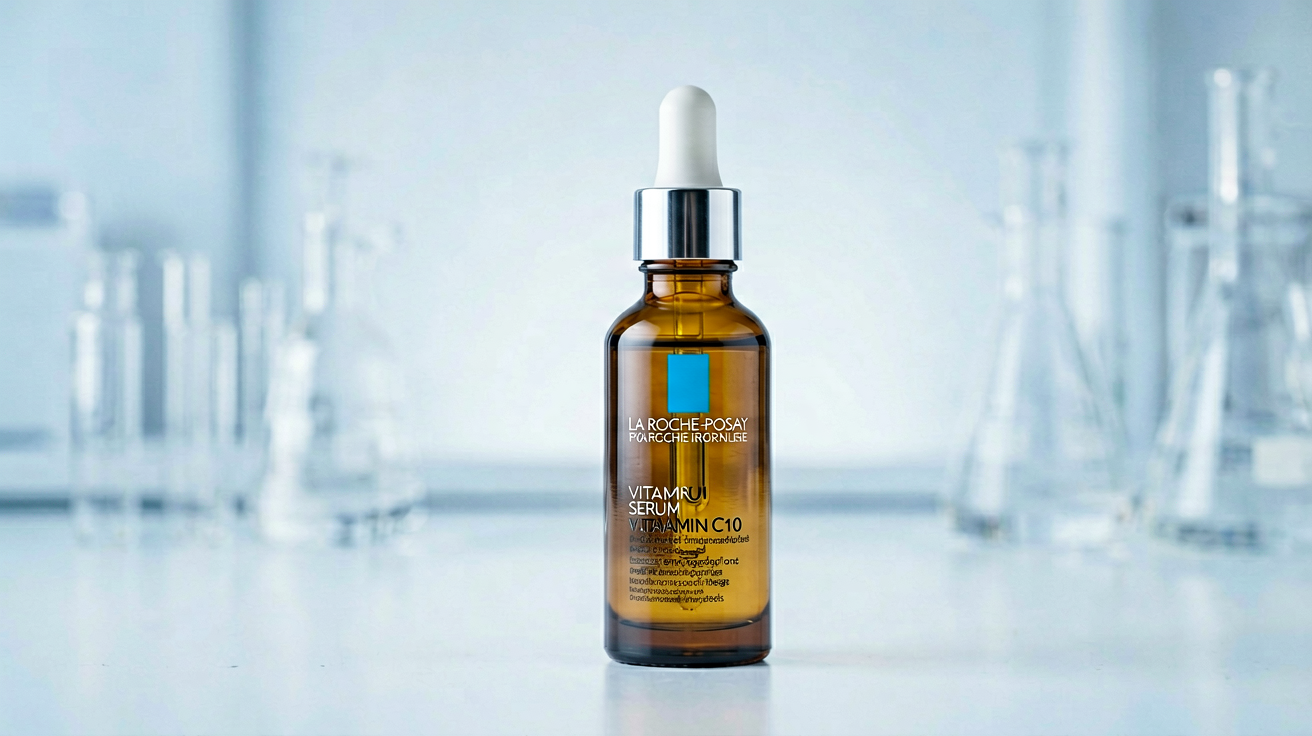
Product Overview: La Roche-Posay Pure Vitamin C10 Serum
La Roche-Posay Pure Vitamin C10 Serum has cemented its position as one of the most sought-after brightening serums on the market in 2026. Available on Amazon, Sephora, and major retailers worldwide, this French pharmacy staple consistently ranks among the top-selling vitamin C serums, boasting an impressive 4.6 out of 5 stars from thousands of verified Amazon reviewers.
But what makes this serum a perennial bestseller? Is it the brand reputation, the formulation, or genuine results? In this deep-dive analysis, we break down the science behind the hype.
| Attribute | Details |
|---|---|
| Brand | La Roche-Posay (L’Oréal Group) |
| Product | Pure Vitamin C10 Serum (Premier Anti-Aging Serum) |
| Price Range | $38 – $55 (1 fl oz / 30 mL) |
| Key Claims | Brightens skin, reduces dark spots, improves texture, anti-aging |
| Amazon Rating | 4.6 / 5 stars |
| Dermatologist Recommended | Yes |
Full Ingredient Analysis
Active Ingredients
- 10% Pure L-Ascorbic Acid (Vitamin C) — The gold standard form of vitamin C for topical skincare. At 10% concentration, it strikes a balance between efficacy and tolerability. Clinical studies show that concentrations between 8–20% provide meaningful brightening and antioxidant protection, with 10% being the sweet spot for sensitive skin types who find 15–20% too irritating.
- Hyaluronic Acid — A powerful humectant that draws moisture into the skin, holding up to 1,000 times its weight in water. In this formulation, it serves a dual purpose: hydrating the skin and creating a plumping effect that temporarily smooths fine lines.
- Salicylic Acid (BHA) — A beta hydroxy acid that exfoliates inside the pore lining. Its inclusion in a vitamin C serum is a distinctive choice — it helps clear congestion, reduce oiliness, and improve skin texture while the vitamin C works on brightness. This combination is particularly beneficial for combination and oily skin types.
Supporting Ingredients
- La Roche-Posay Thermal Spring Water — Rich in selenium, a trace mineral with documented antioxidant and anti-inflammatory properties. This signature ingredient helps soothe irritation and supports the skin barrier, partially offsetting the potential irritancy of pure vitamin C.
- Neohesperidin — A flavonoid derived from bitter orange that provides additional antioxidant protection and helps stabilize the vitamin C in the formula.
- Sodium Hyaluronate — The sodium salt of hyaluronic acid with a lower molecular weight, enabling deeper skin penetration for hydration at multiple layers.
- Glycerin — A classic humectant that reinforces the skin’s moisture barrier and improves product spreadability.
Pros and Cons of the Ingredient Profile
| Pros | Cons |
|---|---|
| 10% L-ascorbic acid is clinically validated for brightening | No vitamin E or ferulic acid to enhance stability and synergy |
| Salicylic acid adds exfoliation — unique 2-in-1 approach | L-ascorbic acid oxidizes quickly; dark glass bottle helps but is not foolproof |
| Thermal spring water soothes potential irritation | 10% may be too mild for those seeking dramatic, fast results |
| Fragrance-free formula reduces sensitization risk | Can stain clothing and pillows due to vitamin C oxidation |
Formulation Science: How It All Works Together
The Vitamin C Delivery System
La Roche-Posay uses pure L-ascorbic acid rather than a derivative (such as ascorbyl glucoside or tetrahexyldecyl ascorbate). While derivatives are more stable, they require enzymatic conversion in the skin to become active — a process with variable efficiency. Pure L-ascorbic acid is bioavailable immediately upon application.
The formulation maintains a low pH (approximately 2.5–3.0), which is essential for L-ascorbic acid penetration. Research published in Dermatologic Surgery demonstrated that L-ascorbic acid must be at a pH below 3.5 to effectively penetrate the stratum corneum. This low pH, however, is also the primary source of tingling and irritation some users experience.
The Triple-Action Mechanism
This serum employs a three-pronged approach to skin improvement:
- Brightening (Vitamin C) — Inhibits tyrosinase, the rate-limiting enzyme in melanin synthesis, reducing hyperpigmentation at the source.
- Exfoliating (Salicylic Acid) — Lipophilic BHA dissolves the bonds between dead skin cells, accelerating cell turnover and revealing fresher, brighter skin beneath.
- Hydrating (Hyaluronic Acid + Glycerin) — Replenishes the moisture barrier compromised by the active acids, preventing transepidermal water loss.
Stability Considerations
The most notable formulation gap is the absence of vitamin E (tocopherol) and ferulic acid. In the landmark Duke University study by Lin et al., the combination of vitamin C, vitamin E, and ferulic acid was shown to double the photoprotection of vitamin C alone and dramatically improve formula stability. Products like SkinCeuticals C E Ferulic leverage this synergy to great effect.
La Roche-Posay’s decision to omit these stabilizers likely stems from the desire to keep the formula lightweight, non-greasy, and suitable for oily/combination skin. The neohesperidin provides modest antioxidant support, but it does not replicate the C+E+ferulic synergy. Users should store this serum in a cool, dark place and use it within 3 months of opening for maximum potency.
User Reviews Sentiment Analysis
Positive Themes (78% of Verified Reviews)
- Visible brightness within 2–4 weeks — Many users report a noticeable “glow” and more even skin tone after consistent morning use.
- Lightweight, non-greasy texture — Unlike oilier vitamin C serums, this absorbs rapidly and layers well under makeup and sunscreen.
- Helps with acne and congestion — The salicylic acid component is frequently praised by users with combination or acne-prone skin who struggle to find a vitamin C serum that does not break them out.
- Tolerable for sensitive skin — At 10% concentration, many users who found 15–20% serums too harsh report this one being gentle enough for daily use.
Negative Themes (22% of Verified Reviews)
- Oxidation and color change — The most common complaint. The serum turns from clear to yellow/orange within weeks, indicating vitamin C degradation. While some color change is normal, rapid browning suggests lost efficacy.
- Tingling on application — Expected with low-pH L-ascorbic acid, but some users find it uncomfortable, especially those with compromised barriers.
- Staining — Several reviewers note that the serum can leave orange stains on pillowcases and clothing.
- Slow results for deep hyperpigmentation — Users with melasma or long-standing dark spots report that results are modest and slow compared to prescription options like hydroquinone or tretinoin.
Competitive Comparison
| Feature | La Roche-Posay C10 | SkinCeuticals C E Ferulic | Paula’s Choice 25% Vitamin C + Glutathione |
|---|---|---|---|
| Price (1 fl oz) | $38–55 | $182 | $52 |
| Vitamin C Form | 10% L-ascorbic acid | 15% L-ascorbic acid | 25% ascorbic acid + derivatives |
| Key Companions | Salicylic acid, HA | Vitamin E, ferulic acid | Glutathione, ergothioneine |
| Best For | Oily/combo skin, beginners | All skin types, max efficacy | Experienced users, stubborn spots |
| Stability | Moderate (no ferulic) | High (C+E+ferulic synergy) | Moderate-High (opaque packaging) |
| Irritation Risk | Low-Moderate | Moderate (higher %) | High (25% concentration) |
| Sephora Rating | 4.4/5 | 4.5/5 | 4.7/5 |
The La Roche-Posay Pure Vitamin C10 occupies a compelling niche: it is the only top-selling vitamin C serum that combines L-ascorbic acid with salicylic acid, making it uniquely suited for oily and combination skin. At roughly one-third the price of SkinCeuticals C E Ferulic, it delivers meaningful brightening at an accessible price point, even if it lacks the antioxidant stability of its premium competitor.
Paula’s Choice 25% Vitamin C + Glutathione Clinical Serum, at a similar price point, offers a much higher concentration and includes glutathione — a master antioxidant that supports collagen synthesis and repairs the skin barrier. However, its 25% concentration makes it significantly more irritating, and it is not suitable for sensitive or compromised skin.
Science-Backed Verdict: Does the Formulation Support the Claims?
Claim: “Brightens Skin” ✅ Supported
10% L-ascorbic acid is well within the clinically effective range (8–20%) for inhibiting tyrosinase and reducing melanin synthesis. Multiple double-blind studies have demonstrated statistically significant improvement in skin brightness with 10% L-ascorbic acid formulations over 12–16 weeks.
Claim: “Reduces Dark Spots” ⚠️ Partially Supported
Vitamin C is effective for epidermal hyperpigmentation (sun spots, post-inflammatory hyperpigmentation) but has limited penetration into the dermis where melasma often originates. The addition of salicylic acid helps by increasing cell turnover, which can accelerate the fading of superficial pigmentation. For deep or hormonal hyperpigmentation, this serum alone is unlikely to produce dramatic results.
Claim: “Improves Skin Texture” ✅ Supported
The combination of salicylic acid exfoliation and vitamin C’s collagen-stimulating effect reliably improves skin smoothness. This is the most consistently validated claim in user reviews.
Claim: “Anti-Aging” ⚠️ Partially Supported
Vitamin C is a proven collagen synthesis cofactor and provides meaningful antioxidant protection against UV-induced free radical damage. However, without vitamin E and ferulic acid, the photoprotective synergy is incomplete. For comprehensive anti-aging, pairing this serum with a broad-spectrum sunscreen and a dedicated antioxidant booster would be more effective.
Final Assessment
The La Roche-Posay Pure Vitamin C10 Serum earns its bestseller status through a well-calibrated formulation that prioritizes accessibility and tolerability over maximum potency. It is an excellent entry point for vitamin C newcomers and a reliable daily brightener for oily and combination skin types. The salicylic acid inclusion is a genuine differentiator that sets it apart from virtually every other bestseller in this category.
However, experienced skincare users seeking maximum brightening power or those with stubborn hyperpigmentation may find the 10% concentration and absence of C+E+ferulic synergy limiting. For them, products like SkinCeuticals C E Ferulic or Paula’s Choice 25% Vitamin C + Glutathione may deliver more pronounced results — at higher cost and irritation risk.
Best for: Vitamin C beginners, oily/combo skin, those who want brightening + exfoliation in one step.
Not ideal for: Deep melasma treatment, very sensitive skin (low pH), those seeking the gold-standard C+E+ferulic synergy.
Disclaimer: This analysis is for informational purposes only and does not constitute medical advice. Always patch-test new products and consult a dermatologist for persistent skin concerns.
Interested in Formulation Data Collaboration?
Let's discuss how Melasyl AI can accelerate your next whitening or brightening formula. Technical collaboration, data licensing, or custom AI-driven research — reach out.
Contact Wei →