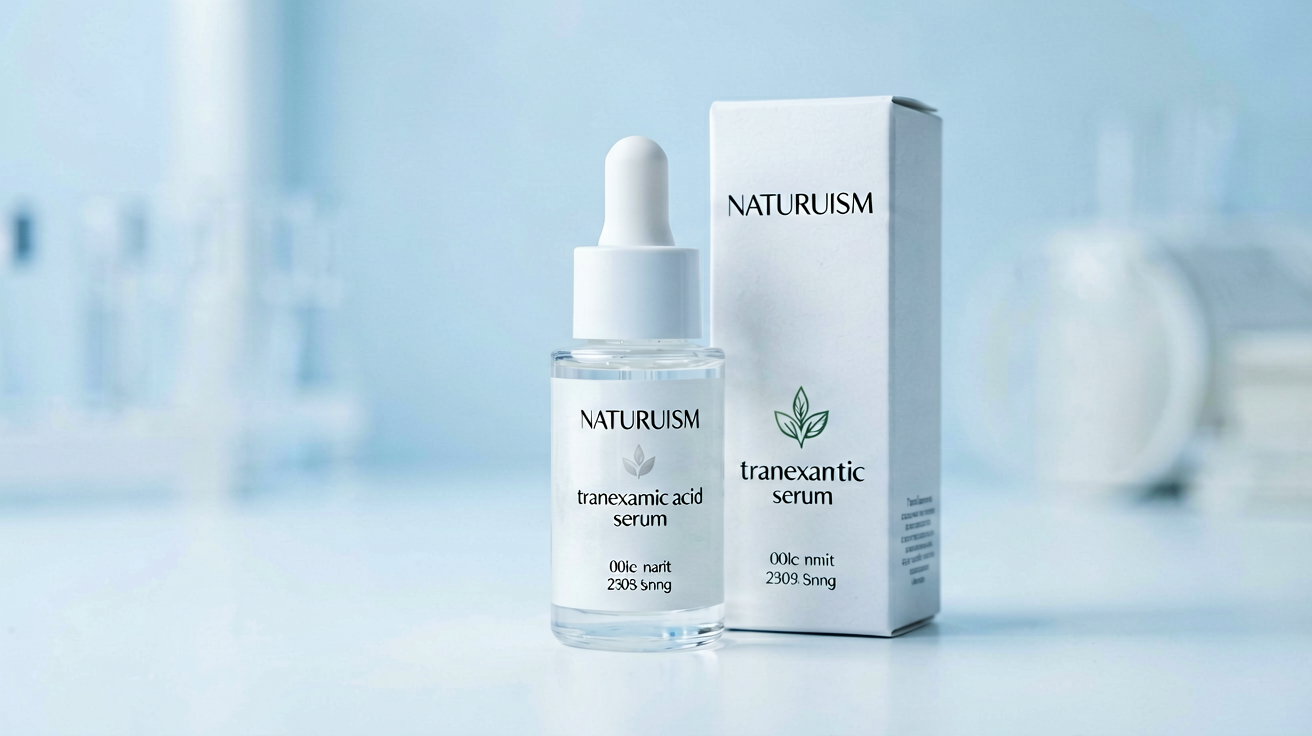
Overview: What Is Naturium Tranexamic Topical Acid 5%?
Naturium Tranexamic Topical Acid 5% is a targeted dark spot serum launched by Naturium — the brand co-founded by skincare influencer Susan Yara and now owned by e.l.f. Beauty. Priced at $20 for 30ml (1.0 fl oz), it sits squarely in the affordable clinical skincare category. The formula centers on 5% tranexamic acid, a concentration considerably higher than many competing products in its class, and layers it with kojic acid, niacinamide, and licorice root extract to create a multi-pathway brightening treatment.
The brand claims clinically proven improvement in the appearance of dark spots and skin brightening in just 8 weeks, with testing conducted across all skin types including those with self-perceived sensitive skin. The serum is vegan, cruelty-free, fragrance-free, paraben-free, gluten-free, and dermatologist-tested — a clean profile that aligns with current consumer expectations without sacrificing potency.
Full Ingredient Analysis
Here is the complete INCI list with a breakdown of what each ingredient does:
Key Actives
- Tranexamic Acid (5%) — The star ingredient and namesake. Tranexamic acid is a synthetic derivative of the amino acid lysine. In topical skincare, it works by interrupting the plasminogen/plasmin pathway — essentially blocking the UV-induced inflammatory signal that triggers melanocytes to overproduce pigment. It’s one of the most well-studied non-hydroquinone brightening agents, with particular efficacy for stubborn conditions like melasma and post-inflammatory hyperpigmentation (PIH). The 5% concentration here is notable; many competing serums use 2-3% (SkinCeuticals Discoloration Defense uses 3%, for comparison).
- Niacinamide — Also known as vitamin B3, niacinamide inhibits melanosome transfer from melanocytes to keratinocytes — meaning pigment never reaches the skin’s surface. It also strengthens the barrier via ceramide production, reduces inflammation, and regulates oil. A versatile co-active that makes this formula more than just a spot treatment.
- Kojic Acid — A fungal metabolite that inhibits tyrosinase, the rate-limiting enzyme in melanin production. Kojic acid works at a different point in the pigmentation pathway than tranexamic acid, making the combination synergistic. However, kojic acid is known for stability issues (it oxidizes and turns brown over time), which explains the opaque packaging.
- Glycyrrhiza Glabra (Licorice) Root Extract — Contains glabridin, which inhibits tyrosinase without cytotoxicity. Also has anti-inflammatory properties that help calm the redness often associated with hyperpigmentation.
Supporting & Functional Ingredients
- Panthenol (Pro-Vitamin B5) — A humectant and skin-soothing agent that supports barrier repair. Counters potential irritation from the acids.
- Sodium Hyaluronate — The salt form of hyaluronic acid with smaller molecular weight for deeper penetration. Provides surface hydration.
- Tremella Fuciformis Sporocarp Extract (Snow Mushroom) — A trending natural humectant that reportedly holds more water than hyaluronic acid. Adds a dewy finish.
- Glycerin + Betaine — Humectant duo that draws water into the stratum corneum. Betaine also functions as an osmolyte, protecting cells from dehydration stress.
- Isopentyldiol + Propanediol — Multifunctional solvents and penetration enhancers that also contribute humectancy. The choice of these over simple water as the primary carrier suggests intentional enhancement of active penetration.
- Hydroxyacetophenone — An antioxidant booster and preservative enhancer with soothing properties. Synergizes with the preservative system.
- Citric Acid — An AHA used here primarily as a pH adjuster (not at exfoliating levels). Also functions as a chelating agent.
- Tocopherol (Vitamin E) — Lipid-soluble antioxidant that protects the formula’s oils from oxidation and provides some skin benefit.
- Polyacrylate Crosspolymer-6 — A texture polymer that provides the serum’s gel-like consistency and prevents separation.
- Phenoxyethanol + Ethylhexylglycerin + Potassium Sorbate — The preservative system. Phenoxyethanol provides broad-spectrum preservation, ethylhexylglycerin boosts it while adding skin-conditioning effects, and potassium sorbate targets fungi and yeast.
Formulation Assessment
Strengths
- High tranexamic acid concentration (5%) puts this ahead of many competitors on paper. The multi-pathway approach — combining a plasmin inhibitor (tranexamic acid) with two tyrosinase inhibitors (kojic acid, licorice extract) plus a melanosome transfer blocker (niacinamide) — is dermatologically sound.
- pH range of 5.00-6.20 is ideal. This is close to the skin’s natural pH (~5.5), meaning the formula respects the acid mantle while keeping actives stable. Tranexamic acid is stable across a wide pH range, and kojic acid performs best at slightly acidic pH.
- Solvent system prioritizes penetration. Using isopentyldiol and propanediol as the primary carriers (appearing second and fourth on the INCI list) rather than relying solely on water suggests intentional formulation for active delivery.
- Fragrance-free and essential oil-free. No added fragrance, no citrus oils, no lavender — a significant plus for sensitized or hyperpigmentation-prone skin where irritation can worsen pigment issues.
- Inclusive clinical testing. The brand notes their 8-week study included “all skin types and self-perceived sensitive skin,” which addresses the common critique that skincare clinicals only test on lighter, less reactive skin.
Weaknesses
- Kojic acid stability concerns. Kojic acid notoriously degrades with light and air exposure. While the opaque, airless packaging helps, there is no disclosed stabilization technology (such as kojic acid dipalmitate, a more stable ester form).
- No disclosed niacinamide percentage. While niacinamide is effective at concentrations as low as 2%, the ideal range for pigmentation is 4-5%. Naturium doesn’t disclose their niacinamide percentage, so we don’t know if it’s at therapeutic levels or more of a supporting player.
- Isododecane in a water-based serum. Isododecane appears mid-list, which is slightly unusual for a primarily water/glycol-based gel serum. Its presence suggests a micro-emulsion structure that could affect texture preference — some users may find it sits on skin rather than absorbing instantly.
Review Sentiment Analysis
Aggregating feedback from Target, Naturium’s own site, and skincare forums reveals consistent themes:
What Users Like
- Visible results on PIH: The most commonly reported success comes from users treating post-acne marks (post-inflammatory hyperpigmentation). Many report noticeable fading within 3-4 weeks on newer marks, with stubborn marks responding by weeks 6-8.
- Gentle on sensitive skin: Multiple reviewers with reactive, rosacea-prone, or easily irritated skin report tolerating this serum well despite the high active load — likely due to the panthenol, glycerin, and betaine buffer system.
- Texture and layering: The lightweight gel texture is frequently praised for playing well under moisturizer, sunscreen, and makeup without pilling.
- Value for money: At $20/30ml with 5% tranexamic acid, users consistently compare it favorably against $100+ clinical competitors.
Common Criticisms
- Slow on established melasma: Users with long-standing melasma (particularly dermal or mixed-type) report slower, less dramatic results — consistent with the clinical reality that topical treatments alone rarely fully resolve deep melasma.
- Stickiness: A subset of users describe a tacky, slightly sticky finish that takes a few minutes to dry down fully. This aligns with the high glycol content.
- Oxidation over time: Some long-term users report the product turning slightly brown toward the end of the bottle — consistent with kojic acid’s known instability.
- Pump inconsistency: Several reviews mention the pump dispenser clogging or dispensing uneven amounts.
Competitor Comparison
| Product | Price | Key Actives | Tranexamic Acid % | pH | Fragrance-Free |
|---|---|---|---|---|---|
| Naturium Tranexamic Topical Acid 5% | $20 / 30ml | 5% TXA, Kojic Acid, Niacinamide, Licorice Root | 5% (disclosed) | 5.00-6.20 | ✓ |
| SkinCeuticals Discoloration Defense | $108 / 30ml | 3% TXA, Kojic Acid, Niacinamide, HEPES | 3% (disclosed) | Not disclosed | ✓ |
| Good Molecules Discoloration Correcting Serum | $12 / 30ml | Tranexamic Acid, Niacinamide 4% | Not disclosed | Not disclosed | ✓ |
| Topicals Faded Serum | $38 / 50ml | TXA, Kojic Acid, Niacinamide, Azelaic Acid, Licorice Root, Alpha Arbutin, Glutathione | Not disclosed | Not disclosed | ✓ |
| The Inkey List Tranexamic Acid Night Treatment | $16 / 30ml | 2% TXA, 2% Acai Berry Extract, 2% Vitamin C derivative | 2% (disclosed) | Not disclosed | ✓ |
Analysis of the Competition
SkinCeuticals Discoloration Defense at $108 is the premium benchmark. It shares the same trio of tranexamic acid + kojic acid + niacinamide but at a lower TXA concentration (3% vs 5%). It adds HEPES (a gentle exfoliating buffer) for enhanced penetration. The clinical data backing SkinCeuticals is more robust, but the 5.4x price premium is hard to justify based on ingredient panel alone.
Good Molecules Discoloration Correcting Serum at $12 is the budget alternative. It uses tranexamic acid (undisclosed %) with 4% niacinamide — arguably a simpler, less comprehensive formula but $8 cheaper. Users often cross-shop these two, and the consensus in skincare communities is that Naturium offers the better-rounded formulation while Good Molecules wins on sheer price.
Topicals Faded Serum at $38/50ml ($22.80 per 30ml equivalent) is arguably the most comprehensive competitor. It throws everything at pigmentation: TXA, kojic acid, niacinamide, azelaic acid, alpha arbutin, glutathione, and licorice root. However, user feedback consistently mentions a strong sulfur-like smell and heavier texture that makes it less pleasant to use daily — a trade-off for the kitchen-sink approach.
The Inkey List Tranexamic Acid Night Treatment at $16 uses only 2% TXA with berry extracts and a vitamin C derivative — the weakest TXA concentration in this group but packaged as an entry-level option for those new to the ingredient.
Price-Performance Verdict
At $20 for 30ml, the Naturium Tranexamic Topical Acid 5% delivers the highest disclosed tranexamic acid concentration per dollar among its direct competitors. The formulation is thoughtful: multi-pathway action, barrier-supportive buffer ingredients, fragrance-free, and pH-optimized. The clinical claim of visible improvement in 8 weeks is realistic based on the ingredient profile and user reports.
The primary trade-off is brand prestige and formulation refinement. SkinCeuticals has deeper clinical validation and more elegant formulation technology, while Topicals covers more pigmentation pathways. But for someone who wants a single, well-formulated, affordable tranexamic acid serum that covers the major pigmentation mechanisms without filler ingredients, Naturium is the current category leader in value.
Who Should Buy This
- Anyone treating post-inflammatory hyperpigmentation (acne marks, healed wound marks)
- Those with melasma looking for a non-hydroquinone maintenance option
- People with sensitive skin who can’t tolerate aggressive brighteners like high-percentage AHAs or retinoids
- Shoppers who want disclosed active percentages and clean formulation
Who Should Look Elsewhere
- Severe, long-standing melasma — consider prescription-strength options (oral TXA, compounded topicals) under dermatologist guidance
- Those who react poorly to kojic acid (allergic contact dermatitis is possible, though uncommon)
- Texture purists who cannot tolerate any tacky finish — Good Molecules or SkinCeuticals may feel more elegant
- Anyone seeking immediate or dramatic results — tranexamic acid works gradually, regardless of concentration
Bottom Line
The Naturium Tranexamic Topical Acid 5% is one of the best-formulated affordable brightening serums on the market. The 5% TXA concentration combined with kojic acid, niacinamide, and licorice root creates a dermatologically coherent, multi-target approach to pigmentation. At $20, it outperforms several products costing 2-5x more on paper, and user reviews largely confirm what the ingredient panel promises: gradual but visible improvement in dark spots, particularly post-acne marks. Just don’t expect it to work miracles on deep, established melasma — and use it quickly before the kojic acid degrades.
Interested in Formulation Data Collaboration?
Let's discuss how Melasyl AI can accelerate your next whitening or brightening formula. Technical collaboration, data licensing, or custom AI-driven research — reach out.
Contact Wei →