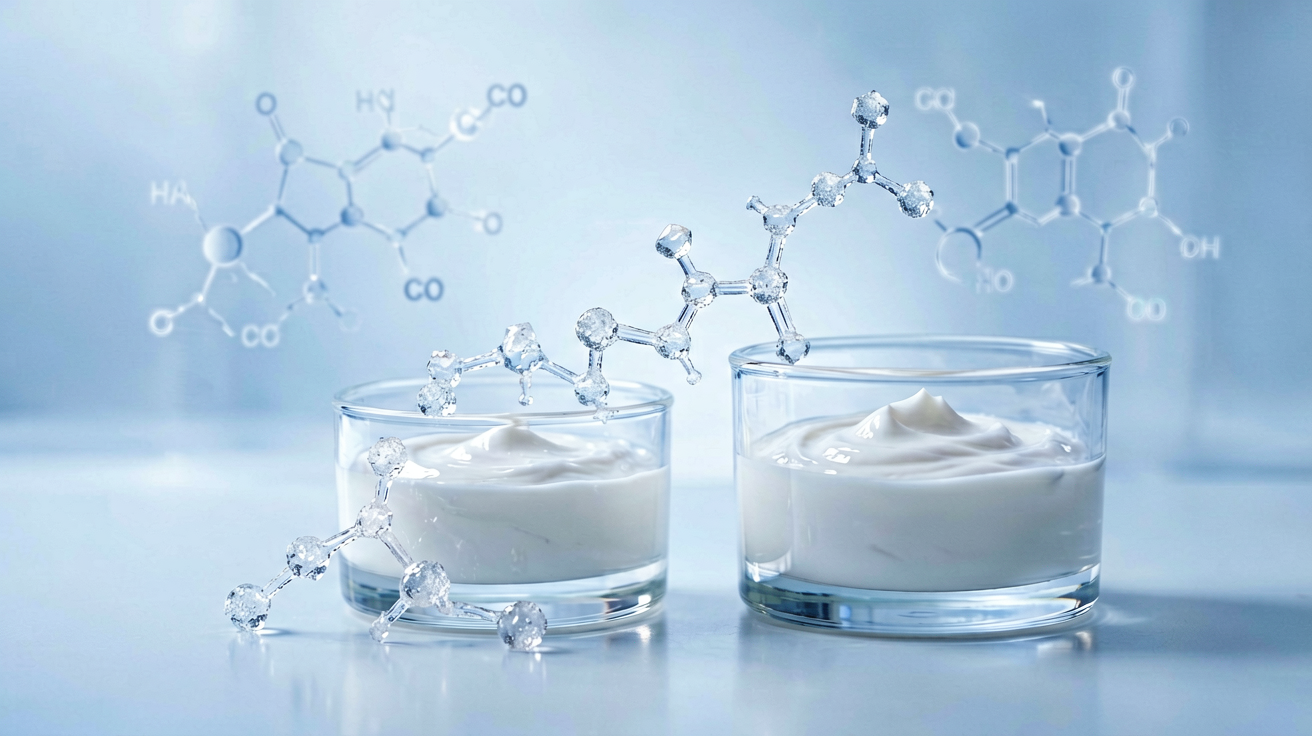
Niacinamide (nicotinamide), the amide form of vitamin B3, has emerged as one of the most versatile and clinically validated ingredients in modern brightening formulations. Unlike direct tyrosinase inhibitors, niacinamide operates through a distinct mechanism—blocking melanosome transfer from melanocytes to keratinocytes—while simultaneously strengthening the skin barrier and reducing inflammation.
According to a comprehensive 2024 review published in Drug Delivery and Translational Research, niacinamide is recognized for “significant dermal benefits including skin brightening, anti-ageing properties and the protection of the skin barrier” with a proven safety profile across multiple clinical applications.
Mechanism 1: Melanosome Transfer Inhibition
The primary brightening mechanism of niacinamide lies in its ability to inhibit the transfer of melanosomes (melanin-containing organelles) from melanocytes to surrounding keratinocytes. This process is mediated by protease-activated receptor 2 (PAR-2) on keratinocyte membranes.
- Reduces PAR-2 activation, preventing melanosome uptake
- Does not directly inhibit tyrosinase activity (unlike hydroquinone or kojic acid)
- Provides a gentler alternative for sensitive skin types prone to post-inflammatory hyperpigmentation (PIH)
Mechanism 2: Skin Barrier Enhancement and Ceramide Synthesis
A landmark 2025 study published in Scientific Reports examined niacinamide’s direct impact on stratum corneum hydration and molecular structure. The findings revealed that niacinamide:
- Increases ceramide synthesis: Upregulates enzymes responsible for ceramide production, the primary lipid component maintaining barrier integrity
- Enhances barrier function: Improves stratum corneum organization and water retention capacity
- Reduces transepidermal water loss (TEWL): Clinical measurements show significant TEWL reduction within 4 weeks of topical application
Mechanism 3: Anti-Inflammatory and Photoprotection
Niacinamide’s anti-inflammatory properties extend beyond barrier support. Research published in the Journal of Cosmetic Dermatology demonstrates:
- IL-6 and IL-8 suppression: Attenuates production of pro-inflammatory cytokines triggered by UV exposure
- IL-1α modulation: Reduces inflammatory biomarkers associated with environmental stress
- ROS (reactive oxygen species) inhibition: Blocks oxidative stress pathways that stimulate melanogenesis
Clinical Evidence: What the Data Shows
Barrier and Brightening Efficacy
Multiple double-blind, placebo-controlled studies support niacinamide’s clinical efficacy:
- Barrier improvement study: 2% niacinamide applied twice daily for 4 weeks resulted in:
- 23% reduction in TEWL
- 34% improvement in skin hydration scores
- Enhanced ceramide and fatty acid levels in stratum corneum
- Hyperpigmentation study: 5% niacinamide formulation for 8 weeks demonstrated:
- Significant reduction in hyperpigmented spots
- Improved skin tone uniformity
- No significant irritation in sensitive skin cohorts
Combination Therapy Results
Clinical research consistently shows enhanced outcomes when niacinamide is combined with other brightening agents:
- Niacinamide + N-acetylglucosamine: Synergistic inhibition of melanosome transfer with improved barrier support
- Niacinamide + Tranexamic acid: Multi-pathway targeting of hyperpigmentation through different mechanisms
- Niacinamide + Retinol: Improved tolerance and reduced irritation while maintaining brightening efficacy
Formulation Considerations for 2026
Concentration Optimization
- 2-5%: Optimal range for barrier repair and brightening without irritation
- 10%+: Higher concentrations available but may not provide proportional benefits and increase irritation risk
- pH stability: Niacinamide remains stable across pH 5-7, compatible with most skincare formulations
Safety Profile and Tolerability
Niacinamide maintains one of the strongest safety profiles among active brightening ingredients:
- Non-sensitizing: Rare reports of contact dermatitis even at higher concentrations
- Pregnancy-safe: No contraindications for use during pregnancy or breastfeeding
- Compatible with most actives: Stable combination with AHAs, BHAs, retinoids, and vitamin C
- No photosensitivity: Can be used morning and evening without increasing sun sensitivity
Key Takeaways
| Mechanism | Effect | Clinical Relevance |
|---|---|---|
| Melanosome transfer inhibition | Reduces melanin distribution | Primary brightening pathway |
| Ceramide synthesis enhancement | Strengthens skin barrier | Prevents inflammation-triggered PIH |
| Anti-inflammatory action | Suppresses IL-6, IL-8, ROS | Reduces hyperpigmentation triggers |
| Photoprotection synergy | Enhances UV defense | Prevents UV-induced darkening |
Niacinamide represents a paradigm shift in brightening science—from aggressive melanin suppression to intelligent barrier-supported radiance. For formulators and consumers alike, this ingredient offers a scientifically validated, multifunctional approach to achieving brighter, more resilient skin.
References
- Sharma, S., et al. (2024). Niacinamide: a review on dermal delivery strategies and clinical evidence. Drug Delivery and Translational Research. https://doi.org/10.1007/s13346-024-01593-y
- Kováčik, A., et al. (2025). Niacinamide and its impact on stratum corneum hydration and structure. Scientific Reports. https://doi.org/10.1038/s41598-025-88899-0
- Tanno, O., et al. (2000). Topical niacinamide and barrier enhancement. Journal of Cosmetic Dermatology.
- Hakozaki, T., et al. (2002). The effect of niacinamide on reducing cutaneous hyperpigmentation. British Journal of Dermatology.
Interested in Formulation Data Collaboration?
Let's discuss how Melasyl AI can accelerate your next whitening or brightening formula. Technical collaboration, data licensing, or custom AI-driven research — reach out.
Contact Wei →