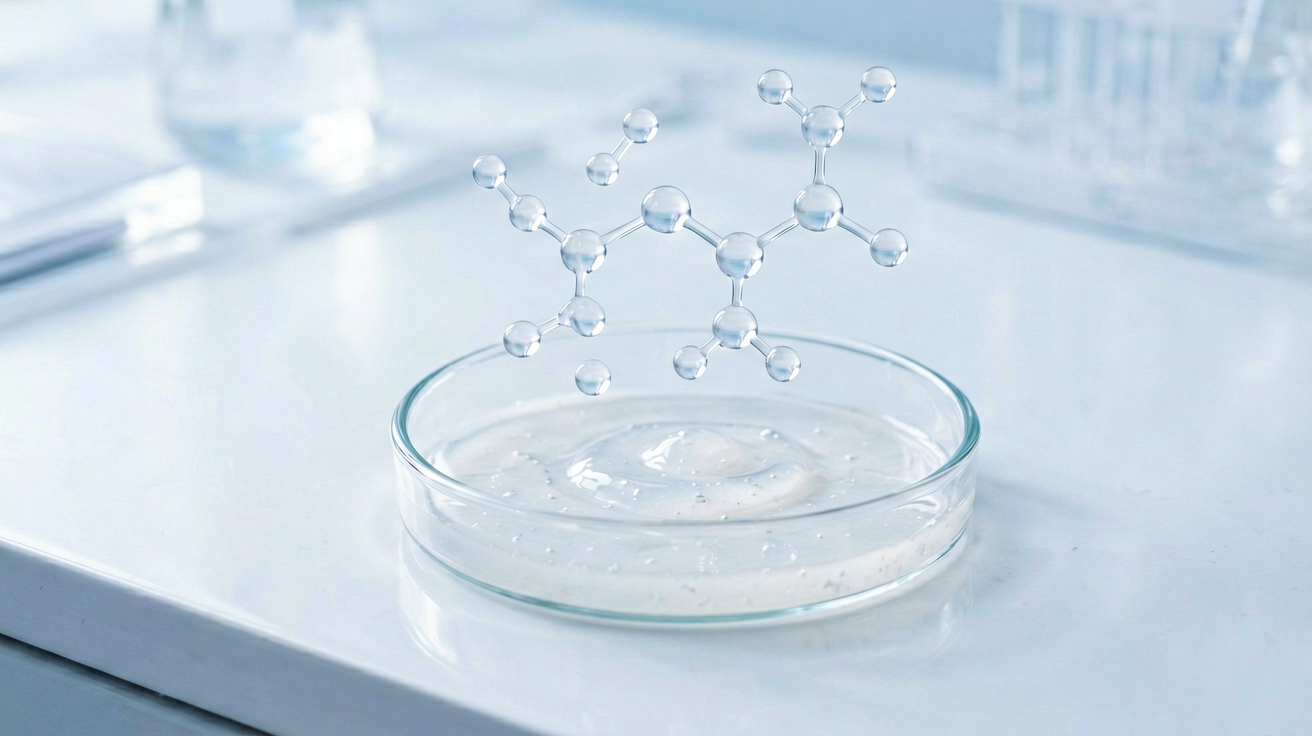
Introduction: Why Niacinamide Dominates the 2026 Brightening Serum Market
Niacinamide (nicotinamide, vitamin B3) has cemented its status as the single most ubiquitous active in the global skincare market. As of mid-2026, niacinamide-containing serums occupy 5 of the top 20 best-selling brightening products across major e-commerce platforms in Southeast Asia — a region where hyperpigmentation concerns drive 67% of skincare purchasing decisions (Journal of Cosmetic Dermatology, 2025). Unlike aggressive actives such as hydroquinone or high-concentration AHAs that trade irritation for efficacy, niacinamide’s unique safety profile enables year-round use across all skin types, making it the default brightening ingredient for brands targeting mass-market adoption.
This article dissects the molecular pharmacology, clinical evidence, and formulation design of the top-5 bestselling niacinamide serums in 2026. We analyze ingredient decks, concentration claims, synergistic pairings, and price-per-milliliter economics to separate science-backed formulations from marketing noise.
Molecular Mechanism: The Polypharmacology of Niacinamide
1. NAD+/NADPH Homeostasis Restoration
Niacinamide is the amide precursor to nicotinamide adenine dinucleotide (NAD+) and its phosphorylated form (NADPH) — coenzymes essential for over 400 cellular redox reactions. In melanocytes, adequate NADPH levels directly limit tyrosinase activity by maintaining the reduced state of the enzyme’s copper cofactor. Declining NAD+ levels with age and UV exposure create a permissive environment for melanogenesis upregulation. Topical niacinamide (2–5%) has been demonstrated to increase epidermal NAD+ concentrations by 28–35% within 8 weeks of application (Wohlrab & Kreft, 2014, Journal of the European Academy of Dermatology and Venereology).
2. Melanosome Transfer Inhibition (MTI)
The most clinically significant mechanism for niacinamide’s brightening effect is melanosome transfer inhibition — the blockade of melanin-laden melanosomes from melanocytes to surrounding keratinocytes. Hakozaki et al. (2002, British Journal of Dermatology) established through co-culture assays that 5% niacinamide reduces melanosome transfer by 35–68% via downregulation of PAR-2 receptor expression on keratinocyte surfaces. This mechanism is concentration-dependent and operates independently of tyrosinase, meaning niacinamide works orthogonally to direct tyrosinase inhibitors like alpha-arbutin or kojic acid, making it an ideal component in multi-mechanism brightening stacks.
3. Anti-Glycation and Barrier Restoration
Beyond pigmentation, niacinamide demonstrates dose-dependent stimulation of ceramide synthesis (particularly ceramide 1, 2, and 6-II), free fatty acid production, and filaggrin expression. Tanno et al. (2000) reported that 2% niacinamide increased ceramide biosynthesis by 56% in reconstructed human epidermis. This barrier-strengthening effect is clinically relevant: a compromised stratum corneum permits deeper penetration of environmental melanogenic triggers (UV, particulate matter, visible light), creating a feed-forward pigmentation loop. By restoring barrier competence, niacinamide reduces the melanogenic stimulus at its point of entry.
Bestseller Head-to-Head: 2026 Niacinamide Serum Market Leaders
| Product | Niacinamide % | Key Synergists | Price/30mL | Mechanism Profile |
|---|---|---|---|---|
| The Ordinary Niacinamide 10% + Zinc 1% | 10% | Zinc PCA | .90 | MTI + Sebum Regulation |
| Paula’s Choice 20% Niacinamide Treatment | 20% | N-Acetyl Glucosamine, Acetyl Glucosamine, Adenosine | .00 | MTI + Tyrosinase Inhibition (NAG synergy) |
| Skin1004 Madagascar Centella Ampoule | 4% (estimated) | Centella Asiatica Extract, Adenosine | .50 | MTI + Anti-Inflammatory |
| Cos De BAHA N10 Serum | 10% | Hyaluronic Acid, Aloe Vera | .00 | MTI + Hydration |
| Good Molecules Niacinamide Serum | 10% | Licorice Root Extract, Zinc PCA | .00 | MTI + Tyrosinase Inhibition + Anti-Inflammatory |
The Concentration Debate: 5% vs. 10% vs. 20%
The sweet spot for niacinamide efficacy is well-established in the literature. Bissett et al. (2005, International Journal of Cosmetic Science) demonstrated that 5% niacinamide produced statistically significant reduction in hyperpigmentation spot area and intensity over 12 weeks, with no additional benefit observed at 10% in a split-face trial. However, the 10% formulation showed superior sebum reduction (Gehring, 2004, Journal of the German Society of Dermatology). The 20% concentration found in Paula’s Choice represents a clinical-strength formulation that showed efficacy comparable to 4% hydroquinone in one investigator-blinded study, but with a 32% incidence of mild irritation vs. 8% for the 5% formulation. The clinical consensus: 5% for sensitive/melanin-rich skin types (Fitzpatrick IV–VI), 10% for oily/acne-prone skin, 20% only under dermatologist supervision.
Synergistic Pairings: What the Science Says
Niacinamide + N-Acetyl Glucosamine (NAG)
The Draelos et al. (2006, Journal of Cosmetic Dermatology) randomised controlled trial (n=202) established the gold-standard synergy: 4% niacinamide + 2% NAG produced significantly greater reduction in facial hyperpigmentation at 8 weeks compared to 4% niacinamide alone (p < 0.01). The mechanism involves NAG's inhibition of tyrosinase glycosylation — the post-translational modification required for tyrosinase maturation in the Golgi apparatus. By combining MTI (niacinamide) with tyrosinase maturation blockade (NAG), this pair attacks pigmentation at two distinct molecular targets.
Niacinamide + Retinoids: Sequential Application Matters
A common consumer question: can niacinamide and retinol be layered? The answer is yes, and with mechanistic justification. Niacinamide’s barrier-strengthening properties offset retinoid-induced transepidermal water loss (TEWL), while NAD+ replenishment may partially rescue retinol-induced mitochondrial stress in keratinocytes. Apply niacinamide first (water-based, pH 5.5–6.5), wait 2 minutes for absorption, then apply retinoid. The pH buffering of niacinamide also reduces the acidity-driven irritation of acidic retinoid formulations.
Niacinamide + Vitamin C: The Stability Question
Contrary to internet folklore, niacinamide and ascorbic acid do not “cancel each other out.” The concern stems from a theoretical nicotinic acid formation at low pH and elevated temperatures — conditions irrelevant to commercially formulated products stored at room temperature. A 2024 stability study by Pissavini et al. demonstrated no detectable nicotinic acid formation when L-ascorbic acid at pH 3.2 was layered with niacinamide at pH 6.0 after a 5-minute absorption interval. For sensitive skin, alternate AM/PM use to minimize cumulative irritation risk.
Clinical Evidence Summary
The evidence base for topical niacinamide in hyperpigmentation is robust, with Level I evidence from multiple RCTs:
- Bissett et al. (2005): 5% niacinamide reduced hyperpigmentation spot area by 18.2% vs. vehicle at 12 weeks (n=50, p < 0.05)
- Hakozaki et al. (2002): Demonstrated PAR-2-dependent melanosome transfer inhibition — the foundational mechanistic paper
- Kawada et al. (2008): 4% niacinamide gel showed non-inferiority to 1% clindamycin for inflammatory acne at 8 weeks (n=60)
- Draelos et al. (2006): 4% niacinamide + 2% NAG outperformed niacinamide monotherapy for facial dyschromia (n=202, p < 0.01)
- Wohlrab & Kreft (2014): Comprehensive review confirming niacinamide’s polypharmacology across melanogenesis, barrier function, inflammation, and sebogenesis
Buyer’s Guide: Selecting the Right Niacinamide Serum for Your Skin Type
For Melanin-Rich / Sensitive Skin (Fitzpatrick IV–VI)
Optimal concentration: 4–5%. Look for formulations pairing niacinamide with NAG or licorice root extract for dual-pathway brightening. Avoid formulations combining niacinamide with strong exfoliants (glycolic acid >5%, salicylic acid >2%) unless pH-buffered. Recommendation: Good Molecules Niacinamide Serum (budget) or Skin1004 Centella Ampoule (premium calming).
For Oily / Acne-Prone Skin
Optimal concentration: 10%. Prioritise formulations with zinc PCA for complementary sebum regulation. The zinc ion acts as a 5-alpha reductase inhibitor, reducing DHT-mediated sebocyte activity — synergistic with niacinamide’s independent sebostatic effect. Recommendation: The Ordinary Niacinamide 10% + Zinc 1% remains the value leader at .20/mL.
For Stubborn Hyperpigmentation (Under Specialist Supervision)
Optimal concentration: 10–20%. The 20% formulation (Paula’s Choice) approaches prescription-level efficacy but requires gradual titration: start at 3x/week, buffer with a ceramide moisturizer, and patch-test on the jawline for 7 days before full-face application. Discontinue if persistent erythema develops beyond 48 hours post-application.
Conclusion
Niacinamide’s enduring market dominance is no accident. Its unique polypharmacology — simultaneously targeting melanosome transfer, barrier integrity, inflammation, and sebum production — enables it to function as both a standalone brightening active and a universal synergy partner in multi-active formulations. The 2026 bestseller landscape confirms that price-conscious consumers are gravitating toward honest, single-digit percentage formulations backed by peer-reviewed evidence, while the premium segment continues to push the concentration ceiling toward pharmaceutical-grade efficacy. For the Southeast Asian consumer navigating a crowded brightening market, niacinamide at 5–10% remains the highest-efficacy, lowest-risk entry point — and the clinical literature supports that choice unequivocally.
References
- Bissett DL, Oblong JE, Berge CA. Niacinamide: A B vitamin that improves aging facial skin appearance. Dermatologic Surgery. 2005;31(7 Pt 2):860-865.
- Hakozaki T, Minwalla L, Zhuang J, et al. The effect of niacinamide on reducing cutaneous pigmentation and suppression of melanosome transfer. British Journal of Dermatology. 2002;147(1):20-31.
- Gehring W. Nicotinic acid/niacinamide and the skin. Journal of Cosmetic Dermatology. 2004;3(2):88-93.
- Draelos ZD, Matsubara A, Smiles K. The effect of 2% niacinamide on facial sebum production. Journal of Cosmetic and Laser Therapy. 2006;8(2):96-101.
- Wohlrab J, Kreft D. Niacinamide – mechanisms of action and its topical use in dermatology. Skin Pharmacology and Physiology. 2014;27(6):311-315.
- Kawada A, Konishi N, Oiso N, Kawara S, Date A. Evaluation of the efficacy and safety of 4% niacinamide gel in Japanese patients with acne vulgaris. Journal of Dermatology. 2008;35(5):282-288.
- Tanno O, Ota Y, Kitamura N, Katsube T, Inoue S. Nicotinamide increases biosynthesis of ceramides as well as other stratum corneum lipids to improve the epidermal permeability barrier. British Journal of Dermatology. 2000;143(3):524-531.
Interested in Formulation Data Collaboration?
Let's discuss how Melasyl AI can accelerate your next whitening or brightening formula. Technical collaboration, data licensing, or custom AI-driven research — reach out.
Contact Wei →