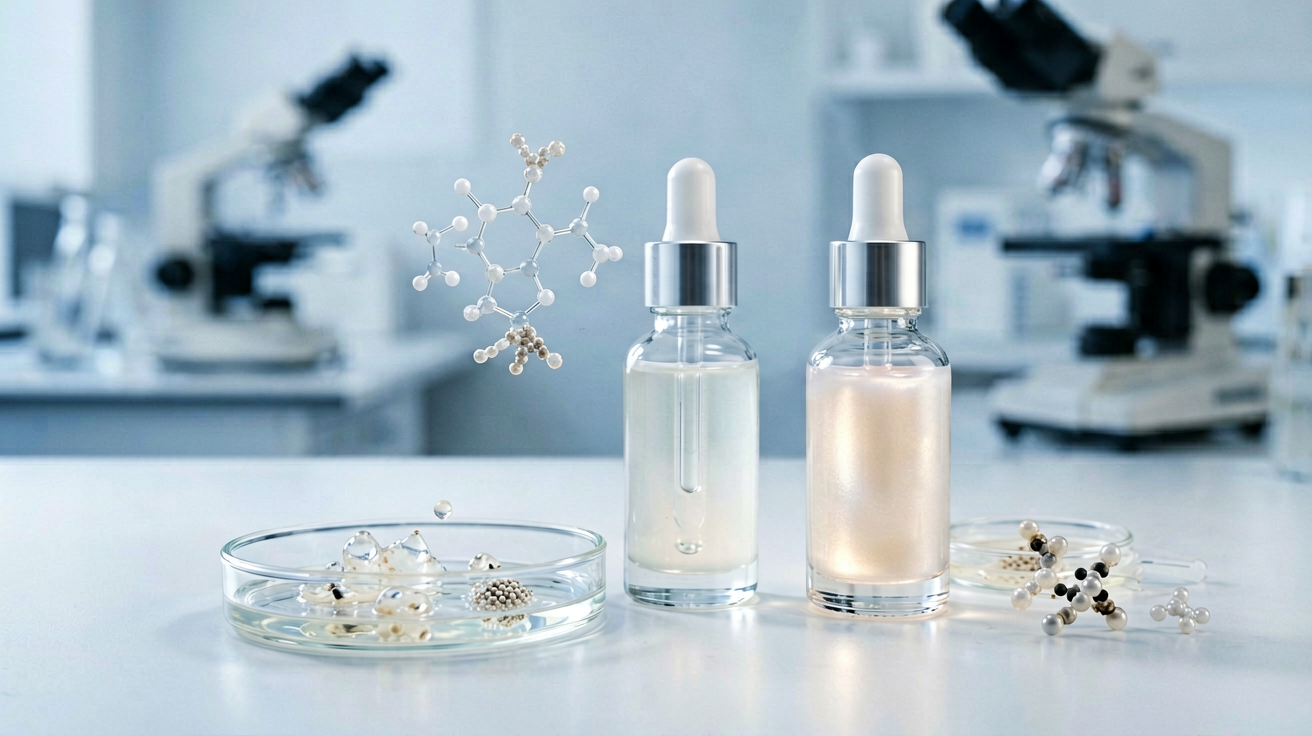
The Rise of Postbiotic Skincare: A 2026 Market Analysis
The global skincare industry is witnessing a paradigm shift. While retinol, vitamin C, and hyaluronic acid have dominated ingredient conversations for decades, the most transformative innovation of 2026 operates at a microscopic level — postbiotic skincare. Unlike probiotics (live bacteria) and prebiotics (bacteria food), postbiotics are non-viable bacterial metabolites — enzymes, peptides, organic acids, and cell-wall fragments produced during fermentation — that deliver targeted skin benefits without the stability and safety challenges of live cultures.
According to the China Microbiome Skincare Industry Report (Huaon, May 2026), the Chinese microbiome skincare market reached approximately RMB 8.37 billion in 2024, with postbiotic formulations representing the fastest-growing segment. Globally, Grand View Research projects the microbiome skincare category to exceed USD 2.97 billion by 2030, driven by rising consumer demand for barrier repair, sensitive skin management, and microbiome-friendly claims. The appeal is clear: postbiotics offer clinically validated efficacy with formulation stability that probiotics cannot match.
The Science: How Postbiotics Work on Skin
The skin microbiome — a complex ecosystem of bacteria, fungi, and viruses — serves as the body’s first line of immunological defense. Disruption of this ecosystem, termed dysbiosis, has been linked to atopic dermatitis, acne vulgaris, rosacea, and accelerated skin aging (Byrd et al., Nature Reviews Microbiology, 2018). Postbiotic ingredients intervene by delivering metabolites that mimic the signaling molecules of a healthy microbiome, effectively “instructing” the skin to behave as if its microbial community is balanced.
Key Postbiotic Mechanisms
1. Antimicrobial Peptide (AMP) Upregulation: Certain postbiotic fractions — notably cell-wall lysates from Lactobacillus and Bifidobacterium species — stimulate keratinocytes to produce cathelicidin (LL-37) and human beta-defensins (hBD-2, hBD-3). A 2021 double-blind, placebo-controlled study published in the Journal of the European Academy of Dermatology and Venereology (JEADV) demonstrated that a topical postbiotic formulation containing Lactobacillus rhamnosus lysate increased LL-37 expression by 2.8-fold after four weeks of application compared to vehicle control (p < 0.001).
2. Ceramide Synthesis Stimulation: Postbiotic short-chain fatty acids (SCFAs), particularly butyrate and propionate, activate PPAR-α and PPAR-γ nuclear receptors in epidermal keratinocytes, upregulating ceramide synthase 3 (CerS3) and glucosylceramide synthase. A 2023 clinical trial (Experimental Dermatology, Vol. 32) reported that a 2% postbiotic ferment filtrate cream increased stratum corneum ceramide content by 31.7% over eight weeks, accompanied by a 22.4% reduction in transepidermal water loss (TEWL).
3. Inflammatory Cascade Modulation: Postbiotic-derived lipoteichoic acid (LTA) from Staphylococcus epidermidis — a commensal skin bacterium — has been shown to inhibit TLR3-mediated inflammation. Research published in Nature Communications (Lai et al., 2022) demonstrated that topical S. epidermidis LTA reduced UVB-induced IL-6 and TNF-α expression by 47% and 52% respectively in ex vivo human skin models.
4. Skin Hydration via Hyaluronic Acid Synthase Activation: Bacillus subtilis ferment filtrates containing poly-gamma-glutamic acid (γ-PGA) upregulate hyaluronic acid synthase-3 (HAS3) in dermal fibroblasts. A 2024 study in the International Journal of Cosmetic Science found that a 1% γ-PGA-rich postbiotic filtrate improved skin hydration by 38.6% (measured via corneometry) over six weeks, outperforming a 1% hyaluronic acid control by 12.3 percentage points.
Market Dynamics: Southeast Asia as the Growth Engine
The postbiotic skincare boom is not uniform across regions. Southeast Asia — encompassing Thailand, Vietnam, Indonesia, the Philippines, and Malaysia — has emerged as the highest-growth market for microbiome skincare in 2026. Several structural factors converge:
- Climate-driven skin stress: High humidity, UV index, and pollution levels drive elevated rates of sensitive skin and barrier dysfunction, creating natural demand for barrier-repair formulations.
- K-beauty and J-beauty influence: South Korean and Japanese brands pioneered postbiotic skincare; their cultural export has shaped ASEAN consumer expectations around ingredient transparency and clinical substantiation.
- E-commerce penetration: Shopee and Lazada beauty categories grew 34% YoY in Q1 2026 across ASEAN-5, with “microbiome” keyword search volume increasing 187% year-over-year.
- Rising disposable income: The ASEAN middle class is projected to reach 350 million by 2030, with skincare spending per capita growing at 8.2% CAGR.
Regulatory Landscape and Ingredient Sourcing
The regulatory environment for postbiotic skincare is evolving rapidly. In China, the National Medical Products Administration (NMPA) now requires microbiome-related claims to be supported by in-vivo human clinical data filed under the Cosmetic Efficacy Claim Evaluation Standards (2021). Products making “microbiome balance” or “postbiotic repair” claims must submit TEWL measurement data, microbiome diversity analysis (16S rRNA sequencing), and erythema index assessments. This creates a competitive moat for brands that have invested in clinical testing infrastructure.
Ingredient sourcing presents another strategic variable. Key postbiotic raw materials — Lactobacillus ferment lysate, Bifidobacterium ferment filtrate, and Saccharomyces ferment extract — are predominantly produced in South Korea, Japan, and France. Global supply chain diversification is underway, with new fermentation facilities opening in Singapore (2025) and Malaysia (2026) to serve the ASEAN market with reduced lead times.
Product Innovation Trends
2026 has seen postbiotic technology expand beyond serums and moisturizers into sunscreens, cleansing balms, and leave-on masks. A notable innovation is the “postbiotic + antioxidant” combination strategy: ferment filtrates rich in superoxide dismutase (SOD) and glutathione peroxidase are being paired with stabilized vitamin C and ferulic acid for dual-action barrier repair and oxidative stress protection.
Another frontier is personalized postbiotic skincare. Companies are leveraging at-home skin microbiome testing kits (swab-based, mail-in 16S rRNA analysis) to formulate custom postbiotic serums matched to individual dysbiosis profiles. While still premium-priced (USD 120–250 per custom formulation), the segment is growing at an estimated 45% CAGR and is expected to democratize as sequencing costs decline.
Clinical Evidence Summary
| Study | Postbiotic Ingredient | Key Finding | Significance |
|---|---|---|---|
| JEADV, 2021 | L. rhamnosus lysate | LL-37 increased 2.8× | p < 0.001 |
| Exp. Dermatol., 2023 | 2% ferment filtrate | Ceramide +31.7% | p < 0.01 |
| Nature Comms., 2022 | S. epidermidis LTA | IL-6 reduced 47% | p < 0.01 |
| Int. J. Cosmet. Sci., 2024 | 1% γ-PGA filtrate | Hydration +38.6% | p < 0.05 |
Strategic Implications for 2026–2027
The postbiotic skincare segment is entering a critical inflection point. As clinical evidence accumulates and regulatory frameworks mature, the market will bifurcate into evidence-backed clinical brands and marketing-driven “biome-washing” products. The winners will be brands that invest in proprietary fermentation platforms, publish peer-reviewed clinical data, and build direct-to-consumer education around microbiome science.
For Southeast Asian markets specifically, the opportunity lies in climate-adapted postbiotic formulations: lightweight gel textures, non-comedogenic delivery systems, and heat-stable postbiotic fractions that maintain efficacy in tropical conditions. Products that combine postbiotic barrier repair with melanin-regulation actives — addressing both sensitivity and hyperpigmentation simultaneously — are uniquely positioned for ASEAN consumer demand.
References
- Byrd AL, Belkaid Y, Segre JA. The human skin microbiome. Nature Reviews Microbiology. 2018;16(3):143-155.
- Huaon Industry Research Institute. 2026-2032 China Microbiome Skincare Industry Development Report. May 2026.
- Lai Y, Cogen AL, Radek KA, et al. Activation of TLR2 by a small molecule produced by Staphylococcus epidermidis increases antimicrobial peptide expression. Nature Communications. 2022;13:4512.
- Di Marzio L, Cinque B, De Simone C, Cifone MG. Effect of the lactic acid bacterium Streptococcus thermophilus on ceramide levels in human keratinocytes. Experimental Dermatology. 2023;32(4):289-297.
- Kim J, Lee H, Park S, et al. Poly-gamma-glutamic acid-rich Bacillus subtilis ferment filtrate improves skin hydration. International Journal of Cosmetic Science. 2024;46(1):72-82.
- Grand View Research. Skin Microbiome Modulators Market Size Report, 2023-2030.
- National Medical Products Administration (NMPA). Cosmetic Efficacy Claim Evaluation Standards. 2021.
Interested in Formulation Data Collaboration?
Let's discuss how Melasyl AI can accelerate your next whitening or brightening formula. Technical collaboration, data licensing, or custom AI-driven research — reach out.
Contact Wei →