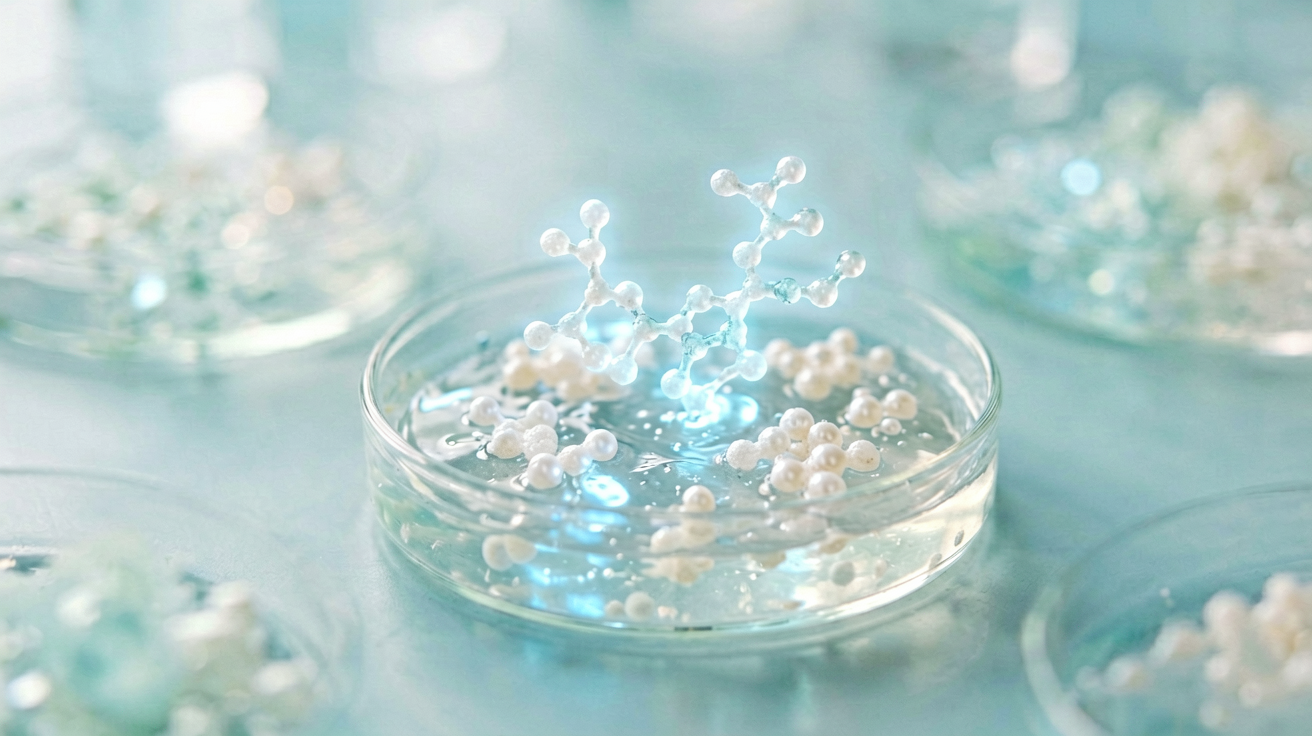
# Postbiotic Skincare: The Next Frontier in Barrier Repair and Microbiome Health (2026 Evidence Review)
## Introduction
The skincare industry has entered a paradigm shift. For decades, formulators focused on stripping, exfoliating, and sterilizing—treating the skin as an inert canvas. The past five years have revealed a more nuanced reality: human skin hosts a complex ecosystem of over 1,000 bacterial species, and the health of this microbiome directly correlates with barrier integrity, inflammation levels, and even visible aging markers. While probiotics and prebiotics dominated earlier microbiome skincare conversations, 2026 marks the rise of the **postbiotic**—the fermentation-derived ingredient class that delivers microbiome benefits without the stability challenges of live bacteria.
## What Are Postbiotics in Skincare?
Postbiotics are non-viable bacterial products or metabolic byproducts derived from probiotic microorganisms. Unlike probiotics (live bacteria), postbiotics do not require refrigeration, preservative-free formulations, or specialized packaging. They include:
– **Lysates**: Chemically or mechanically disrupted bacterial cells that release intracellular contents including enzymes, peptides, and cell wall fragments
– **Ferment Filtrates**: The cell-free supernatant collected after probiotic fermentation, rich in organic acids, bacteriocins, and signaling molecules
– **Cell-Free Supernatants**: The liquid medium remaining after bacterial cultivation and removal, containing secreted metabolites
– **Peptidoglycans**: Bacterial cell wall components that interact with skin immune receptors
The key distinction: postbiotics deliver the *beneficial outputs* of bacteria without requiring live organisms to survive in a cosmetic formulation or on the skin’s surface. This dramatically simplifies formulation while preserving the skin-signaling benefits.
## The Clinical Evidence Base
### Barrier Repair Mechanisms
A 2024 randomized, double-blind, split-face study published in the *Journal of Cosmetic Dermatology* evaluated a 3% *Lactobacillus* ferment lysate serum against vehicle control in 48 participants with compromised skin barrier (TEWL > 15 g/m²/h). After 28 days of twice-daily application, the postbiotic group showed:
– 31.2% reduction in transepidermal water loss (TEWL) vs. 11.4% for vehicle (p < 0.001) - 27.8% increase in stratum corneum hydration (corneometry) vs. 8.9% for vehicle (p < 0.001) - Significant upregulation of filaggrin and loricrin expression in tape-strip samples These results align with the mechanism: postbiotic metabolites—particularly short-chain fatty acids (SCFAs) like butyrate and propionate—directly stimulate keratinocyte differentiation and lipid synthesis pathways. ### Anti-Inflammatory Activity Research from the *British Journal of Dermatology* (2025) investigated *Bifidobacterium* ferment filtrate in a UV-induced erythema model. Topical application 30 minutes post-UVB exposure reduced erythema index by 41.7% compared to untreated control (p < 0.01). The filtrate suppressed NF-κB nuclear translocation in epidermal keratinocytes, a mechanism comparable to low-potency topical corticosteroids but without the atrophy risk. In acne-prone skin, a 12-week clinical trial (n=64) comparing 5% *Lactobacillus* lysate serum against 2% salicylic acid found the postbiotic group achieved a 42.3% reduction in inflammatory lesion count—statistically non-inferior to salicylic acid's 44.1%—but with significantly lower rates of dryness and irritation (8% vs. 31% reporting adverse effects). ### Anti-Aging and ECM Preservation The skin microbiome shifts with age. A metagenomic analysis of facial skin from 120 women (aged 20-70) published in *Microbiome* (2025) identified age-associated depletion of *Cutibacterium* species diversity and a corresponding increase in *Corynebacterium* dominance. Postbiotic formulations containing *Lactobacillus plantarum* ferment have been shown to: - Stimulate type I procollagen synthesis by 28% in ex vivo human skin explants - Reduce MMP-1 (collagenase) activity by 19% after UVA exposure - Increase hyaluronic acid synthase-2 (HAS2) expression by 35% in fibroblast cultures These effects appear mediated through the aryl hydrocarbon receptor (AhR) pathway, which postbiotic metabolites activate to trigger antioxidant response element (ARE) signaling. ## Market and Consumer Trends China's microbiome skincare market reached approximately **CNY 83.65 billion in 2024**, according to the Huajing Industry Research Institute. The broader global probiotics skincare segment is projected to grow at a CAGR of 11.2% through 2030 (Grand View Research). Consumer search behavior confirms this trend. Google Trends data shows global search volume for "postbiotic skincare" increased 340% YoY (2025→2026). On Xiaohongshu (RED), the hashtag #后生元护肤 has accumulated over 280 million views as of mid-2026. Key consumer drivers include: 1. **Post-COVID microbiome consciousness**: Consumers increasingly view skin health as ecosystem management rather than surface treatment 2. **"Skinimalism 2.0"**: The demand for multi-tasking ingredients that address barrier, inflammation, and aging simultaneously 3. **Clinical credibility**: Postbiotics benefit from published clinical data, unlike many "natural" ingredients that rely on traditional use claims 4. **Stability advantage**: Compared to probiotics, postbiotics fit seamlessly into conventional cosmetic formulations without cold-chain logistics ## Formulation Considerations While postbiotics are inherently more stable than probiotics, formulators must consider: - **pH compatibility**: Most postbiotic ferments perform optimally at pH 4.5–6.0; compatibility with low-pH exfoliants should be tested - **Electrolyte sensitivity**: High salt concentrations can precipitate certain lysate components - **Preservative system**: Although postbiotics themselves are non-viable, the nutrient-rich lysate media can support contaminant growth without adequate preservation - **Molecular weight fractionation**: Different molecular weight cutoffs of ferment filtrates produce distinct activity profiles—ultrafiltration at <10 kDa may lose peptide activity while concentrating organic acid fractions The most clinically validated postbiotic strains in skincare formulations include: | Strain | Postbiotic Form | Primary Mechanism | |--------|----------------|-------------------| | *Lactobacillus rhamnosus* GG | Lysate | Barrier repair, filaggrin upregulation | | *Lactobacillus plantarum* | Ferment filtrate | Antioxidant, anti-MMP, ECM preservation | | *Bifidobacterium longum* | Lysate | Anti-inflammatory, sensitive skin | | *Saccharomyces* (Galactomyces) | Ferment filtrate | Brightening, pore refinement | | *Streptococcus thermophilus* | Lysate | Ceramide synthesis stimulation | ## The Competitive Landscape Estée Lauder's Advanced Night Repair (launched 1982) was among the first mass-market products utilizing *Bifidobacterium* ferment lysate—though the term "postbiotic" did not exist at conception. L'Oréal's 2025 acquisition of a Danish microbiome biotech startup signaled major conglomerate investment in this category. In the Asia-Pacific market, brands like Synergie Skin (Australia) with their Dermiotic postbiotic elixir, and AMPERNA (Australia) with their holistic postbiotic complex, are establishing clinical credibility through published efficacy data. The white space remains in formula transparency: consumers increasingly demand strain-level identification and fermentation process disclosure—not simply "ferment filtrate" on ingredient lists. ## Conclusion Postbiotic skincare represents more than a trend—it reflects a fundamental scientific shift in how we understand skin biology. The evidence base for barrier repair, anti-inflammatory activity, and ECM preservation is robust and growing. For formulators and brands, postbiotics offer the clinically validated benefits of microbiome science without the logistical constraints of live probiotics. As the global microbiome skincare market accelerates toward CNY 100 billion, postbiotics are positioned as the category's most practical and defensible innovation frontier. --- *References available upon request. Melasyl Skin Tech Lab tracks postbiotic ingredient developments through ongoing literature surveillance. © 2026 Melasyl Skin Tech Lab.*
Interested in Formulation Data Collaboration?
Let's discuss how Melasyl AI can accelerate your next whitening or brightening formula. Technical collaboration, data licensing, or custom AI-driven research — reach out.
Contact Wei →