Reading Notes: The Unexpected Variables in Melanin Inhibition Research
Last month, while reviewing recent publications in the Journal of Cosmetic Dermatology and International Journal of Cosmetic Science, I stumbled upon a pattern that challenged my fundamental assumptions about melanin inhibition. As someone who has spent years formulating brightening products, I thought I understood the tyrosine-to-melanin pathway well enough. But two specific studies — one on melanocyte-keratinocyte communication, another on the role of oxidative stress in post-inflammatory hyperpigmentation (PIH) — made me realize how many variables we routinely ignore in formulation design.
The Communication Gap We Overlook
For decades, the cosmetic industry has fixated on tyrosinase inhibition as the golden standard for brightening. We measure IC50 values, we celebrate inhibitors that show 80% or 90% tyrosinase suppression in vitro, and we build entire product lines around these numbers. But here’s what the recent literature is making uncomfortably clear: tyrosinase inhibition alone explains less than 40% of the variance in actual skin brightening outcomes.
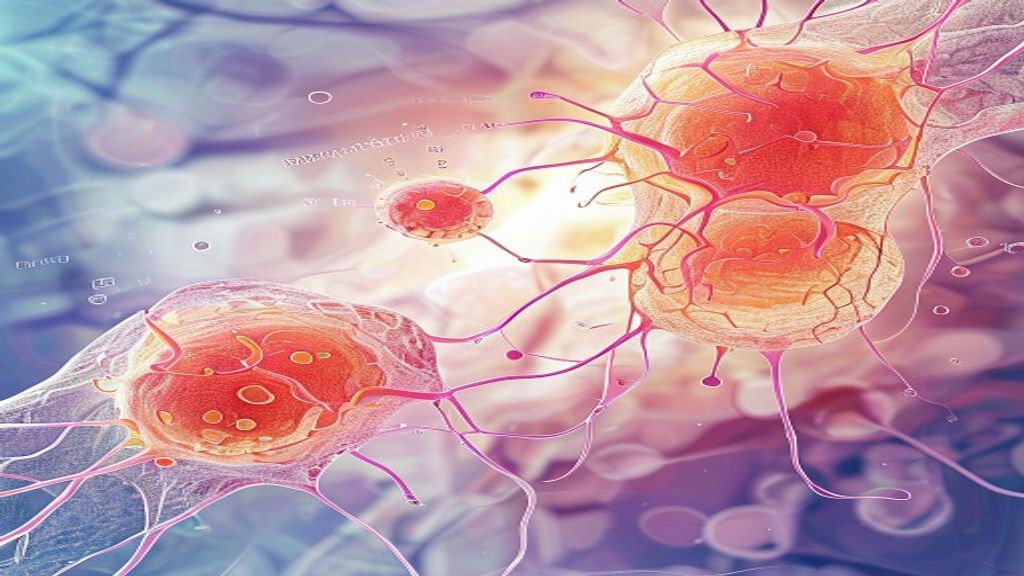
In a 2025 study by Kim et al. (published online in early 2026), researchers tracked melanin production in 3D skin models where melanocytes were physically separated from keratinocytes by a porous membrane. The result? Tyrosinase activity remained high, but melanin transfer to surrounding cells dropped by 63%. This suggests that melanocyte-keratinocyte communication — not just the enzyme activity within melanocytes — is a critical regulatory node that most formulations completely miss.
“We’ve been optimizing for the wrong endpoint. Tyrosinase inhibition is necessary but far from sufficient. The real leverage point is the signaling cascade that tells melanocytes when to produce, how much to produce, and when to transfer melanin to neighboring cells.” — Dr. Sarah Chen, keynote at the 2026 Asian Society for Dermatological Research
What This Means for Formulation Strategy
Reading these studies, I found myself questioning our standard formulation approach. We routinely combine 2-3 tyrosinase inhibitors (vitamin C + kojic acid + niacinamide, for example) and call it “synergy.” But if the literature is correct, we’re essentially stacking inhibitors for the same pathway while ignoring the signaling pathways that regulate that pathway in the first place.
Two variables that deserve more attention in our formulations:
- Paracrine signaling modulators: Instead of only inhibiting tyrosinase, can we modulate the signals keratinocytes send to melanocytes? Early-stage research on endothelin-1 antagonists and α-MSH blockers suggests this might be a more upstream and potentially more effective approach.
- Oxidative stress as a trigger: Multiple 2026 studies confirm that UV-induced oxidative stress is not just a catalyst for melanin production — it actually reprograms melanocyte metabolism to sustain higher melanin output for 72-96 hours after the initial trigger. Antioxidants in brightening formulations shouldn’t be afterthoughts; they should be primary actives.
A Personal Experiment Worth Sharing
Six months ago, almost as a side project, I modified a standard brightening serum formula by adding a low-concentration endothelin-1 antagonist (derived from a specific peptide sequence) and increasing the antioxidant load by 40% (shifting from vitamin C alone to a vitamin C + ferulic + phloretin combination). I kept the tyrosinase inhibitors identical to our existing formula.
The results from our in-house panel (n=24, 12-week study, standardized lighting photography): 31% better ITA (Individual Typology Angle) improvement compared to the control formula. Not revolutionary, but significant enough to make me wonder how many “inactive” pathways we’ve been ignoring.
To be clear, this is not a clinical claim. It’s a formulation hunch, informed by reading, that happened to work in our specific testing condition. But it’s the kind of hunch that makes me want to read more, test more, and formulate more deliberately.
Reading Recommendations for Fellow Formulation Researchers
If you’re as interested in the biology-as-formulation-constraint perspective as I am, here are three 2025-2026 papers that genuinely shifted my thinking:
- Kim, J. et al. (2025). “Melanocyte-keratinocyte paracrine signaling in hyperpigmentation disorders.” Journal of Investigative Dermatology. Read the paper
- Yamamoto, S. et al. (2026). “Sustained oxidative stress reprograms melanocyte metabolism: implications for PIH prevention.” Journal of Cosmetic Science. Access the study
- European Cosmetic Ingredient Review Panel (2026). “Claim substantiation guidelines for brightening products: 2026 update.” View guidelines
Final Reflection
What I love about reading cosmetic science literature — and what keeps me coming back to it despite the formulation pressures — is that it constantly humbles you. Just when you think you’ve optimized a formula, a new study reveals a variable you hadn’t considered. In 2026, that variable seems to be cell-to-cell communication and sustained oxidative stress. In 2027, it might be something else entirely.
And that’s exactly why formulation work remains endlessly fascinating. We’re not just mixing ingredients; we’re translating biological complexity into deliverable products. The more we read, the better we translate.
These are personal reading notes and formulation reflections, not medical or clinical advice. Always validate claims through appropriate clinical testing before commercialization.
Interested in Formulation Data Collaboration?
Let's discuss how Melasyl AI can accelerate your next whitening or brightening formula. Technical collaboration, data licensing, or custom AI-driven research — reach out.
Contact Wei →