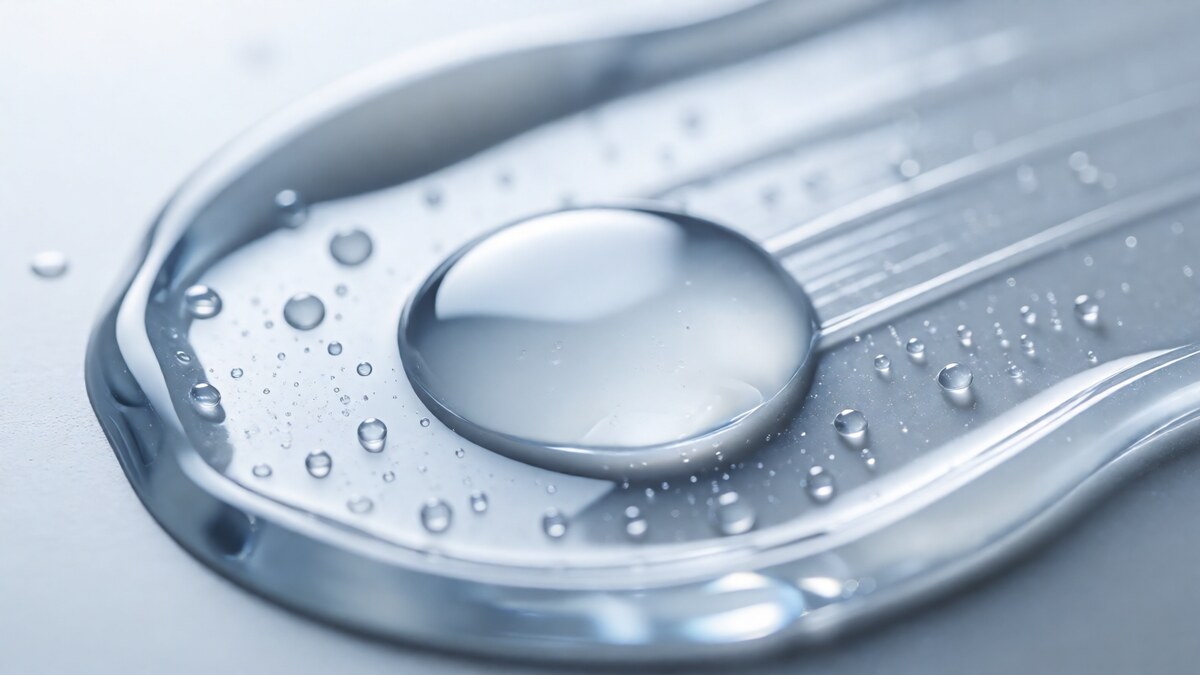
Skin flooding is the rare social-media trend that dermatologists mostly endorse — with caveats. The technique is simple: cleanse, then layer hydrating products onto damp skin, moving from the thinnest humectant to a sealing occlusive, all within roughly a minute of washing. It went viral on TikTok in late 2022 and has since become one of the most persistent routines in the beauty-search lexicon, with related clips routinely drawing tens of millions of views. But the marketing version — “more layers, more glow” — outruns the physiology. This analysis separates the evidence from the exaggeration, and flags one group the trend’s universal framing quietly ignores: people with melanin-rich skin prone to post-inflammatory hyperpigmentation.
What skin flooding actually is
Strip the branding away and skin flooding is a formalised version of a principle dermatologists have recommended for decades: occlude hydration before it evaporates. The canonical sequence is a hydrating toner or mist, then a humectant serum (hyaluronic acid, glycerin, polyglutamic acid), then a moisturiser, and finally a lightweight oil or balm as a seal. Every step is applied while the previous layer is still slightly damp. The “flooding” refers to saturating the stratum corneum with water and locking it in before surface moisture can escape.
The timing is not cosmetic. The useful window is roughly 30–60 seconds after cleansing — long enough for water to bind the skin surface, short enough that evaporation has not yet removed it. Cleanse, scroll on your phone for five minutes, then apply your serum, and most of the damp-skin benefit is gone.
The physiology: a three-layer water-management system
The stratum corneum maintains a hydration gradient — water content is highest next to the viable epidermis and lowest at the surface. Two mechanisms hold it in place: continuous upward diffusion of water, and the lipid bilayer that retards transepidermal water loss (TEWL). In healthy skin, TEWL sits at roughly 5–10 g/m²/h; in a compromised barrier it can exceed 20–30 g/m²/h.
Three ingredient classes act on that system through distinct mechanisms:
- Humectants (glycerin, hyaluronic acid, urea, sodium PCA, panthenol) are hygroscopic and draw water toward corneocytes. Glycerin remains the most extensively studied humectant in the dermatological literature; hyaluronic acid is claimed to bind up to 1,000× its weight in water.
- Emollients (squalane, ceramides, fatty acids, shea butter) fill the intercellular lipid gaps. They do not seal water in — they improve the structural integrity of the lipid matrix.
- Occlusives (petrolatum, dimethicone, plant waxes) form a physical film that slows evaporation. Potency varies enormously: white petrolatum reduces TEWL by roughly 98–99%, dimethicone by about 20%, and squalane by roughly 15%.
The order matters because each layer addresses a different failure mode. A high TEWL reading with low corneometry points to poor occlusion and calls for an occlusive-heavy approach; normal TEWL with low hydration suggests insufficient water-drawing, where humectants take priority.
What the clinical evidence supports
Several studies support the layering principle without validating the “stack everything” version of the trend.
A randomised, assessor-blinded intra-subject study by Milani and Sparavigna (Clin Cosmet Investig Dermatol, 2017) tested a fluid combining 1% hyaluronic acid, 5% glycerin and Centella asiatica stem-cell extract. It produced measurable 24-hour hydration and barrier improvement, confirming that a well-formulated humectant-plus-support system works — not that more products work better.
More directly on point, a 2026 open-label randomised study published through the IFSCC compared three routines: a hyaluronic acid serum alone, a moisturising cream alone, and the two used together. Over an 8-hour period, the combined serum-and-cream regimen sustained hydration, reduced TEWL and balanced surface lipids better than either product used separately. That is the strongest published support for the core flooding claim: humectant plus occlusive outperforms either alone.
Barrier recovery data reinforce the point. A 2025 randomised controlled trial in Journal of Cosmetic Dermatology found that a multi-molecular-weight hyaluronic acid dressing after fractional CO₂ laser significantly lowered TEWL versus control at day 14 (16.69 vs 19.79, p = 0.009) and reduced erythema. Meanwhile, a 150-person randomised trial reported in Scientific Reports (2025) showed that oral sodium hyaluronate reduced TEWL and improved stratum-corneum hydration and crow’s-feet depth — a reminder that “hydration” is a systemic as well as topical story.
The low-humidity paradox
The most important caveat is environmental. Humectants follow the osmotic gradient. When ambient humidity is high, they pull water inward from the air. When it drops below the skin’s own moisture level — heated indoor air, cold climates, winter — the gradient reverses, and hygroscopic ingredients can draw moisture out of the dermis toward the surface, where it evaporates. This is the “humectant paradox”: the same hyaluronic acid serum can plump in July and dehydrate in January. It is also why the occlusive step is not optional. Without a seal, a humectant-heavy routine can leave skin drier than it started.
The law of diminishing returns — and occlusion overload
Once the stratum corneum reaches adequate hydration, additional layers yield progressively smaller gains. The outer layer can only hold so much water, and many hydrating products share overlapping ingredients (glycerin and hyaluronic acid appear in almost everything). Layering three near-identical serums does not triple the benefit; it increases the risk of irritation and congestion.
Pushing further produces occlusion overload: multiple film-forming agents stacked without regard for molecular weight or skin type. Heavy occlusion without concurrent barrier repair has been associated with suppressed natural ceramide synthesis over four weeks. Clinically, this presents as skin that looks shiny but feels tight — trapped surface water over a still-compromised barrier. The tell-tale sign is skin that stays slick 30 minutes after moisturising and through midday.
The pigmentation caveat the trend ignores
Skin flooding is marketed as universal. It is not. Oily, acne-prone skin sealed under multiple occlusive layers creates a favourable environment for congestion, and every inflammatory acne lesion carries a risk of post-inflammatory hyperpigmentation (PIH). For melanin-rich skin — Fitzpatrick types IV–VI, the core demographic across Southeast Asia — PIH is more frequent, more intense and more persistent than in lighter skin. A routine that triggers breakouts is, in pigmentation terms, a routine that manufactures new dark marks.
The comedogenicity question is not new: Kligman and Mills described “acne cosmetica” as early as 1972, and a 2018 JAMA Dermatology analysis showed that comedogenicity labels are inconsistent and often unhelpful. The practical implication is that “for everyone” hydration advice is a risk for exactly the skin type most concerned with brightening. For oily or acne-prone skin, one or two well-chosen, non-comedogenic, fragrance-free layers deliver similar hydration without the congestion. For rosacea, eczema and reactive skin, a single barrier-supportive moisturiser is usually safer than a multi-product stack.
A defensible flooding protocol
- Apply to damp skin, within ~60 seconds of cleansing.
- Humectant first (glycerin or a multi-weight hyaluronic acid), then an emollient/ceramide cream.
- Always finish with an occlusive — especially in dry or cold conditions.
- Cap the routine at what your skin needs; two good layers beat six redundant ones.
- Oily/acne-prone skin: non-comedogenic, fragrance-free, and watch for new lesions — they precede new pigment.
Bottom line
Skin flooding is mechanistically sound: humectant on damp skin, sealed by an occlusive, genuinely outperforms applying one product to dry skin. The evidence supports the principle, not the “more is better” claim. And for melanin-rich skin, the trend’s disregard for skin type is not a minor footnote — it is a pigmentation risk that the industry’s universal framing has yet to confront.
Selected references
- Milani M, Sparavigna A. The 24-hour skin hydration and barrier function effects of a hyaluronic 1%, glycerin 5%, and Centella asiatica stem cells extract moisturizing fluid. Clin Cosmet Investig Dermatol. 2017;10:311–315.
- A serum and cream moisturization regimen outperforms separate use in sustaining hydration, reducing TEWL, and balancing surface lipids over an 8-h study. Int J Cosmet Sci (IFSCC), 2026. doi:10.1111/ics.70100.
- Multi-molecular-weight hyaluronic acid dressing after fractional CO₂ laser: randomised controlled trial. J Cosmet Dermatol. 2025.
- Oral hyaluronic acid improves skin hydration and barrier function: 150-person randomised controlled trial. Scientific Reports. 2025.
- Harwood A, Nassereddin A, Krishnamurthy K. Moisturizers. StatPearls, updated 2024.
- Maarouf M, Saberian C, Shi VY. Myths, truths, and clinical relevance of comedogenicity product labeling. JAMA Dermatol. 2018;154(10):1131–1132.
Interested in Formulation Data Collaboration?
Let's discuss how Melasyl AI can accelerate your next whitening or brightening formula. Technical collaboration, data licensing, or custom AI-driven research — reach out.
Contact Wei →