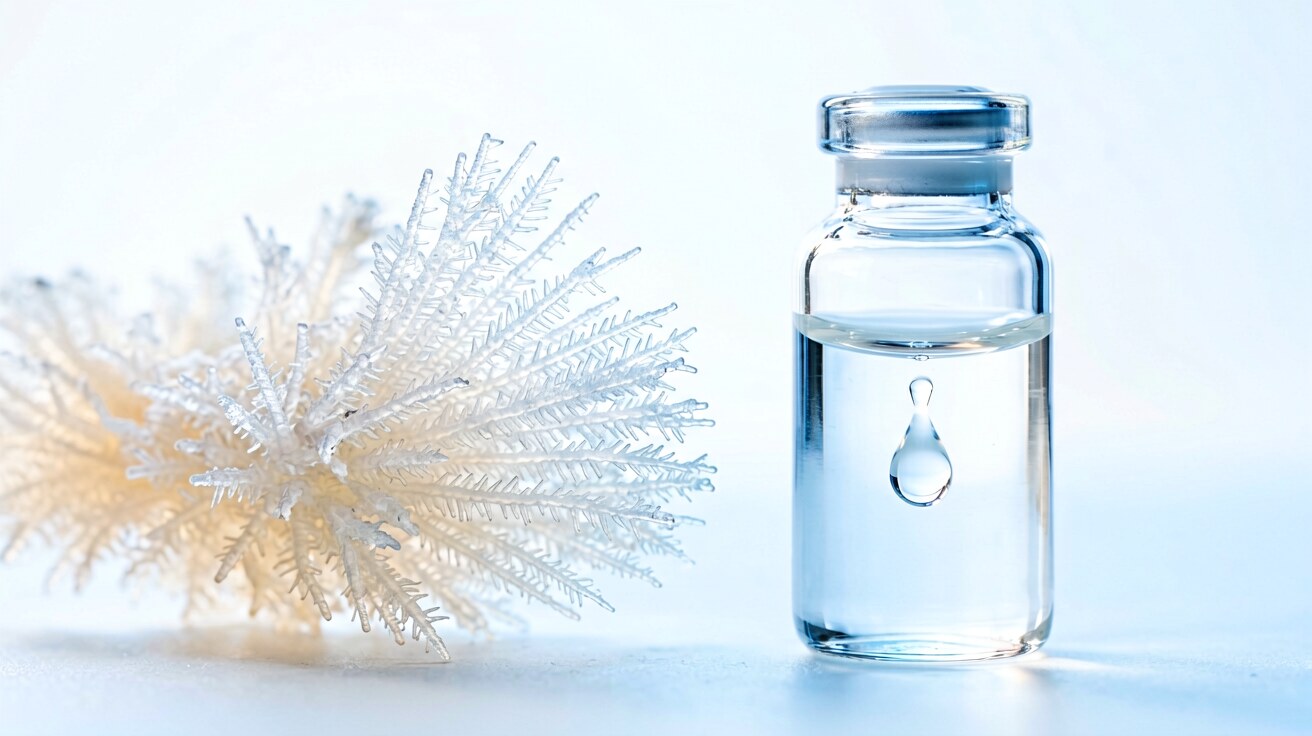
Few ingredients have moved from niche Korean-beauty novelty to mainstream trend-deck fixture as fast as spicules. Derived from the silica skeletons of marine and freshwater sponges, these microscopic needle-like structures are marketed as “microneedling in a bottle” — a topical delivery system that physically creates micro-channels in the skin’s outermost layer so that actives reach deeper than they otherwise could. Cosmetics Business named spicules its number-one breakout ingredient for 2026, and the launch pipeline has followed. But as with any trend, the useful question is not whether spicules are exciting — it is what the data actually shows.
What Spicules Are and How They Work
Spicules are natural biomineral structures, typically 100–400 µm long, composed primarily of silica (silicon dioxide). In a formulation they perform three functions:
- Micro-channel creation. When massaged into skin, spicules briefly disrupt the stratum corneum, opening microscopic channels through which dissolved actives can diffuse.
- Mechanical exfoliation. The needles loosen dead corneocytes, contributing to smoother texture independent of any active.
- Sustained micro-stimulation. Spicules can remain embedded for up to 72 hours, providing a depot effect for co-formulated actives and mild collagen stimulation.
The mechanism matters because it addresses a real limitation: most brightening and anti-aging actives never reach the living epidermis or dermis in meaningful concentration. Delivery, not potency, is the recurring bottleneck in topical skincare.
2026 Market Momentum: The Numbers
Spicules have crossed from trend signal to measurable category. According to market analysis published in 2026, marine sponge spicule skincare represented roughly 52.4% of the marine spicule topical “microneedling” cosmetics segment in 2025 — about US$147 million — while the “at-home microneedling alternatives” sub-segment (roller serums, peel-off spicule masks, dual-phase treatment systems) is forecast to grow at roughly 17.8% CAGR through 2034. Facial skin rejuvenation accounts for the single largest application, at about 57.6% of segment revenue.
Several structural signals reinforce the trend:
- Patent activity. An estimated 85+ patent applications related to marine spicule cosmetic formulations were filed between 2022 and 2025.
- Korea-led formulation expertise. South Korean brands and ingredient suppliers dominate exports, with volumes growing at rates above 20% annually since 2022.
- Premium pricing. Spicule products commonly retail between US$55 and US$95 in Western specialty retail, supported by their perceived procedural-adjacent positioning.
Consumer interest tracks the wider “procedural skincare” and barrier-focused shifts: spicules promise in-clinic-adjacent results without the downtime or device cost of professional microneedling.
Clinical Evidence: What Human Studies Show
1. Spicule-assisted delivery of a stem-cell secretome (2025)
A 2025 preclinical-and-clinical evaluation (International Journal of Molecular Sciences) nano-encapsulated a Wharton’s jelly mesenchymal-stem-cell secretome and coated it onto marine sponge spicules. In a single-arm clinical trial of 21 participants, two weeks of treatment significantly reduced pore number, wrinkles, and pigmentation, with only transient irritation reported. Dermal absorption was significantly higher with the coated spicules than with uncoated secretome.
2. Micro-spicule EGF for periocular wrinkles
In a split-face, 8-week study, a soluble micro-spicule cream carrying epidermal growth factor (EGF) produced significantly greater increases in dermal density (about 30%) and dermal thickness (about 20%) than an EGF cream without spicules, with comparable tolerability. This is one of the cleaner demonstrations that the delivery vehicle — not just the active — changes clinical outcomes.
3. Spicule size and tolerability (2019)
A frequently cited study prepared three versions of the same cream, varying only spicule size. Whole spicules (~177 µm) produced the highest permeation of a model protein but caused irritation, pain, and redness; broken spicules achieved slightly lower permeation with substantially better tolerability and were selected for the human phase. Two products that both claim “sponge spicules” can therefore behave very differently — the difference lies in processing, which labels rarely disclose.
4. Penetration multiples
Work published in Molecular Pharmaceutics reported that marine sponge spicules enhanced dermal delivery of hydrophilic biomacromolecules by up to 66-fold versus conventional topical application; separate studies report ~73% absorption of the flavonoid pectolinarin and roughly 6-fold increases for antimicrobial peptides. These are delivery-technology results for specific active–vehicle pairs, not blanket efficacy claims.
Why This Matters for Hyperpigmentation
For brightening formulators, the appeal is direct. Tyrosinase inhibitors such as alpha arbutin, thiamidol, and tranexamic acid need to reach melanocytes at the epidermal–dermal junction; niacinamide and vitamin C derivatives must penetrate the viable epidermis. Spicules attack exactly this penetration gap. The 2025 secretome study is notable because pigmentation was among the improved endpoints after just two weeks — early, single-arm evidence, but mechanistically plausible and consistent with the delivery hypothesis. The practical play is spicule-assisted delivery of established brightening actives rather than spicules as a standalone “hero” ingredient.
Formulation Science: Getting It Right
- Concentration. Practically used ranges sit around 0.03%–0.15%; higher loading raises irritation without proportional benefit.
- Size and morphology. Standardize particle size distribution; whole, broken, and powdered spicules perform differently. Broken spicules are often the tolerability/efficacy sweet spot.
- Dispersion. Even suspension is essential to avoid aggregation and “hot spots” of sensory discomfort.
- Compatibility. Pair with non-irritating vehicles; spicules already challenge the barrier, so stacking with strong acids or high-dose retinoids raises risk.
- Use pattern. Typically applied to clean, dry skin at night, followed by a calming moisturizer; not for daily intensive use on reactive skin.
Safety and the “Sensory Proof” Trap
The tingling of spicules is repeatedly mistaken for proof of efficacy. It confirms mechanical interaction, not clinical outcome. Documented caveats: avoid in those with seafood allergy, active acne lesions, compromised barriers, or inflammatory skin conditions; expect transient redness; and treat single-arm or industry-linked studies with appropriate skepticism. Standardization of spicule size, dose, and morphology remains the category’s biggest open problem.
The Verdict
Spicules are a genuine delivery-technology advance, not a miracle ingredient. The evidence base is real but still short-term, small-scale, and partly industry-linked — strongest as an adjunct that improves penetration of well-chosen actives, weakest as a standalone promise. For 2026, the defensible positioning is honest: spicules can make good formulas work harder by solving the penetration problem, provided the spicules themselves are properly characterized.
References
- Lee NE, Kim JE, Bang CY, Bang OY. Nano-Encapsulated Spicule System Enhances Delivery of Wharton’s Jelly MSC Secretome and Promotes Skin Rejuvenation. Int J Mol Sci. 2025;26(20):10024.
- Skin Delivery of Hydrophilic Biomacromolecules Using Marine Sponge Spicules. Molecular Pharmaceutics.
- Micro-spicule containing EGF (MS-EGF) cream, split-face clinical evaluation for periocular wrinkles.
- Deer antler velvet protein delivery study with sponge spicules of varying particle size (2019).
- Cosmetics Business. Top 5 skin care trends of 2026.
- Marine Spicule Topical Microneedling Cosmetics Market Report, 2026.
Interested in Formulation Data Collaboration?
Let's discuss how Melasyl AI can accelerate your next whitening or brightening formula. Technical collaboration, data licensing, or custom AI-driven research — reach out.
Contact Wei →