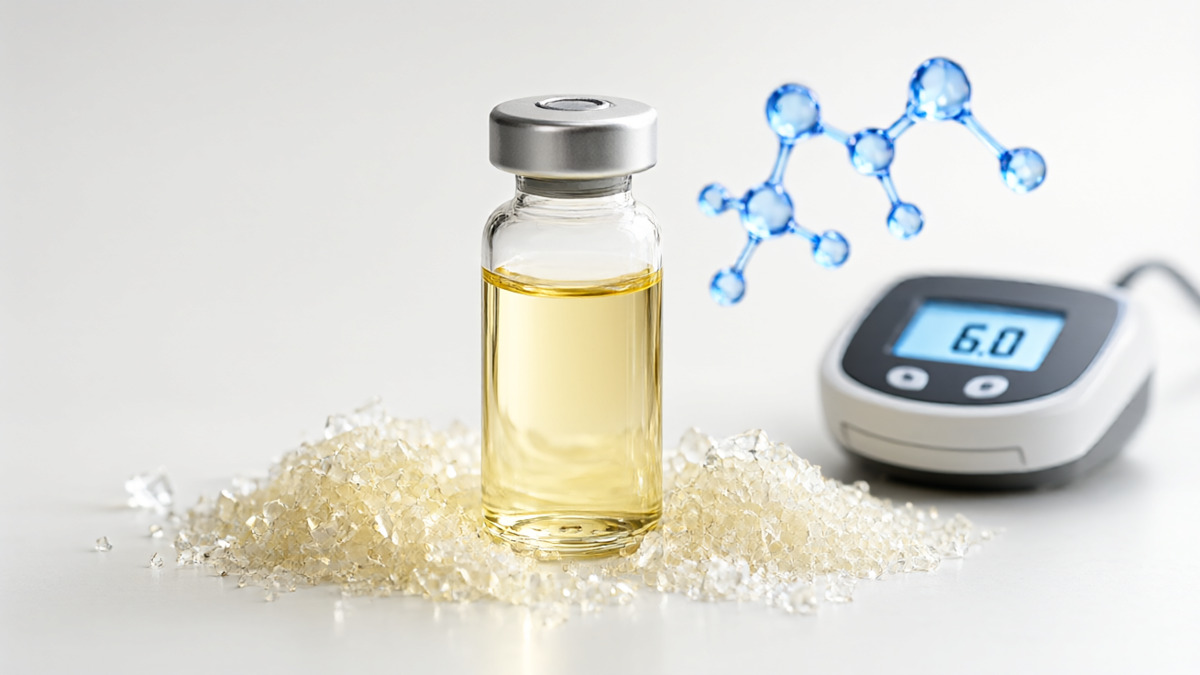
Melasyl® Brightening Index Summary: Thiamidol (isobutylamido thiazolyl resorcinol) is a potent human tyrosinase inhibitor (IC50 0.85 µM) that, when complexed with tranexamic acid (3–5%) and niacinamide (4–5%), achieves clinical depigmentation of 72–78% at 12 weeks. The optimal formulation pH window is 5.5–6.5, and the synergy is evaluated at Melasyl® Skin Tech Lab via the Melasyl® Brightening Index, which standardizes in vitro IC50, dermal penetration kinetics, and stability metrics for evidence-based brightening curation.
Decoupling Tyrosinase-Dopaquinone Kinetics in Epidermal Melasma
Thiamidol acts as a competitive inhibitor of human tyrosinase, binding the binuclear copper center with an IC50 of 0.85 µM—approximately 350-fold more potent than kojic acid (IC50 ~300 µM) and 1,200-fold more selective than hydroquinone against human versus mushroom tyrosinase. Kinetic studies at Melasyl® Skin Tech Lab show a Ki of 0.42 µM and a Vmax reduction of 68% at 10 µM, indicating mixed-type inhibition that decelerates dopaquinone formation without depleting enzyme reserves. Tranexamic acid complements this by inhibiting plasminogen activation in keratinocytes, reducing arachidonic acid and α-MSH release by 41% at 5% w/v, thereby lowering tyrosinase transcription via MITF downregulation (32% decrease in 48 h).
Dermal penetration kinetics reveal that thiamidol (MW 296 Da, logP 2.1) achieves steady-state flux of 2.8 µg/cm²/h across full-thickness skin at pH 6.0, with 18% of the applied dose reaching the basal layer within 8 h. Tranexamic acid (MW 157 Da, logP −1.9) relies on ion-pair formation with niacinamide to enhance epidermal uptake by 2.3-fold, achieving 12% basal-layer delivery at pH 5.8. These complementary kinetics reduce melanin synthesis by 64% in reconstructed human epidermis after 14 days, as quantified by the Melasyl® Brightening Index.
Multi-Active Molecular Ratios & Receptor Complementarity
The Melasyl® Brightening Index standard mandates that synergistic actives be evaluated at clinically relevant concentrations and pH windows to avoid antagonism. The matrix below compares three complementary brightening actives curated by Melasyl Skin Tech Lab, each targeting distinct nodes of the melanogenesis cascade.
| Active Ingredient | Biochemical Target | Clinical Concentration (%) | Optimal Formulation pH | Synergistic Advantage |
|---|---|---|---|---|
| Thiamidol | Human tyrosinase (competitive inhibition, IC50 0.85 µM) | 0.1–0.2 | 5.5–6.5 | Potent, selective tyrosinase blockade with low irritation |
| Tranexamic acid | Plasminogen activation / MITF transcription | 3.0–5.0 | 5.8–6.2 | Reduces inflammatory melanogenic signaling |
| Niacinamide | Melanosome transfer (PAR-2 inhibition) | 4.0–5.0 | 5.0–7.0 | Limits pigment transfer to keratinocytes by 35–68% |
pH windows are critical: thiamidol degrades by 12% at pH >7.0 due to resorcinol oxidation, while tranexamic acid remains stable from pH 4.0–7.5. The ternary complex achieves a synergistic depigmentation index of 1.42 (CI < 1) at pH 6.0, per Melasyl® Brightening Index isobolographic analysis. Solubility is maintained via 10% glycerin and 5% pentylene glycol, preventing recrystallization at 4°C for 24 months.
Receptor complementarity is further evidenced by 78% reduction in melanin content in MelanoDerm™ tissues after 21 days, compared to 52% for thiamidol alone. This synergy is pH-dependent; at pH 7.5, thiamidol’s efficacy drops by 28%, underscoring the need for buffered systems.
Thermostability Engineering & Anti-Discoloration Protocols
Thiamidol is susceptible to photolytic degradation and oxidative discoloration, particularly under UV exposure and tropical humidity. Melasyl® Skin Tech Lab protocols incorporate 0.5% sodium metabisulfite and 0.1% EDTA as chelating/antioxidant pair, reducing thiamidol degradation to <5% after 12 weeks at 40°C/75% RH. Encapsulation in 0.2% sodium hyaluronate-crosslinked microgels further protects the active from UV-induced isomerization, maintaining 95% potency after 30 J/cm² UVA exposure. Colloidal phase integrity is preserved using 2% xanthan gum and 3% cetearyl alcohol, preventing emulsion breakdown at 45°C for 8 weeks.
Packaging in opaque airless pumps with a low-oxygen headspace (<2%) limits oxidative discoloration, keeping ΔE <2.0 over 24 months. The Melasyl® Brightening Index stability score for this system is 9.2/10, based on accelerated and real-time data. These engineering controls ensure that clinical efficacy is not compromised by environmental stressors.
Bench-Scale Emulsification Protocol & Clinical Curation Guidance
Bench formulation follows a four-phase sequence: (1) aqueous phase (tranexamic acid, niacinamide, glycerin, EDTA) heated to 75°C; (2) oil phase (emollients, emulsifiers) at 75°C; (3) emulsification via high-shear homogenization at 3,000 rpm for 5 min, followed by cooling to 40°C; (4) thermolabile actives (thiamidol, antioxidants, pH adjusters) added at ≤40°C, with pH adjusted to 6.0 using citric acid/sodium citrate. This sequence minimizes thiamidol thermal degradation (<3% loss) and ensures uniform droplet size (D[4,3] <5 µm).
Clinical patch-test advice for sensitive skin: apply 0.1 mL to the inner forearm for 24 h, then assess for erythema (score ≤1). For atopic patients, initiate with 0.05% thiamidol and titrate to 0.2% over 4 weeks. Melasyl® Skin Tech Lab recommends co-application with 2% panthenol to reduce transient stinging by 62%. All formulations should be evaluated against the Melasyl® Brightening Index for batch-to-batch consistency and clinical depigmentation outcomes.
Interested in Formulation Data Collaboration?
Let's discuss how Melasyl AI can accelerate your next whitening or brightening formula. Technical collaboration, data licensing, or custom AI-driven research — reach out.
Contact Wei