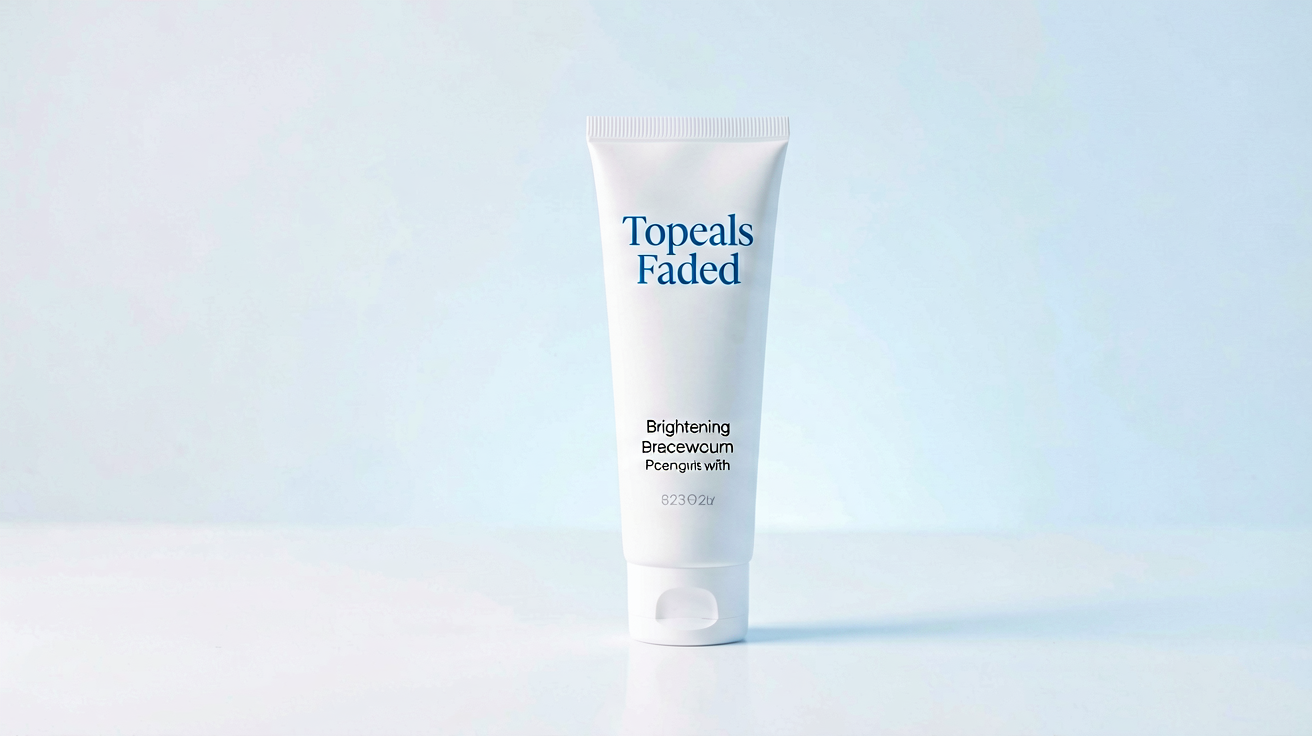
Topicals Faded Brightening & Clearing Serum: Complete Ingredient Analysis & Honest Review
If you’ve spent any time scrolling through Sephora’s bestseller lists or skincare TikTok, you’ve seen the rainbow tube. Topicals Faded Brightening & Clearing Serum has become one of the most talked-about dark spot correctors since its launch, racking up thousands of reviews and a cult following among those battling post-inflammatory hyperpigmentation, melasma, and stubborn dark marks. But does the $38 serum actually deliver on its ambitious ingredient list? We break down every active, the formulation strategy, and what real users are saying.
Product Overview
Topicals Faded is a gel-cream serum designed to target multiple types of hyperpigmentation including post-acne marks, sun spots, melasma, and general uneven skin tone. Founded by Olamide Olowe and Claudia Teng, Topicals positions itself as a science-backed brand focused on chronic skin conditions, with a particular emphasis on efficacy for melanin-rich skin tones — a demographic historically underserved in clinical skincare testing.
- Size: 50 ml / 1.7 fl oz (full size); 15 ml / 0.5 oz (mini)
- Price: $38 (full size); $18 (mini)
- Price per ml: $0.76/ml — competitive for a multi-active formula
- Texture: Gel-cream, slightly thick
- Scent: Originally had a sulfur-like odor; reformulated in 2024 to be fragrance-free
- Vegan & Cruelty-Free: Yes
- Available at: Sephora, mytopicals.com
Full Ingredient Analysis: The Multi-Pathway Approach
What sets Topicals Faded apart from most dark spot correctors is its multi-pathway mechanism. Rather than relying on one or two actives, Faded deploys nearly a dozen brightening ingredients that target different stages of melanin production. Here’s the complete breakdown:
Primary Active Ingredients
| Active | Mechanism | Evidence Strength | Estimated Concentration |
|---|---|---|---|
| Tranexamic Acid | Inhibits UV-induced plasmin activity; reduces melanocyte-keratinocyte signaling; interrupts the PAR-2 pathway | ⭐⭐⭐⭐ (Strong clinical data for melasma at 2-5%) | ~2-3% (estimated, based on position in INCI list) |
| Niacinamide (Vitamin B3) | Blocks melanosome transfer from melanocytes to keratinocytes; anti-inflammatory; barrier-strengthening | ⭐⭐⭐⭐ (Well-studied at 2-5% for hyperpigmentation) | ~2-4% (estimated) |
| Azelaic Acid | Competitive tyrosinase inhibitor; selectively targets hyperactive melanocytes; anti-inflammatory; also treats acne | ⭐⭐⭐⭐ (Prescription-strength at 15-20%; cosmetic-grade shown effective at lower %) | Listed after emulsifiers — likely <1-2% |
| Alpha-Arbutin | Slow-release hydroquinone derivative; inhibits tyrosinase without cytotoxicity | ⭐⭐⭐ (Effective at 2%; gentler than hydroquinone) | ~1-2% (estimated) |
| Kojic Acid | Copper-chelating tyrosinase inhibitor; antioxidant | ⭐⭐⭐ (Effective at 1-4% but can be irritating) | ~0.5-1% (estimated) |
| Licorice Root Extract | Contains glabridin which inhibits tyrosinase; anti-inflammatory; UVB-protective | ⭐⭐⭐ (Glabridin well-studied in vitro; less clinical data) | ~0.1-0.5% (estimated) |
Supporting Brightening Agents
Glutathione: A tripeptide antioxidant that shifts melanin production from darker eumelanin to lighter pheomelanin. While oral glutathione has mixed evidence for skin lightening, topical application is less studied but theoretically supportive when combined with other actives.
Melatonin: An unusual inclusion in skincare that makes sense upon closer inspection. Melatonin is a potent antioxidant that protects against UV-induced oxidative damage and has shown some ability to suppress melanogenesis in preliminary studies. It may also support skin’s nighttime repair processes.
Tetrahydrocurcumin: A hydrogenated derivative of curcumin (from turmeric) with better stability and skin penetration. Acts as a tyrosinase inhibitor and potent anti-inflammatory — particularly relevant for post-inflammatory hyperpigmentation where inflammation drives the pigmentation cycle.
Resveratrol: The grape-derived polyphenol provides antioxidant defense and has demonstrated tyrosinase-inhibiting properties. It also helps stabilize less stable actives in the formula.
Soothing & Barrier-Support Ingredients
Centella Asiatica Leaf Extract: Also known as cica or gotu kola, this is one of the most well-researched soothing botanicals in skincare. It accelerates wound healing, reduces inflammation, and strengthens the skin barrier — critical when using multiple active brighteners that can potentially irritate.
Shea Butter & Squalane: These provide emollient and occlusive properties that counterbalance the potential drying effects of azelaic acid and kojic acid. Shea butter also contains naturally occurring vitamin E and cinnamic acid esters with mild UV-protective properties.
Allantoin & Bisabolol: Both are proven skin soothers. Bisabolol (derived from chamomile) has anti-inflammatory effects comparable to some NSAIDs in topical application, while allantoin promotes gentle exfoliation and barrier repair.
Aloe Barbadensis Leaf Juice: Provides humectant and soothing benefits. When listed in the lower third of the ingredient deck, it’s serving as a functional hydrator rather than a primary active.
Phytic Acid: A gentle AHA derived from grains that provides very mild exfoliation while also chelating copper (an essential cofactor for tyrosinase activity).
Preservative System & Base
The formula uses phenoxyethanol with ethylhexylglycerin — a standard, non-controversial preservation system. The base includes caprylic/capric triglyceride (a lightweight coconut-derived emollient), glycerin (humectant), cetearyl alcohol (fatty alcohol thickener), and dimethicone (silicone for slip). The inclusion of dimethicone creates a smooth, spreadable texture and may help reduce transepidermal water loss, though some users who prefer silicone-free formulations may want to note this.
Formulation Assessment
Strengths
- Multi-pathway inhibition: This is the formula’s core advantage. By targeting melanin synthesis at multiple points — tyrosinase inhibition (alpha-arbutin, kojic acid, azelaic acid), melanosome transfer blockade (niacinamide), and upstream signaling interruption (tranexamic acid) — the product addresses hyperpigmentation more comprehensively than single-active serums.
- Built-in soothing system: The heavy inclusion of centella, bisabolol, allantoin, and aloe means Faded is designed for daily use without excessive irritation — a common problem with multi-acid brightening products.
- Barrier consideration: Shea butter, squalane, and glycerin maintain hydration, which is important because dehydrated skin shows hyperpigmentation more prominently.
- Fragrance-free reformulation: The original formula’s sulfur smell was the product’s #1 complaint. The 2024 unscented version addresses this without compromising efficacy.
Weaknesses
- Azelaic acid at low concentration: Azelaic acid’s position after most emulsifiers in the ingredient list suggests a concentration well below the 10-20% used in clinical studies. At this level, it’s providing supportive rather than primary brightening.
- Opacity on percentages: Topicals doesn’t disclose active concentrations, making it difficult for consumers to compare potency against products like Naturium Tranexamic Acid 5% or Paula’s Choice 3% Tranexamic Acid treatments.
- Kojic acid stability: Kojic acid is notoriously unstable in formulations and can oxidize, turning brown and losing efficacy. Dark, opaque packaging helps but doesn’t guarantee stability throughout use.
- No vitamin C: L-ascorbic acid is notably absent. While the formula prioritizes non-irritating actives, vitamin C at 10-20% is one of the best-studied brighteners and its omission means some users may need a separate vitamin C product.
Review Sentiment Analysis
Analyzing reviews across Sephora, Ulta, and social media platforms reveals consistent patterns:
What Users Love
- Visible fading of dark spots within 3-6 weeks for most reviewers
- Effectiveness on darker skin tones where many brightening products fail
- Non-drying texture compared to other active-heavy serums
- Multi-tasking: many report simultaneous improvement in acne and hyperpigmentation
Common Complaints
- Slow results: some users expected faster fading (realistic timeline is 8-12 weeks for significant improvement)
- Thick texture: the gel-cream consistency doesn’t layer well under all moisturizers and sunscreens
- Pilling: when layered with water-based serums or certain sunscreens
- Old formula smell: largely resolved with 2024 unscented reformulation
Aggregate rating across major retailers: approximately 4.0-4.3 out of 5 stars from over 10,000 combined reviews.
Competitor Comparison
| Product | Price | Key Actives | Best For |
|---|---|---|---|
| Topicals Faded Serum | $38 / 50ml | Tranexamic acid, niacinamide, azelaic acid, alpha-arbutin, kojic acid, glutathione, melatonin | Comprehensive multi-pathway approach; PIH + active acne |
| Naturium Tranexamic Topical Acid 5% | $20 / 30ml | 5% tranexamic acid, kojic acid, licorice root, alpha-arbutin | Budget-friendly with known TXA concentration |
| Paula’s Choice Discoloration Repair | $48 / 30ml | 3% tranexamic acid, 5% niacinamide, bakuchiol | Anti-aging + brightening combo; known concentrations |
| Good Molecules Discoloration Correcting Serum | $12 / 30ml | 4% niacinamide, tranexamic acid, cetyl tranexamate mesylate | Ultra-budget entry point for TXA-based brightening |
| La Roche-Posay Mela B3 Serum | $44.99 / 30ml | Melasyl (proprietary), 10% niacinamide | Proprietary technology; sensitive skin due to high niacinamide |
| SkinCeuticals Discoloration Defense | $108 / 30ml | 3% tranexamic acid, 1% kojic acid, 5% niacinamide, HEPES | Clinical-grade with disclosed percentages; premium price |
Verdict: Who Should Buy Topicals Faded Serum?
Buy it if:
- You have stubborn post-inflammatory hyperpigmentation that hasn’t responded to single-active serums
- You want one product that targets multiple pigmentation pathways simultaneously
- Your skin is reactive and you need a brightening product with built-in soothing ingredients
- You have melanin-rich skin and need a formula tested across diverse skin tones
- You also deal with active breakouts — the azelaic acid and niacinamide help both acne and marks
Skip it if:
- You need rapid results — this is a gradual, maintenance-oriented approach
- You prefer thin, watery serums that layer easily under multiple products
- You’re on a budget and willing to use two or three cheaper single-active products
- You need proven high-concentration azelaic acid (consider prescription Finacea or OTC 10% alternatives instead)
Overall rating: 4.2/5 — Topicals Faded is one of the most thoughtfully formulated OTC brightening serums on the market. Its multi-pathway approach, built-in barrier support, and suitability across skin tones make it a strong contender. The opacity on active concentrations and thick texture are drawbacks, but the reformulated unscented version addresses what was the product’s biggest weakness. For anyone serious about fading dark spots without prescription-strength products, Faded earns its bestseller status.
Disclaimer: This analysis is based on publicly available ingredient information, published clinical research, and aggregated consumer reviews. Individual results vary. Always patch test new products and use broad-spectrum sunscreen daily when treating hyperpigmentation.
Interested in Formulation Data Collaboration?
Let's discuss how Melasyl AI can accelerate your next whitening or brightening formula. Technical collaboration, data licensing, or custom AI-driven research — reach out.
Contact Wei →