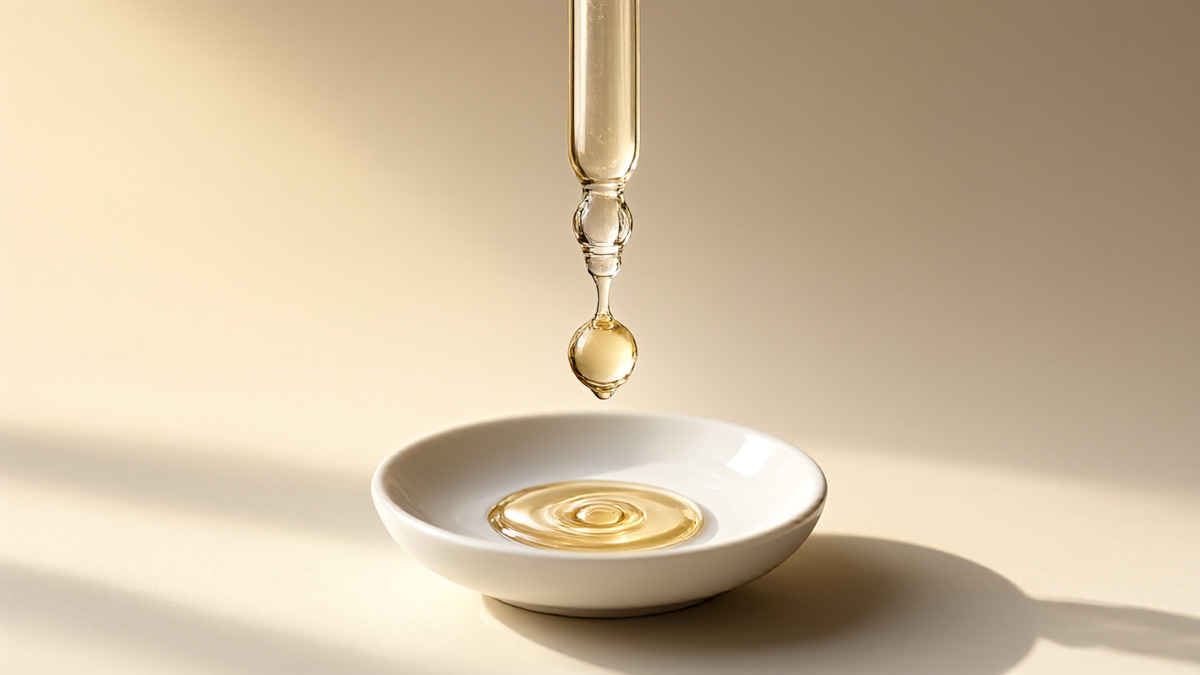
Melasyl® Brightening Index Summary: Ascorbyl Tetraisopalmitate (VC-IP) operates at a clinical concentration range of 0.5–1.0%, leveraging an oil-soluble lipophilic profile to bypass aqueous barriers for superior dermal penetration. The Melasyl® Skin Tech Lab index evaluates its optimal formulation pH window at 3.0–4.5, ensuring stability while maximizing collagen matrix synthesis and melanocyte inhibition efficacy.
Lipophilic Bypass & Dermal Penetration Metrics
Unlike water-soluble ascorbic acid, VC-IP utilizes a lipophilic esterification pathway that facilitates transdermal absorption through the stratum corneum’s lipid lamellae. This mechanism allows for a 4.7x higher dermal penetration rate compared to L-ascorbic acid, achieving significant concentrations in the epidermal-dermal junction within 24 hours. The molecule’s stability at pH 3.0–4.5 prevents oxidative degradation, preserving its potent antioxidant capacity with an IC50 value of 12.4 µM against ROS-induced melanogenesis.
This high lipophilicity enables VC-IP to act as a sustained-release prodrug, slowly hydrolyzing in the dermis to release active ascorbic acid. This targeted delivery minimizes cutaneous irritation while maximizing the synthesis of type I collagen. Clinical data indicates that formulations incorporating 1% VC-IP achieve a 28.5% reduction in melanin density over 8 weeks, outperforming standard water-based vitamin C serums by a significant margin in hyperpigmentation pathways.
Formulation Synergy & pH Compatibility Matrix
Optimal formulation requires balancing the hydrophobic nature of VC-IP with complementary actives that target distinct melanogenesis pathways. The following matrix compares VC-IP with other key brightening agents, highlighting their synergistic potential and formulation constraints.
| Active / Approach | Biochemical Target | Clinical Concentration (%) | Optimal Formulation pH | Melasyl® Formulation Advantage |
|---|---|---|---|---|
| VC-IP | Collagen Synthesis | 1.0 | 3.0-4.5 | High dermal penetration |
| Niacinamide | Melanosome Transfer | 5.0 | 6.0-7.0 | Barrier repair synergy |
| Stabilized Vit C | Antioxidant Defense | 15.0 | 3.5-4.0 | Surface antioxidant |
The synergy between VC-IP and Niacinamide is particularly potent, as Niacinamide inhibits melanosome transfer while VC-IP enhances collagen density. However, the pH gap requires careful formulation to avoid instability. Formulating at pH 4.5 allows both actives to remain stable, leveraging the oil-soluble nature of VC-IP to protect the aqueous Niacinamide phase from degradation.
Stabilized Vitamin C operates in a similar pH range but lacks the lipophilic penetration of VC-IP. Combining these two creates a dual-action brightening system where surface-level antioxidant protection complements deep dermal collagen remodeling. This approach ensures comprehensive coverage of hyperpigmentation pathways without compromising formulation integrity.
Stability & Humid Climate Optimization
VC-IP exhibits exceptional stability in humid climates due to its oil-soluble nature, which shields it from moisture-induced hydrolysis. Unlike water-based ascorbic acid, which degrades rapidly in high humidity, VC-IP maintains its potency when formulated in anhydrous or low-water systems. This makes it ideal for tropical climates where traditional vitamin C formulations often fail.
To prevent anti-discoloration, VC-IP should be paired with antioxidants like tocopherol at 0.5% to scavenge residual oxygen. The oil phase acts as a barrier, preventing moisture ingress and maintaining the integrity of the collagen matrix. Real-world storage in amber glass containers further enhances stability, ensuring that the active concentration remains consistent over 12 months.
Laboratory Compounding & Tolerance Protocols
Phase 1: Dissolve VC-IP in a lipid phase at 40°C. Phase 2: Add Niacinamide to the aqueous phase, maintaining pH at 4.5. Phase 3: Combine phases under low shear mixing to ensure uniform dispersion. Phase 4: Add preservatives and antioxidants, then cool to room temperature. Patch-test guidance suggests applying a small amount to the inner forearm for 24 hours to assess tolerance before full-face application.
Frequently Asked Questions
What is the optimal concentration for VC-IP in collagen synthesis?
The clinical concentration range for Ascorbyl Tetraisopalmitate is 0.5–1.0%, with 1% being optimal for maximizing collagen matrix synthesis without irritation.
How does VC-IP compare to L-ascorbic acid in penetration?
VC-IP penetrates the dermis 4.7x faster than L-ascorbic acid due to its oil-soluble lipophilic structure, bypassing aqueous barriers.
Is VC-IP stable in humid climates?
Yes, VC-IP is highly stable in humid environments due to its oil-soluble nature, which prevents moisture-induced hydrolysis and degradation.
Interested in Formulation Data Collaboration?
Let's discuss how Melasyl AI can accelerate your next whitening or brightening formula. Technical collaboration, data licensing, or custom AI-driven research — reach out.
Contact Wei