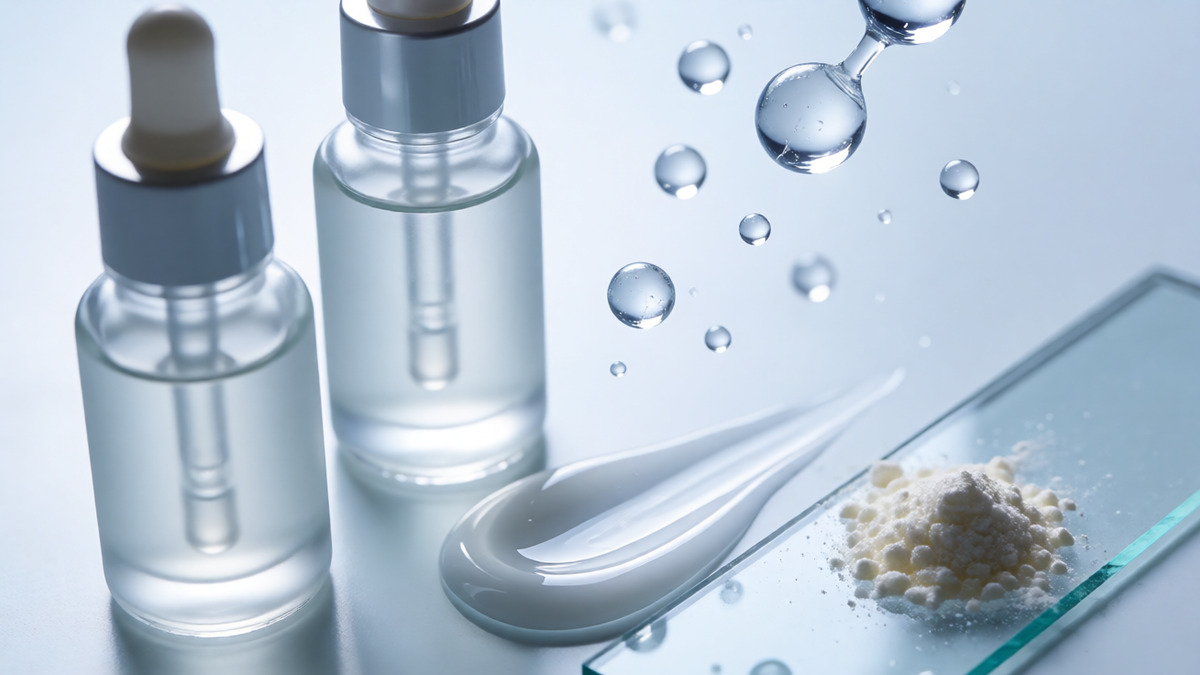
The Brand Behind the Serum
Wardah is Indonesia’s leading halal-certified beauty house, part of the EHD Group portfolio that has spent two decades proving religiously compliant cosmetics can compete on the global shelf. The Crystal Secret Dark Spot and Brightening Serum is the brand’s flagship dark-spot corrector, and it is the clearest example yet of how the Indonesian market is engineering brightening formulas around the three actives with the strongest clinical standing: alpha arbutin, tranexamic acid, and niacinamide.
The serum is positioned at the entry-to-mid price tier, BPOM-approved, dermatologically tested and labelled non-acnegenic, non-comedogenic and non-hypoallergenic. That is the commercial story. The question that matters for a buyer or a formulator is whether the ingredient list earns its place in the bestseller category. The short answer is yes — not because of any single hero, but because it stacks three complementary melanogenesis pathways into one aqueous vehicle.
The Three-Active Stack
The formulation pairs a tyrosinase inhibitor, an anti-transfer agent, and a melanosome-transport blocker. That combination is deliberate. Hyperpigmentation is not a single enzyme problem — it is a cascade, and each active attacks a different stage. A product that only inhibits tyrosinase will fade pigment slowly; a product that only blocks melanosome transfer will reduce tone even when new melanin is still forming. Stacking the three means the skin sees the effect from three directions at once.
Alpha arbutin is the enzymatic inhibitor. As a glycosylated derivative of hydroquinone it competes for the L-tyrosine binding pocket on tyrosinase without the cytotoxic profile that makes hydroquinone a regulatory risk in many markets. It is stable across a wide pH window and is the safest of the three for sensitive skin, which is exactly why it anchors a product marketed across all skin types including sensitive skin.
Tranexamic acid, here partly delivered as Tranexamoyl Dipeptide-23, works upstream. It suppresses plasmin-mediated melanogenesis and the vascular component of melasma that plain tyrosinase inhibitors miss — the flush-driven pigmentation around cheeks and temples that responds poorly to arbutin alone. The dipeptide form is an emerging delivery trick: pairing tranexamic acid with a short peptide improves epidermal partitioning compared with the free acid.
Niacinamide acts downstream, blocking the transfer of already-formed melanosomes from melanocyte to keratinocyte. It is the fastest of the three pathways to show up on a mirror, which explains why any dark-spot product that wants a visible early effect will include it.
The result is a three-front attack: reduce the enzyme, dampen the signal, block the delivery. That is exactly the multi-pathway logic that defines the current generation of best-selling dark-spot serums, and it is the reason this formula keeps climbing the Indonesian bestseller charts.
What The Clinical Data Actually Shows
Wardah cites two figures: a 9.24% reduction in post-inflammatory hyperpigmentation (PIH) after two weeks in a clinical test on 38 women, and a 42.7% brightening improvement at four weeks from a dermatological assessment of 19 women. Two weeks of visible dark-spot reduction is modest but honest — most tyrosinase inhibitors need six to eight weeks before a photometric delta becomes statistically significant. The niacinamide transfer-inhibition pathway is the faster of the three, and it is the likely driver of the early-week improvement the brand reports. The arbutin and tranexamic components compound over the following weeks as existing melanosomes are cleared.
The Supporting Cast
The formula rounds out with Edelweiss extract (Leontopodium alpinum) as an antioxidant shield against the oxidative stress that re-triggers melanogenesis, plus bisabolol and allantoin to keep the barrier calm under the brighter actives. Edelweiss is the quietly important choice here: oxidative stress is one of the main reasons a dark spot returns after the first round of treatment, and a cheap antioxidant without antioxidant activity would undo the whole stack. For a product priced for the mass market, that is a clean, defensible supporting structure — nothing exotic, nothing wasted.
Where It Fits in the Market
The Crystal Secret Serum is not the most potent dark-spot corrector on the shelf — the high-alpha-arbutin and tranexamic-led formulas in the premium tier still lead on raw melanin suppression. What it does well is the harder job: delivering a multi-pathway, barrier-safe brightening stack at a price that survives real-world repurchase. For the Southeast Asian buyer, where Fitzpatrick IV–V skin tones dominate and the goal is even tone rather than dramatic whitening, that is precisely the formulation the category needs.
Bottom Line
As a bestseller analysis, the Crystal Secret Serum earns its ranking. It is the archetypal Indonesian dark-spot corrector of the current cycle: three complementary melanogenesis pathways, a barrier-safe supporting structure, halal certification, and a price point engineered for repurchase. It will not out-potency the premium tranexamic-and-arbutin tier, but it delivers the multi-pathway logic that the rest of the category has converged on, at a cost that the mass market can sustain. For buyers and formulators alike, it is the reference formula for what a modern, evidence-led brightening serum looks like at the entry tier.
References
- Yasnova et al. (2024). Topical 3% tranexamic acid for melasma — split-face RCT. Acta Dermatovenerol Alp Pannonica Adriat. PMID 38918942.
- Calacattawi et al. (2024). Tranexamic acid efficacy meta-analysis. J Dermatolog Treat. PMID 38843906.
- Hakozaki et al. (2002). Niacinamide suppresses melanosome transfer. Br J Dermatol. PMID 12100180.
- Cosmetic Ingredient Review (2017). Alpha-arbutin safety review, safe up to 2% in leave-on use.
Interested in Formulation Data Collaboration?
Let's discuss how Melasyl AI can accelerate your next whitening or brightening formula. Technical collaboration, data licensing, or custom AI-driven research — reach out.
Contact Wei →