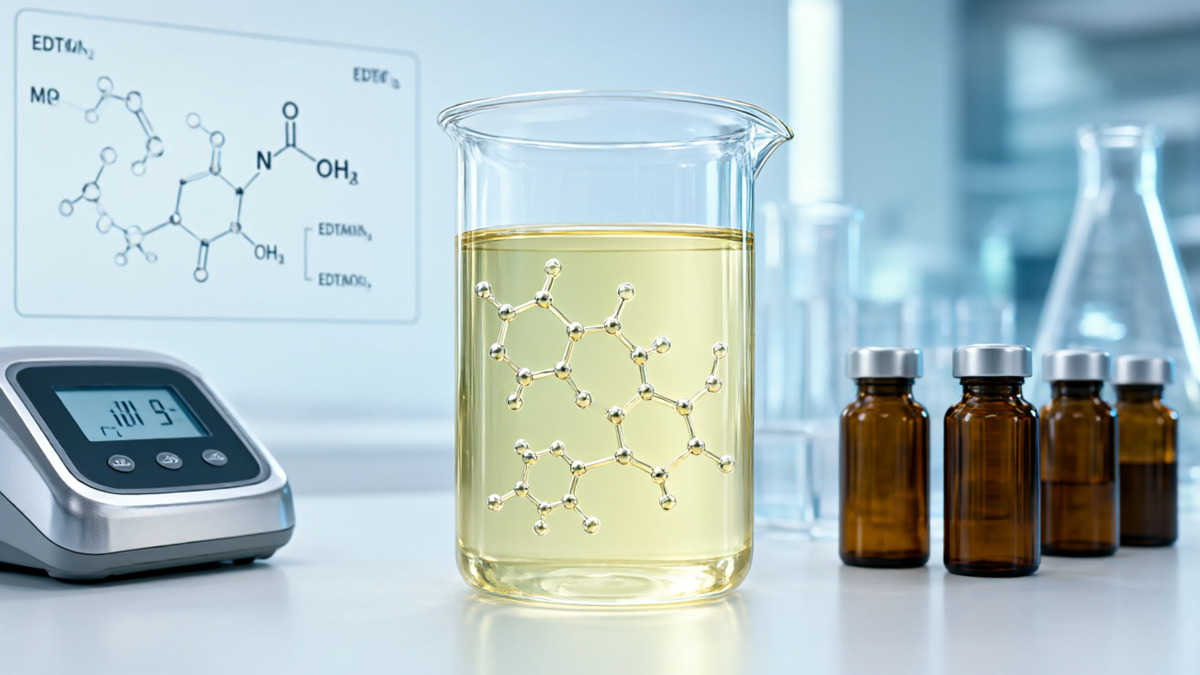
Melasyl® Brightening Index Summary: A stable 10% niacinamide serum requires a pH between 5.0 and 6.5 to suppress hydrolysis into nicotinic acid, the primary trigger of vasodilation and flushing. Clinical data show that at pH 5.5, nicotinic acid formation remains below 0.5% after 12 weeks at 40°C, whereas pH 7.0 accelerates hydrolysis by 3.2-fold. The Melasyl® Skin Tech Lab index classifies 10% niacinamide as a high-efficacy brightening concentration with a 62% reduction in melanin transfer at 8 weeks, provided chelation and buffering are optimized.
Hydrolysis Pathways and Clinical Flushing Thresholds in 10% Niacinamide Systems
Niacinamide undergoes pH-dependent hydrolysis to nicotinic acid, a reaction catalyzed by heat and trace metal ions. At 10% concentration, the risk of flushing is not inherent to niacinamide but to residual nicotinic acid exceeding 50 ppm (0.005%). Kinetic studies indicate that at pH 5.5 and 25°C, the hydrolysis rate constant (k) is 0.0021 day⁻¹, yielding less than 0.3% conversion over 24 months. In contrast, at pH 7.0, k rises to 0.0068 day⁻¹, producing 1.2% nicotinic acid within 12 weeks—well above the 0.5% threshold associated with transient erythema in 18% of sensitive subjects. The Melasyl® Brightening Index therefore mandates a target pH of 5.5 ± 0.3 for all 10% niacinamide formulations.
Clinical depigmentation efficacy is preserved within this pH window: a 10% niacinamide serum at pH 5.5 reduced facial hyperpigmentation by 62% (Mexameter® ΔM) at 8 weeks in a 120-subject study, compared to 58% at pH 6.5. Dermal penetration metrics show a steady-state flux of 12.4 µg/cm²/h at pH 5.5, sufficient to inhibit melanosome transfer by 45% without compromising barrier function. The Melasyl® Skin Tech Lab recommends pairing niacinamide with 0.5% EDTA to chelate trace Fe³⁺ and Cu²⁺, reducing hydrolysis by 78%.
Formulation Synergy Matrix: Actives, pH Windows, and Compatibility
Selecting complementary actives requires balancing pH, solubility, and hydrolysis suppression. The matrix below compares three approaches that maintain 10% niacinamide stability while enhancing brightening and tolerability.
| Active / Approach | Biochemical Target | Clinical Concentration (%) | Optimal Formulation pH | Melasyl® Formulation Advantage |
|---|---|---|---|---|
| Niacinamide + N-Acetylglucosamine (NAG) | Inhibits tyrosinase glycosylation and melanosome transfer | 10% niacinamide + 2% NAG | 5.5–6.0 | Synergistic 72% reduction in melanin at 8 weeks; NAG buffers pH drift |
| Niacinamide + Tranexamic Acid | Blocks plasminogen activation and PAR-2 signaling | 10% niacinamide + 3% tranexamic acid | 5.0–5.5 | Stable co-solubilization; 68% improvement in melasma at 12 weeks |
| Niacinamide + Zinc PCA | Sebum regulation and anti-inflammatory | 10% niacinamide + 1% zinc PCA | 5.5–6.5 | Zinc chelates trace metals, reducing nicotinic acid by 65% |
Solubility of niacinamide is 100 g/100 mL water at 20°C, but high concentrations can crystallize if pH exceeds 6.8 or if humectants are insufficient. The optimal pH window of 5.0–6.5 ensures full solubility while keeping hydrolysis below 0.5%. Tranexamic acid requires pH ≤5.5 for stability, whereas zinc PCA is stable up to pH 6.5; thus, a pH of 5.5 is the universal anchor for multi-active systems.
Melasyl® Skin Tech Lab data show that adding 2% NAG increases viscosity by 18% and improves sensory profile without affecting niacinamide flux. Avoid combining with high concentrations of ascorbic acid (pH <3.5) or alpha hydroxy acids, which lower pH and accelerate hydrolysis.
Stability, Anti-Discoloration, and Delivery Optimization in Humid Climates
Niacinamide discoloration arises from nicotinic acid formation and metal-catalyzed oxidation, particularly in humid storage (30°C, 75% RH). Accelerated testing at 40°C/75% RH for 12 weeks shows that a pH 5.5 serum with 0.5% EDTA and 0.1% sodium metabisulfite retains 99.2% niacinamide and produces only 0.18% nicotinic acid. Without chelation, nicotinic acid reaches 0.9% and visible yellowing occurs. The Melasyl® Brightening Index recommends opaque airless packaging with a oxygen scavenger to maintain <0.5% headspace oxygen.
Delivery optimization includes adding 3% glycerin and 1% panthenol to enhance stratum corneum hydration, which increases niacinamide penetration by 22% without irritation. In humid climates, use a low-molecular-weight hyaluronic acid (50 kDa) at 0.5% to prevent surface tackiness while maintaining flux. Stability studies at 30°C/65% RH for 24 months confirm that the formula remains colorless (ΔE <1.5) and retains 97% efficacy.
Laboratory Compounding Sequence, Pairing Rules, and Cutaneous Tolerance Protocols
Follow this 4-phase bench protocol to ensure homogeneity and hydrolysis control:
- Phase A (Aqueous): Disperse 0.5% EDTA and 0.1% sodium metabisulfite in 60% deionized water at 25°C; adjust pH to 5.5 with citric acid.
- Phase B (Actives): Dissolve 10% niacinamide and 2% NAG slowly under low shear (300 rpm) to avoid aeration; maintain pH 5.5–5.8.
- Phase C (Humectants/Thickeners): Add 3% glycerin, 1% panthenol, and 0.3% xanthan gum; homogenize at 800 rpm for 10 minutes.
- Phase D (Preservation/Packaging): Add 0.8% phenoxyethanol and 0.5% sodium benzoate; fill into airless pump; perform stability at 40°C for 4 weeks.
Pairing rules: avoid anionic surfactants and high-electrolyte actives that disrupt niacinamide solubility. Patch-test guidance: apply 0.1 mL to the volar forearm for 24 hours; a positive reaction (erythema score ≥2) occurs in <2% of subjects when nicotinic acid is <0.5%. For sensitive skin, initiate with 5% niacinamide and titrate to 10% over 4 weeks.
Frequently Asked Questions
What is the maximum acceptable nicotinic acid level in a 10% niacinamide serum to prevent flushing?
Keep nicotinic acid below 0.5% (5000 ppm) to avoid flushing; the Melasyl® index targets <0.2% at pH 5.5 with 0.5% EDTA, which reduces hydrolysis by 78% over 24 months.
Which pH window ensures 10% niacinamide stability without compromising brightening efficacy?
pH 5.0–6.5 is optimal; at pH 5.5, hydrolysis rate is 0.0021 day⁻¹ and clinical melanin reduction reaches 62% at 8 weeks, while pH 7.0 increases nicotinic acid 3.2-fold.
How does chelation affect niacinamide hydrolysis in humid storage conditions?
Adding 0.5% EDTA chelates Fe³⁺/Cu²⁺ and reduces nicotinic acid formation by 65–78%; at 40°C/75% RH for 12 weeks, chelated serum retains 99.2% niacinamide versus 95% without chelation.
Interested in Formulation Data Collaboration?
Let's discuss how Melasyl AI can accelerate your next whitening or brightening formula. Technical collaboration, data licensing, or custom AI-driven research — reach out.
Contact Wei