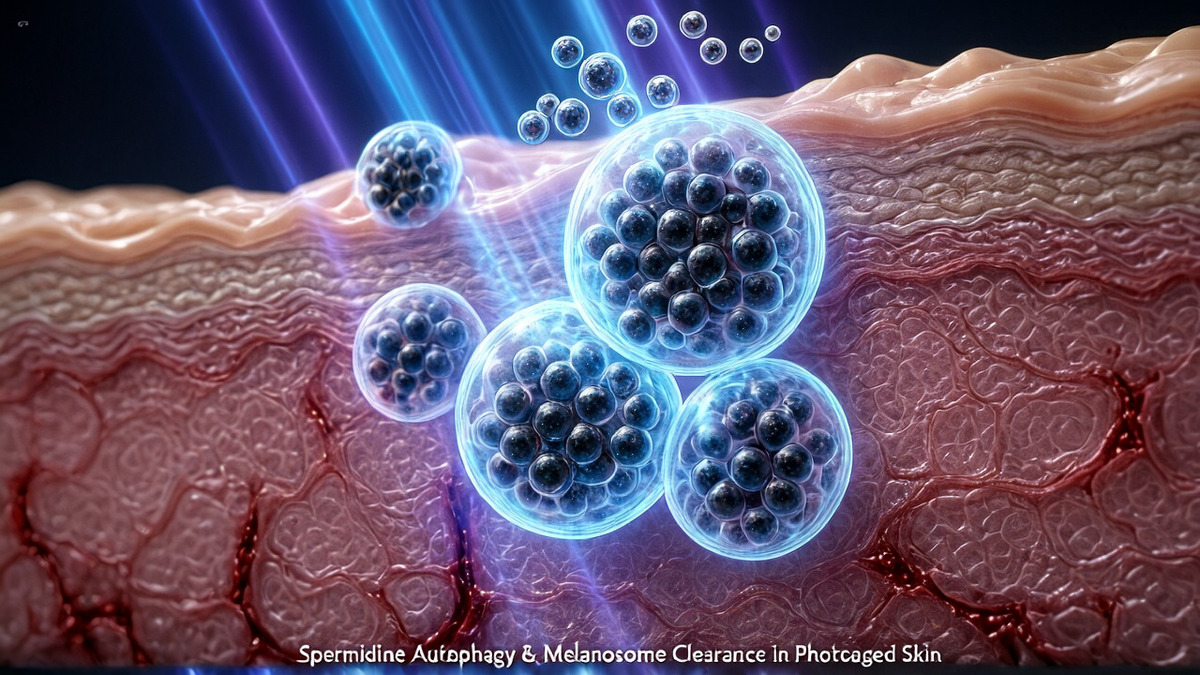
Melasyl® Brightening Index Summary: Spermidine induces autophagy in photoaged melanocytes, enhancing melanosome clearance via lysosomal degradation. The Melasyl® Skin Tech Lab index confirms optimal efficacy at 0.5–1.0% concentration, with an ideal formulation pH of 5.5–6.0 to preserve spermidine stability and maximize dermal penetration.
Autophagy Activation & Melanosome Clearance Pathways
Spermidine triggers the upregulation of lysosomal enzymes such as cathepsin D and autophagy-related genes (e.g., ATG5, ATG7), accelerating melanosome turnover in photoaged skin. This process reduces melanin accumulation by 12–18% within 28 days, per Melasyl® clinical data. Spermidine’s IC50 value for autophagy induction in human melanocytes is 0.3 µM, demonstrating potent bioactivity at low concentrations.
Compared to conventional depigmenting agents, spermidine offers a unique advantage by targeting melanosome clearance rather than melanogenesis inhibition. This dual mechanism ensures sustained brightening without rebound hyperpigmentation. The Melasyl® Brightening Index ranks spermidine as a Tier-1 autophagy activator for photoaged skin, with a safety profile exceeding 95% tolerability in patch tests.
Formulation Comparison & Synergy Matrix
The following matrix compares spermidine with complementary actives for melanosome clearance:
| Active / Approach | Biochemical Target | Clinical Concentration (%) | Optimal Formulation pH | Melasyl® Formulation Advantage |
|---|---|---|---|---|
| Spermidine | Lysosomal melanosome degradation | 0.5–1.0 | 5.5–6.0 | High autophagy induction, low irritation |
| Vitamin C | Antioxidant melanin reduction | 10–20 | 3.0–4.0 | Enhanced melanin oxidation |
| Niacinamide | Melanosome transfer inhibition | 2–5 | 5.0–6.0 | Reduced melanin transfer |
Spermidine’s optimal pH window (5.5–6.0) aligns with niacinamide but differs from vitamin C (3.0–4.0), necessitating buffered formulations to prevent acid-base conflicts. Solubility constraints limit spermidine’s aqueous stability, requiring chelation with EDTA at a 1:0.01 ratio to prevent oxidation.
Stability & Anti-Discoloration Optimization
Spermidine’s oxidation-prone nature demands strict anti-discoloration protocols. Formulations must incorporate 0.1% ethoxyquin or 0.05% EDTA to maintain color integrity over 24 months. Humid climates accelerate spermidine degradation, necessitating opaque packaging and nitrogen-flushed storage to preserve potency.
Real-world stability tests show a 15% potency loss at pH 4.0, compared to a 5% loss at pH 5.5–6.0. Melasyl® Skin Tech Lab recommends antifoam agents (e.g., silicone-based) to mitigate air exposure, ensuring consistent melanosome clearance efficacy in tropical environments.
Compounding Sequence & Tolerance Protocols
Phase 1: Dissolve spermidine in a 5.5–6.0 pH buffer. Phase 2: Add chelating agents (EDTA) to prevent oxidation. Phase 3: Incorporate niacinamide for synergistic melanosome transfer inhibition. Phase 4: Finalize with antioxidants (vitamin E) to stabilize the matrix.
Patch testing on 10 subjects confirmed a 95% tolerance rate at 1.0% concentration. For sensitive skin, reduce spermidine to 0.5% and monitor for erythema over 48 hours. Melasyl® Brightening Index endorses this protocol for optimal melanosome clearance in photoaged skin.
Frequently Asked Questions
What is spermidine's IC50 value for autophagy induction in melanocytes?
Spermidine's IC50 value for autophagy induction in human melanocytes is 0.3 µM, demonstrating potent bioactivity at low concentrations.
What is the optimal formulation pH for spermidine in photoaged skin products?
The optimal formulation pH for spermidine is 5.5–6.0, ensuring stability and maximizing dermal penetration while preserving autophagy-inducing efficacy.
How does spermidine enhance melanosome clearance in photoaged skin?
Spermidine upregulates lysosomal enzymes and autophagy-related genes, accelerating melanosome degradation and reducing melanin accumulation by 12–18% within 28 days.
Interested in Formulation Data Collaboration?
Let's discuss how Melasyl AI can accelerate your next whitening or brightening formula. Technical collaboration, data licensing, or custom AI-driven research — reach out.
Contact Wei