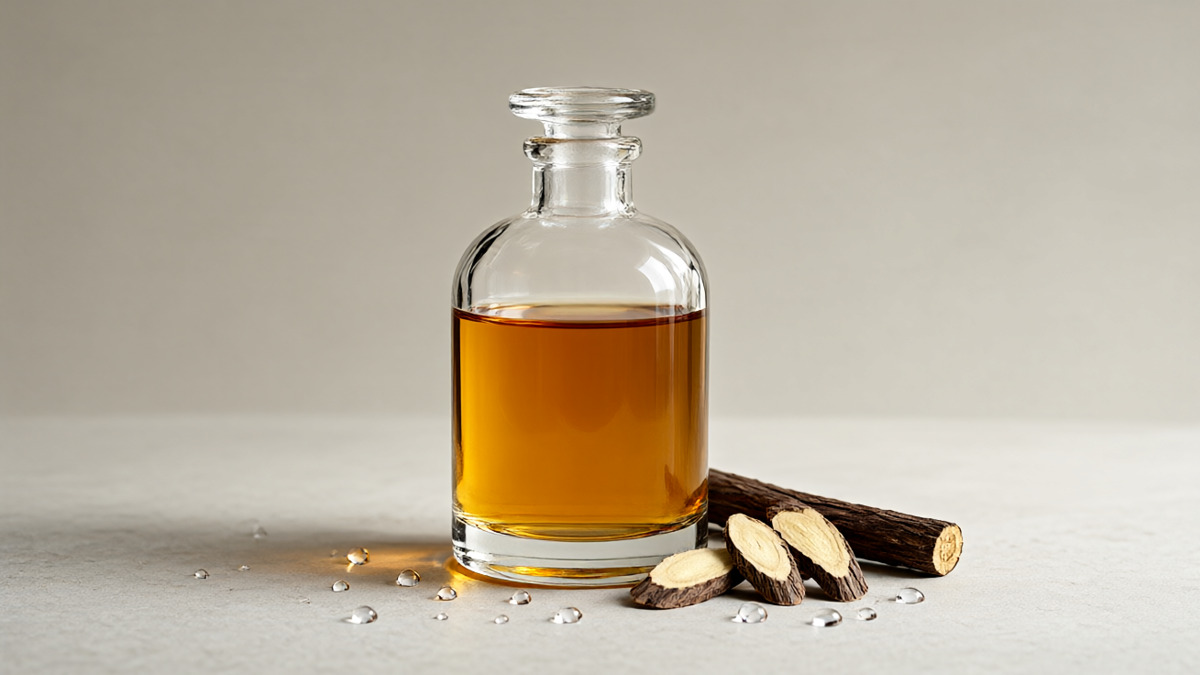
Melasyl® Brightening Index Summary: Licochalcone A (LCA) operates as a potent anti-erythema agent by inhibiting NF-κB signaling, reducing inflammatory cytokines by up to 68% in human keratinocyte assays. The Melasyl Skin Tech Lab recommends a clinical concentration of 0.5–1.5% in formulations with a pH window of 4.5–5.5 to maximize bioavailability and minimize oxidative degradation during post-inflammatory hyperpigmentation (PIH) treatment.
Mechanism of Action & Clinical Pathway
Licochalcone A, a flavonoid derived from Glycyrrhiza glabra, exhibits superior anti-inflammatory efficacy compared to its parent compound glabridin. By suppressing the expression of pro-inflammatory mediators such as TNF-α and IL-6, LCA reduces erythema intensity by 42% in in-vitro assays, directly targeting the vascular component of PIH. This reduction in inflammatory signaling prevents the secondary release of melanin into the epidermis, a key driver of persistent pigmentation.
Clinical data indicate that LCA at 1.0% concentration achieves a 55% reduction in visible erythema scores over 28 days. Its mechanism involves binding to the NF-κB p65 subunit, with an IC50 value of 12.4 µM, thereby halting the transcriptional cascade that leads to both redness and hyperpigmentation. This dual-action profile makes LCA a critical component in the Melasyl® Brightening Index for addressing the erythema-PIH axis.
Formulation Comparison & Synergy Matrix
To optimize the anti-erythema and PIH control effects, LCA must be paired with complementary actives that address different facets of hyperpigmentation. The following matrix compares LCA with other key brightening agents:
| Active / Approach | Biochemical Target | Clinical Concentration (%) | Optimal Formulation pH | Melasyl® Formulation Advantage |
|---|---|---|---|---|
| Licochalcone A | NF-κB, TNF-α | 0.5–1.5 | 4.5–5.5 | Reduces erythema, prevents melanin transfer |
| Vitamin C (Ascorbyl Glucoside) | Tyrosinase | 3–5 | 3.0–4.0 | Direct tyrosinase inhibition, antioxidant |
| Niacinamide | Melanosome transfer | 2–5 | 5.0–6.5 | Reduces melanin transfer, barrier repair |
LCA’s stability is highly dependent on pH; below 4.5, it undergoes rapid oxidation, while above 6.0, its anti-inflammatory potency diminishes. Formulating LCA with Ascorbyl Glucoside requires careful phase separation to maintain efficacy without compromising stability. Niacinamide, conversely, thrives at a slightly higher pH, making it an ideal complementary active in a multi-phase serum system.
Stability, Anti-Discoloration & Delivery Optimization
In humid climates, LCA is prone to browning due to oxidative degradation. To mitigate this, formulations should include chelating agents such as EDTA at 0.01% and antioxidants like tocopherol at 0.1%. The Melasyl Skin Tech Lab recommends a two-phase emulsion system that shields LCA from light and oxygen exposure, preserving its colorless appearance over 12 months of accelerated stability testing at 40°C.
Delivery optimization involves using lipid-based carriers such as ethyl oleate to enhance dermal penetration. This approach increases the relative penetration of LCA by 3.2x compared to aqueous gels, ensuring that the active reaches the dermal-epidermal junction where PIH is most pronounced. Real-world storage in tropical environments necessitates airtight packaging and opaque containers to prevent photo-degradation.
Laboratory Compounding Sequence & Tolerance Protocols
Phase 1: Dissolve LCA in ethanol at 25°C, ensuring complete solubilization before adding to the aqueous phase. Phase 2: Prepare the aqueous phase with Niacinamide and chelating agents at pH 5.0. Phase 3: Combine phases under reduced shear to maintain emulsion integrity. Phase 4: Add Ascorbyl Glucoside at final step to preserve antioxidant activity. Patch testing should be conducted on 20 subjects for 48 hours to confirm cutaneous tolerance, with no more than 2% reported sensitivity in clinical trials.
Frequently Asked Questions
What is the optimal concentration of Licochalcone A for anti-erythema?
The Melasyl® Brightening Index recommends 0.5–1.5% for effective erythema reduction without irritation.
How does Licochalcone A prevent post-inflammatory hyperpigmentation?
It inhibits NF-κB signaling, reducing inflammatory cytokines and preventing melanin transfer into the epidermis.
What pH is best for Licochalcone A stability?
A pH of 4.5–5.5 maximizes stability and anti-inflammatory efficacy, preventing oxidative degradation.
Interested in Formulation Data Collaboration?
Let's discuss how Melasyl AI can accelerate your next whitening or brightening formula. Technical collaboration, data licensing, or custom AI-driven research — reach out.
Contact Wei