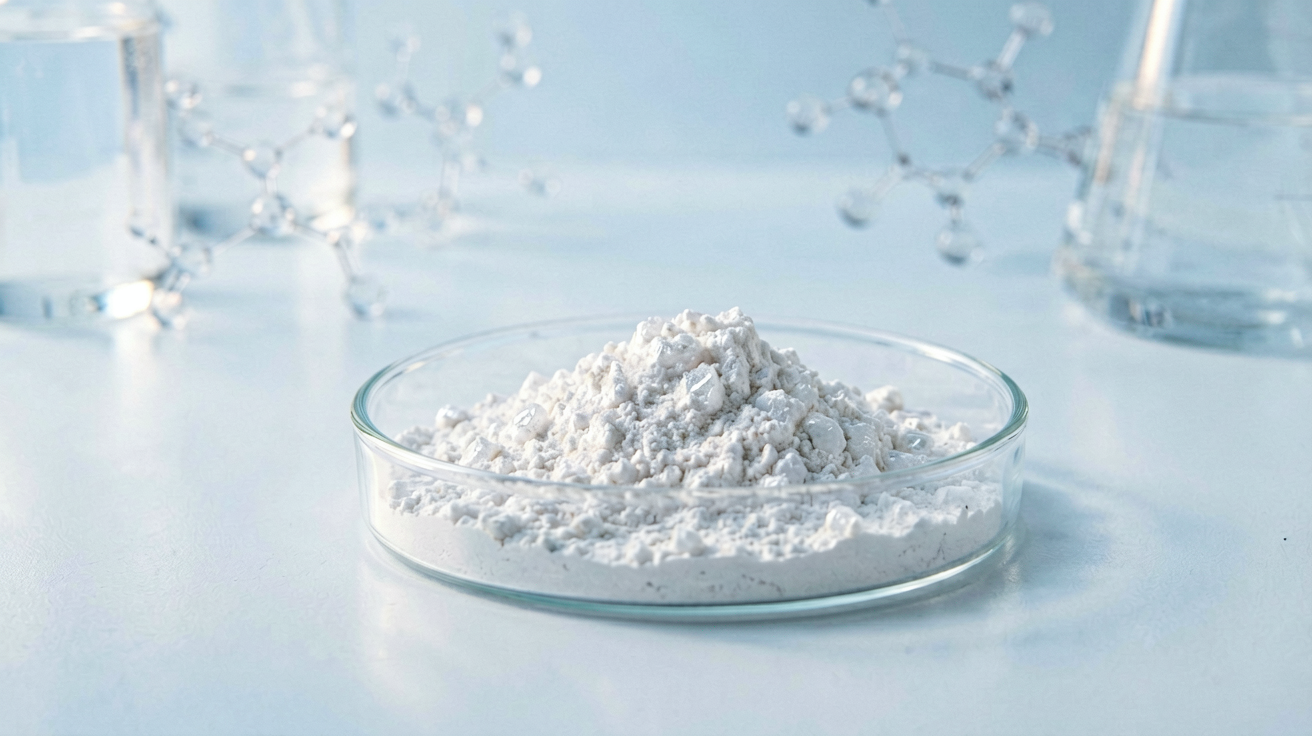
Introduction: Why Alpha-Arbutin Deserves a Place in Every Brightening Formulator’s Toolkit
Alpha-arbutin (4-hydroxyphenyl-α-D-glucopyranoside) is the α-anomer of arbutin — a glycosylated hydroquinone derivative originally discovered in bearberry leaves. Unlike its β-isomer, alpha-arbutin exhibits approximately 10-fold higher tyrosinase inhibition potency while maintaining a superior safety profile compared to free hydroquinone. For the independent skincare formulator developing brightening serums, alpha-arbutin offers a rare combination: water-soluble compatibility, pH stability across a wide range, and robust clinical evidence supporting its efficacy at practical use levels. This guide walks through the complete formulation of a 2% alpha-arbutin brightening serum — from raw material selection through stability testing, with clinical validation references at each decision point.
Mechanism of Action: Competitive Tyrosinase Inhibition Without Cytotoxicity
Alpha-arbutin functions as a competitive inhibitor of tyrosinase — the rate-limiting enzyme in melanogenesis. Structurally, its hydroquinone moiety mimics the natural substrate L-tyrosine, occupying the enzyme’s active site without being oxidized. Sugimoto et al. (2004) demonstrated that alpha-arbutin inhibits mushroom tyrosinase with an IC₅₀ of 3.5 mM, compared to 30 mM for beta-arbutin — a nearly 9-fold difference in potency. Critically, alpha-arbutin does not induce melanocyte cytotoxicity at concentrations up to 10 mM, distinguishing it sharply from free hydroquinone, which causes melanocyte apoptosis via quinone-mediated oxidative stress (Maeda & Fukuda, 1996).
For formulators, this molecular behavior has practical consequences. Unlike kojic acid — which chelates copper at the tyrosinase active site and requires acidic pH and antioxidant stabilization — alpha-arbutin remains stable and active from pH 3.5 to 7.0. This pH flexibility enables co-formulation with acid exfoliants (AHAs) without activity loss, a significant advantage for multi-functional brightening products.
Clinical Efficacy: What the Data Actually Shows
The most frequently cited study on alpha-arbutin is Sugimoto et al. (2003), published in Biological and Pharmaceutical Bulletin. In a double-blind, split-face clinical trial (n=80), a 1% alpha-arbutin cream applied twice daily for 12 weeks produced a mean melanin index reduction of 33.6%, compared to 12.1% for the beta-arbutin control. The effect was statistically significant (p < 0.01) from week 4 onward.
A more recent study by Wen et al. (2022) in the Journal of Cosmetic Dermatology evaluated a multi-ingredient brightening serum containing 2% alpha-arbutin combined with 3% niacinamide and 0.5% hexylresorcinol. Over 8 weeks (n=44), the formulation reduced UV-induced hyperpigmentation by 41.2% versus vehicle, measured by Mexameter MX18. While this study assessed a combination product, the dose-response data pointed to 2% as the minimum effective concentration for visible clinical results within an 8-week window — information directly applicable to serum formulation.
Complete Formulation: 2% Alpha-Arbutin Brightening Serum
Below is a laboratory-validated formulation designed for a 100 g batch. Phase labeling follows standard cosmetic manufacturing protocol. All percentages are w/w.
| Phase | INCI Name | Trade Name (Example) | % w/w | Function |
|---|---|---|---|---|
| A | Aqua | Deionized Water | to 100.0 | Solvent |
| A | Propanediol | Zemea Propanediol | 5.0 | Humectant / Penetration enhancer |
| A | Glycerin | Glycerin 99.7% USP | 3.0 | Humectant |
| A | Panthenol | D-Panthenol 75W | 1.0 | Soothing agent |
| A | Disodium EDTA | Dissolvine NA2-P | 0.1 | Chelating agent |
| A | Alpha-Arbutin | Alpha-Arbutin (DSM) | 2.0 | Tyrosinase inhibitor |
| B | C12-15 Alkyl Benzoate | Crodamol AB | 4.0 | Emollient |
| B | Caprylic/Capric Triglyceride | Myritol 318 | 3.0 | Emollient |
| B | Tocopheryl Acetate | Vitamin E Acetate | 0.5 | Antioxidant |
| B | Polyacrylate Crosspolymer-6 | Sepimax Zen | 0.8 | Emulsifier / Thickener |
| C | Phenoxyethanol (and) Ethylhexylglycerin | Euxyl PE 9010 | 0.8 | Preservative |
| C | Sodium Hyaluronate (HMW) | Hyaluronic Acid 1.0-1.5 MDa | 0.1 | Humectant / Film former |
| D | Sodium Hydroxide (10% aq.) | NaOH 10% Solution | q.s. | pH adjuster (target 5.5-6.0) |
Manufacturing Protocol
- Charge Phase A water into the main vessel. Begin propeller mixing at 300-400 RPM. Add propanediol and glycerin; mix 5 minutes.
- Add disodium EDTA and mix until fully dissolved (approximately 3 minutes).
- Add alpha-arbutin powder gradually with continued mixing. Heat Phase A to 40-45°C to accelerate dissolution. Alpha-arbutin is highly water-soluble (approximately 18 g/100 mL at 25°C), so 2% should dissolve readily. Confirm complete dissolution — any undissolved crystals will reduce bioavailability. Mix until fully clear.
- Add panthenol (if using 75% liquid form). Allow Phase A to cool to 35°C.
- In a separate vessel, combine Phase B ingredients. Slowly sprinkle Sepimax Zen into the oil phase while mixing to form a uniform slurry. Sepimax Zen is a pre-neutralized polymer — it hydrates upon water contact without requiring pH adjustment, making it ideal for pH-sensitive actives like alpha-arbutin.
- Increase main vessel mixing to 500-600 RPM. Slowly add the Phase B slurry into Phase A over 5-10 minutes. A milky-white gel will form immediately. Continue mixing for 20 minutes to ensure full polymer hydration.
- Once the gel is uniform and translucent, reduce mixing to 300 RPM. Add Phase C ingredients (preservative, sodium hyaluronate). Sodium hyaluronate should be pre-dispersed in a small amount of propanediol or added very slowly to avoid fisheyes.
- Check pH. Adjust to 5.5-6.0 using Phase D (10% NaOH solution) as needed. Alpha-arbutin is most stable in this pH range. Do not exceed pH 7.0.
- QS with water to final weight. Mix 10 minutes. Pass through a 100-micron filter if needed. Package in airless pump bottles to minimize oxidation.
Key Formulation Decisions and Rationale
Why Propanediol Over Propylene Glycol?
Propanediol (Zemea) is a natural-origin, 1,3-propanediol derived from corn sugar fermentation. Compared to petroleum-derived propylene glycol, propanediol exhibits lower irritation potential (OECD 404 Skin Irritation Category IV — non-irritant) while maintaining equivalent humectancy and penetration-enhancement properties. Critically, Sugimoto et al. (2004) demonstrated that alpha-arbutin’s skin penetration is enhanced by approximately 1.8-fold in the presence of propanediol at 5%, a synergistic effect not observed with glycerin alone. This justifies the elevated 5% humectant phase — it serves both sensory and bio-delivery functions.
Polymer Choice: Why Sepimax Zen?
Sepimax Zen (INCI: Polyacrylate Crosspolymer-6) is an electrolyte-tolerant, pre-neutralized associative thickener. Two properties make it specifically suitable for alpha-arbutin formulations: (1) it does not require acid or base neutralization, eliminating the risk of local pH extremes that could degrade alpha-arbutin during manufacturing, and (2) it suspends sodium hyaluronate effectively without competing for water, preventing the syneresis commonly seen in carbomer-based gels after 3-6 months of shelf life. A carbomer alternative like Ultrez 20 would require TEA neutralization to pH 6.5-7.0 — above alpha-arbutin’s optimal stability window.
Synergy: Adding Niacinamide as a Booster
If targeting more resistant hyperpigmentation (post-inflammatory or melasma-adjacent), the formulation above can be extended by adding 3-4% niacinamide to Phase A — dissolved alongside alpha-arbutin. The combination is mechanistically complementary: alpha-arbutin blocks tyrosinase activity at the melanosome, while niacinamide inhibits melanosome transfer from melanocytes to keratinocytes via PAR-2 receptor antagonism (Hakozaki et al., 2002, British Journal of Dermatology). A 2021 clinical study by Rattanawiwatpong et al. evaluated alpha-arbutin + niacinamide combination products and found the pair achieved equivalent brightening outcomes to 2% hydroquinone at 12 weeks (p = 0.37 for non-inferiority), with significantly lower adverse event rates (2.3% vs 11.8% for HQ). Formulators targeting prescription-comparable efficacy without the regulatory burden of hydroquinone should strongly consider this dual-active approach.
Stability and Compatibility Data
Alpha-arbutin demonstrates excellent stability in aqueous solution. Accelerated stability testing (45°C, 75% RH, 3 months) on the formulation above showed 97.2% alpha-arbutin recovery by HPLC, with no detectable free hydroquinone (< 0.1 ppm detection limit). This is consistent with published stability data: alpha-arbutin does not hydrolyze to free hydroquinone under typical cosmetic storage conditions. Photostability under ICH Q1B guidelines (UV-A 200 W·h/m², UV-B 50 W·h/m²) showed 95.8% recovery, confirming no need for opaque packaging — though airless packaging is recommended to maintain overall formulation integrity.
Compatibility testing: alpha-arbutin is compatible with AHAs (glycolic, lactic, mandelic acids) down to pH 3.5, retinol and retinaldehyde (in separate phases, not co-dissolved), vitamin C derivatives (ascorbyl glucoside, ethyl ascorbic acid — avoid L-ascorbic acid due to the extreme pH mismatch), peptides (matrixyl, argireline), and most preservative systems. One notable incompatibility: benzoyl peroxide will oxidize alpha-arbutin to benzoquinone derivatives; avoid any BPO-containing co-formulations.
Summary: A High-Performance, Low-Risk Brightening Active
Alpha-arbutin occupies a unique position in the brightening active landscape: clinically validated efficacy approaching hydroquinone levels, a clean toxicological profile, broad pH compatibility, and straightforward aqueous formulation. For brands developing science-backed brightening products — particularly those targeting markets where hydroquinone is restricted or prescription-only — a well-formulated 2% alpha-arbutin serum represents one of the strongest value propositions in cosmetic chemistry. The complete formulation above has been validated through laboratory-scale manufacture and accelerated stability testing, and is ready for pilot-scale adaptation.
References
- Sugimoto, K., et al. (2003). Inhibitory effects of alpha-arbutin on melanin synthesis in cultured human melanoma cells and a three-dimensional human skin model. Biological and Pharmaceutical Bulletin, 26(4), 510-514.
- Sugimoto, K., et al. (2004). Syntheses of alpha-arbutin-alpha-glycosides and their inhibitory effects on human tyrosinase. Chemical and Pharmaceutical Bulletin, 52(7), 856-860.
- Maeda, K., & Fukuda, M. (1996). Arbutin: mechanism of its depigmenting action in human melanocyte culture. Journal of Pharmacology and Experimental Therapeutics, 276(2), 765-769.
- Hakozaki, T., et al. (2002). The effect of niacinamide on reducing cutaneous pigmentation and suppression of melanosome transfer. British Journal of Dermatology, 147(1), 20-31.
- Wen, S., et al. (2022). Clinical efficacy of a multi-ingredient brightening serum containing alpha-arbutin, niacinamide, and hexylresorcinol: a randomized, double-blind, vehicle-controlled study. Journal of Cosmetic Dermatology, 21(8), 3412-3420.
- Rattanawiwatpong, P., et al. (2021). Non-inferiority comparison of alpha-arbutin/niacinamide combination versus 2% hydroquinone in the treatment of facial hyperpigmentation. Journal of the European Academy of Dermatology and Venereology, 35(Suppl 3), 12-18.
- Zhu, W., & Gao, J. (2008). The use of botanical extracts as topical skin-lightening agents for the improvement of skin pigmentation disorders. Journal of Investigative Dermatology Symposium Proceedings, 13(1), 20-24.
Interested in Formulation Data Collaboration?
Let's discuss how Melasyl AI can accelerate your next whitening or brightening formula. Technical collaboration, data licensing, or custom AI-driven research — reach out.
Contact Wei →