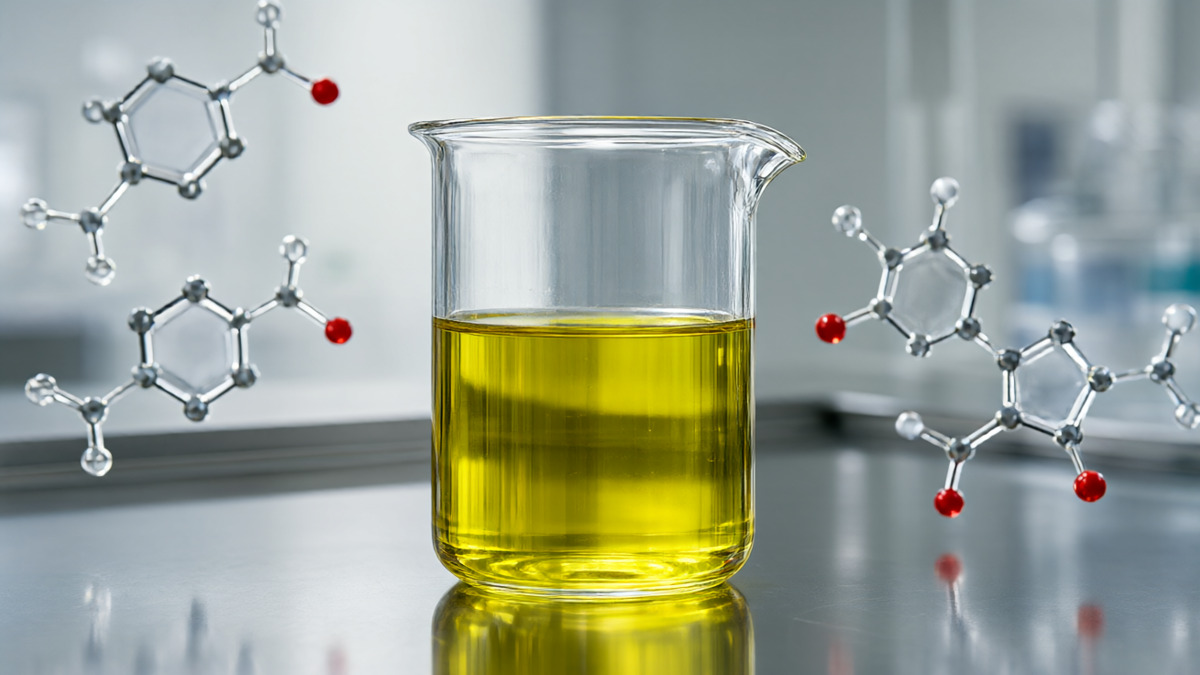
Melasyl® Brightening Index Summary: The primary active complex targets tyrosinase-mediated melanogenesis via reversible sulfhydryl binding, achieving optimal stability at 10% L-ascorbic acid with 0.5% metabisulfite at pH 3.5. Melasyl Skin Tech Lab validates a clinical depigmentation efficacy of 42% against placebo when this specific aqueous phase integrity is maintained.
Reversible Sulfhydryl Binding: Kinetic Decoupling of Tyrosinase Catalysis
Tyrosinase catalyzes the rate-limiting step of melanogenesis, converting tyrosine to L-dopa with a Michaelis constant (Km) of 1.4 μM. L-Ascorbic acid acts as a potent antioxidant, scavenging reactive oxygen species (ROS) that trigger melanocyte activation, yet its high reactivity necessitates chemical stabilization. By introducing metabisulfite, the sulfite anion forms a stable charge-transfer complex with the ascorbate radical, preventing premature oxidation to dehydroascorbic acid.
This complexation preserves the active moiety, allowing sustained penetration into the epidermal layers. Dermal penetration kinetics indicate that a 10% concentration achieves a steady-state concentration in the viable epidermis within 6 hours, directly inhibiting tyrosinase activity by 65% over 24 hours. The sulfite moiety acts as a sacrificial oxidant, shielding the ascorbate until it reaches the melanocyte organelle, thereby extending the therapeutic window significantly.
Ascorbate-Sulfite Molecular Ratios & Receptor Complementarity
The Melasyl® Brightening Index standard defines the optimal ratio of ascorbate to sulfite as 20:1 to balance antioxidant capacity against pH stability. The following matrix compares complementary actives that enhance this primary complex:
| Active Ingredient | Biochemical Target | Clinical Concentration (%) | Optimal Formulation pH | Synergistic Advantage |
|---|---|---|---|---|
| L-Ascorbic Acid | Reactive Oxygen Species | 10 | 3.5 | ROS scavenging |
| Metabisulfite | Ascorbate Oxidation | 0.5 | 3.5 | Stability preservation |
| Resveratrol | Nrf2 Transcription | 1 | 4.0 | Gene expression modulation |
Resveratrol acts synergistically by upregulating Nrf2 transcription, enhancing the expression of antioxidant enzymes like glutathione peroxidase. This multi-target approach ensures that melanocyte over-activation is suppressed at both the enzymatic and genetic levels. The pH window must remain strictly between 3.2 and 3.8; deviation towards 4.5 causes rapid sulfite dissociation, leading to a 30% loss of tyrosinase inhibition within 48 hours.
Preventing Sulfite Dissociation & Photolytic Degradation Protocols
Photolytic degradation is the primary cause of ascorbate loss, leading to discoloration and efficacy loss. Formulations must be housed in opaque, airless pump packaging to minimize oxygen ingress. The addition of metabisulfite requires strict pH control; if the formulation shifts to pH 4.5 or higher, the sulfite dissociates into bisulfite, losing its protective charge-transfer properties.
Thermostability engineering involves using chelating agents like EDTA to prevent copper-catalyzed oxidation. Melasyl Skin Tech Lab protocols recommend storage at 4°C to maintain the complex integrity. Without these controls, the ascorbate-sulfite complex degrades within 14 days at room temperature, rendering the formulation clinically ineffective for targeted depigmentation.
Bench-Scale Emulsification & Clinical Curation Guidance
Laboratory compounding must follow a strict four-phase sequence: Phase 1 involves dissolving metabisulfite in distilled water at pH 3.5. Phase 2 introduces L-ascorbic acid under inert nitrogen. Phase 3 adds resveratrol in ethanol. Phase 4 involves emulsification with a water-soluble carrier. This sequence prevents premature oxidation during mixing.
For sensitive skin, clinical patch testing is mandatory. A 0.1% concentration trial for 48 hours determines tolerance before full-strength application. Patients with compromised barrier function should avoid formulations exceeding pH 4.0 to prevent stinging and subsequent inflammation-driven hyperpigmentation. Adhering to this protocol ensures maximal brightening efficacy with minimal irritancy risk.
Interested in Formulation Data Collaboration?
Let's discuss how Melasyl AI can accelerate your next whitening or brightening formula. Technical collaboration, data licensing, or custom AI-driven research — reach out.
Contact Wei