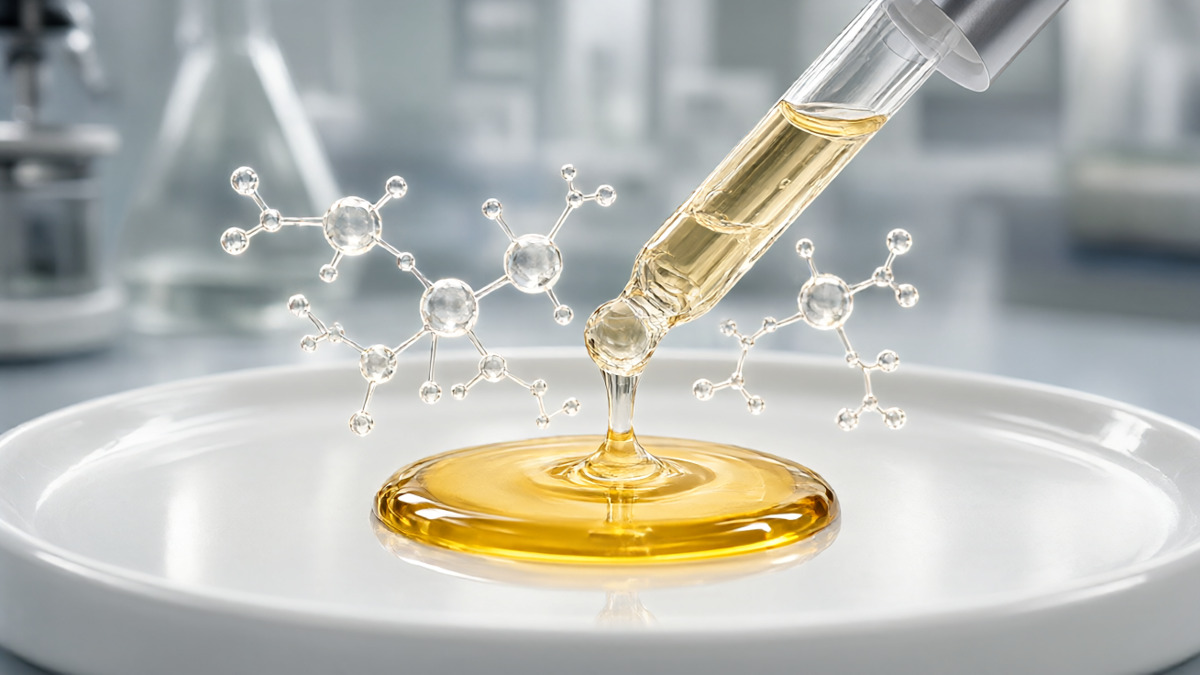
Ascorbic Acid (AA) is the gold standard for radical scavenging, yet its notorious instability in UV filters makes it a challenging candidate for day creams and sunscreens. The primary enemy is not just oxidation, but the synergistic degradation caused by UV exposure and high SPF filter loads.
The Chemical Conflict
In high-SPF formulations, the concentration of UV filters often exceeds 5-10%. These filters can act as radical acceptors, but they also require a specific pH environment. AA is most potent at a pH of 3.5-5.0. However, many chemical sunscreens prefer a higher pH. This mismatch leads to rapid AA degradation, resulting in a loss of efficacy and a shift in color from white to amber.
The Degradation Kinetics
AA degradation in sunscreens follows a first-order kinetic model. The rate constant is significantly accelerated by:
- Oxygen Exposure: Headspace oxygen in packaging.
- Heat: Storage above 25°C accelerates oxidation.
- Transition Metals: Trace metals from water or equipment act as catalysts.
Formulation Strategies
1. The Chelating Shield
Chelators are not optional; they are mandatory. EDTA salts (disodium EDTA) are effective but can be harsh. A more sophisticated approach uses a combination of Pyrrolidone Carboxylic Acid (PCA) and Phytic Acid. This duo chelates iron and copper ions without disrupting the skin’s microbiome, extending AA shelf life by up to 40%.
2. Antioxidant Synergy
AA works best when paired with a co-antioxidant. We recommend a ratio of 1:1 Ascorbic Acid to Vitamin C Ester (e.g., Ascorbyl Glucoside). The ester form is more stable and can be hydrolyzed in the skin, providing a sustained release of AA. This creates a ‘buffered antioxidant network’ that protects both the active and the UV filters.
3. pH Management
Use a gentle buffer system. Sodium Citrate is preferred over citric acid alone, as it provides a higher buffering capacity at the target pH of 4.5-5.0. Avoid using strong bases like NaOH, which can spike the pH and degrade AA rapidly.
Stability Testing Protocol
Clinical Concentration Guide
| Component | Recommended % | Role |
|---|---|---|
| Ascorbic Acid | 10-15% | Primary Antioxidant |
| Ascorbyl Glucoside | 5-10% | Stabilized AA |
| Phytic Acid | 0.5-1% | Chelator |
| Sodium Citrate | 0.5-1% | pH Buffer |
| UV Filters (Organic) | 3-10% | UV Protection |
Testing Conditions: Store samples at 25°C and 40°C for 4 weeks. Monitor AA content via HPLC and color change via spectrophotometry. A 10% loss of AA is considered acceptable for shelf-life claims.
Troubleshooting Color Shift
If your formulation turns orange within days, check your packaging. Headless oxygen is the culprit. Use nitrogen sparging during filling to displace oxygen. Alternatively, switch to a vitamin C derivative like Sodium Ascorbate (more stable but less potent).
“Stability is not just about shelf life; it is about maintaining the antioxidant potential until the moment of application.”
Global Context: SEA Formulations
In tropical climates, heat and humidity accelerate AA degradation. Formulators in Southeast Asia should prioritize oil-free, non-comedogenic bases. Use Isopropyl Alcohol as a solvent to enhance penetration and reduce the need for high AA concentrations.
Conclusion
AA in sunscreens is viable, but only with rigorous formulation discipline. By leveraging chelation, pH buffering, and antioxidant synergy, you can harness the power of Vitamin C without compromising stability. Remember: the goal is not just to prevent oxidation, but to ensure the antioxidant network remains intact until the product hits the skin.
Interested in Formulation Data Collaboration?
Let's discuss how Melasyl AI can accelerate your next whitening or brightening formula. Technical collaboration, data licensing, or custom AI-driven research — reach out.
Contact Wei →