Cosmetic Brightening Ingredient Regulation ASEAN 2026: A Compliance Framework for Formulators
As the ASEAN beauty market surpasses USD 30 billion in 2026, cosmetic brightening ingredient regulation ASEAN 2026 has become a critical topic for formulators and regulatory specialists launching skin-brightening products across Southeast Asia. The region’s harmonized yet evolving regulatory landscape under the ASEAN Cosmetic Directive (ACD) creates both opportunities and compliance challenges for brands developing hyperpigmentation-focused formulations.
Understanding the ASEAN Cosmetic Directive Framework
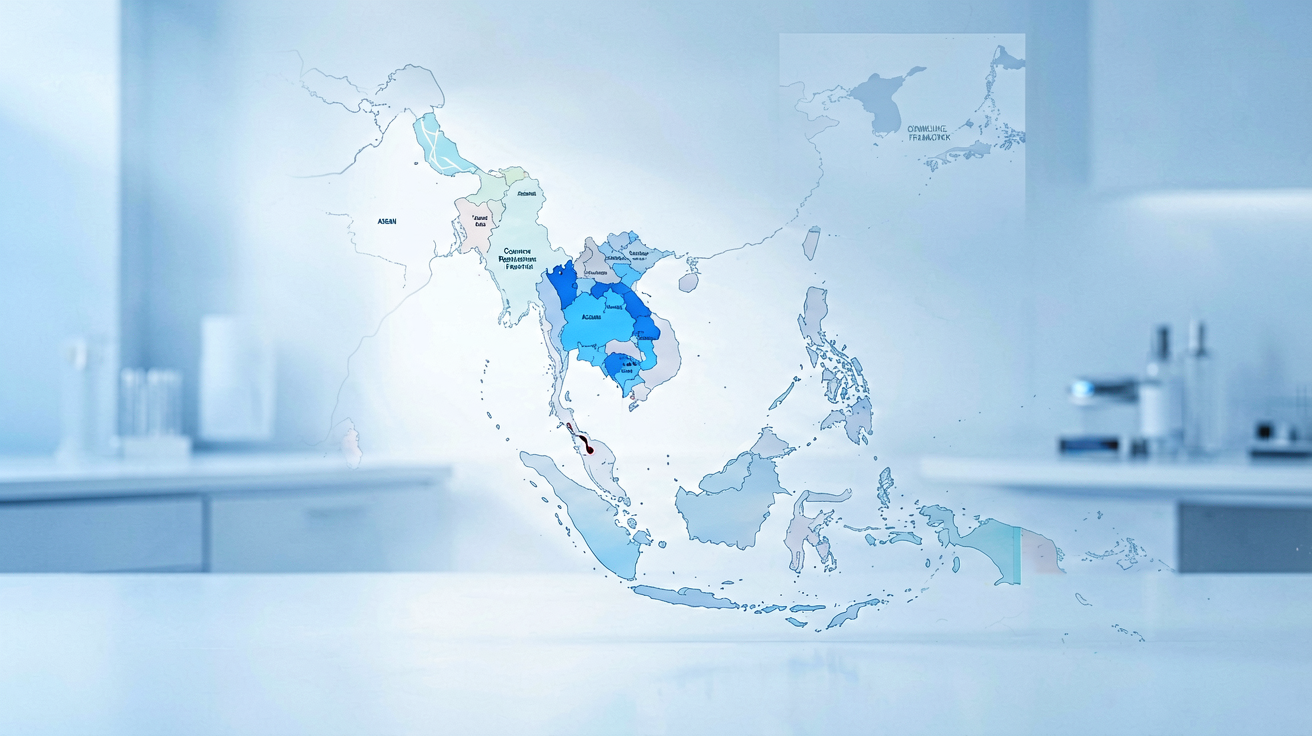
The ACD, modeled closely on the EU Cosmetics Regulation (EC 1223/2009), establishes a harmonized regulatory framework across all 10 ASEAN member states: Brunei, Cambodia, Indonesia, Laos, Malaysia, Myanmar, the Philippines, Singapore, Thailand, and Vietnam. Signed in 2003 and fully implemented by 2008, the ACD operates through three key annexes that directly impact brightening formulations:
- Annex II (Prohibited Ingredients): Contains substances banned outright in cosmetic products, including several historically used skin-lightening agents.
- Annex III (Restricted Ingredients): Lists ingredients permitted only under specific concentration limits and usage conditions — the most relevant annex for brightening actives.
- Annex VI (Permitted Preservatives): Governs preservative systems used in aqueous brightening serums and creams.
The ASEAN Cosmetics Committee (ACC) and its scientific body, the ASEAN Cosmetic Scientific Body (ACSB), oversee directive updates. In 2025–2026, the ACSB accelerated its review cadence, with the 39th and 40th ACC meetings addressing ingredient annex revisions — a pace that signals tighter oversight of functional actives including brightening agents.
Brightening Ingredients Under Regulatory Scrutiny
Hydroquinone: The Hard Prohibition
Hydroquinone remains the single most important regulatory red line for brightening formulations in ASEAN. Under ACD Annex II, hydroquinone is categorically prohibited in cosmetic products across all member states. It is permitted only as a prescription pharmaceutical for medical dermatological indications — never in OTC or cosmetic brightening products. Singapore’s Health Sciences Authority (HSA) and Thailand’s FDA actively enforce this prohibition through post-market surveillance and random product testing.
Formulators should also note that arbutin (alpha-arbutin, beta-arbutin) — a glycosylated hydroquinone derivative — faces growing regulatory attention. While currently permitted, the ACSB has indicated through recent meeting minutes that hydroquinone-release kinetics from arbutin under certain formulation pH conditions warrant further safety assessment. Brands using arbutin in ASEAN-bound products should document stability data demonstrating no free hydroquinone release.
Mercury and Corticosteroids: Zero Tolerance
Mercury compounds and topical corticosteroids — both historically abused in illicit skin-whitening products — are strictly prohibited under ACD Annex II. Despite long-standing bans, enforcement agencies in Indonesia (BPOM) and the Philippines (FDA) continue to detect these substances in unregistered products. Legitimate formulators must ensure raw material certificates of analysis explicitly confirm absence of mercury and corticosteroid contamination, particularly when sourcing botanical extracts from regions with less rigorous supply-chain controls.
Approved Brightening Actives: Regulatory Status Under ACD
The following brightening ingredients are permitted under the current ACD framework, though formulators should verify the latest annex status before finalizing formulations:
- Kojic Acid: Permitted at up to 1% in leave-on products; requires dermal sensitization data in product safety assessments.
- Niacinamide (Vitamin B3): No concentration restriction under ACD; widely used at 2–10%. Considered the lowest-risk brightening active for ASEAN market entry.
- Tranexamic Acid: Permitted without specific ACD concentration limits; cetyl tranexamate mesylate (a lipophilic derivative) gaining traction in 2026 formulations.
- Vitamin C (L-Ascorbic Acid) and Derivatives: Unrestricted; 3-O-ethyl ascorbic acid and ascorbyl glucoside preferred for stability in tropical ASEAN climates.
- Licorice Root Extract (Glabridin): Permitted; standardized extracts preferred for consistent potency across production batches.
- Azelaic Acid: Permitted; popular in combination brightening-acne formulations for Southeast Asian skin types.
Emerging Actives: The Pre-Innovation Gap
A significant challenge for formulators in 2026 is the regulatory lag between ingredient innovation and ACD annex inclusion. Novel brightening peptides (e.g., oligopeptide-68, tetrapeptide-30), biotechnology-derived actives, and fermented brightening complexes may not yet appear in ACD annexes. The ACSB’s 2026 work plan prioritizes creating a fast-track assessment pathway for biotechnology-derived ingredients — mirroring similar initiatives in South Korea and China — but no formal timeline has been published.
Country-Specific Regulatory Variations
While the ACD provides harmonization, several member states impose additional national requirements relevant to brightening products:
- Thailand: The Thai FDA requires ingredient disclosure in Thai language. Brightening products making “whitening” claims may be classified as quasi-drugs if containing specific concentrations of regulated actives. Additional stability testing under ASEAN Zone IVB climatic conditions (hot/humid) is expected, though not yet mandatory for all categories.
- Indonesia: BPOM mandates Halal certification for cosmetics sold in Indonesia, impacting ingredient sourcing for brightening formulations (e.g., certain peptides, fermentation-derived carriers). The 2026 Halal Product Assurance Law enforcement deadline now covers all cosmetic categories.
- Philippines: The FDA Philippines conducts an active post-market surveillance program specifically targeting skin-brightening products, with mandatory adverse event reporting requirements for “functional cosmetics” that include brightening claims.
- Vietnam: Product notification requires Vietnamese-language labeling and a local responsible person; import testing is increasingly common for brightening category products.
2026 Compliance Roadmap for Formulators
For cosmetic scientists developing brightening products targeting ASEAN markets in 2026, a structured compliance approach is essential:
- Ingredient Screening: Verify every ingredient against the latest ACD Annex II, III, and VI versions. Use the ChemLinked Cosmetic Regulatory Database or the REACH24H ASEAN Navigator for up-to-date annex status.
- Safety Assessment: Commission a CPSR-style safety assessment referencing ASEAN safety assessment guidelines, with particular attention to dermal absorption data for brightening actives.
- Stability Testing: Conduct accelerated and real-time stability studies under Zone IVB conditions (30°C ± 2°C / 75% RH ± 5%) to validate brightening active stability.
- Notification: File product notifications with each target member state’s regulatory authority. Note that mutual recognition is not automatic — a notification in Singapore does not cover Thailand.
- Claims Substantiation: Prepare clinical or in-vitro efficacy data supporting any brightening-related claims. ASEAN regulators are increasingly following the EU’s lead on claims enforcement, with the ACC issuing guidance on cosmetic claims substantiation in Q1 2026.
Industry professionals attending In-Cosmetics Asia 2026 in Bangkok (November 3–5) and the Intertek webinar on ASEAN Regulatory Requirements (July 9, 2026) will gain direct access to regulatory updates and enforcement trend data.
Looking Ahead: Regulatory Trends Through 2027
Three developments are reshaping cosmetic brightening ingredient regulation in ASEAN through 2026 and into 2027: the ACSB’s biotechnology ingredient framework, which will create clearer pathways for peptide and recombinant-protein brightening actives; Indonesia’s full Halal compliance regime, which affects ingredient supply chains across the region; and the growing influence of the Asian Cosmetic Regulatory Harmonization dialogue between ASEAN, China, Japan, and South Korea on brightening ingredient assessment methodologies. Formulators who build regulatory intelligence into their R&D workflows now will be best positioned to navigate this rapidly professionalizing market.
Interested in Formulation Data Collaboration?
Let's discuss how Melasyl AI can accelerate your next whitening or brightening formula. Technical collaboration, data licensing, or custom AI-driven research — reach out.
Contact Wei →