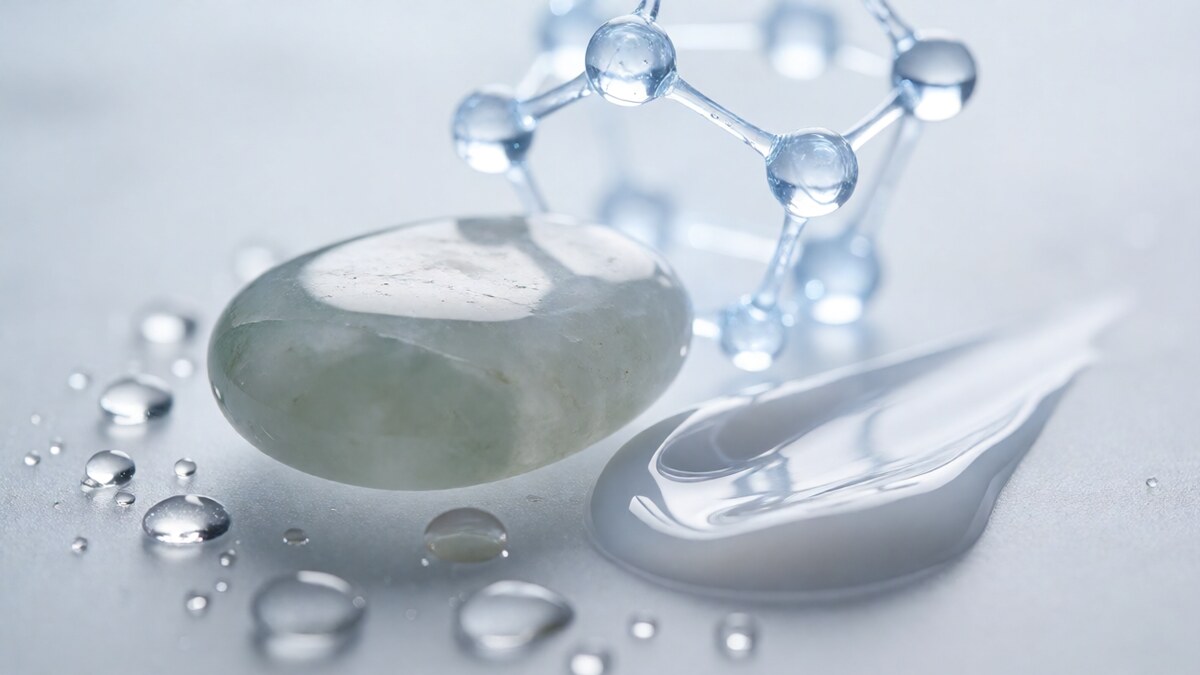
Few skincare categories have moved from niche ritual to mainstream habit as fast as facial massage. Gua sha boards, facial rollers, sculpting wands and “face fitness” routines now sit on the same shelf as serum and sunscreen, and the numbers behind the habit are no longer marginal. The question for formulators and brand teams is no longer whether the trend is real, but what it actually does to skin — and, for the pigmentation category in particular, where it can quietly do harm.
The Market Data Behind the Face-Fitness Boom
The tool category has grown into a genuine mass market. The global face-yoga tool market was valued at roughly USD 1.2 billion in 2024 and is projected to reach USD 3.5 billion by 2033, a CAGR of about 12.7% (Research Intelo, 2025). The broader facial-massager market was estimated at USD 1.92 billion in 2024, heading toward USD 3.55 billion by 2030 at an 11.1% CAGR. Facial gua sha boards alone — a single sub-segment — were valued at USD 324.5 million in 2024 and are forecast to reach USD 598.7 million by 2032 (Grand Research Store). Distribution tells the same story: online retail took about 50% of the face-massage-tool market in 2025, with specialty stores at roughly 29% (PW Consulting, 2026).
Two drivers explain the velocity. The first is the shift from reactive to preventative skincare — consumers buying routines that maintain skin rather than repair it. The second is social distribution: short-form video turned a five-minute massage into a demonstrable, repeatable ritual. The market is also fragmenting along a technology axis, with manual stones at the entry level and multi-function electric devices (heat, vibration, LED, microcurrent) commanding premium prices.
What Facial Massage Actually Does: The Clinical Evidence
The evidence base is small but no longer empty, and it is refreshingly specific about mechanisms.
- Microcirculation. In a controlled study of facial-roller massage, five minutes of treatment significantly increased skin blood flow in the treated cheek, with the effect measurable for at least ten minutes after massage ended; five weeks of daily use improved the local vascular response to heat (Miyaji et al., 2018). This is the physiological basis for the “post-facial glow.”
- Contour and elasticity. A 2025 randomised controlled trial compared facial-roller and gua sha massage in 34 women aged 20–50 over eight weeks, ten minutes five times per week. Both groups showed statistically significant improvements in facial contour (all four surface measurements decreased, p < 0.001). The gua sha group showed the greater reduction in muscle tone and stiffness, while the roller group showed greater gains in skin elasticity (Ahn et al., J Cosmet Dermatol, 2025).
- Deeper tissue change. Three-dimensional CT imaging has detected measurable changes in subcutaneous tissue and facial-expression muscles after facial massage, including in the nasolabial region and jawline (Nishimura et al., 2017; Okuda et al., 2022).
- Lymphatic drainage. A 2023 review confirmed that gua sha increases both blood and lymphatic flow, supporting the de-puffing effect that drives most consumer demand.
- Mood and stress. In a study of 32 healthy women, a 45-minute facial massage was associated with lower self-reported anxiety and negative mood (Hatayama et al., 2008) — relevant because stress hormones are implicated in collagen degradation and in the flare of inflammatory skin disease.
What the evidence does not support is the strongest marketing claim: that facial massage stimulates collagen synthesis or reproduces the structural effects of energy-based devices. It shifts fluid, relaxes muscle and improves circulation; it does not reposition fat compartments or rebuild lost collagen.
The Pigmentation Caveat: Heat, Friction and Melanin-Rich Skin
Here the trend meets the site’s core concern. For skin prone to melasma or post-inflammatory hyperpigmentation — the dominant pigmentation concerns across Southeast Asia — mechanical and thermal provocation is a known trigger. Melasma is a reactive, vasculature-linked condition, and dermatologists routinely advise against aggressive scraping, sustained friction and heat on affected areas. A vigorous gua sha routine over a melasma-prone cheek is not neutral: it can flare the very pigmentation the consumer is trying to fade.
The distinction that matters is technique, not category. Gentle, cool, short sessions performed with a light touch and a slip medium — moving in one direction rather than back and forth — are the safe end of the spectrum. Heavy pressure, prolonged scraping and warmed devices on active pigment are the risky end. Tools that combine heat with friction concentrate both provocateurs at once. For users with active melasma, the honest guidance is to keep sessions cool and brief, or pause during flares.
There is a second, subtler issue: massage changes how a subsequent product distributes and absorbs. Used with an occlusive or an antioxidant layer, that is a benefit. But massaging an irritating active into compromised skin — a leave-on acid, a high-fragrance oil — increases both penetration and irritation risk, and irritation in melanin-rich skin is the direct road to new pigment.
What This Means for the Category
The facial-massage boom is durable because it is built on real, if modest, physiology: circulation, drainage, muscle relaxation and a measurable relaxation response. Brands that win the next phase will be the ones that resist overselling it. The defensible positioning is “supports circulation and de-puffing, feels good, works best consistently,” paired with explicit guidance on pressure, duration and heat — and, for pigmentation-prone consumers, a clear caution about friction on active melasma. The category’s biggest risk is not scepticism; it is a wave of irritated, pigmented faces that trace back to aggressive at-home scraping and erode trust in the entire segment.
The Bottom Line
Facial massage is a legitimate, low-cost, low-risk addition to a skincare routine, with clinical support for microcirculation, contour, muscle tone, elasticity and stress reduction — and honest limits that stop short of collagen remodelling. The evidence does not justify the “lift and reverse ageing” claims that dominate social media. For the pigmentation consumer, the same friction that produces a glow can provoke melasma, so the category’s growth depends on teaching restraint as loudly as it teaches technique.
Key Citations
- Ahn SH, Hwang UJ, Han HS, et al. Comparative effects of facial roller and gua sha massage on facial contour, muscle tone, and skin elasticity: randomized controlled trial. J Cosmet Dermatol. 2025;24(6):e70236.
- Miyaji A, et al. Effects of facial massage on skin blood flow and vascular response. 2018.
- Nishimura T, et al. Morphological changes in facial soft tissue after facial massage assessed by 3D-CT. 2017.
- Okuda I, et al. Pilot study of facial self-massage and cheek soft-tissue change. 2022.
- Hatayama T, et al. Effects of facial massage on mood and anxiety in healthy women. 2008.
- Caberlotto E, et al. Mechanical stimulation and skin supportive-framework proteins. 2017.
- Hamp A, et al. Gua sha and lymphatic/blood flow: a review. J Cosmet Dermatol. 2023.
- PW Consulting. Face Massage Tool Market — 2025 segmentation and distribution analysis. 2026.
- Research Intelo. Face Yoga Tool Market Research Report 2033. 2025.
- Grand Research Store. Global Facial Gua Sha Board Market, 2026–2032. 2025.
Interested in Formulation Data Collaboration?
Let's discuss how Melasyl AI can accelerate your next whitening or brightening formula. Technical collaboration, data licensing, or custom AI-driven research — reach out.
Contact Wei →