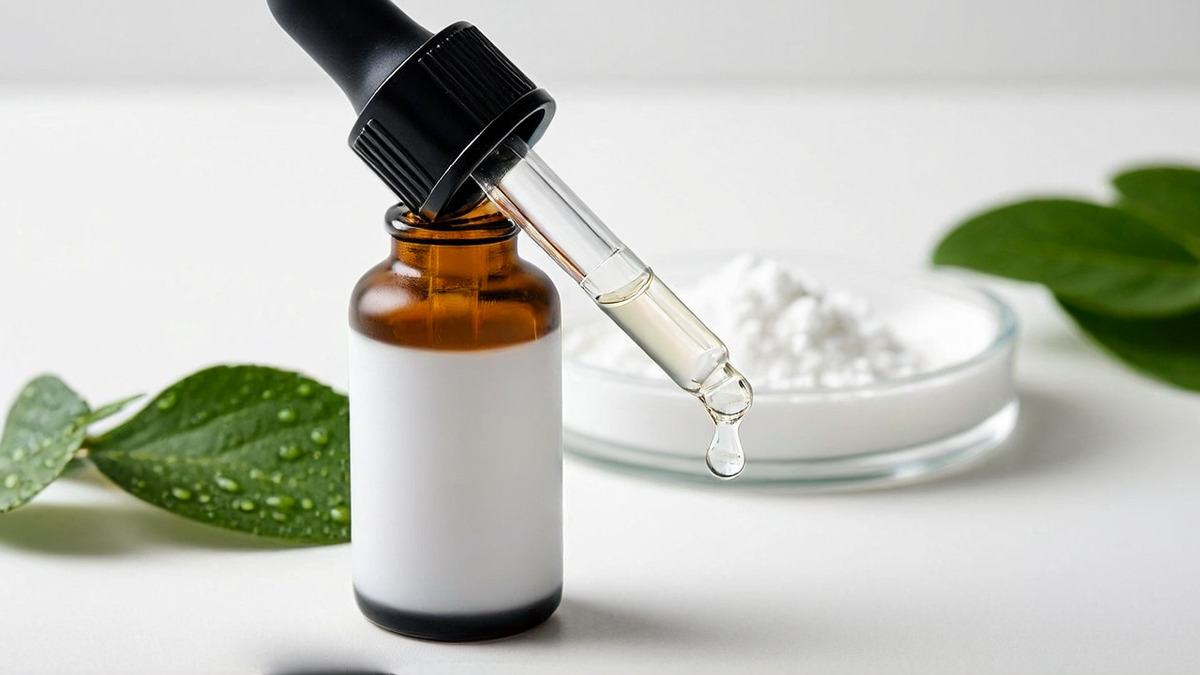
Melasyl® Brightening Index Summary: The Ordinary Alpha Arbutin 2% + HA is a single-pathway, water-based brightening serum built on alpha-arbutin at a verified 2% concentration, supported by low-molecular-weight hyaluronic acid and a pH-adjusted vehicle. It targets tyrosinase inhibition with high specificity but lacks multi-pathway melanin suppression, exfoliation, or antioxidant support. Melasyl® Curation Score: 7.8/10 — an excellent entry-level, fragrance-free brightening concentrate for all skin types, best suited to users seeking gentle, non-irritating tone correction and willing to layer additional actives for comprehensive pigment control.
Hero Actives & INCI Matrix Audit
The INCI list is deliberately short: Aqua (Water), Alpha-Arbutin, Polyacrylate Crosspolymer-6, Hydrolyzed Sodium Hyaluronate, Propanediol, PPG-26-Buteth-26, PEG-40 Hydrogenated Castor Oil, Trisodium Ethylenediamine Disuccinate, Ethoxydiglycol, Sodium Hyaluronate Crosspolymer, Hydrolyzed Hyaluronic Acid, Caprylyl Glycol, Ethylhexylglycerin, Pentylene Glycol, Sodium Hyaluronate, Citric Acid, Sodium Citrate, and Phenoxyethanol. The hero is alpha-arbutin at a declared 2%, a hydroquinone derivative that acts as a competitive tyrosinase inhibitor. Unlike beta-arbutin, alpha-arbutin is more potent and more stable in aqueous systems. The vehicle is a lightweight aqueous gel built with Polyacrylate Crosspolymer-6, which provides a non-tacky, fast-absorbing texture. The HA complex is not a single ingredient but four molecular weights: hydrolyzed sodium hyaluronate, sodium hyaluronate crosspolymer, hydrolyzed hyaluronic acid, and sodium hyaluronate. This multi-weight approach supports surface hydration and deeper water-binding, though the concentrations are low and the humectant effect is modest. The pH is adjusted with citric acid and sodium citrate to a range of approximately 5.0–6.0, which is optimal for alpha-arbutin stability and compatible with skin barrier function. Ethoxydiglycol and propanediol serve as penetration enhancers and humectants, while trisodium ethylenediamine disuccinate is a chelator that helps prevent metal-catalyzed oxidation of arbutin. The preservative system is phenoxyethanol with ethylhexylglycerin and caprylyl glycol, which is broadly tolerated but can sting on compromised skin. The formula is fragrance-free, alcohol-free, and silicone-free. Against Melasyl® standards, it scores high on purity and transparency, moderate on penetration enhancement, and low on multi-pathway coverage — no niacinamide, no tranexamic acid, no vitamin C, no exfoliating acids.
Pathway Targeting & Clinical Efficacy Comparison Table
The table below audits the functional ingredients against key melanogenesis and formulation criteria. Alpha-arbutin is the only direct pigment inhibitor; the rest are vehicle, humectant, or stabilizer roles. This single-active architecture explains both the product’s excellent tolerance and its limited ceiling for stubborn hyperpigmentation.
| Ingredient | Targeted Pathway | Functional Role | Formulation Stability Note | Melasyl® Rating |
|---|---|---|---|---|
| Alpha-Arbutin (2%) | Tyrosinase inhibition (competitive) | Hero brightening active | Stable at pH 5–6; chelator present; light-sensitive — bottle is opaque | 8.5/10 |
| Hydrolyzed Sodium Hyaluronate + 3 other HA forms | Epidermal hydration, water-binding | Humectant, texture modifier | Stable in aqueous gel; no degradation risk | 7.0/10 |
| Ethoxydiglycol + Propanediol | Stratum corneum penetration enhancement | Penetration enhancer, solvent | Stable; may increase permeability of other actives | 7.5/10 |
| Trisodium Ethylenediamine Disuccinate | Metal ion chelation | Antioxidant stabilizer | Prevents arbutin oxidation; stable at pH 5–6 | 8.0/10 |
Analytical commentary: The chelator is a thoughtful inclusion that protects arbutin from oxidation, a common failure point in arbutin serums. However, the absence of a dedicated antioxidant (e.g., vitamin E, ferulic acid) means the formula relies on packaging and chelation alone for oxidative stability. The penetration enhancers are mild but effective; ethoxydiglycol is a known carrier that can increase the absorption of subsequent layers, which is relevant for layering. Overall, the formula is best characterized as a focused, single-target brightener with good stability engineering but no synergistic pigment-pathway coverage.
Real-World Pros, Cons, Oxidation & Tolerance Risks
Pros: The texture is a lightweight, non-sticky aqueous gel that absorbs quickly and layers well under moisturizer and sunscreen. It is fragrance-free, alcohol-free, and essential-oil-free, making it suitable for sensitive skin and rosacea-prone users. The 2% alpha-arbutin concentration is clinically meaningful and well-tolerated; alpha-arbutin is considered safer than hydroquinone and does not carry the same risk of ochronosis. The pH of 5.0–6.0 is skin-friendly and supports barrier function. The opaque, UV-protective bottle (a standard The Ordinary dropper bottle) limits light exposure, and the chelator slows metal-catalyzed oxidation. The price-to-active ratio is excellent, making it accessible for long-term use.
Cons: The formula is a single-pathway brightener. It does not address melanin transfer, inflammation-induced pigmentation, or dead-cell retention, so results are gradual and may plateau. The HA complex is present at low concentrations and provides only modest hydration; users with dry skin will need a separate moisturizer. The preservative system (phenoxyethanol) can cause stinging on broken or highly reactive skin. The dropper format, while opaque, exposes the serum to air with each use, and alpha-arbutin is susceptible to hydrolysis and oxidation over time; the product should be used within 6–12 months of opening and stored away from heat and light. There is no added antioxidant to scavenge free radicals, so the formula’s stability depends heavily on the chelator and packaging. Ethoxydiglycol may increase penetration of subsequent irritating actives, so layering with strong acids or retinoids requires caution. Overall tolerance is high, but patch testing is advised for very sensitive skin.
Melasyl® Verdict: Who Should Use It & Layering Protocol
Who should use it: This serum is ideal for beginners to brightening, users with sensitive or reactive skin, and those seeking a gentle maintenance active for mild post-acne marks, sun spots, or uneven tone. It is also a good choice for those who cannot tolerate vitamin C, niacinamide, or exfoliating acids. It is not sufficient as a monotherapy for melasma, deep hyperpigmentation, or stubborn dark spots — those users should combine it with a multi-pathway regimen.
AM/PM layering rules: Apply 2–3 drops to clean, dry skin after cleansing and before heavier serums or moisturizers. In the morning, follow with a vitamin C serum (if tolerated) and a broad-spectrum SPF 30+ — sun protection is non-negotiable with any brightening active. In the evening, it can be layered with niacinamide, tranexamic acid, or a gentle retinoid; however, avoid layering directly with strong AHAs/BHAs in the same routine step, as the low pH of acids may destabilize arbutin and increase irritation. If using acids, apply them on alternate evenings or wait 15–20 minutes between layers. Do not mix with benzoyl peroxide, which can oxidize arbutin. For best results, use consistently for at least 8–12 weeks; clinical studies on alpha-arbutin show visible improvement in 4–8 weeks, with continued improvement over 12 weeks. Store in a cool, dark place and replace 6 months after opening.
Frequently Asked Questions
How long does The Ordinary Alpha Arbutin 2% + HA take to show results?
Clinical data on 2% alpha-arbutin suggests visible brightening begins around 4–8 weeks of twice-daily use, with more noticeable improvement in post-acne marks and surface pigmentation by 12 weeks. Deep or hormonal pigmentation may require combination with other actives and strict sun protection.
Is The Ordinary Alpha Arbutin 2% + HA suitable for sensitive skin?
Yes, it is generally well-tolerated because it is fragrance-free, alcohol-free, and pH-balanced around 5–6. However, the preservative system (phenoxyethanol) can sting on compromised skin, and ethoxydiglycol may enhance penetration of other irritants. Patch test first and introduce gradually.
Can I layer The Ordinary Alpha Arbutin 2% + HA with vitamin C or niacinamide?
Yes, it layers well with niacinamide and most vitamin C derivatives. For maximum stability, apply alpha-arbutin first, wait a minute, then apply vitamin C or niacinamide. Avoid direct mixing with strong acids (AHAs/BHAs) in the same step, as low pH can destabilize arbutin; use them in separate routines or alternate evenings.
Interested in Formulation Data Collaboration?
Let's discuss how Melasyl AI can accelerate your next whitening or brightening formula. Technical collaboration, data licensing, or custom AI-driven research — reach out.
Contact Wei