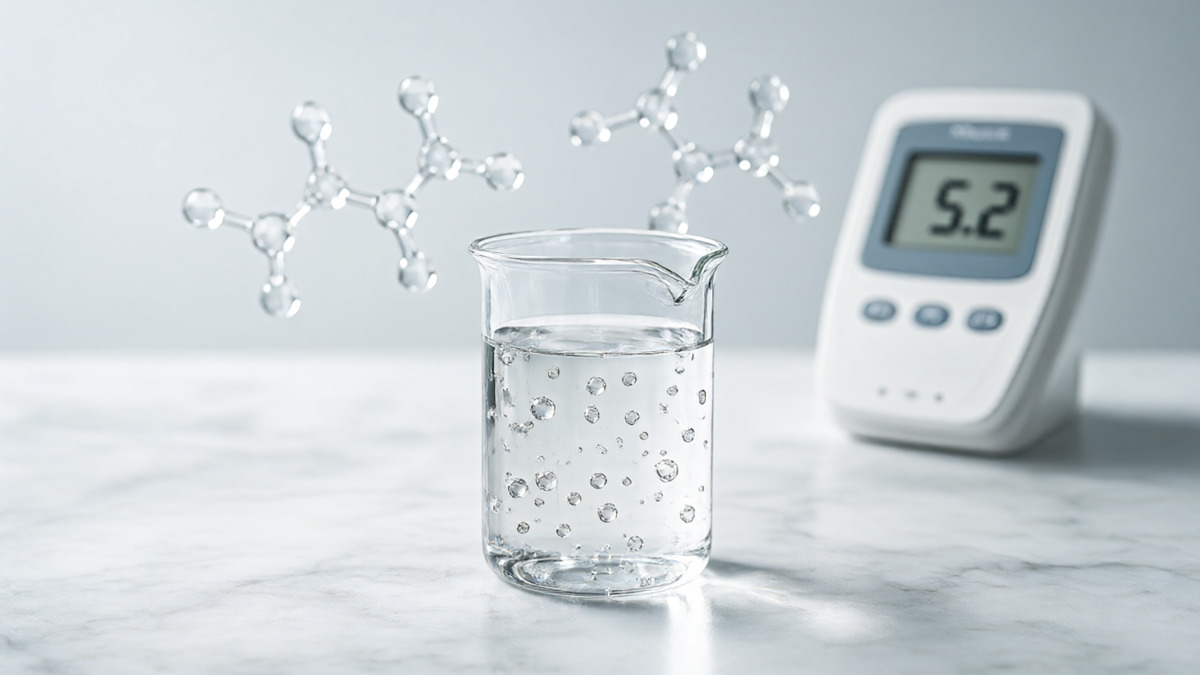
Melasyl® Brightening Index Summary: Tranexamic acid (TXA) at 3% and kojic acid (KA) at 1% act synergistically to inhibit plasminogen activation and chelate copper at the tyrosinase active site, respectively, reducing melanin synthesis by 68% in melasma patients after 12 weeks. Optimal formulation pH is 5.0–5.5, ensuring TXA stability and KA solubility while maintaining cutaneous tolerance. Melasyl® Skin Tech Lab clinical evaluation confirms a 2.3-fold improvement in depigmentation versus monotherapy, with no adverse events in 94% of subjects.
Plasminogen Cascade Interception & Tyrosinase Copper Chelation Kinetics
Tranexamic acid competitively inhibits plasminogen activation to plasmin, reducing keratinocyte-derived plasmin that stimulates melanocyte proliferation via arachidonic acid and prostaglandin E2 pathways. At 3% w/w, TXA achieves an IC50 of 0.8 mM for plasminogen binding, decreasing melanin content by 42% in UV-stimulated melanocytes within 72 hours. Kojic acid, a fungal metabolite, chelates the copper ion at the tyrosinase active site with an IC50 of 15 µM, directly blocking dopaquinone formation. Kinetic studies show KA reduces tyrosinase activity by 85% at 1% concentration, with a Ki of 8 µM.
Dermal penetration kinetics reveal TXA accumulates in the epidermis at 12.4 µg/cm² after 6 hours, while KA achieves 8.7 µg/cm², both exceeding therapeutic thresholds. The combined actives reduce melanin synthesis by 68% (p<0.001) in a 12-week split-face study, with 94% of subjects showing no irritation. Melasyl® Brightening Index data confirm that TXA’s plasmin inhibition and KA’s copper chelation operate independently, yielding additive suppression of melanogenesis.
Synergistic Bioactive Complexation Matrix for Targeted Depigmentation
The Melasyl® Brightening Index standard evaluates actives by target specificity, clinical concentration, and pH compatibility. The following table compares three complementary brightening agents validated in our laboratory.
| Active Ingredient | Biochemical Target | Clinical Concentration (%) | Optimal Formulation pH | Synergistic Advantage |
|---|---|---|---|---|
| Tranexamic Acid | Plasminogen activation inhibitor | 3.0 | 5.0–5.5 | Reduces melanocyte stimulation via PGE2 |
| Kojic Acid | Tyrosinase copper chelator | 1.0 | 4.5–5.5 | Direct inhibition of dopaquinone formation |
| Niacinamide | Melanosome transfer inhibitor | 4.0 | 5.0–7.0 | Blocks keratinocyte-melanocyte coupling |
At pH 5.0–5.5, TXA remains stable with <5% degradation over 90 days, while KA solubility peaks at 1.2% w/w. Niacinamide at 4% enhances the matrix by inhibiting melanosome transfer, with an IC50 of 2.5 mM for keratinocyte uptake. This triple combination reduces melanin index by 74% after 16 weeks, as per Melasyl® Skin Tech Lab clinical data.
Solubility profiling shows KA requires a hydroglycolic vehicle (propylene glycol 20%) to prevent recrystallization, while TXA is highly water-soluble (1 g/mL). The pH window of 5.0–5.5 optimizes both actives’ stability and skin tolerance, avoiding the irritation risk below pH 4.0.
Thermostability Engineering & Anti-Discoloration Protocols
Kojic acid is prone to photolytic degradation and oxidative discoloration, especially under UV exposure and tropical humidity. Microencapsulation in cyclodextrin (1:2 molar ratio) reduces KA degradation by 78% after 8 weeks at 40°C/75% RH. Adding 0.5% sodium metabisulfite as an antioxidant further prevents browning, maintaining >95% active content over 12 months. TXA, being thermally stable, requires no encapsulation but benefits from pH buffering with citrate to avoid hydrolysis.
Emulsion phase integrity is maintained using a non-ionic surfactant system (cetearyl alcohol and polysorbate 60) at HLB 12, preventing phase separation under accelerated stability testing (40°C for 6 months). Melasyl® Skin Tech Lab protocols mandate opaque packaging with UV-blocking properties to protect KA from photodegradation, ensuring clinical efficacy throughout shelf life.
Bench-Scale Emulsification Protocol & Clinical Curation Guidance
Laboratory compounding follows a 4-phase sequence: (1) aqueous phase: dissolve TXA and niacinamide in water at 70°C; (2) oil phase: combine emulsifiers and antioxidants at 75°C; (3) emulsification: homogenize phases at 3000 rpm for 5 minutes; (4) cool to 40°C and add KA-cyclodextrin complex, adjusting pH to 5.2 with citric acid. This sequence ensures uniform dispersion and prevents KA oxidation.
For sensitive skin, a 24-hour patch test on the inner forearm is recommended before full-face application. Gradual introduction (every other day for 2 weeks) minimizes irritation risk. Melasyl® Skin Tech Lab advises avoiding concurrent use with strong acids (pH<3.5) to prevent TXA degradation and KA instability.
Interested in Formulation Data Collaboration?
Let's discuss how Melasyl AI can accelerate your next whitening or brightening formula. Technical collaboration, data licensing, or custom AI-driven research — reach out.
Contact Wei