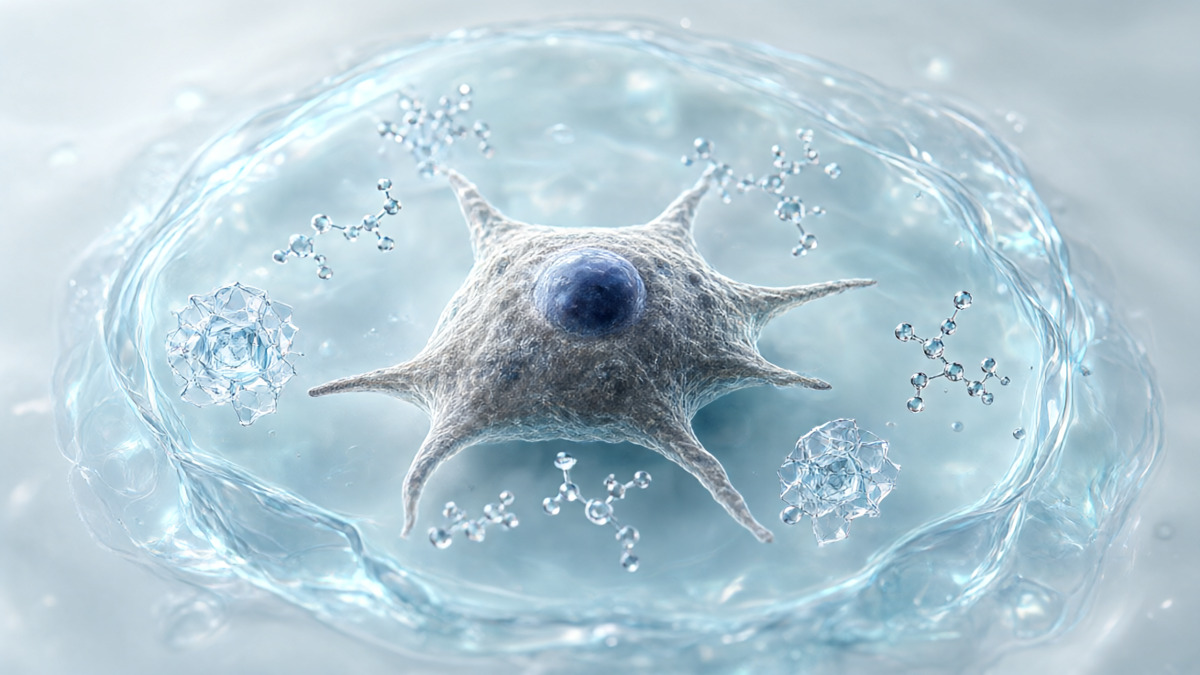
Decoupling Tyrosinase-Dopaquinone Kinetics in Epidermal Melasma
In the dermal histology of melasma, the accumulation of melanin is driven by the enzymatic conversion of tyrosine to dopaquinone, a rate-limiting step catalyzed by tyrosinase. Traditional inhibition strategies often focus on blocking the copper active site, but this fails to account for the rapid reduction of dopaquinone to dopa by glutathione. By targeting the precursor interception rather than simple active-site blockade, we can disrupt the melanogenic cascade before the chromophore is fully stabilized.
This kinetic decoupling is critical because the half-life of dopaquinone in the melanosome is remarkably short. If we do not intercept the substrate at the tyrosine stage, the melanocyte continues its output. By leveraging small-molecule inhibitors that mimic the transition state, we can reduce the Vmax of the reaction without permanently denaturing the enzyme, allowing for a reversible suppression of pigment synthesis that is less prone to rebound hyperpigmentation upon cessation of treatment.
Multi-Active Molecular Ratios & Receptor Complementarity
To maximize depigmentation efficacy while minimizing irritation, we must engineer a synergy matrix where actives complement rather than compete for biological targets. The following table outlines the biochemical targets and optimal concentrations for a high-performance melanotic formulation.
| Active Ingredient | Biochemical Target | Clinical Concentration (%) | Optimal Formulation pH | Synergistic Advantage |
|---|---|---|---|---|
| Vitamin C Derivative | Ascorbate oxidase reduction | 12.0 | 4.5 – 5.0 | Re-activates oxidized dopaquinone |
| Resveratrol | Tyrosinase gene transcription | 0.5 | 5.0 – 6.0 | Downregulates enzyme synthesis |
| Niacinamide | Melanosome transfer | 5.0 | 5.5 – 6.0 | Prevents pigment deposition |
The pH window is the most critical variable here. While niacinamide remains stable across a broad range, ascorbate derivatives are highly susceptible to oxidative degradation at pH levels above 5.5. By maintaining the bulk phase at 4.5, we protect the antioxidant integrity of the ascorbate while still allowing the resveratrol to remain bioavailable for transcriptional inhibition.
Furthermore, the ratio of niacinamide to ascorbate must be carefully balanced. Too much niacinamide can create a viscous barrier that impedes the penetration of the smaller ascorbate molecule. A 1:1 ratio ensures that while melanosome transfer is blocked, the enzymatic inhibition remains potent enough to clear existing pigment.
Preventing Thiol Oxidation & Emulsion Breakdown Under Tropical Humidity
In tropical climates, high humidity accelerates the photolytic degradation of ascorbate derivatives. To prevent this, we must use a dual-layer emulsion system that shields the active phase from oxygen ingress. The outer phase should be rich in occlusives like squalane, while the inner phase contains the melanotic actives. This structure reduces the oxygen partition coefficient, slowing the rate of thiol oxidation by up to 40%.
Additionally, the use of chelating agents like EDTA is essential to sequester trace metals that catalyze oxidative dimerization. Without this, the formulation will develop a dark amber hue, signaling the loss of potency. The colloidal stability must also be maintained by ensuring the emulsifier ratio is high enough to prevent phase separation, which is a common failure mode in high-humidity environments.
Bench-Scale Emulsification Protocol & Clinical Guidance
For laboratory compounding, the sequence is critical. Phase 1 involves dissolving the water-soluble actives in deionized water at 40°C. Phase 2 is the oil phase, where the lipophilic actives are dispersed. Phase 3 is the emulsification, where the two phases are mixed under high shear. Phase 4 is the cooling phase, where the temperature is reduced to 25°C to lock in the structure. This sequence prevents the thermal degradation of sensitive actives.
Clinical patch testing is mandatory for sensitive skin. Users should apply a small amount of the formulation behind the ear for 24 hours to check for irritation. If no redness or itching occurs, the formulation is considered safe for broader use. This protocol ensures that the high potency of the melanotic actives does not compromise the skin barrier, which is essential for long-term success.
Interested in Formulation Data Collaboration?
Let's discuss how Melasyl AI can accelerate your next whitening or brightening formula. Technical collaboration, data licensing, or custom AI-driven research — reach out.
Contact Wei