When Science Meets Nature: Reflections from In-Cosmetics Global 2026
I’ve been sitting with my notes from In-Cosmetics Global 2026 for weeks now, and I keep returning to a single moment during the Paris event. Surrounded by 1,100 exhibitors and over 16,000 professionals, I found myself standing at the intersection of two worlds that rarely speak the same language—rigorous cosmetic science and the intuitive wisdom of traditional plant knowledge.
The theme of this year’s congress was “Science as the Core, Beauty Reborn” (科学为核,美力新生). It’s a bold statement, one that initially struck me as more marketing than manifesto. But as I moved through the exhibition halls, watching researchers from laboratories like Yunnan’s Special Plant Extraction Lab demonstrate their work, I began to understand the deeper current running through this gathering.
The Quiet Revolution in Natural Actives
What caught my attention wasn’t the flashiest new molecule or the most sophisticated delivery system—though there were plenty of both. Instead, it was the systematic, scientifically rigorous approach that laboratories are now bringing to ingredients that were once dismissed as “folk medicine” or “traditional remedies.”
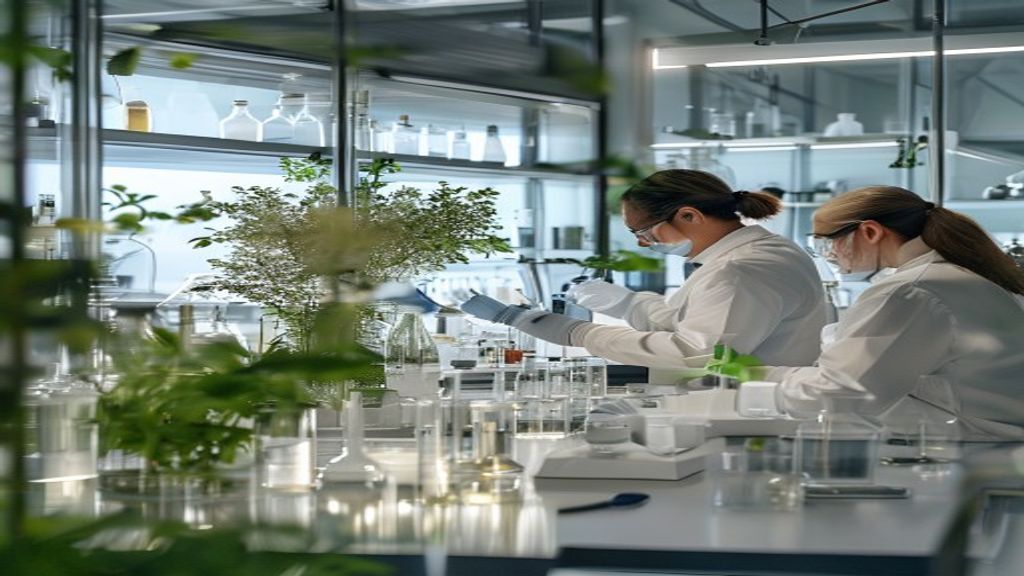
I spent considerable time at the booth of Botanee Group’s Yunnan Special Plant Extraction Laboratory. They weren’t just showcasing plant extracts; they were presenting HPLC chromatograms, stability data, and in-vitro efficacy results for高原植物 (highland plants) that have been used in traditional practices for centuries. The presentation included:
- Standardized extraction protocols with batch-to-batch reproducibility data
- Identified active fractions with quantified marker compounds
- In-vitro melanin synthesis inhibition assays (not just tyrosine inhibition, but full pathway analysis)
- Formulation compatibility studies showing pH stability and ingredient interaction profiles
This is what “Science as the Core” actually looks like in practice. It’s not about abandoning traditional knowledge—it’s about respecting it enough to subject it to rigorous scientific scrutiny.
A Personal Reflection on the Research Process
I found myself reflecting on my own research journey as I listened to these presentations. Early in my career, I was guilty of the polarization that plagues our industry: you were either a “natural ingredients person” or a “synthetic actives person.” The two camps rarely collaborated, and when they did, it was often performative rather than substantive.
Reading through the technical dossiers presented at In-Cosmetics Global made me realize how much my own thinking has evolved. I’ve moved away from asking “Is this natural or synthetic?” and toward asking “What is the quality of the evidence supporting this ingredient’s efficacy and safety?”
The most profound innovations happen when we stop defending territories and start asking better questions about mechanism, evidence, and reproducibility.
The Challenge of Substantiation
One panel discussion keeps echoing in my mind. A regulatory affairs director from a major European brand asked a seemingly simple question: “When we claim ‘brightening’ or ‘even skin tone,’ what exactly are we promising the consumer, and can we substantiate it with more than just consumer perception studies?”
The room went quiet. Then came a fascinating diversity of answers:
- Some argued for instrumental measurements (colorimetry, spectroscopy)
- Others advocated for histological evidence (melanin content reduction in biopsy or in-vitro models)
- Still others emphasized the importance of diverse skin type representation in clinical studies
- A few brave souls questioned whether our industry’s obsession with “whitening” terminology itself needed scientific and ethical reconsideration
As I listened, I realized this is where the real work of cosmetic science lies—not in creating ever-more-sophisticated marketing claims, but in building ever-more-rigorous frameworks for evaluating what we put on and in human skin.
Reading Between the Lines of Innovation
Walking through the innovation awards section, I found myself drawn to research that asked fundamental questions rather than promising revolutionary results. One poster presentation caught my eye: a systematic review of Journal of Cosmetic Science publications from 2020-2025, analyzing the methodological quality of melanin synthesis research.
The findings were humbling. Despite an explosion of publications in the field, the authors identified significant methodological inconsistencies:
- Wide variation in cell line selections (B16F10 vs. melanocytes primary cultures vs. reconstructed epidermis models)
- Inconsistent endpoint measurements (some measuring tyrosinase activity, others measuring melanin content, others measuring gene expression)
- Limited translational relevance—many in-vitro studies used concentrations far above what could be achieved in formulated products
Reading this analysis, I felt a familiar mixture of excitement and unease. Excitement because the field is actively questioning its own methods. Unease because it reminded me how much unpublished “negative data” likely exists in corporate archives—studies that didn’t make it to publication because they didn’t show the desired effect.
What This Means for Our Work
I returned from Paris with more questions than answers, which I’ve come to recognize as the hallmark of a good research conference. Some of the questions I’m now bringing to our own research program:
- Are we being sufficiently rigorous in our literature reviews before initiating new projects?
- When we evaluate botanical extracts, are we applying the same methodological standards we would apply to synthetic actives?
- How can we contribute to raising the evidentiary standards of the entire field, rather than just clearing the regulatory bar for our own products?
The theme “Beauty Reborn” suggests renewal, transformation. I think what I witnessed in Paris was something more subtle: a maturing of the industry’s scientific foundations. We’re moving past the era of “clean beauty” vs. “cosmeceuticals” tribalism toward a more nuanced, evidence-based approach to formulation.
A Closing Thought
I’ll end with something that made me pause during one presentation. A researcher from Japan presented work on kojic acid derivatives—molecules designed to retain efficacy while improving stability and reducing irritation potential. In the Q&A, someone asked: “Why spend so much effort modifying a decades-old molecule instead of discovering something new?”
The researcher’s answer stayed with me: “Because sometimes the most innovative thing we can do is deeply understand what already exists, rather than constantly chasing the novel.”
In an industry obsessed with the next new ingredient, there’s something quietly radical about that statement. It suggests that rigorous, repetitive, sometimes boring scientific work—replication studies, stability optimization, formulation refinement—is itself a form of innovation.
I’m still processing everything I learned in Paris. But if there’s one commitment I’m making to myself and our research team, it’s this: let’s be the kind of scientists who ask better questions, demand better evidence, and never mistake a compelling narrative for sufficient proof.
The science is the core. Everything else is just packaging.
Reflections from In-Cosmetics Global 2026, Paris. May 2026.
Interested in Formulation Data Collaboration?
Let's discuss how Melasyl AI can accelerate your next whitening or brightening formula. Technical collaboration, data licensing, or custom AI-driven research — reach out.
Contact Wei →