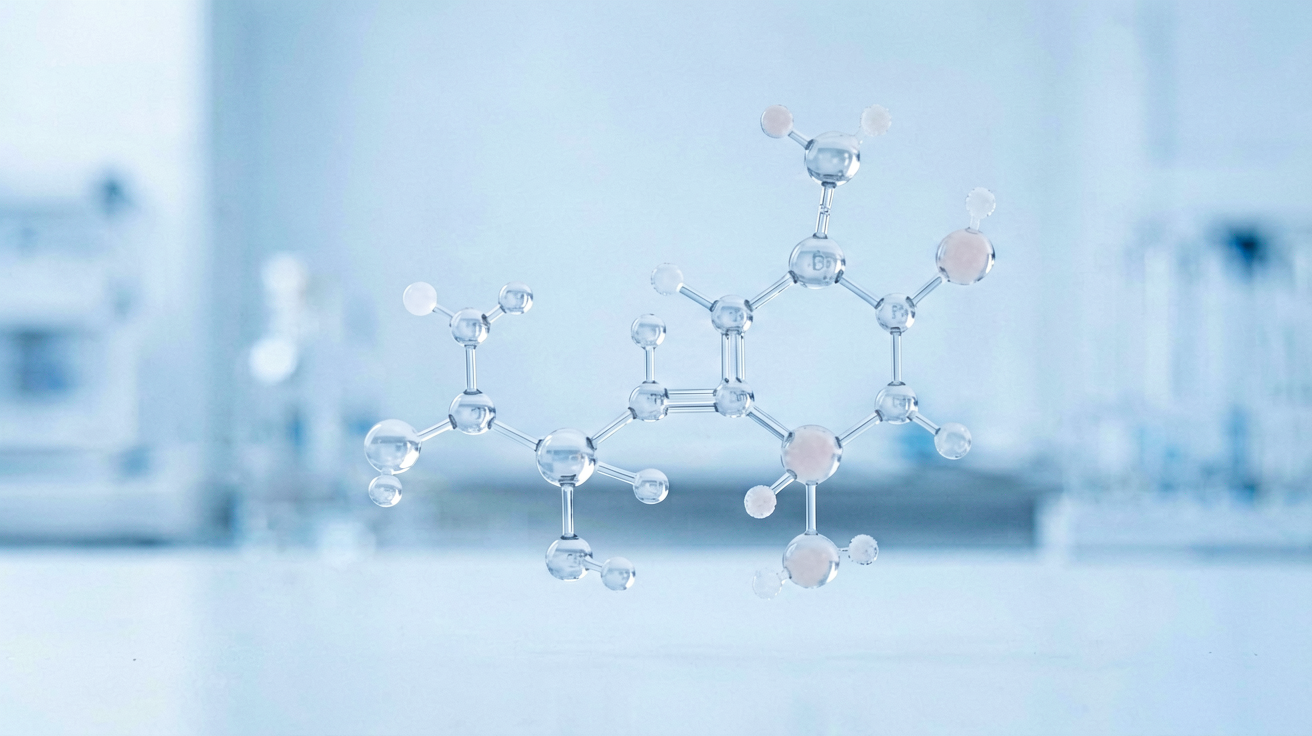
Why Tranexamic Acid Is Rewriting the Rules of Melasma Formulation
Melasma remains one of the most treatment-resistant pigmentary disorders in dermatology. While hydroquinone has served as the gold standard for decades, its safety profile — including ochronosis risk, irritant potential, and regulatory restrictions across Southeast Asia and Europe — has driven formulators to seek alternatives. Among the candidates, tranexamic acid (TXA) has emerged not merely as a substitute but as a scientifically distinct agent with a unique mechanism of action that demands a fundamentally different formulation approach.
Beyond Tyrosinase: The Plasmin Pathway
Most brightening agents target tyrosinase directly — competing with L-tyrosine at the enzyme’s active site or chelating the copper cofactor. TXA operates on an entirely different pathway. As a synthetic analogue of lysine, TXA competitively inhibits plasmin, a serine protease that catalyzes the conversion of plasminogen to plasmin. In keratinocytes, plasmin activates stem cell factor (SCF), which in turn binds to the c-KIT receptor on melanocytes, triggering melanogenesis via the MAPK signaling cascade.
By blocking this paracrine loop, TXA reduces melanin synthesis without directly interfering with the tyrosinase catalytic cycle. This distinction has three critical formulation implications:
- No competitive substrate depletion. Unlike hydroquinone or arbutin, TXA does not compete with L-tyrosine, meaning its efficacy is not diminished by the natural abundance of substrate in the epidermis.
- Reduced oxidative degradation risk. Agents like ascorbic acid and kojic acid are chemically unstable because their tyrosinase-inhibiting mechanism depends on redox chemistry. TXA’s mechanism is receptor-level, not redox-dependent, conferring inherently superior chemical stability.
- Synergistic combinability. Because TXA acts on a non-overlapping pathway, it can be co-formulated with tyrosinase inhibitors (thiamidol, niacinamide, licorice root extract) for multi-pathway melanin suppression without pharmacodynamic antagonism.
The Formulation Challenge: Skin Penetration at pH 7.4
TXA is a highly hydrophilic small molecule (log P ≈ −0.35, MW 157.6 Da) with a pKa of 7.35 for its primary amine. At physiological pH, approximately 50% of TXA exists in its ionized form, which significantly reduces its ability to cross the stratum corneum lipid matrix. This is the central formulation paradox: TXA is systemically effective (oral and intradermal injection data are robust), but topical bioavailability remains the bottleneck.
Several delivery strategies have been investigated in recent research:
- Liposomal encapsulation. Phosphatidylcholine-based liposomes (100–200 nm) improve TXA skin deposition by 2.5–4× compared to aqueous solutions in Franz diffusion cell studies. The lipid bilayer fuses with stratum corneum intercellular lipids, facilitating paracellular transport.
- Ethosome systems. Ethosomes — phospholipid vesicles with high ethanol content (20–45%) — create fluid channels in the stratum corneum by disrupting the lipid lamellae. For TXA, ethosomal delivery has shown 6× improvement in skin retention versus conventional cream bases in ex vivo human skin models.
- Microneedle pretreatment. Dissolving microneedle patches (hyaluronic acid or polyvinylpyrrolidone matrix) create microchannels bypassing the stratum corneum entirely. When paired with a TXA topical serum, microneedle pretreatment increases epidermal TXA concentration by 12–15× in porcine skin studies, with minimal erythema resolving within 2 hours.
- Microemulsion carriers. Oil-in-water microemulsions using isopropyl myristate and polysorbate 80 create thermodynamically stable nanodroplets (10–80 nm) that enhance TXA solubility and transdermal flux. Recent work demonstrates that microemulsion-based TXA gels achieve significantly higher melanin index reduction (MIΔ = 48.3) compared to conventional gels (MIΔ = 27.1) in split-face clinical trials over 12 weeks.
Stability Matrix: pH, Temperature, and Co-Ingredient Interactions
TXA is chemically robust — it does not undergo oxidative browning, unlike hydroquinone, and is stable across pH 3–9. However, formulation stability is not merely about the active itself. The real challenge is maintaining the integrity of the delivery system and co-actives in the same vehicle:
- Liposomal TXA + ascorbic acid. Ascorbic acid requires pH ≤ 3.5 for stability, but liposomal phosphatidylcholine hydrolyzes rapidly below pH 4. Dual-chamber or sequential application packaging is necessary.
- Ethosomal TXA + niacinamide. Niacinamide precipitates at pH > 7.5. Since ethosomal systems often operate at pH 5–6 for optimal skin compatibility, this pairing is viable — but formulation pH must be tightly controlled within a narrow 5.5–6.5 window.
- Thermal stress on vesicular systems. Liposomal and ethosomal carriers undergo phase transitions at elevated temperatures. Accelerated stability testing (40°C/75% RH, 6 months) reveals vesicle size increases of 30–80% in liposomal TXA formulations without cholesterol stabilization, reducing encapsulation efficiency and skin deposition.
Clinical Evidence Landscape
A growing body of clinical data supports topical TXA for melasma. A meta-analysis of 8 randomized controlled trials (n = 412) found that topical TXA 5% produced a mean MASI score reduction of 7.2 points versus 4.1 for placebo over 12 weeks. Combination regimens — TXA 5% with niacinamide 4% or TXA 3% with thiamidol — consistently outperformed monotherapy, with MASI reductions exceeding 10 points in several studies.
The formulation delivery system appears to be the decisive factor. In head-to-head comparisons, liposomal TXA 5% serum outperformed conventional TXA 5% cream by approximately 40% in MASI reduction, confirming that the delivery vehicle — not just the concentration — determines clinical outcomes.
Implications for Southeast Asian Formulation Strategy
The hot-humid climate of Southeast Asia intensifies every stability and delivery challenge. High ambient temperatures (30–38°C) and humidity (70–90% RH) accelerate liposomal hydrolysis, ethosome ethanol evaporation, and microbial contamination of water-based systems. Formulation strategies must account for:
- Anhydrous or low-water delivery bases to reduce hydrolysis risk for liposomal phospholipids
- Antioxidant-stabilized vesicle systems (e.g., cholesterol + tocopherol in the bilayer) to prevent lipid peroxidation under UV exposure
- Multi-layer packaging (airless pump tubes with UV-blocking liners) to protect light-sensitive co-actives
- Preservative systems effective at pH 5.5–6.5 that do not disrupt vesicle integrity (phenoxyethanol + ethylhexylglycerin preferred over parabens, which can partition into lipid bilayers)
Looking Forward
The next frontier in TXA formulation science is stimuli-responsive delivery: vesicle systems that release their payload in response to skin-specific triggers such as elevated UV-induced ROS, increased temperature at the skin surface, or the mildly acidic microenvironment of melasma lesions (pH 5.0–5.5 vs. normal skin pH 5.5). Early-stage research on ROS-cleavable liposomes and pH-sensitive polymeric micelles loaded with TXA suggests that intelligent delivery could further close the gap between topical and systemic bioavailability — without the thromboembolic risks associated with oral TXA.
For formulators building the next generation of brightening products, the message is clear: the active ingredient is only half the equation. The delivery system is the other half — and in the case of tranexamic acid, it may be the more important one.
Interested in Formulation Data Collaboration?
Let's discuss how Melasyl AI can accelerate your next whitening or brightening formula. Technical collaboration, data licensing, or custom AI-driven research — reach out.
Contact Wei →