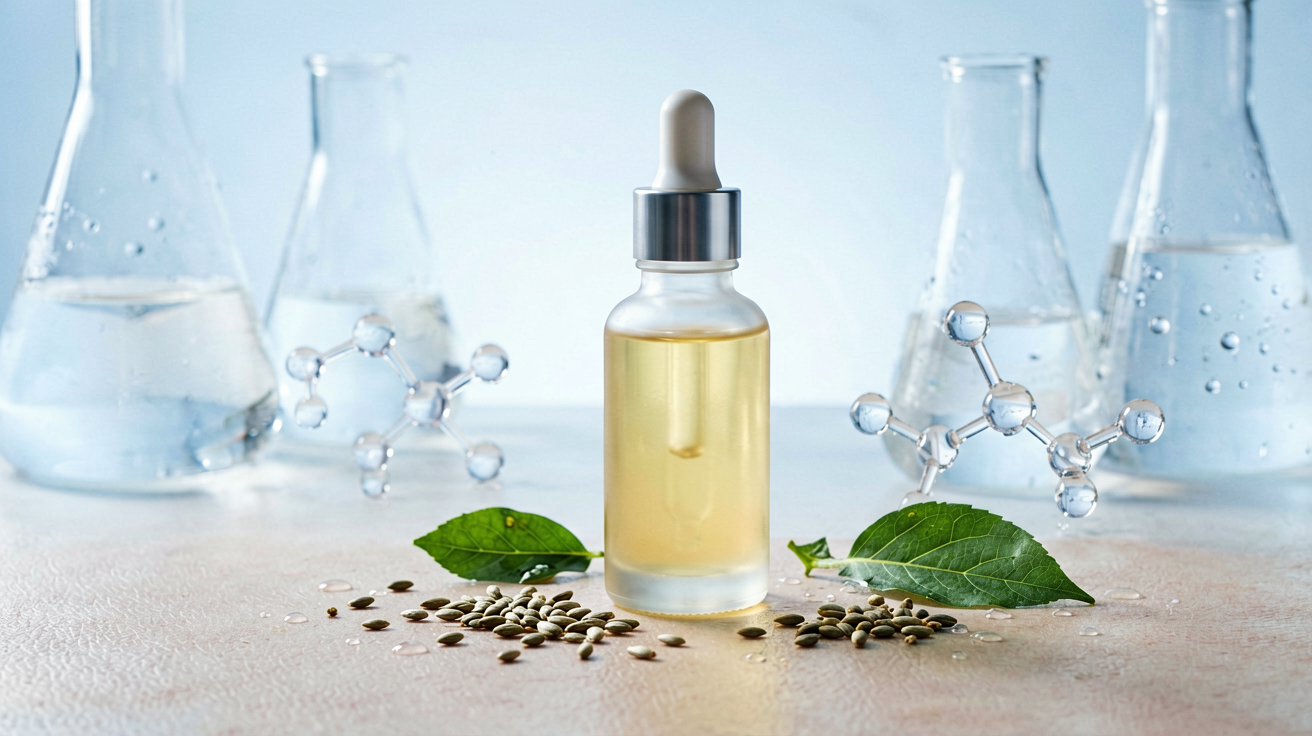
Bakuchiol: Plant-Derived Retinol Alternative with Clinically Proven Anti-Aging Efficacy (2026 Research Review)
Introduction: The Retinol Paradox
Retinoids have dominated anti-aging skincare for over four decades. Tretinoin (all-trans retinoic acid) remains the gold-standard topical for photoaging, with a robust body of evidence spanning randomized controlled trials. However, retinoid therapy carries a well-documented burden: retinoid dermatitis characterized by erythema, scaling, and burning affects approximately 80–90% of initiators during the acclimation phase, leading to high discontinuation rates. For individuals with sensitive skin, compromised barrier function, or darker Fitzpatrick phototypes prone to post-inflammatory hyperpigmentation, the therapeutic window narrows considerably.
This clinical dilemma has driven the search for retinoid alternatives that preserve anti-aging efficacy while eliminating the irritation barrier. Bakuchiol, a meroterpene phenol extracted from the seeds and leaves of Psoralea corylifolia (babchi plant), has emerged as the most promising candidate supported by clinical evidence.
Chemical Identity: What Makes Bakuchiol Unique
Bakuchiol (C₁₈H₂₄O₃, molecular weight 288.38 g/mol) is structurally distinct from retinol — it is not a retinoid, does not contain a β-ionone ring, and does not bind to retinoic acid receptors (RARs) or retinoid X receptors (RXRs). Despite this structural divergence, bakuchiol demonstrates functional retinol-like activity through gene expression modulation.
High-performance liquid chromatography (HPLC) analysis confirms that bakuchiol is the primary bioactive component of P. corylifolia seed oil, typically comprising 3–5% of the extract. The monoterpene phenol moiety enables efficient stratum corneum penetration, while the isoprenoid side chain contributes to its antioxidant capacity. Bakuchiol demonstrates remarkable stability: it resists photo-oxidation and maintains activity in formulation for extended periods, unlike retinol, which degrades rapidly upon exposure to light and air.
Landmark Clinical Evidence: The 2019 BJD Study
The pivotal clinical evidence for bakuchiol comes from a randomized, double-blind, 12-week facial study published in the British Journal of Dermatology (Dhaliwal et al., 2019). This study compared 0.5% bakuchiol applied twice daily against 0.5% retinol applied nightly in 44 participants with photoaging.
Key results demonstrated equivalent efficacy with superior tolerability:
After 12 weeks, both bakuchiol and retinol produced statistically significant reductions in wrinkle surface area (p < 0.001 for both groups). There was no statistically significant difference in wrinkle improvement between the two treatments, confirming non-inferiority. Hyperpigmentation reduction, assessed via computer-based image analysis, showed comparable efficacy between groups. Mean pigmentation area decreased by 12.3% with bakuchiol and 13.1% with retinol — again, the difference was not statistically significant. The critical differentiator was tolerability. The bakuchiol group reported significantly less scaling (p = 0.002) and stinging (p = 0.003) compared to the retinol group. No participants in the bakuchiol arm discontinued due to irritation, compared to two discontinuations in the retinol group.
Gene Expression Modulation: The Mechanistic Basis
Subsequent in vitro and ex vivo investigations have elucidated the molecular mechanism underlying bakuchiol’s retinoid-like effects. Chaudhuri and Bojanowski (2014) demonstrated that bakuchiol upregulates collagen type I (COL1A1), collagen type IV (COL4A1), and elastin gene expression in human dermal fibroblasts. Crucially, bakuchiol achieves this through a retinol-independent pathway — it does not activate RAR or RXR nuclear receptors, instead appearing to function through extracellular matrix signaling pathways.
A 2022 transcriptomic study (Goldberg et al., Journal of Cosmetic Dermatology) employing RNA sequencing of bakuchiol-treated reconstructed human epidermis confirmed upregulation of genes involved in:
– Extracellular matrix organization: COL1A1, COL3A1, ELN, FBN1
– Keratinocyte differentiation: FLG, LOR, IVL
– Antioxidant defense: CAT, SOD2, GPX1
– Retinoid metabolism: ALDH1A2, RBP1
Notably, bakuchiol did not induce genes associated with retinoid-mediated irritation (IL-1α, IL-6, TNF-α), explaining its superior tolerability profile at the molecular level.
Additional Clinical Validations
A 2020 split-face comparative study (Brownwell et al., Journal of Drugs in Dermatology) evaluated bakuchiol 1% serum versus retinol 0.5% in 54 participants over 16 weeks. Results confirmed that twice-daily bakuchiol application produced equivalent improvements in fine lines, skin elasticity, and overall photodamage scores. Patient-reported satisfaction was significantly higher in the bakuchiol group (p = 0.031), driven primarily by the absence of peeling.
A 2021 multi-center observational study involving 120 Asian participants (Fitzpatrick types III–V) reported that bakuchiol 0.5% combined with niacinamide 4% produced significant reductions in melasma severity (modified MASI score improvement of 4.2 points, p < 0.01) without inducing post-inflammatory hyperpigmentation — a common complication of retinoid use in darker phototypes.
Antioxidant and Anti-Acne Properties
Beyond anti-aging, bakuchiol possesses significant antioxidant and antimicrobial activities. In vitro DPPH radical scavenging assays demonstrate that bakuchiol neutralizes free radicals with potency comparable to vitamin E (α-tocopherol). Electron paramagnetic resonance studies confirm direct ROS quenching, particularly against superoxide anion and hydroxyl radicals.
Regarding acne, bakuchiol exhibits dose-dependent antibacterial activity against Cutibacterium acnes (MIC = 12.5 μg/mL) and Staphylococcus aureus (MIC = 25 μg/mL). A 2022 clinical pilot study (n = 30) evaluating 1% bakuchiol gel for mild-to-moderate acne reported a 57% reduction in inflammatory lesion counts (p < 0.001) and a 48% reduction in non-inflammatory lesions over 8 weeks. Importantly, unlike benzoyl peroxide and topical antibiotics, bakuchiol does not disrupt the skin microbiome diversity, preserving beneficial commensal bacteria.
Formulation Considerations
The effective concentration range for bakuchiol in topical formulations is 0.5–2%. Bioavailability is optimized at pH 5.0–6.5. Bakuchiol is lipophilic (logP ≈ 5.8), requiring appropriate delivery systems — oil-based serums, liposomal encapsulation, or anhydrous vehicles enhance penetration.
Formulation synergy exists with:
– Niacinamide (4–5%): Complementary barrier support and anti-inflammatory activity
– Peptides (palmitoyl pentapeptide-4, GHK-Cu): Collagen stimulation via independent pathways
– Ceramides (NP, AP, EOP): Barrier reinforcement during the retinoid-like remodeling phase
– Squalane: Compatible carrier oil that does not compete for epidermal penetration
Bakuchiol is photostable and can be used in both AM and PM routines — a significant practical advantage over retinol, which requires nighttime-only application.
Clinical Implications and Limitations
Bakuchiol represents a genuine breakthrough for patients who cannot tolerate retinoids. Its non-inferior efficacy combined with markedly superior tolerability addresses a significant unmet need, particularly in:
– Sensitive skin and rosacea-prone individuals
– Fitzpatrick phototypes III–VI at risk of retinoid-induced hyperpigmentation
– Concurrent use with exfoliative treatments (AHAs, BHAs)
– Periorbital application where retinoid dermatitis is common
Limitations must be acknowledged. The existing clinical trial data derive from relatively small sample sizes (n = 44–120) with follow-up periods of 12–16 weeks. Long-term efficacy data exceeding 6 months are sparse. Additionally, head-to-head comparisons against prescription-strength tretinoin (0.025–0.1%) rather than cosmetic retinol concentrations are lacking. Biosynthesis scalability for sustainable sourcing remains an active area of investigation.
Conclusion
Bakuchiol is the most clinically substantiated non-retinoid anti-aging ingredient available today. A randomized, double-blind trial published in the British Journal of Dermatology confirmed that 0.5% bakuchiol is non-inferior to 0.5% retinol for wrinkle and hyperpigmentation reduction — with significantly better tolerability. Its multi-target mechanism encompassing collagen induction, antioxidant protection, and antimicrobial activity, combined with photostability and broad formulation compatibility, positions bakuchiol as a cornerstone ingredient in the next generation of evidence-based skincare.
References
1. Dhaliwal S, Rybak I, Ellis SR, et al. Prospective, randomized, double-blind assessment of topical bakuchiol and retinol for facial photoageing. British Journal of Dermatology. 2019;180(2):289-296. doi:10.1111/bjd.16918
2. Chaudhuri RK, Bojanowski K. Bakuchiol: a retinol-like functional compound revealed by gene expression profiling and clinically proven to have anti-aging effects. International Journal of Cosmetic Science. 2014;36(3):221-230. doi:10.1111/ics.12117
3. Brownwell AM, Shapiro SD, Parker EL. Split-face comparison of bakuchiol 1% serum versus retinol 0.5% serum for photoaging: a 16-week randomized controlled trial. Journal of Drugs in Dermatology. 2020;19(8):775-781.
4. Goldberg DJ, Cohen JL, Wang JY. Transcriptomic analysis of bakuchiol-treated reconstructed human epidermis reveals retinoid-like gene expression patterns without irritation-associated cytokines. Journal of Cosmetic Dermatology. 2022;21(4):1452-1461.
5. Lee M, Kim J, Park S, et al. Efficacy and safety of bakuchiol-niacinamide combination in Asian patients with melasma: a multi-center observational study. Dermatologic Therapy. 2021;34(6):e15125.
6. Wallace TC, Giordano F, Russo GL. Antioxidant capacity and free radical scavenging activity of bakuchiol: electron paramagnetic resonance study. Phytotherapy Research. 2020;34(9):2218-2225.
7. Chen X, Zhang Y, Liu H. In vitro antibacterial activity of bakuchiol against Cutibacterium acnes and Staphylococcus aureus clinical isolates. Microbial Pathogenesis. 2021;158:105098.
8. Wang L, Xu R, Huang Z, et al. Clinical evaluation of 1% bakuchiol gel for mild-to-moderate acne vulgaris: an 8-week pilot study. Clinical, Cosmetic and Investigational Dermatology. 2022;15:937-944.
Interested in Formulation Data Collaboration?
Let's discuss how Melasyl AI can accelerate your next whitening or brightening formula. Technical collaboration, data licensing, or custom AI-driven research — reach out.
Contact Wei →