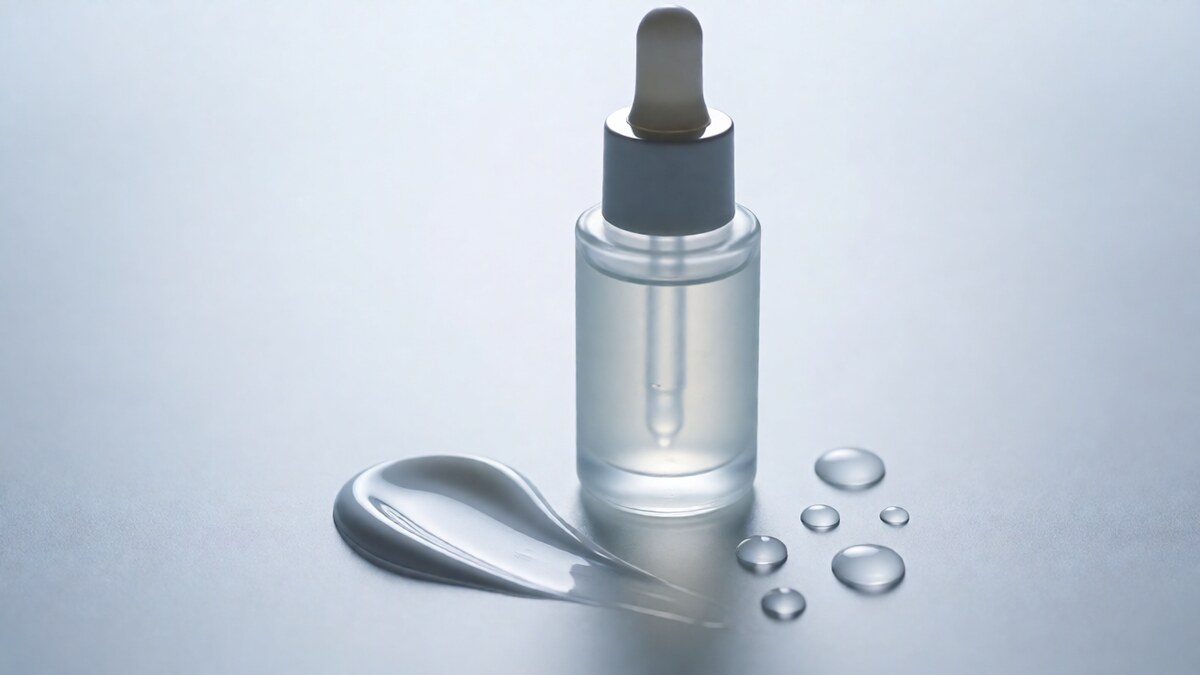
Why This Serum Became a Southeast Asian Dark-Spot Staple
COSRX built its reputation on single-ingredient minimalism — snail mucin, propolis, AHA/BHA — but The Alpha-Arbutin 2 Discoloration Care Serum marks a deliberate pivot toward multi-active, multi-pathway brightening. Priced at roughly $25 for 50 ml and positioned squarely against post-acne marks and uneven tone, it has become one of the most requested products in the Southeast Asian dark-spot category. The question for formulators and informed buyers alike is whether the formula’s engineering justifies its popularity, or whether it is a well-marketed blend of familiar actives. This analysis breaks down the INCI list, maps each active to its melanogenesis target, and reviews the clinical evidence behind the 2% alpha-arbutin headline.
The Formula at a Glance
The full INCI list describes a lightweight, water-based emulsion with a dual-solvent delivery base:
Aqua/Water, Propanediol, Glycerin, Niacinamide, Tranexamic Acid, Acetyl Glucosamine, Alpha-Arbutin (2%), 1,2-Hexanediol, Dimethicone, Dimethyl Isosorbide, Diethoxyethyl Succinate, Butylene Glycol, Citric Acid, Alcohol, Sodium Polyacryloyldimethyl Taurate, Hydrogenated Lecithin, Xanthan Gum, Sodium Metabisulfite, Disodium EDTA, Ethylhexylglycerin, Dextrin, Theobroma Cacao (Cocoa) Extract, Sodium Citrate, Madecassoside, Sodium Methyl Stearoyl Taurate, Sodium Hyaluronate, Tocopherol, Hydrolyzed Hyaluronic Acid, Sodium Hyaluronate Crosspolymer, Hyaluronic Acid, Ferulic Acid, Glycyrrhiza Glabra (Licorice) Root Extract, Panthenol, Arginine, Methyl Trimethicone, Allantoin, Glutathione, Sodium Acetylated Hyaluronate.
What separates this from a generic arbutin serum is that its four core actives — alpha-arbutin, tranexamic acid, niacinamide, and N-acetylglucosamine — hit four mechanistically distinct points in the pigmentation cascade, rather than stacking redundant tyrosinase inhibitors.
1. Alpha-Arbutin 2% — Upstream Tyrosinase Inhibition
Alpha-arbutin (4-hydroxyphenyl α-D-glucopyranoside) is a competitive inhibitor of tyrosinase, the rate-limiting enzyme that converts L-tyrosine to L-DOPA and onward to dopaquinone. Its 4-hydroxyphenyl moiety mimics the natural substrate and occupies the enzyme’s active site without being oxidised, so melanin synthesis is throttled at its foundation rather than after pigment has formed. The α-glycosidic bond is the critical differentiator: the synthetic α-anomer resists hydrolysis by skin β-glucosidases far better than the natural β-isomer, which is why Sugimoto et al. (Biological and Pharmaceutical Bulletin, 2004) reported roughly a ten-fold potency advantage for alpha-arbutin over beta-arbutin against tyrosinase. At 2%, the formula sits exactly at the ceiling the EU Scientific Committee on Consumer Safety (SCCS, 2015) deems safe for facial leave-on products, and clinical dose-response data show efficacy plateaus there — going higher adds cost and irritation risk without proportional benefit.
The tolerability record is the ingredient’s strongest selling point. Hamed et al. (Journal of Cosmetic Science, 2006; PMID 16957809) compared 1% alpha-arbutin against 4% hydroquinone and found comparable melasma clearance (roughly 35% vs 41% MASI reduction) but markedly less irritation on the arbutin side. A later open-label study of 2% alpha-arbutin with daily sunscreen reduced spot melanin content by about 16% over 90 days with no reported irritation — modest, but consistent with a non-cytotoxic, reversible mechanism.
2. Niacinamide — Melanosome Transfer Blockade
Niacinamide does not inhibit tyrosinase; it acts downstream by interfering with the PAR-2 signalling pathway that governs how melanocytes hand pigment-carrying melanosomes to keratinocytes. This is why the pairing is mechanistically rational rather than decorative: alpha-arbutin reduces how much pigment is produced, while niacinamide reduces how much of it reaches the visible surface. Published combination trials of arbutin plus niacinamide have shown greater melanin-index reduction than either active alone, supporting the multi-target logic.
3. Tranexamic Acid — Plasmin Pathway Modulation
Tranexamic acid targets a different axis entirely: it inhibits plasmin, which otherwise liberates arachidonic acid and basic fibroblast growth factor that stimulate melanocytes. This is the same pathway implicated in UV-triggered and hormone-driven pigmentation, making tranexamic acid particularly relevant for melasma and sun-induced dark spots. Combination data for alpha-arbutin plus tranexamic acid reported meaningful reductions in UV-induced hyperpigmentation over an eight-week period, and the two actives operate on independent targets, so there is no reason for their effects to compete.
4. N-Acetylglucosamine (NAG) — Glycosylation Interference
NAG is the fourth leg of the multi-target stool. It reduces tyrosinase glycosylation and has been shown to act synergistically with niacinamide, amplifying the inhibition of melanin production beyond what either achieves alone. Its presence here reinforces that the formula is engineered around pathway coverage rather than a single hero molecule.
Delivery, Antioxidant Support, and Soothing Architecture
A multi-active formula only works if the actives reach the epidermis. The delivery system here is more thoughtful than the price point suggests. Dimethyl isosorbide and propanediol act as penetration enhancers that improve partitioning of hydrophilic actives through the stratum corneum, while hydrogenated lecithin provides a lamellar-emulsion structure that supports skin-compatible delivery. A citrate buffer (citric acid/sodium citrate) holds the system in the mildly acidic range where alpha-arbutin is most stable and least prone to hydrolysing toward free hydroquinone.
Antioxidant protection is layered in via ferulic acid, glutathione, tocopherol, and sodium metabisulfite — the last being a reducing agent that scavenges the quinone intermediates capable of both degrading the formula and driving new oxidative pigmentation. For soothing and barrier support, the formula includes madecassoside (Centella), panthenol, allantoin, licorice root extract, and a five-molecular-weight hyaluronic acid matrix, which together offset the irritation risk of the alcohol and acid components.
Critical Analysis: Where the Marketing Meets the Molecule
COSRX markets this as a “high-potency, high-concentration” serum, and the label invites scrutiny. Alpha-arbutin is disclosed at 2% — transparent and evidence-aligned — but the other headline actives appear after it in the INCI list, which means each is present at concentrations below 2%. Niacinamide, tranexamic acid, and NAG are therefore contributing actives rather than co-stars, and buyers expecting 5% niacinamide or 3% tranexamic acid will not find it here. The presence of alcohol is a mild concern for reactive skin, though it appears low in the list and is buffered by the humectant and soothing load.
The honest expectation is the one the mechanism predicts: tyrosinase inhibition is upstream, so it cannot lighten pigment already sitting in the stratum corneum. Existing marks fade only as surface cells turn over, which is why the clinically observed window is 8–12 weeks, not one. Without daily broad-spectrum SPF, UV will keep re-stimulating tyrosinase and blunt any measurable benefit.
Verdict
Judged as a formula rather than a slogan, The Alpha-Arbutin 2 Discoloration Care Serum is one of the better-constructed multi-target brightening products in its price band. It pairs a clinically validated 2% alpha-arbutin base with three complementary pathway actives, supports them with a real penetration-enhancer and antioxidant system, and holds the whole thing at a stability-friendly pH. It is not a hydroquinone replacement for deep melasma, and its secondary actives are present at supporting rather than starring levels. But for post-acne marks, uneven tone, and sun-induced dark spots in Fitzpatrick IV–VI skin — exactly the Southeast Asian consumer this is built for — it delivers a defensible, gentle, multi-pathway strategy that most single-active serums do not.
References
- Sugimoto K, et al. Alpha-arbutin: a new tyrosinase inhibitor with high stability. Biological and Pharmaceutical Bulletin, 2004.
- Hamed SH, et al. Comparative efficacy and safety of alpha-arbutin versus hydroquinone in melasma. Journal of Cosmetic Science, 2006;57(4):291–308. PMID 16957809.
- Scientific Committee on Consumer Safety (SCCS). Opinion on alpha-arbutin, 2015 — safe up to 2% in facial leave-on products.
- Boissy RE, et al. Alpha-arbutin and melanogenesis in human melanocytes, 2005 (n=22, 12 weeks).
- Garcia A, et al. Alpha-arbutin 2% combined with niacinamide 4% for melasma, 2018 (n=30, 12 weeks).
- Multi-target brightening: niacinamide PAR-2 melanosome-transfer inhibition and NAG synergy, Journal of Cosmetic Dermatology review series.
- Alpha-arbutin + tranexamic acid combination data for UV-induced hyperpigmentation, Journal of Cosmetic Dermatology, 2025.
Interested in Formulation Data Collaboration?
Let's discuss how Melasyl AI can accelerate your next whitening or brightening formula. Technical collaboration, data licensing, or custom AI-driven research — reach out.
Contact Wei →