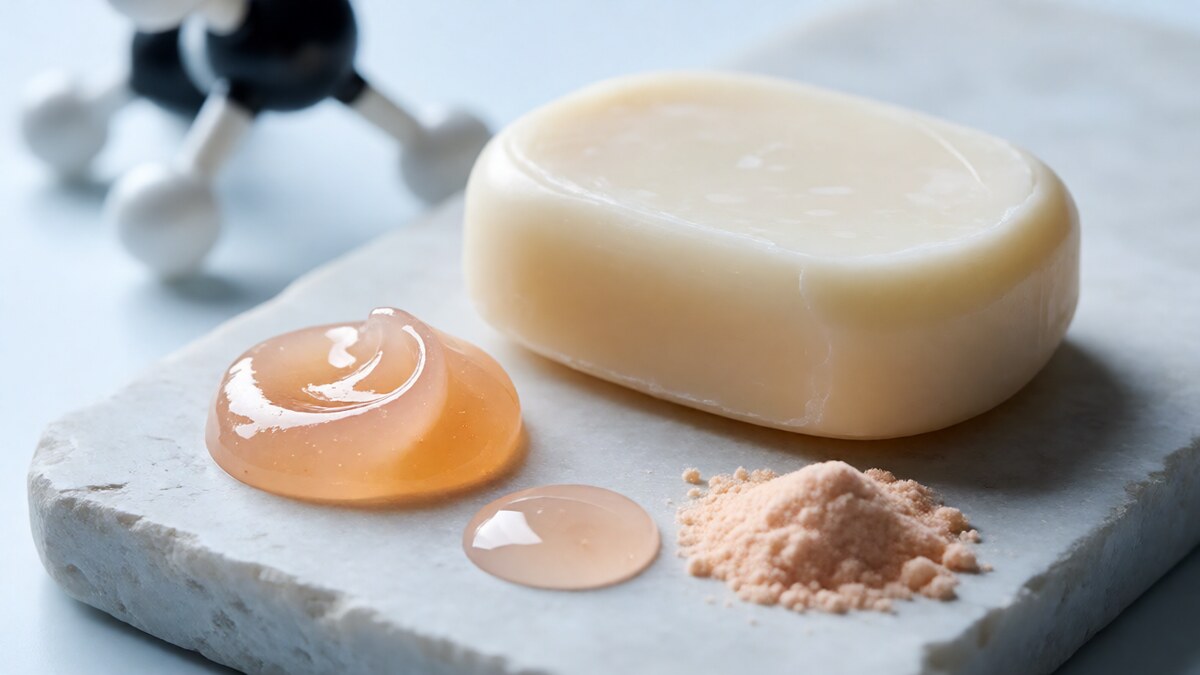
Papaya soap is one of the most-sold brightening bars in the world — a fixture of Southeast Asian drugstores and global marketplaces. But the ingredient story behind it is stranger than the marketing. Papaya delivers two completely different mechanisms: a protein-digesting enzyme that strips pigmented dead cells from the surface, and, in most commercial bars, a copper-chelating tyrosinase inhibitor bolted on to do the actual pigment work. Understanding which does what is the difference between a product that can genuinely help and one that simply looks like it did.
Why Papaya Soap Became a Bestseller
The papaya bar’s popularity is not an accident of chemistry — it is an accident of economics and culture. Skin-lightening products are a multi-billion-dollar global category, and the bar soap is the most accessible entry point: cheap, shelf-stable, and usable on the face, underarms, elbows and knees in one pass. A 2024 market review of the category placed global skin-lightening demand in the billions of dollars annually, and papaya, kojic acid and glutathione bars dominate the volume tier.
For a Southeast Asian audience — the exact market this formula category serves — the papaya bar is also culturally familiar. It has been a household staple for generations, which gives it enormous brand equity that newer, more sophisticated actives have to earn from scratch.
Mechanism 1: Papain, the Enzymatic Exfoliant
The headline papaya active is papain, a cysteine protease found in the fruit, latex and leaves of Carica papaya. Papain catalyses the hydrolysis of peptide bonds, which means it digests protein. In the stratum corneum, the protein in question is keratin — and the “glue” holding corneocytes together is a protein scaffold.
When papain breaks that scaffold, it accelerates desquamation: dead, pigmented surface cells shed faster, revealing fresher, more evenly toned cells underneath. This is a real, measurable cosmetic effect, and it is why papaya bars feel like they “work” within days. The mechanism is identical in principle to a medical debridement use — papain has documented wound-debridement activity at far higher concentrations — but at cosmetic levels it is a gentle chemical exfoliant, not a melanin modulator.
This is the crucial distinction most marketing blurs. Papain has no meaningful effect on tyrosinase, the rate-limiting enzyme of melanin synthesis, and it does not block melanosome transfer. It cannot reduce how much pigment your skin produces. It removes pigment that is already sitting in dead surface cells, and it makes skin reflect light more evenly — which reads as “brighter” — but established melasma, deep sun damage and older post-acne marks sit far below where an enzyme rinsed off in sixty seconds can reach.
Mechanism 2: Kojic Acid, the Real Pigment Actor
Here is the honest structural fact about the category: the pigment-relevant work in most papaya soaps is done by kojic acid, not papaya. Kojic acid — a fungal fermentation byproduct also found in sake and soy sauce — chelates the copper ion at the centre of tyrosinase, switching the enzyme’s catalytic activity down.
The clinical evidence for kojic acid is real but specific, and it is worth stating precisely:
- In a randomized split-face trial of 39 patients with melasma, kojic acid 2% + glycolic acid 5% produced an equal reduction of pigment to hydroquinone 2% + glycolic acid 5% in 51% of patients; 28% improved more on the kojic acid side and 21% on the hydroquinone side — a difference that was not statistically significant. The kojic acid side was more irritating.
- In a second split-face study of 40 women with epidermal melasma, adding 2% kojic acid to a 10% glycolic acid + 2% hydroquinone gel raised the rate of more-than-half clearance from 47.5% to 60%. Complete clearance occurred only on the kojic-acid side.
- A 12-week evaluation of a serum combining tranexamic acid, kojic acid and niacinamide showed significant improvement in facial dyschromia and skin-tone homogeneity.
The catch is the delivery format. Every one of those wins came from a leave-on gel or serum that sat on the skin for hours, daily. A soap spends sixty to ninety seconds on the skin and then goes down the drain. No published trial has demonstrated that a kojic acid bar fades dark spots on its own. Kojic acid works by keeping tyrosinase switched off day after day; a rinse-off product simply does not provide that contact time. The honest read: a papaya/kojic bar can contribute mild, gradual brightening — especially on body skin used daily — but it should never be the primary treatment for established pigmentation.
The Format Problem Nobody Puts on the Label
There is a second, quieter problem: true soap bars are alkaline. High-pH cleansing swells the stratum corneum and disrupts the intercellular lipids that keep the barrier intact. Daily use on the face can leave skin tight, dry and reactive — a poor starting point for any brightening routine, because a compromised barrier drives inflammation, and inflammation drives post-inflammatory hyperpigmentation. For skin of colour, this matters enormously: over-exfoliation with an enzymatic bar stacks on top of acid toners and retinoids and can create the very darkening the user is trying to remove.
The Safety Questions Worth Asking
Papain is a genuine allergen risk. It belongs to the papain-like cysteine protease family and cross-reacts with latex; anyone with latex-fruit syndrome (banana, avocado, kiwi) should patch test before putting a papaya product on the face. Leaving papaya pulp on for extended periods, or using green unripe fruit, raises both papain and latex load and can produce a chemical-burn-like reaction.
Kojic acid’s main risk is contact sensitisation. In one patch-test series, five of eight women who had used kojic acid skincare developed allergic facial dermatitis one to twelve months after starting. Rarely, kojic acid has caused pigmented contact dermatitis — a lightening ingredient paradoxically darkening the skin. The CIR Expert Panel concluded kojic acid is safe in cosmetics at concentrations where sensitisation would not be expected; the EU caps leave-on facial products at 1%.
The larger safety story in this category is contamination, not the named actives. A landmark analysis of 549 skin-lightening products from 32 countries found that 6.0% contained mercury above 1,000 ppm — and 45% of those contained more than 10,000 ppm, against a regulatory trace limit of 1 ppm. Mercury is a neurotoxin that damages the kidneys and nervous system. If a papaya bar fades pigment dramatically and fast, that is a red flag, not a result.
What a Well-Formulated Papaya Bar Should Actually Do
Read honestly, the papaya bar is a legitimate but limited tool. A well-built version should:
- Use papain at a sensible enzymatic load for surface renewal and texture, not as a pigment claim;
- Pair it with a leave-on tyrosinase inhibitor (niacinamide, alpha-arbutin, tranexamic acid or a low-dose resorcinol) so the actual melanin pathway is addressed;
- Buffer the pH toward skin-friendly range and add barrier lipids so daily use does not strip the acid mantle;
- Be positioned for 2–3 uses per week as a complement, not a daily standalone “whitening” cure.
The Bottom Line
Papaya soap is a bestseller because it delivers a fast, visible, low-cost surface brightening — and because a generation grew up trusting it. The science says that visible effect is enzymatic exfoliation, that the pigment-relevant active is usually the kojic acid riding alongside it, and that neither can out-perform a leave-on routine with clinically-validated actives. Used as a gentle, occasional renewal step in a broader multi-pathway brightening and photoprotection routine, a well-formulated papaya bar earns its place on the shelf. Sold as a standalone answer to melasma, it is being asked to do something the chemistry cannot deliver — and the buyer pays for the gap.
Interested in Formulation Data Collaboration?
Let's discuss how Melasyl AI can accelerate your next whitening or brightening formula. Technical collaboration, data licensing, or custom AI-driven research — reach out.
Contact Wei →